Madison County, Iowa Still Has 6 Covered Bridges. Here’s How to See All of Them in One Late-Fall Drive
We may earn money or products from the companies mentioned in this post. This means if you click on the link and purchase the item, I will receive a small commission at no extra cost to you ... you're just helping re-supply our family's travel fund.
Madison County, Iowa once had 19 covered bridges. Today, six Madison County covered bridges remain, and all of them are within about 15 miles of Winterset, the county seat, about 30 minutes southwest of Des Moines. The bridges became famous after Robert James Waller’s 1992 novel “The Bridges of Madison County” and the 1995 film starring Clint Eastwood and Meryl Streep, which used two of them as settings.
Here’s how to see all six in one late-fall drive: start at the Madison County Welcome Center in Winterset, see Cutler-Donahoe Bridge in Winterset City Park, then drive north to Hogback, east to Cedar Bridge, southeast to Holliwell, southwest to Roseman, and finish at Imes Bridge in St. Charles. The loop takes five to six hours with stops, and three of the bridges are on gravel roads.
The county’s Covered Bridges Scenic Byway, an 82-mile route, connects the bridges with Winterset and other small towns. You don’t have to drive all of it to see the bridges, but it’s a good guide.
How to See All 6 Bridges in One Drive
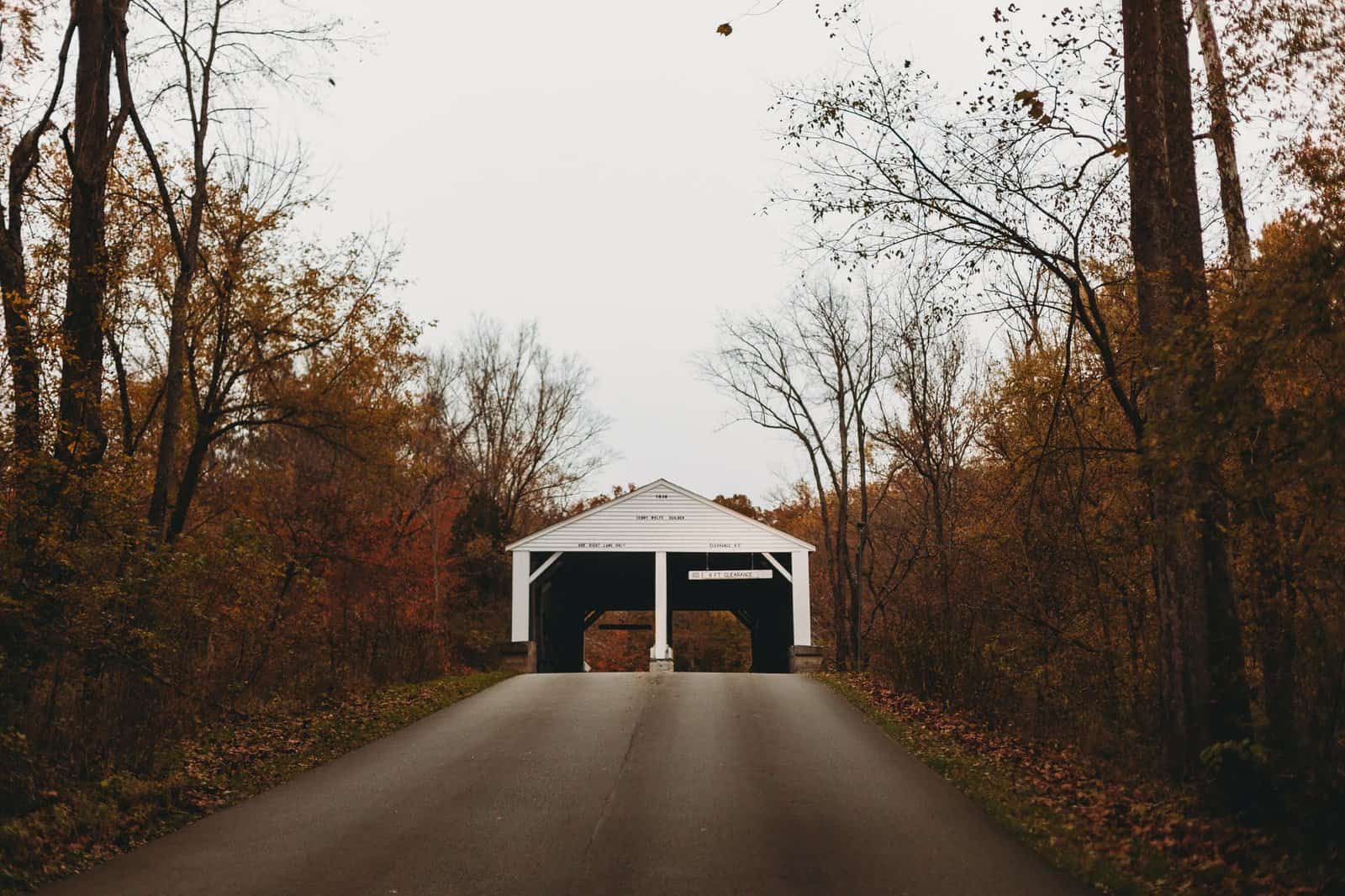
Here’s a route that works well, starting and ending in or near Winterset. Pick up a free map at the Welcome Center first.
Stop 1: Madison County Welcome Center
The Welcome Center, at 73 W. Jefferson St. on the town square in Winterset, has maps of the bridges, information about the byway, and advice on road conditions. Check hours before you go, since they may be shorter in the off-season. Winterset’s square, with its 1876 limestone courthouse, is worth a walk.
Stop 2: Cutler-Donahoe Bridge (1870 or 1871)
Cutler-Donahoe Bridge is in Winterset City Park, just a few minutes from the square. It was built in 1870 or 1871 over the North River near Bevington and moved to the park in 1970. It’s the easiest bridge to see, with parking nearby and a paved road. The park also has Clark Tower, a limestone tower with a view of the Middle River valley, worth a short side trip.
Stop 3: Hogback Bridge (1884)
From Winterset, drive north about 4 miles to Hogback Bridge, which crosses the North River. It was built in 1884 and takes its name from a nearby limestone ridge. The last part of the road is gravel. The bridge sits in a quiet, wooded valley, and late-fall colors make it one of the most photogenic stops.
Stop 4: Cedar Bridge (rebuilt 2019)
Cedar Bridge, northeast of Winterset, is the only covered bridge in the county that cars can still drive through. The original bridge was built in 1883 and was destroyed by arson in 2002. It was rebuilt, and then burned again in 2017. The current bridge is a replica, completed in 2019. Cedar Bridge Park has parking and picnic areas.
Stop 5: Holliwell Bridge (1880)
Holliwell Bridge, southeast of Winterset, was built in 1880 over the Middle River. At 110 feet, it’s the longest of the county’s covered bridges and is considered the longest timber bridge in Iowa. It appears in “The Bridges of Madison County.” The road to the bridge is gravel.
Stop 6: Roseman Bridge (1883)
Roseman Bridge, southwest of Winterset, is the best known of the six. It was built in 1883 over the Middle River, and it’s the bridge where the novel’s main characters meet. It also appears in the movie. Local legend says the bridge is haunted, dating to a story about a jailbreak in 1892. The road to the bridge is gravel. There’s a parking area and sometimes a seasonal gift shop.
Stop 7: Imes Bridge (1870)
Finish at Imes Bridge, the oldest of the six, built in 1870. It was moved to its current spot at the edge of St. Charles, east of Winterset, in 1977. It’s a short drive from Interstate 35, which makes it an easy last stop if you’re heading back to Des Moines.
Tips for Driving the Madison County Covered Bridges
- Expect gravel: Roseman, Hogback, and Holliwell are on gravel roads. They’re usually fine for regular cars, but drive slowly, especially after rain or snow.
- Allow plenty of time: Five to six hours gives you time to walk through each bridge and stop for lunch in Winterset.
- Watch the daylight: In November, the sun sets before 5 p.m., so start in the morning.
- Bring a map: Cell service can be patchy in the countryside. A paper map from the Welcome Center helps.
- Respect the bridges: Several have been damaged by fire and vandalism. Don’t carve or write on them, and follow posted rules.
- No cars on most bridges: Only Cedar Bridge is open to vehicles. The others are for pedestrians.
Why Late Fall Is a Good Time for the Madison County Covered Bridges
The county’s Covered Bridge Festival is held every October, and the bridges can be busy then. By November, crowds are smaller, the fields are harvested, and the trees along the rivers have bare branches that frame the bridges. The low autumn light makes good photos. If you visit after a snowfall, the red bridges stand out against the white.
More to See in Winterset
Winterset has a few other stops worth adding:
- The John Wayne Birthplace and Museum: The actor was born in Winterset in 1907. The museum has film memorabilia and the small house where he was born.
- The town square: The limestone courthouse is surrounded by shops, cafes, and restaurants.
- Clark Tower: A 25-foot limestone tower in Winterset City Park with views of the river valley.
- Madison County Historical Complex: A collection of historic buildings, including a 19th-century farmhouse and schoolhouse.
Getting There
Winterset is about 35 miles southwest of downtown Des Moines, or roughly a 30- to 40-minute drive. From Interstate 35, take Iowa 92 west to Winterset. The Des Moines International Airport is the closest airport.
Why Iowa Built Covered Bridges
Covered bridges were common in the 19th century across the Midwest and the Northeast. The roof and walls weren’t there to keep travelers dry. They protected the wooden trusses and deck from rain and snow, which helped the bridge last far longer than an open wooden span would. In Madison County, the bridges were built over the Middle River, North River, and smaller creeks to connect farms with towns.
Most of the county’s covered bridges were replaced over the years by steel and concrete bridges, or lost to floods, fires, and age. The six that remain are protected as historic sites, and several are listed on the National Register of Historic Places. Most have been restored at least once, and a few have been moved from their original locations to keep them safe.
Lunch and Breaks on the Drive
Winterset is the best place to stop for food, with cafes and restaurants around the courthouse square. A few tips for planning the day:
- Eat in Winterset between bridges. The town sits near the center of the route, so you can see a few bridges, eat lunch on the square, and then finish the loop.
- Pack snacks and water. There are few places to buy food near the bridges themselves.
- Use restrooms in town. Most bridge sites have limited facilities, especially in the off-season.
- Fill up on gas in Winterset before heading out on gravel roads.
Photography Tips for the Madison County Covered Bridges
- Shoot from the riverbank. Many of the best angles are from below the bridge, looking up at the roof and trusses. Watch your footing, since banks can be muddy or icy.
- Look inside. The wooden trusses and the light coming through the gaps in the boards make good close-up photos.
- Go early or late. Morning and late-afternoon light brings out the red paint and the texture of the wood.
- Include the setting. Bare trees, harvested fields, and frost or snow help tell the story of a late-fall visit.
- Be patient. Even in the off-season, other visitors may be walking through. Wait a few minutes for a clear shot.
Adding a Night in Winterset
If you’d rather not rush, spend a night in Winterset or in nearby Des Moines and split the bridges over two days. That gives you time for the John Wayne Birthplace and Museum, the courthouse square, and a slower drive on the gravel roads. In December, the square often has holiday decorations and events, which adds a seasonal reason to stay.
The Book and Movie Connection
Robert James Waller’s novel, published in 1992, tells the story of a photographer who comes to Madison County to photograph its covered bridges and falls in love with a local farm wife. The book became a bestseller, and the 1995 film adaptation brought thousands of new visitors to the county. Roseman and Holliwell bridges both appear in the movie. Fans of the book or film often make those two bridges the center of their visit, but the other four are just as worth seeing.
The Bottom Line on the Madison County Covered Bridges
Six of Madison County’s original 19 covered bridges survive, and you can see all of them in a day. Start at the Welcome Center in Winterset, follow the loop from Cutler-Donahoe to Imes, and leave time for gravel roads and short walks. Late fall gives you quiet roads, good light, and a chance to see the bridges without the festival crowds.