Lake Charles Lost 7% of Its Population in a Single Year. The Neighborhoods Left Behind Tell You Which 7%
We may earn money or products from the companies mentioned in this post. This means if you click on the link and purchase the item, I will receive a small commission at no extra cost to you ... you're just helping re-supply our family's travel fund.
Lake Charles, Louisiana, took a hit between 2019 and 2020 that no other American city matched: it topped the nation in out-migration rate that year, driven by a collapse in oil prices and then compounded by two hurricanes within six weeks of each other. Hurricane Laura struck in late August 2020 with 150-mile-per-hour winds, and Hurricane Delta followed in early October, hitting a region that hadn’t come close to recovering from the first storm. City officials estimate Lake Charles permanently lost close to 7% of its population, more than 5,000 people, according to reporting from [The Invading Sea](https://www.theinvadingsea.com/2024/09/09/disaster-displacement-hurricane-laura-delta-lake-charles-climate-migration-census/).
A Recovery That Skipped Half the City
What makes Lake Charles’s recovery unusual isn’t just how slow it’s been, it’s how unevenly it has landed. According to reporting from [The Invading Sea](https://www.theinvadingsea.com/2024/09/09/disaster-displacement-hurricane-laura-delta-lake-charles-climate-migration-census/), the population moving back into Lake Charles is disproportionately settling into wealthier, whiter parts of the city that recovered fastest, while northern Lake Charles, home to many of the city’s majority-Black neighborhoods, has seen a painfully slow rebuild. One district tracked by local officials went from 51% people of color to roughly 66% after the most recent census count, evidence that the people with the resources to rebuild quickly, or to leave and later return, are not the same people who were living in the hardest-hit neighborhoods before the storms.
The scale of housing damage explains why recovery has taken years rather than months. Hurricanes Laura and Delta together damaged roughly half the housing stock in Calcasieu Parish, where Lake Charles sits, according to a [McKinsey analysis cited by VOA News](https://www.voanews.com/a/6289266.html), with more than a quarter of homes sustaining major damage or total loss. As of 2024, four years after the storms, [the Associated Press reported](https://apnews.com/article/hurricane-louisiana-recovery-lake-charles-delta-laura-2f6a6dcefb4dd3a487fce9f95a3f1a80) that a state relief program, Louisiana Restore, had only distributed about $201 million of its $1 billion fund to qualifying homeowners, with thousands of applications denied or still pending, and roughly 20% of the city’s population living in poverty even before accounting for storm-related setbacks.
The Oil and Gas Paradox
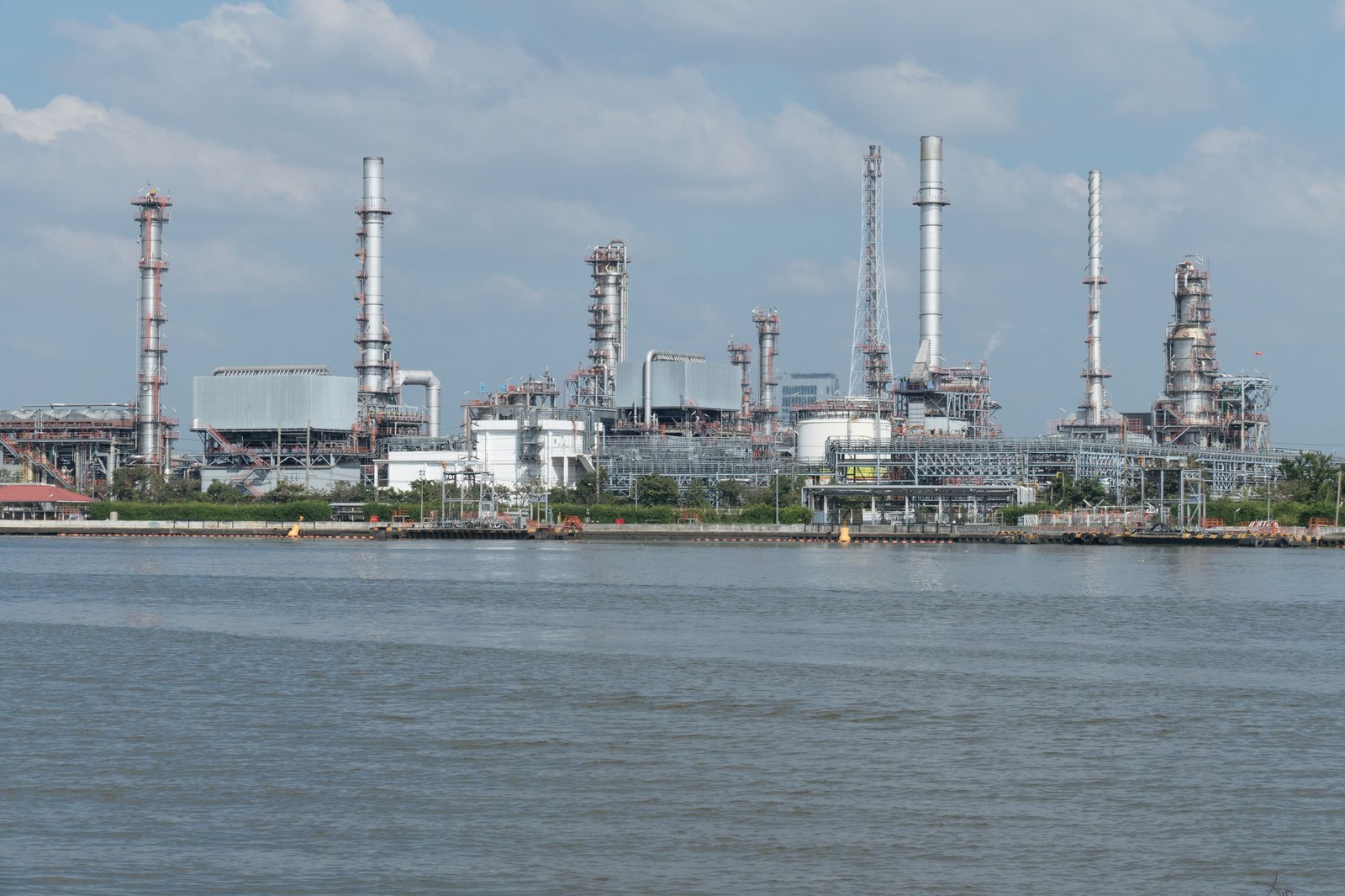
Lake Charles’s economy has long depended on the petrochemical and LNG export industry lining the Calcasieu Ship Channel, and that same industry created a strange, temporary countertrend to the population loss: an influx of construction workers building new LNG export terminals actually doubled historical net population growth in the broader metro area during parts of the rebuild period, according to a [regional economic recovery report](https://static1.squarespace.com/static/5b6c60224611a06e12b5da29/t/600f4c5cd52c160bdea1a735/1611615327310/202011+Hurricane+Laura+Delta+recovery_vFINAL.pdf). But those jobs are overwhelmingly temporary and tied to specific construction phases, meaning the population bump doesn’t reflect a durable return of the residents, and the tax base, the city actually lost.
What a Visitor Actually Sees Today
- Downtown Lake Charles has slowly rebuilt around its casino resorts, including L’Auberge and Golden Nugget, which reopened relatively quickly and remain the area’s biggest employers and draws
- Historic districts and older neighborhoods still show visible storm damage years later, boarded windows and blue-tarped roofs that never got fully repaired
- The city’s Cajun and Creole food culture, including its famous boudin trail, survived the storms largely intact and remains one of the strongest reasons to visit
Local officials and researchers increasingly describe Lake Charles as a preview of a pattern likely to repeat in other Gulf Coast petrochemical towns: a local economy built on an industry that generates both the jobs that sustain the city and, indirectly through the climate effects tied to fossil fuel production, some of the storm intensity increasingly battering it. Geographer Craig Colten, quoted in [VOA’s coverage](https://www.voanews.com/a/6289266.html), predicted that repeated disasters would push southwest Louisiana toward becoming a long-term shrinking region, following the trajectory New Orleans experienced after Hurricane Katrina, where the city’s population still has not fully recovered two decades later.
The Neighborhoods Carrying the Weight
Lake Charles’s population loss wasn’t evenly distributed across the city. Lower-income neighborhoods closer to the industrial corridor along the Calcasieu River, where refinery and petrochemical jobs have long anchored the local economy, saw both the heaviest storm damage and the slowest rebuilding timelines, since residents there were less likely to carry the private flood insurance or savings needed to rebuild quickly without federal aid that took years to fully disburse.
Wealthier subdivisions further from the refineries recovered visibly faster, with contractors and insurance payouts flowing more quickly to homeowners who had the equity and documentation to move rebuilding claims through the system. The gap between those two recovery speeds is now baked into the city’s landscape: block after block of vacant lots and boarded properties in some neighborhoods sit within a few miles of fully restored, occupied streets in others, a visible map of who had the financial cushion to weather a disaster and who didn’t.
Federal recovery aid, while eventually substantial, arrived on a timeline that outpaced the patience of many displaced residents. ProPublica’s reporting on the city’s recovery documented years-long waits for long-term federal housing assistance, delays that pushed many lower-income households to relocate permanently to Houston, Baton Rouge, or elsewhere in Texas rather than wait for Lake Charles’s rebuilding process to catch up with their immediate housing needs. That out-migration, once it happened, proved largely permanent, since new jobs, schools, and social ties formed elsewhere reduced the likelihood of any eventual return even after federal aid did arrive.
Insurance availability itself became part of the inequity story. Homeowners in flood-prone, historically disinvested neighborhoods often carried the least comprehensive coverage before the storm hit, either because private flood insurance was priced out of reach or because FEMA’s flood maps hadn’t been updated to reflect their actual risk level, leaving them more dependent on slow-moving federal disaster aid than neighbors in better-insured, higher-value areas of the city.
The Southerly investigation into Lake Charles’s population loss found the city’s 2020 decline was the steepest of any American city that year, a distinction tied directly to the compounding disasters, Hurricane Laura, Hurricane Delta, a winter freeze, and a flood, that hit the region in rapid succession within roughly twelve months, leaving almost no recovery window between events for residents or infrastructure to stabilize before the next disaster arrived.
For travelers, Lake Charles today is a legitimate stop for Cajun food and casino gaming without the crowds of New Orleans, but visiting also means seeing, directly and without much softening, what four consecutive federally declared disasters look like in the years after the national news coverage moves on.