We may earn money or products from the companies mentioned in this post. This means if you click on the link and purchase the item, I will receive a small commission at no extra cost to you ... you're just helping re-supply our family's travel fund.
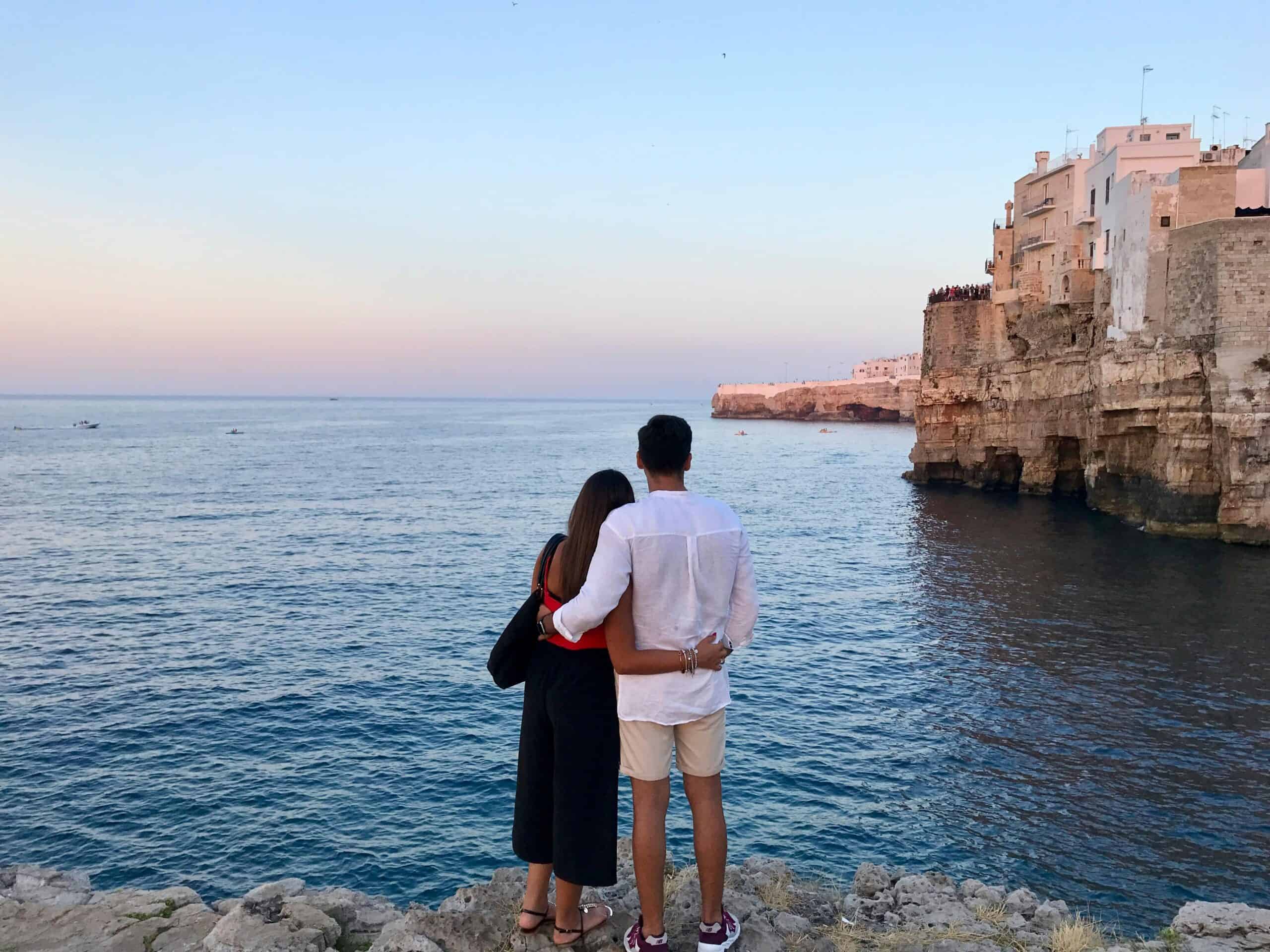
On the Adriatic edge of southern Italy, one of Puglia’s most photographed natural landmarks is suddenly gone. The Lovers’ Arch at Torre Sant’Andrea, near Melendugno in Lecce province, collapsed after days of heavy rain, rough seas, and strong winds around Valentine’s Day weekend. What once framed proposals, vacation photos, and postcards is now a broken line of rocks in the water. The loss has landed as more than a weather story, because it exposed how quickly memory, tourism, and coastal geology can collide.
Where The Arch Once Stood
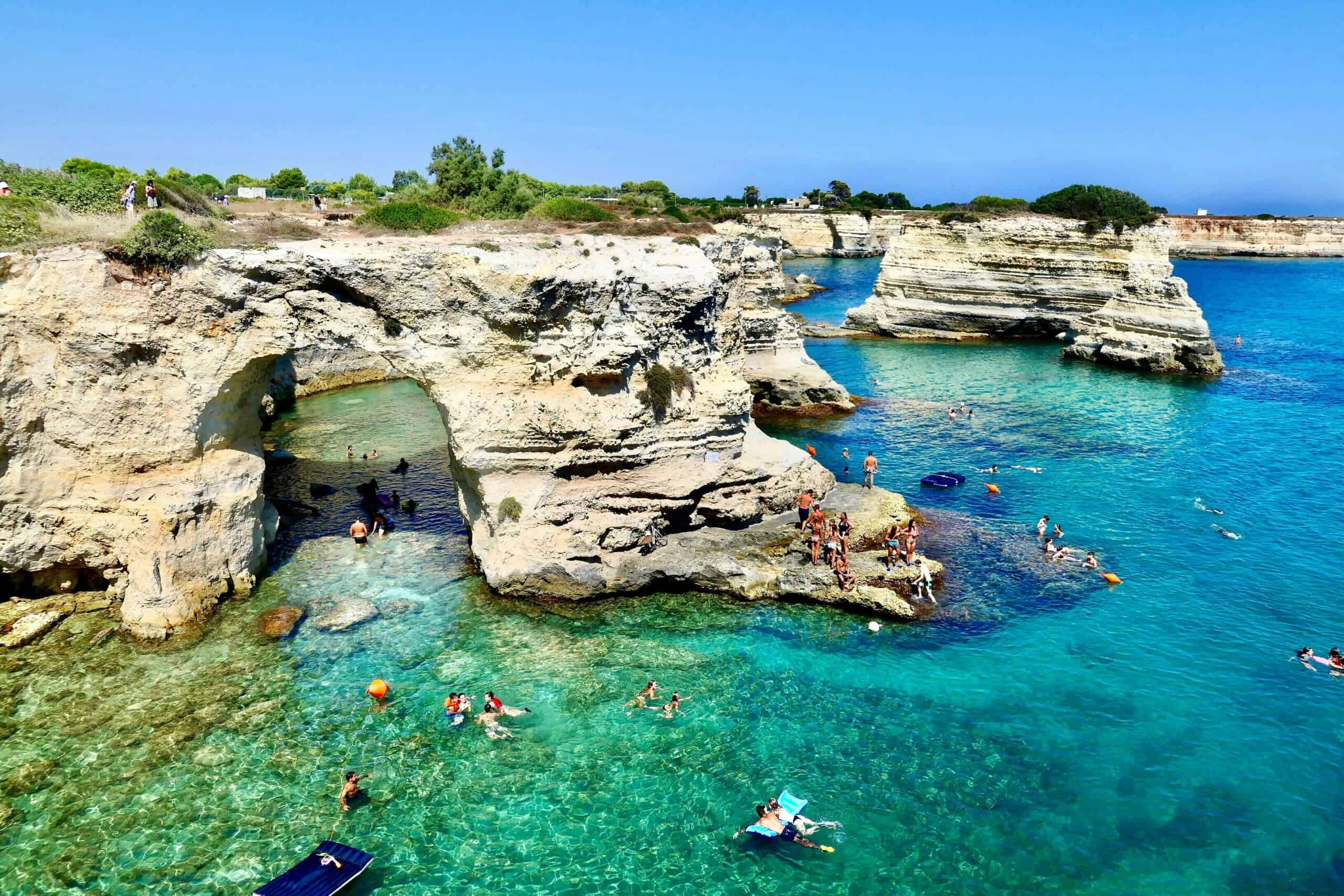
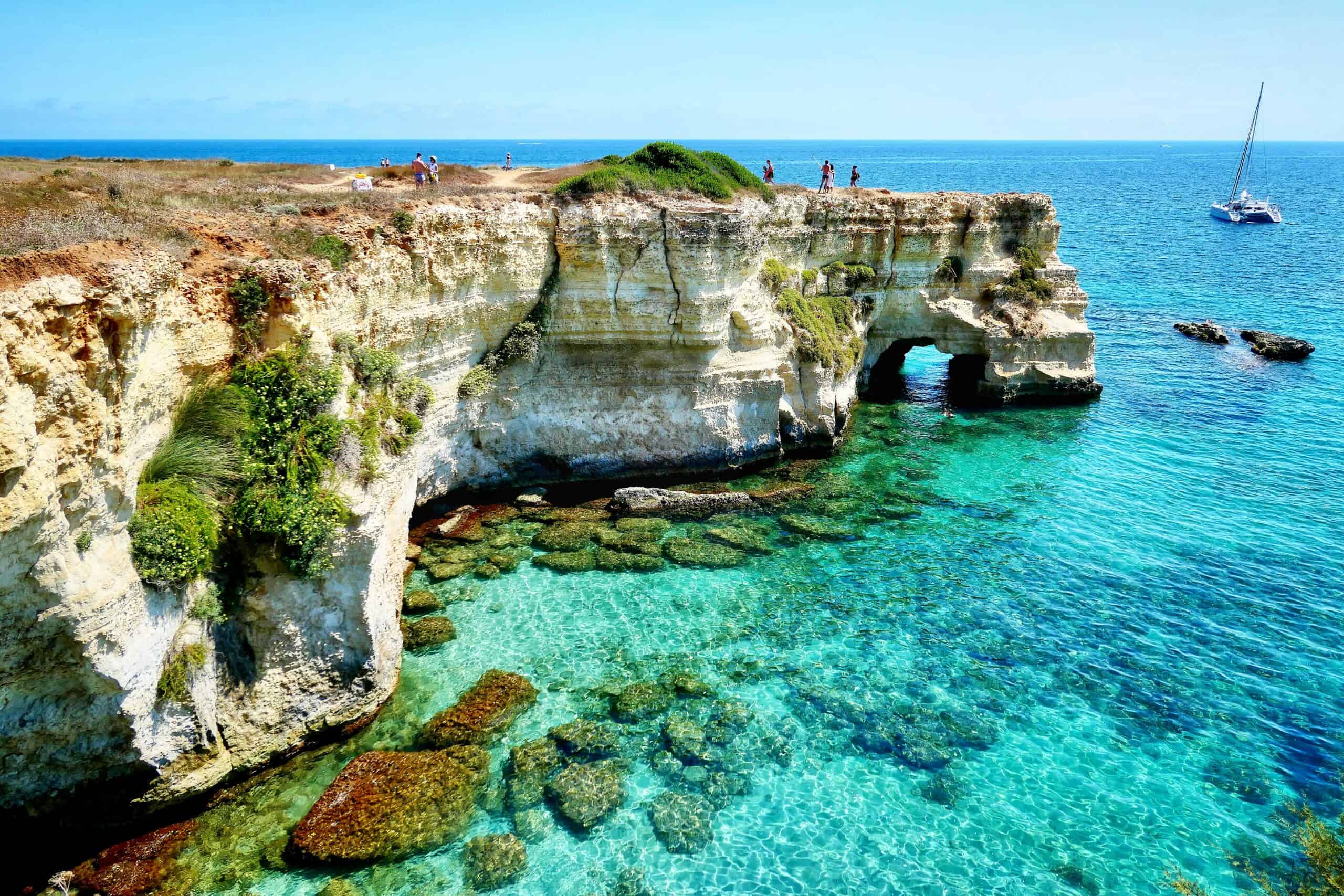
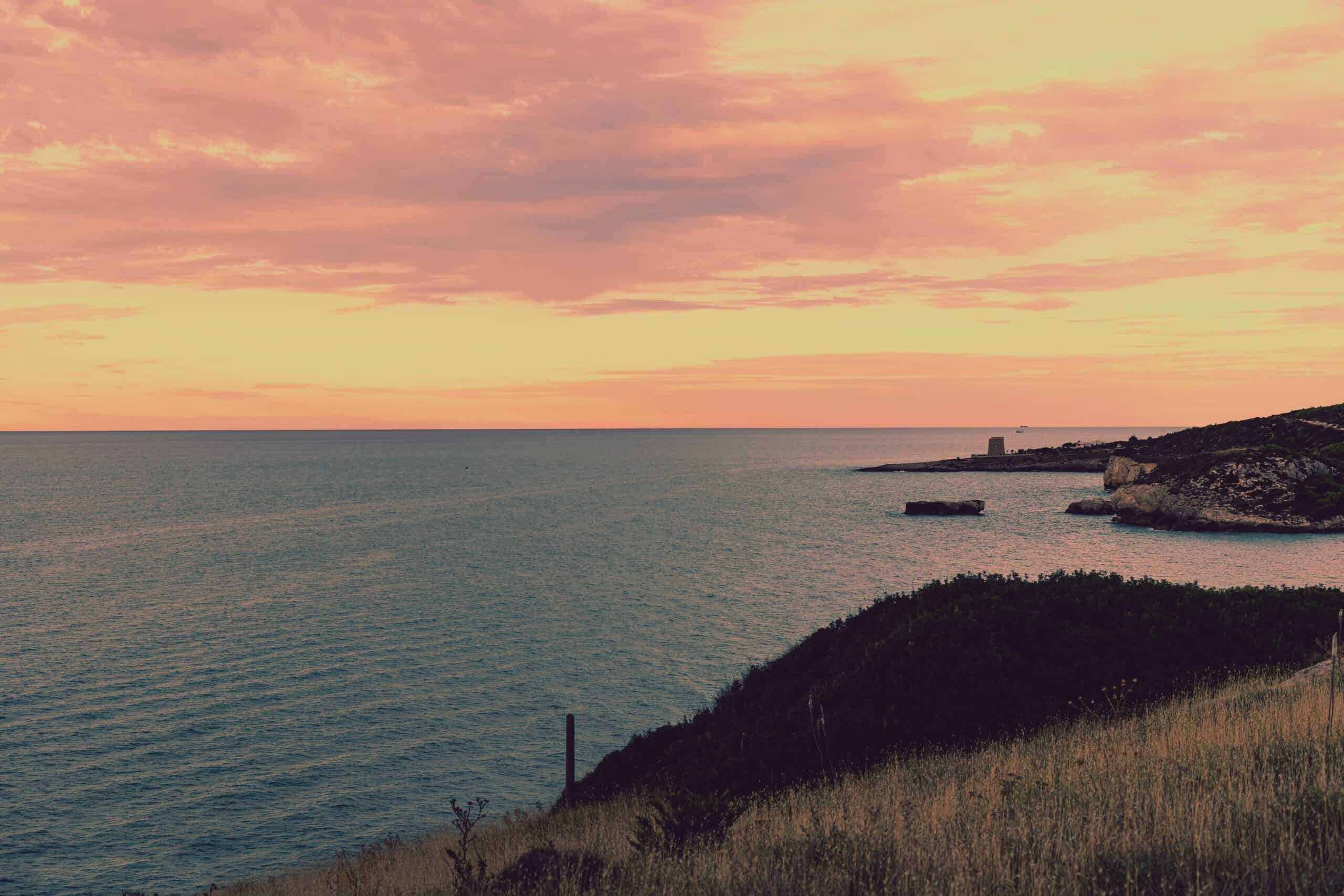
The formation stood among the Sant’Andrea sea stacks along Puglia’s Adriatic coast, just outside Melendugno, where pale limestone cliffs meet clear, wind-cut water and narrow footpaths fill with summer visitors at sunset. It was known locally as Arco degli Innamorati, and it became one of the defining images of Salento’s shoreline for couples, photographers, and families collecting the kind of holiday memory that survives long after the season ends. Reuters and Italian reporting describe it as a regular setting for proposals and landmark photos, giving the area a recognizable symbol that felt both intimate and iconic.
What Happened On Valentine’s Day
Massimo Virgilio/Unsplash
Reuters reported that the collapse happened on Valentine’s Day after several days of bad weather, including heavy rain, strong winds, and rough seas that repeatedly struck this exposed section of coast and weakened already fragile rock. By the following morning, the arch that once opened above the water had fallen into rubble, leaving only low rocks where the span had stood and a shoreline that looked abruptly unfamiliar to residents and returning visitors. RaiNews described the scene as a sudden visual rupture for Melendugno, with a beloved silhouette erased between one storm cycle and the next, almost within a single tide window.
Why The Collapse Was Not Entirely Random
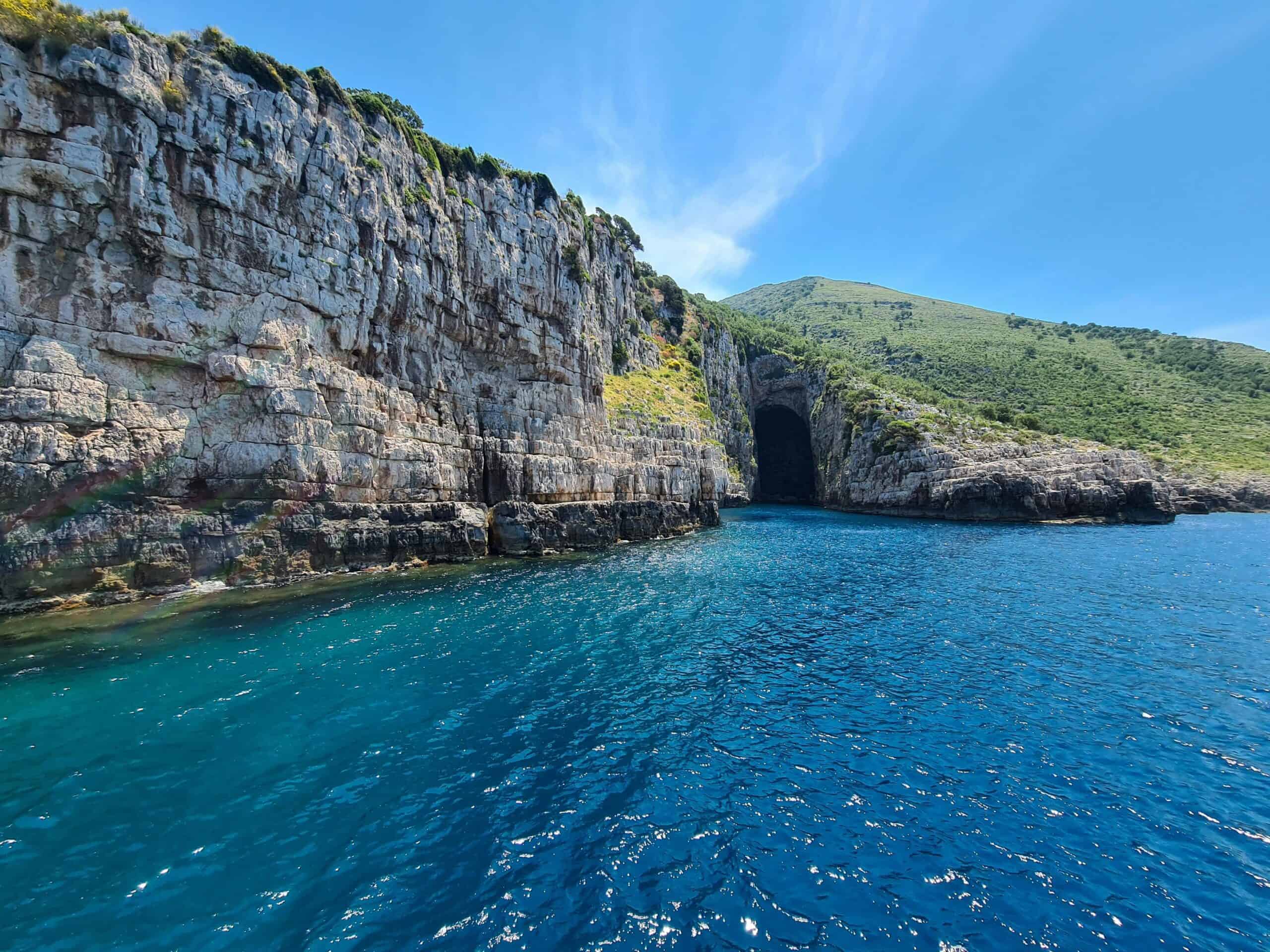
Natural arches are temporary by nature, carved over long periods by waves, salt, and wind, then eventually weakened by those same forces through tiny fractures that grow quietly until structural balance gives way. What made this moment feel abrupt was pace: repeated storms appear to have compressed years of wear into days of visible stress, turning a slow geological process into an overnight public shock with very little warning to casual observers. Regional officials and local experts pointed to erosion pressure already known along the coast, suggesting that a long, monitored process reached a dramatic tipping point all at once.
The Mayor’s Words Captured The Mood
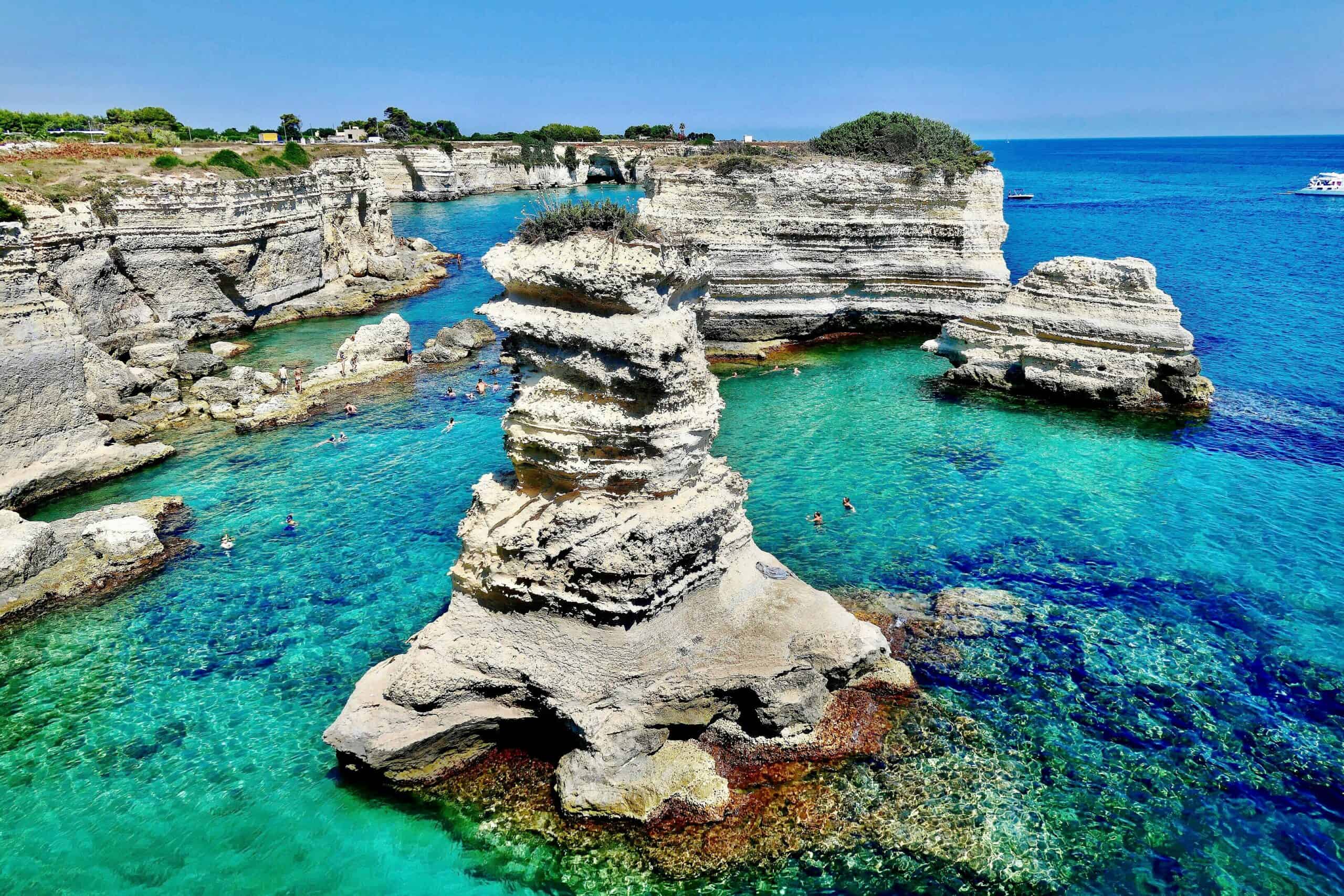
Melendugno Mayor Maurizio Cisternino called the collapse an unwanted Valentine’s Day gift and a very hard blow for the area’s image and tourism, according to Reuters, echoing what many residents were already saying in quieter, personal terms. He also said nature had taken back what it created, a phrase that spread quickly because it carried grief and realism in the same breath, without pretending the loss could be argued away or repaired overnight. The reaction framed the event not as isolated spectacle, but as a shared civic wound tied to place, seasonal work, local pride, and collective memory.
A Tourism Symbol Vanished Overnight
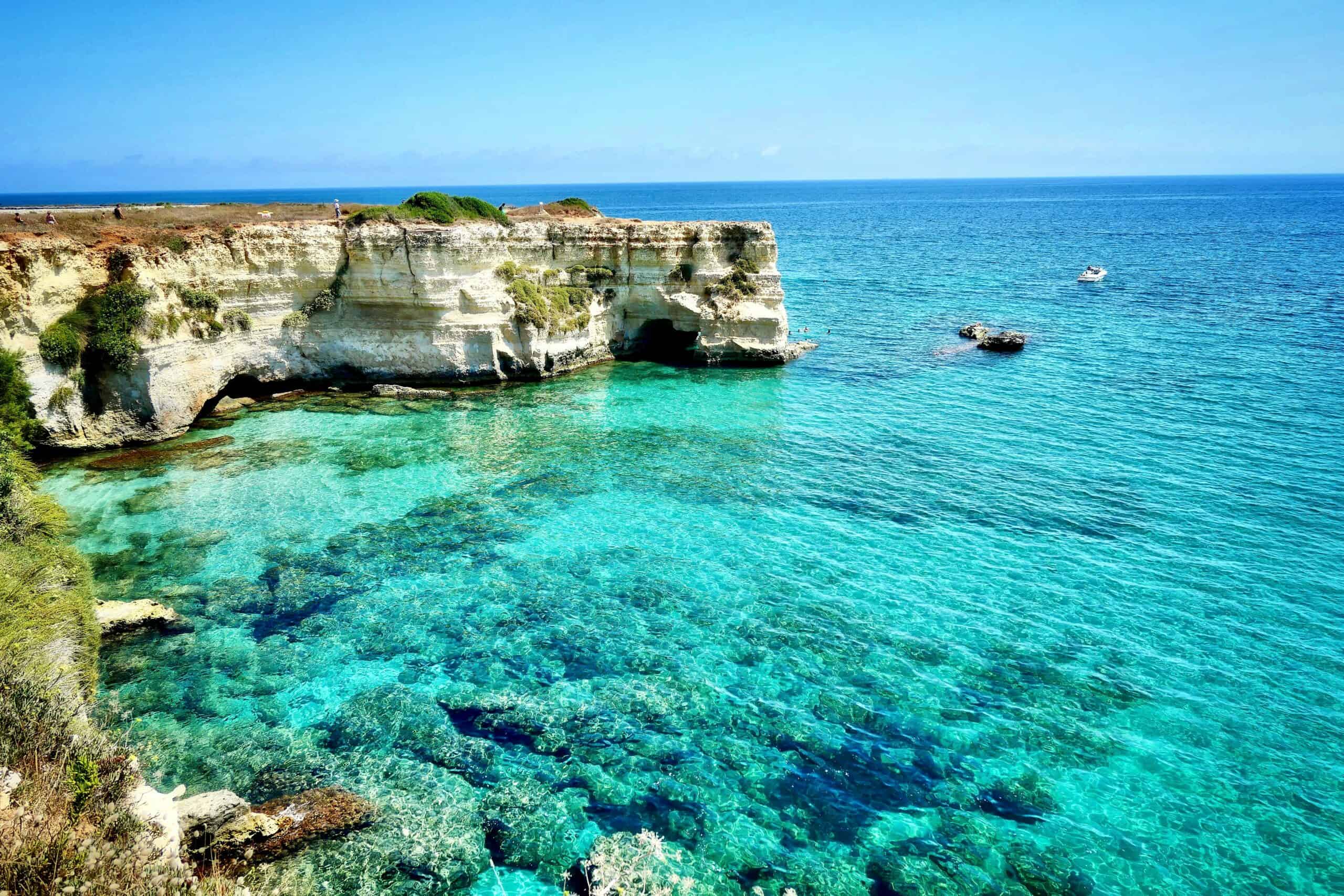
For years, the arch worked as visual shorthand for Torre Sant’Andrea and a broader idea of Salento summers: dramatic rock, bright water, and evening walks above the sea that ended with one more photo before dinner. Its disappearance matters beyond sentiment, because destination memory is often built around specific images that influence bookings, itineraries, travel coverage, and the social media loops that sustain local visibility. When a landmark disappears, local operators lose more than a viewpoint; they lose a narrative anchor that helped translate landscape into livelihood across the high season.
Why Officials Are Warning About Nearby Cliffs
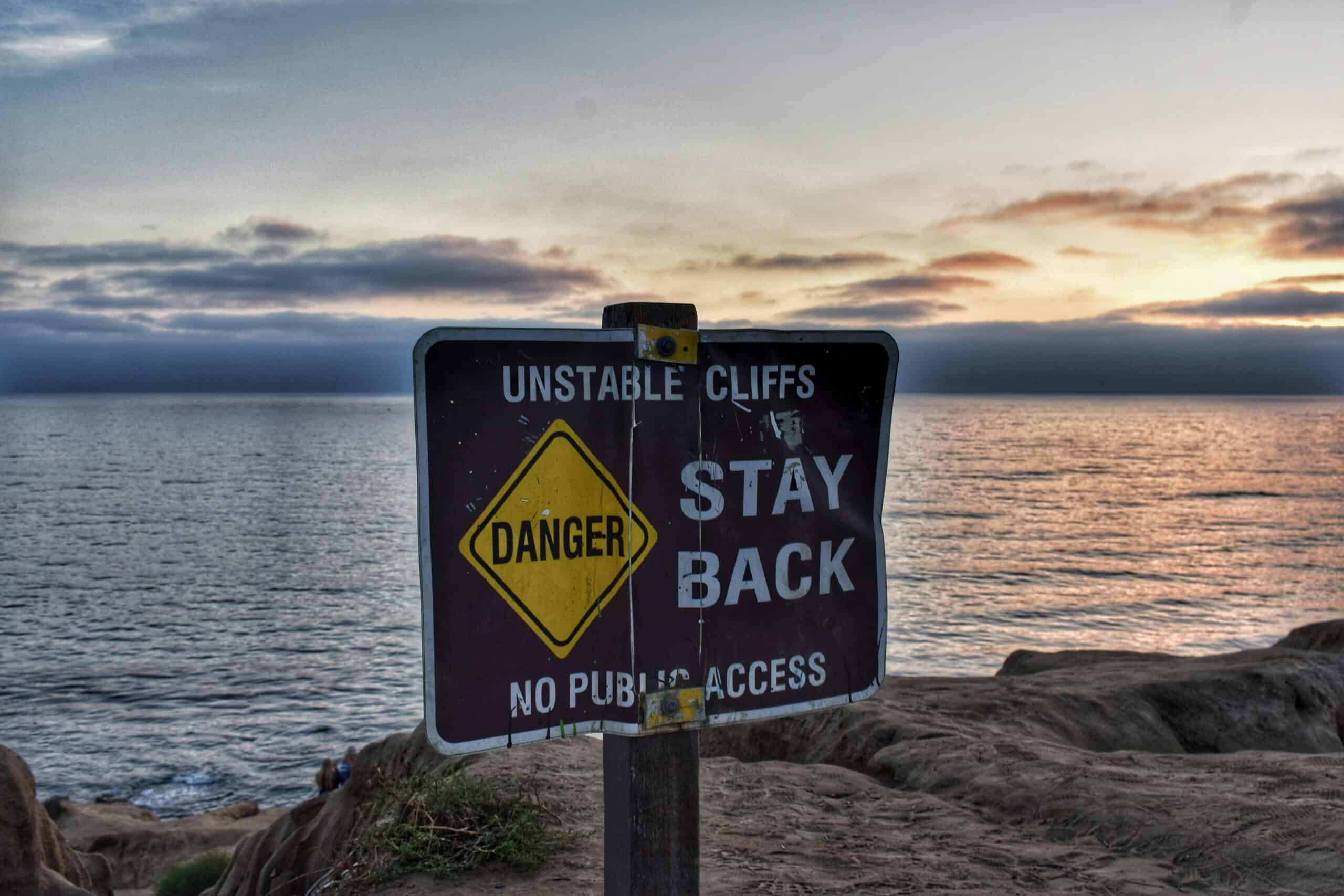
After the collapse, officials cited by Reuters warned that nearby sections of the rocky coastline could also fail, with visible cracks already noted along cliff faces in areas exposed to repeated wave action and runoff. The concern is practical rather than abstract: fractured coastal stone can break in segments after rain infiltration, surge impact, and shifting pressure within already weathered layers of limestone, sometimes with little immediate noise before failure. That changes priorities toward path safety, targeted closures, geotechnical checks, and clearer public risk communication before spring and summer visitor numbers rise.
The Event Fits A Wider Weather Pattern
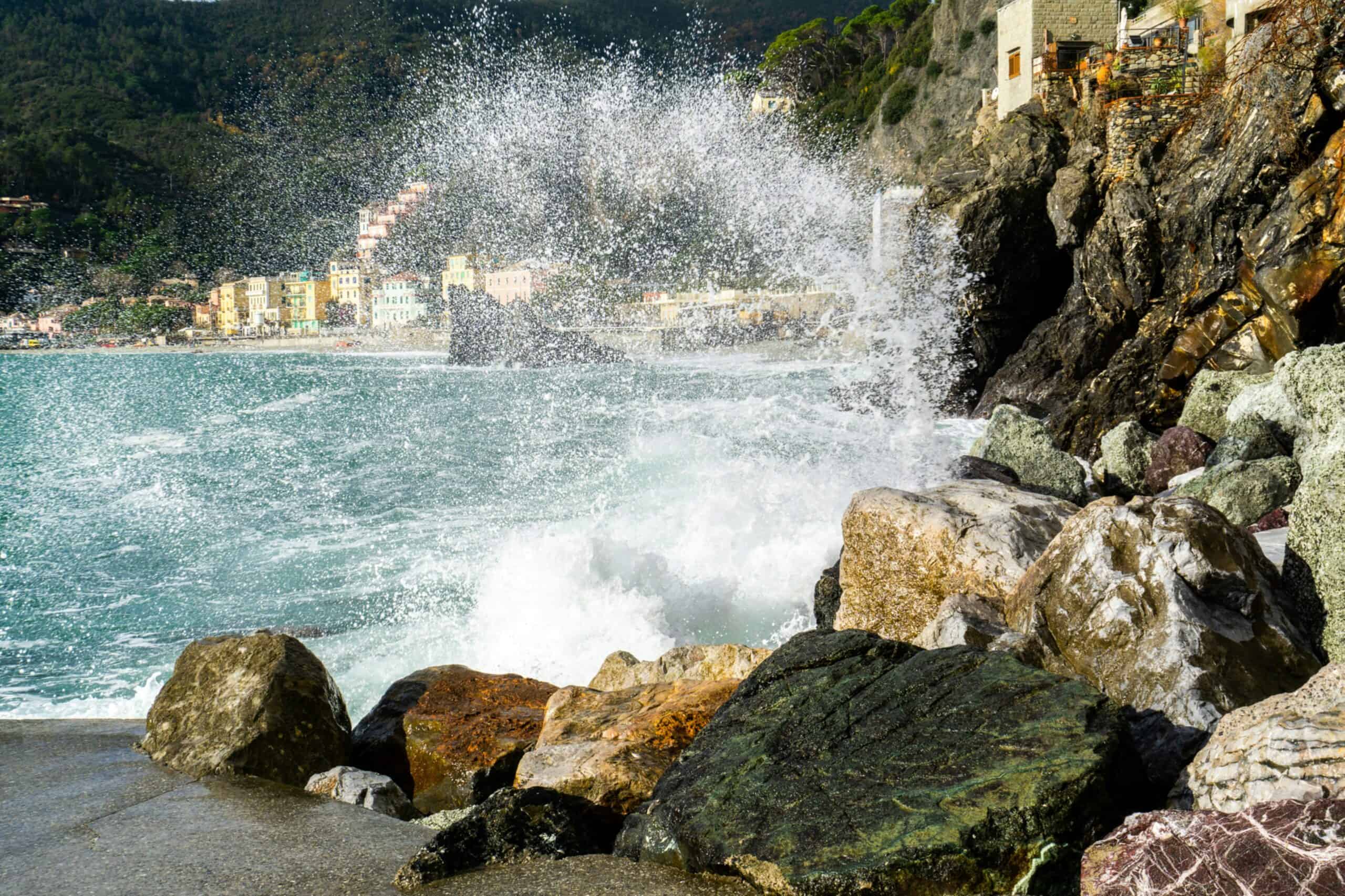
Reuters linked the arch’s collapse to broader storm damage in southern Italy, including coastal impacts along the Ionian side from Ugento toward Gallipoli, where beaches, structures, port areas, and waterfront access points were affected. The same report noted wider losses in the south estimated at more than one billion euros this year, plus a landslide in Niscemi that forced over 1,500 evacuations and showed how quickly instability can escalate after prolonged weather stress. Seen together, these events place Melendugno’s loss inside a larger regional pattern of erosion pressure, extreme conditions, and infrastructure vulnerability.
Regional Authorities Moved Into Response Mode
Puglia’s regional administration said it contacted Melendugno immediately, pairing solidarity with safety checks and coordination on exposed stretches of coast where further instability could threaten both residents and visitors. In its public statement, the region connected the collapse to climate-linked pressure and called for continuous monitoring, prevention work, and planned interventions that balance conservation with practical access needs. RaiNews also reported follow-up inspections and renewed attention to erosion and landslide exposure, signaling that the response is shifting from symbolic reaction toward longer-term management.