Guthrie Was Oklahoma’s Capital Until 1910. Here’s What Its Victorian Downtown Looks Like Now
We may earn money or products from the companies mentioned in this post. This means if you click on the link and purchase the item, I will receive a small commission at no extra cost to you ... you're just helping re-supply our family's travel fund.
Guthrie was Oklahoma’s capital from statehood in 1907 until 1910, and the territorial capital before that. Then voters picked Oklahoma City in a special election, and the state seal left town in the middle of the night. Guthrie’s growth stalled, which turned out to be the best thing that could happen to its buildings. The Guthrie Oklahoma historic district is one of the most complete Victorian downtowns left in the country.
So what does it look like now? Picture several blocks of red brick and pale sandstone storefronts from the 1890s and early 1900s, with ornate cornices, arched windows, and turrets, still lined up along streets built for horses and wagons. Most of the buildings are occupied by shops, restaurants, antique stores, museums, and a professional theater. The scale feels like a Western movie set, but it is a working town of about 10,700 people.
The district is huge by small-town standards. It covers about 400 city blocks and 1,400 acres, with more than 2,000 buildings, and its core was designated a National Historic Landmark in 1999. Here is what you will find when you visit.
Here’s What Its Victorian Downtown Looks Like Now
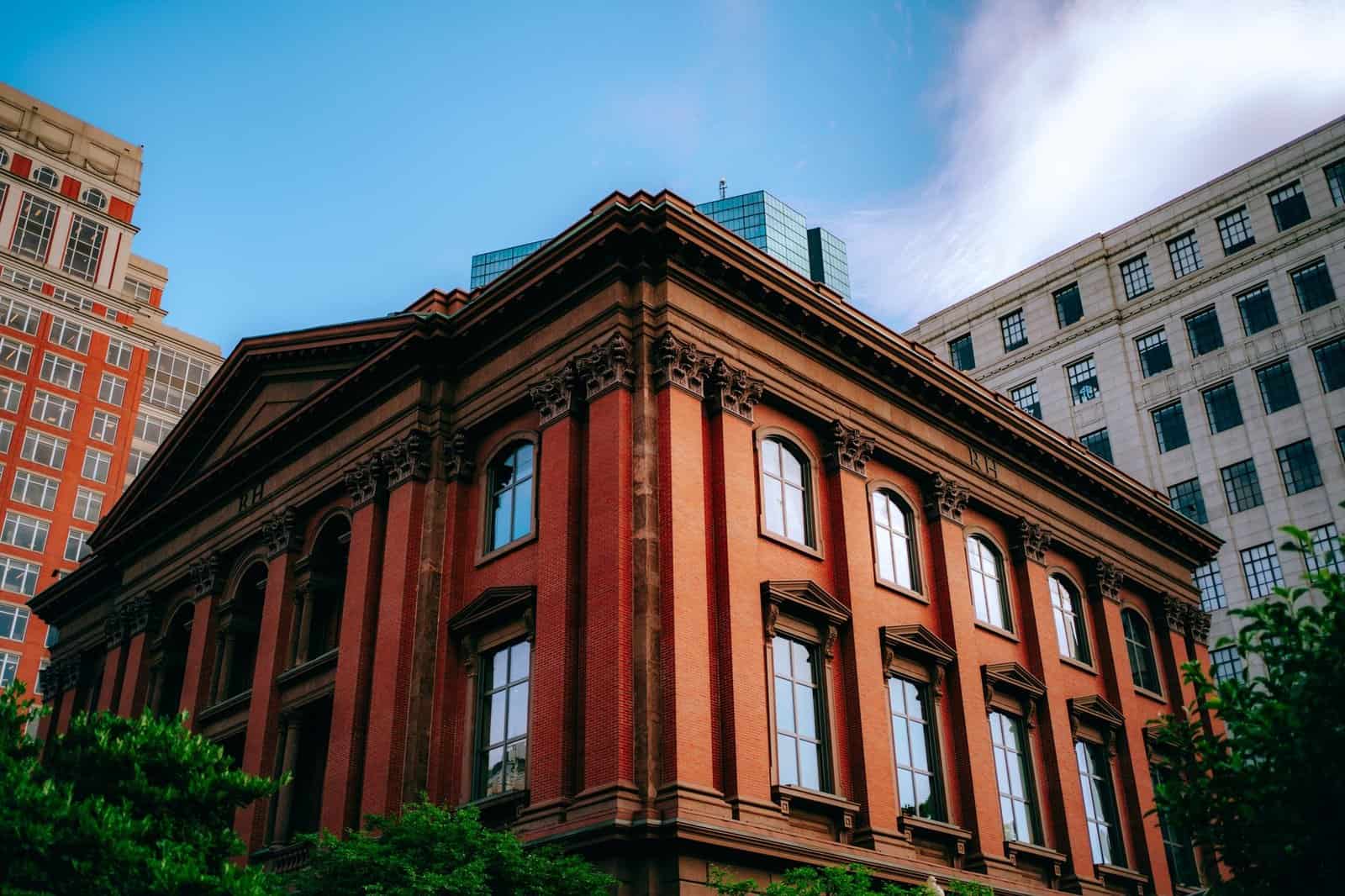
Downtown Guthrie centers on Oklahoma Avenue and Harrison Avenue, with side streets full of commercial buildings from the territorial and early statehood eras. Many were designed by Joseph Foucart, a Belgian-born architect who arrived after the land run and gave the town much of its distinctive look, including rounded corner turrets and decorative brickwork.
Walking the district today, you will see:
- Two- and three-story brick and stone commercial buildings, many with original details restored.
- Storefronts filled with antique shops, boutiques, bookstores, and galleries.
- Restaurants, cafes, and bars in historic spaces.
- Museums dedicated to territorial history and early Oklahoma.
- Brick-paved and historic-feeling streets, with period-style lamps.
- Residential neighborhoods with Victorian houses beyond the commercial core.
In the evenings, downtown is calm, with a handful of restaurants and bars open. On weekends, especially during events, it fills with visitors.
How a Land Run Built Guthrie in a Day
Guthrie’s story begins with the Land Run of April 22, 1889. At noon, cannons and guns signaled the opening of about 2 million acres of the Unassigned Lands in what had been Indian Territory. Tens of thousands of people raced to claim land.
By the end of the day, about 10,000 people had settled in Guthrie, which had been a railroad station. Tents gave way to wooden buildings, then to brick and stone. Within a few years, the town had banks, newspapers, hotels, and government offices. It became the capital of Oklahoma Territory in 1890 and the first state capital in 1907.
Why the Capital Left
Oklahoma City grew faster and pushed to become the capital. In a special election on June 11, 1910, voters chose Oklahoma City by a wide margin. Governor Charles Haskell had the state seal taken to Oklahoma City, despite legal challenges. Courts later upheld the move.
After the capital left, Guthrie’s economy slowed. Fewer new buildings went up, and many older ones survived because there was no pressure to replace them. Decades later, preservationists and residents worked to restore the downtown and protect it.
The Scottish Rite Temple
One building dominates the skyline: the Guthrie Scottish Rite Masonic Temple. It is often described as one of the largest Masonic centers in the world. The building incorporates an earlier structure that was intended to be the state capitol, which helps explain its size and grandeur.
The temple has ornate rooms in different architectural styles, a large auditorium, and detailed decorative work. Tours are offered on a schedule, so check before you go. It is a striking sight even from outside.
Museums Worth Your Time
- The Oklahoma Territorial Museum and Carnegie Library: The 1903 Carnegie Library was the site of the inauguration of Oklahoma’s first governor on statehood day in 1907. The museum covers territorial history.
- The State Capital Publishing Museum: housed in the historic State Capital Publishing Company building, it tells the story of early printing and newspapers in Oklahoma.
- Small house museums and historic sites, which may have limited hours.
Check hours, as some museums operate on reduced schedules.
The Pollard Theatre
The Pollard Theatre Company, the oldest year-round professional theater company in Oklahoma, performs in a historic building downtown. It stages six or more plays and musicals a year. Its annual holiday production, “A Territorial Christmas Carol,” is a local tradition in November and December and a good reason to visit during the season.
Holiday Season in Guthrie
Guthrie leans into its Victorian look around the holidays. Downtown is decorated with lights and garlands, shops host special events, and the town holds holiday celebrations that often include Victorian-themed activities, carriage or trolley rides, and visits from Santa. Event details change from year to year, so check local listings.
Pair a holiday show at the Pollard with a walk downtown under the lights, and you will see the district at its most atmospheric.
Events Through the Year
- The Oklahoma International Bluegrass Festival draws around 15,000 visitors annually.
- The National Finals Steer Roping Rodeo is held in Guthrie.
- Seasonal festivals and markets take place downtown throughout the year.
The People Who Were Here Before the Land Run
The 1889 land run is often told as a frontier adventure, but the Unassigned Lands had been taken from tribal nations through treaties signed after the Civil War, including lands once held by the Creek and Seminole nations. Indian Territory was home to many tribes forcibly relocated from the Southeast and elsewhere. The territorial history celebrated in Guthrie’s museums sits on top of that earlier story, and some exhibits in the region now address it more directly than older displays did.
Knowing that context makes a walk through the territorial capital richer. The brick storefronts went up quickly because the opening of the land drew enormous crowds, and the government buildings that followed helped turn a tent city into a capital.
Victorian Homes Beyond Downtown
The historic district is not just commercial. Residential streets east and west of downtown hold Victorian, Queen Anne, and early 20th-century homes built by bankers, merchants, and territorial officials. Many have wraparound porches, decorative trim, and turrets. Some are bed-and-breakfasts, while most are private homes, so admire them from the sidewalk.
A slow drive or walk through these neighborhoods shows the full scale of the district and explains why it covers about 400 blocks rather than a single main street.
Why Preservation Worked in Guthrie
Guthrie’s buildings survived first because of economic stagnation and later because of deliberate effort. The district was listed on the National Register of Historic Places in 1974, and residents, business owners, and preservation groups worked through the late 20th century to restore facades and reuse old buildings. The National Historic Landmark designation in 1999 recognized the district’s significance and helped draw visitors.
The result is a downtown where historic buildings are still in use, not museum pieces behind ropes. Shops and restaurants occupy the same spaces merchants used more than a century ago.
Where to Eat and Stay
Downtown Guthrie has restaurants serving everything from burgers and barbecue to Italian and fine dining. Some are housed in historic buildings with original tin ceilings and brick walls. Bed-and-breakfasts and historic inns give you the chance to stay in Victorian surroundings.
Guthrie is about 30 to 40 minutes north of Oklahoma City via Interstate 35, so it also works as a day trip.
Tips for Exploring the Guthrie Oklahoma Historic District
- Park once and walk. Downtown is compact and best seen on foot.
- Look up. Some of the best details are on upper floors and rooflines.
- Take a guided tour or trolley ride if available to hear the history.
- Visit during events for a livelier experience, or on weekdays for a quieter one.
- Wear comfortable shoes for brick sidewalks.
A Simple Walking Route
Start at the Oklahoma Territorial Museum and Carnegie Library, then walk toward Oklahoma Avenue and Harrison Avenue to see the densest blocks of commercial buildings. Detour to the State Capital Publishing Museum, then continue to the Scottish Rite Temple, which sits at the end of a long approach that shows off its scale. Loop back through residential streets to see Victorian homes, and end at a downtown restaurant or the Pollard for an evening show. The route takes two to three hours with stops, longer if you browse shops.
The Bottom Line
Guthrie lost the capital in 1910, but it kept something many Oklahoma towns lost: its Victorian downtown. Today, the brick storefronts, ornate details, and grand Scottish Rite Temple make it one of the best places in the region to see what a territorial boomtown looked like. Visit during the holidays for lights and a Christmas show, and walk the streets that have changed little in more than a century.