Fresno’s Farms Automated Faster Than Jobs Could Return—Stockton and Modesto Show What That Means for Central Valley Visitors
We may earn money or products from the companies mentioned in this post. This means if you click on the link and purchase the item, I will receive a small commission at no extra cost to you ... you're just helping re-supply our family's travel fund.
The Central Valley grows roughly a quarter of America’s food on less than one percent of the country’s farmland, and for generations that meant one thing above all else: labor. Fields of almonds, tomatoes, grapes, and dairy operations around Fresno, Modesto, and Stockton employed tens of thousands of seasonal and year-round workers, and the rhythm of the region’s economy followed the harvest calendar as closely as it followed anything else. That equation has been changing for two decades, and it changed faster than almost anyone in the region’s workforce development offices expected it to.
The shift did not happen because farmers stopped needing workers. It happened because labor got expensive and unreliable at the same time water got scarcer and profit margins got thinner, and mechanical harvesters, GPS-guided tractors, and robotic sorting lines offered a way to keep production up while employing fewer people per acre of farmland. An almond harvester that once needed a crew of dozens now needs an operator and a mechanic. A tomato sorting line that once employed sixty seasonal workers in a Stockton cannery now runs with optical sensors and a dozen technicians watching screens instead of picking fruit by hand off a moving belt.
What Automation Actually Replaced, Crop by Crop
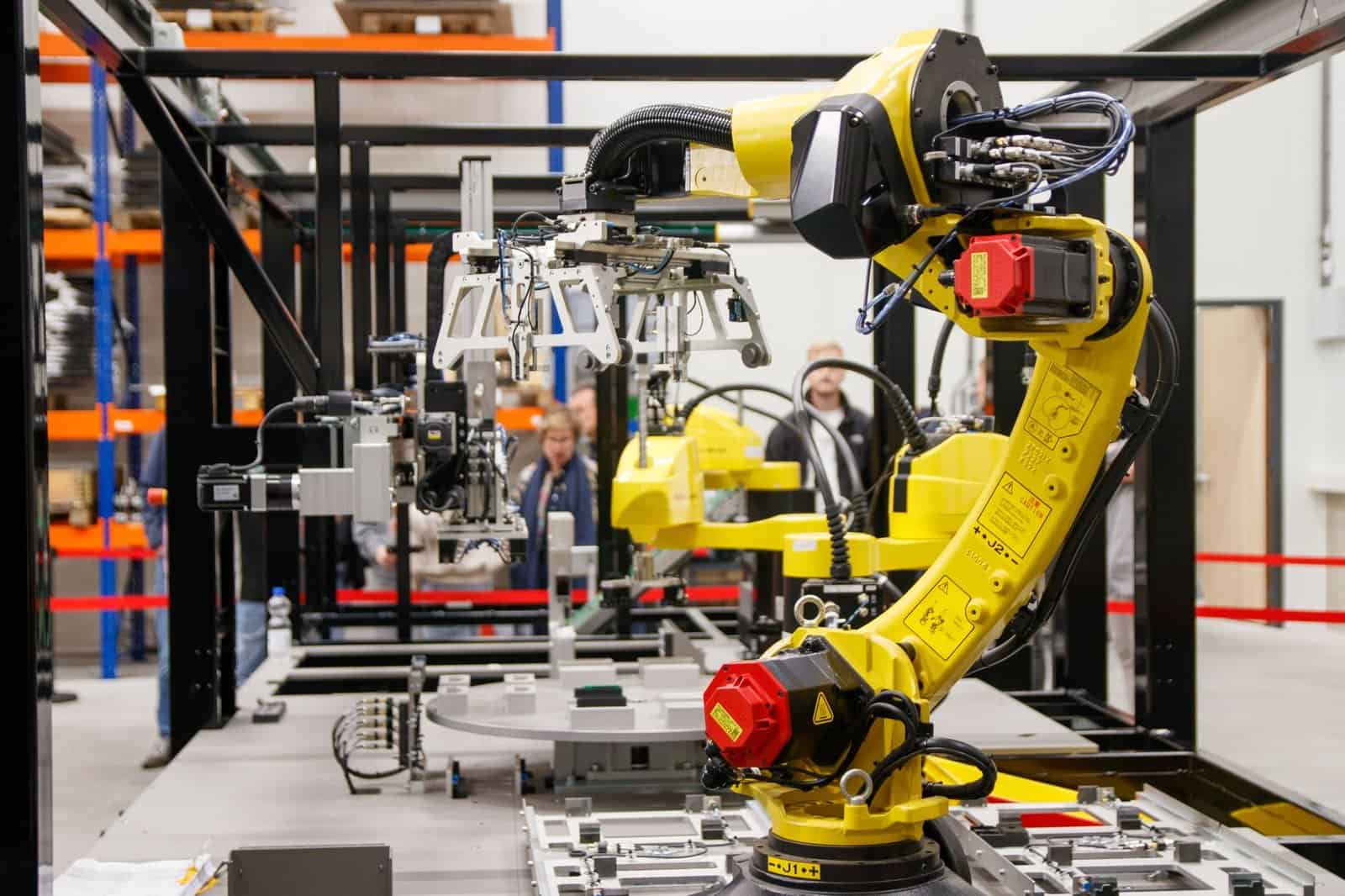
Almonds are the clearest example of how thoroughly mechanization reshaped Central Valley labor patterns. California produces the overwhelming majority of the world’s almond supply, concentrated heavily in Fresno, Kern, and Stanislaus counties, and almost the entire crop is now harvested mechanically. A shaker machine knocks the nuts to the ground, a sweeper gathers them into windrows, and a pickup machine collects them — a process that two generations ago required dozens of workers moving through orchards by hand with poles and tarps. Today a three-person team using specialized equipment can cover in a day what used to take a much larger crew the better part of a week to finish.
Tomatoes tell a related but distinct story around Stockton and Modesto, where canneries process a large share of the nation’s processing tomatoes used for sauce, paste, and canned products sold across the country. Mechanical harvesters have handled the bulk of the tomato crop since the 1960s, one of the earliest and most consequential agricultural automations in American history, one that displaced an enormous share of the state’s farm labor force within a single decade of its introduction. What automated more recently is the sorting and packing side, where laser and camera-based optical sorters replaced long lines of people who used to pick out unripe or damaged fruit by hand as it moved down a conveyor belt toward the canning line.
Dairy operations near Modesto and Turlock have adopted robotic milking systems at a growing rate over the last fifteen years, letting a single farm employee manage machinery that milks, monitors, and tracks the health of herds that once required several hands working rotating shifts around the clock. Grape harvesting for wine and raisins remains only partially mechanized, which is part of why table grape and wine regions around the Valley still support more seasonal hand labor than almond or tomato operations typically do.
- Almond harvesting: shaker-and-sweeper machines replaced hand crews almost entirely
- Tomato sorting: optical sensors now do work that took dozens of line workers in a cannery
- Dairy operations around Modesto increasingly use robotic milking systems
- Grape harvesting for wine and raisins is only partially mechanized, keeping some seasonal work intact
The Jobs That Didn’t Come Back
Fresno County’s unemployment rate has historically run higher than the statewide average, often by several percentage points even in strong economic years, and agricultural mechanization is one of the structural reasons economists and regional workforce boards consistently point to when explaining the gap. The jobs that disappeared were disproportionately entry-level, seasonal, and filled by workers with limited English proficiency or limited formal education — exactly the population with the fewest alternative options nearby and the least leverage to retrain quickly for other kinds of work.
What replaced some of that lost agricultural work were logistics and warehouse jobs, which grew rapidly around Stockton in particular over the same period. Stockton sits at the junction of Interstate 5 and Highway 99, with a deep-water port on the San Joaquin River that connects to the Sacramento River Delta and San Francisco Bay, making it a natural distribution hub for companies serving the Bay Area and the broader West Coast market. Amazon, Restoration Hardware, and a wave of other companies built massive fulfillment centers in and around Stockton through the 2010s, absorbing a meaningful share of displaced agricultural labor even as warehouse work automated many of its own tasks with conveyor systems and, increasingly, robotics of its own design.
The generational effect has been significant across the Valley. Families who spent decades working the same fields now have children working in warehouses, trucking, or having left the Valley entirely for coastal cities in search of better wages, and the agricultural workforce that remains is older, smaller, and more specialized than it was a generation ago, focused on the tasks — pruning, grafting, quality control on crops that resist full automation — that machines still cannot reliably perform without human oversight.
What a Visitor Actually Sees Driving Through
None of this economic transition is visible from Highway 99 at highway speed. What you see are almond orchards stretching to the horizon in blocks of identical trees, dairy operations with long metal barns, and increasingly, massive solar arrays occupying land that stopped being economical to farm as groundwater levels dropped and pumping costs rose sharply. Fresno’s downtown has pockets of real revival — the Tower District has restaurants, bars, and a restored historic movie palace that wouldn’t be out of place in a much larger city — surrounded by a metro area still working out what comes after agriculture stops needing as many hands as it once did to stay productive.
Modesto’s downtown, centered on its well-known arch reading ‘Water Wealth Contentment Health,’ feels like a small city trying to hold onto an identity built when farming was a labor-intensive, community-anchoring enterprise employing much of the town directly or indirectly through related businesses. That identity is increasingly detached from the economic reality of the surrounding fields, where fewer people are needed to produce more food than the region has ever grown before.
For travelers, the Central Valley rarely gets treated as a destination rather than a pass-through on the way to Yosemite, Sequoia National Park, or the coast. But the region’s food scene — particularly its Mexican, Hmong, and broader Southeast Asian communities, built by generations of agricultural labor migration into the Valley — produces some of the most underrated regional cooking in California, concentrated in Fresno’s Tower District, its historic Chinatown neighborhood, and the strip malls of southeast Stockton, where family-run restaurants serve dishes rarely found anywhere outside these tight-knit communities.