Death Valley Is the Hottest Place on Earth. Here’s When It Becomes One of the Best National Park Trips
We may earn money or products from the companies mentioned in this post. This means if you click on the link and purchase the item, I will receive a small commission at no extra cost to you ... you're just helping re-supply our family's travel fund.
Death Valley National Park holds the world record for highest reliably recorded air temperature — 134°F in 1913 at Furnace Creek. Summer Death Valley is genuinely dangerous and should be approached with extreme caution or avoided entirely for casual visitors. November through March Death Valley is something different: comfortable temperatures, dramatic light, wildflower possibilities, and some of the most surreal landscape accessible by road in North America, with almost none of the Yellowstone-scale crowds.
What Death Valley Has Beyond the Temperature Record
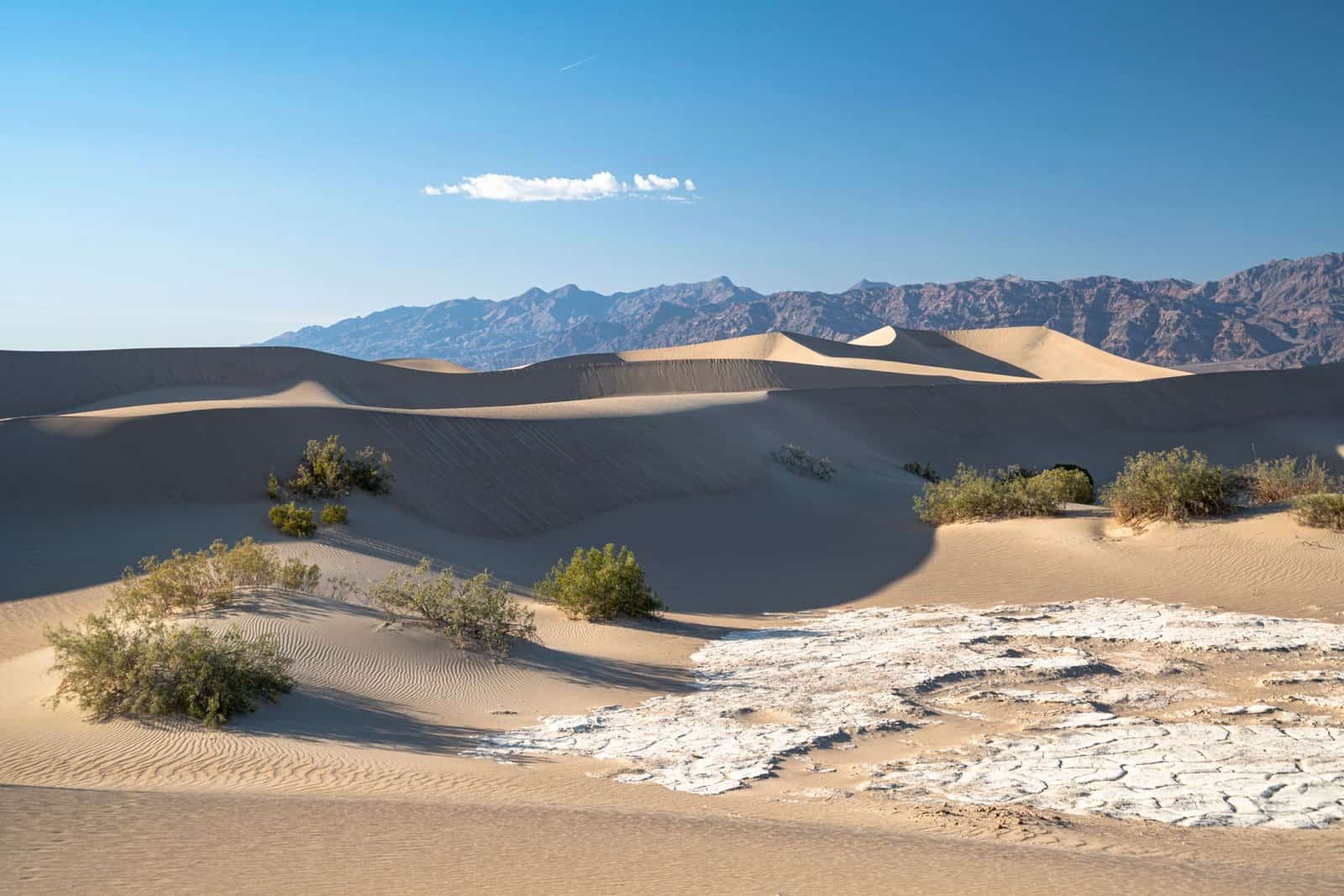
Badwater Basin, at 282 feet below sea level, is the lowest point in North America. The salt flats extending several miles in every direction produce a white crystalline landscape that photographs blue in the dawn light and amber at sunset. Mesquite Flat Sand Dunes, 14 miles north of Furnace Creek, rise 100 feet and are most dramatic in the raking light of early morning when footprints from the previous day have been wind-erased. Artist’s Palette Drive, a 9-mile one-way loop, passes hillsides of green, yellow, orange, and purple volcanic mineral deposits that look digitally saturated in person.
Zabriskie Point at sunrise — a 5-minute walk from the parking area — provides a view of eroded badlands that inspired Antonioni’s 1970 film and looks, in predawn light with no other visitors present, like nothing else in the United States. Getting there before sunrise means driving in the dark at 15 mph on a road you drove the day before, which is entirely manageable.
What a Death Valley Trip Costs
- Park entrance fee: $35/vehicle, 7-day pass
- Furnace Creek Ranch lodging: $180–$280/night in winter season
- The Inn at Death Valley (upscale): $350–$550/night in winter
- Camping at Furnace Creek Campground: $22/night, reservation required
- Nearest significant city: Las Vegas (135 miles east, 2.5 hours)
Death Valley in November through February is one of the most accessible extraordinary landscapes in the United States — within a 2.5-hour drive of Las Vegas, requiring no special equipment or fitness for the main viewpoints, and offering a geological diversity that Zion or Arches, for all their beauty, don’t match. The stigma of the summer temperature record keeps most casual visitors away in a season when the park is genuinely welcoming. The winter visitors who understand this see Death Valley at the only time it should be seen.
The Wildflower Super Bloom — When It Happens
Death Valley super blooms — when adequate winter rain triggers mass germination of wildflower seeds that can lie dormant for decades — happen unpredictably, roughly every 10–15 years for full super bloom conditions and more frequently for partial blooms. When they occur, the valley floor and the alluvial fans below the mountain ranges fill with yellow desert gold, purple phacelia, and white poppies in a display that draws visitors from across the country. Death Valley’s social media traffic during a super bloom year (the most recent significant event was 2024) is a better real-time indicator of bloom status than official forecasts, which can’t predict exact timing. February and March are the peak bloom months when conditions align.
The Racetrack Playa — a dry lake bed 27 miles from the nearest paved road in the northern part of the park — has “sailing stones” that move across the flat surface, leaving tracks in the dried mud. The mechanism was documented in 2014 (thin ice sheets forming on rare winter flooding events allow wind to push the rocks). Getting to the Racetrack requires a high-clearance vehicle, a full tank of gas, and 2 hours of washboard dirt road. The stones and their tracks are exactly as strange in person as they appear in photographs. It’s one of the few places in the United States where a significant natural mystery was solved within recent memory and the evidence is visible on the ground.
Death Valley National Park’s 3.4 million acres make it the largest national park in the contiguous United States — larger than Connecticut. Most visitors see the Furnace Creek corridor, the Mesquite Dunes, and Zabriskie Point, which collectively represent perhaps 2% of the park’s land area. The Panamint Valley on the western side, the Saline Valley with its hot springs in the north, and the Eureka Dunes (the tallest sand dunes in California) all require 4WD access or significant driving on unpaved roads. The accessible version of Death Valley — the winter weekend from Las Vegas, the main sights, the salt flats at sunset — is extraordinary enough. The deeper version rewards the visitor who comes back knowing more about what else is there.