Crater Lake Gets About 42 Feet of Snow a Year. Here’s What a Winter Visit Actually Looks Like
We may earn money or products from the companies mentioned in this post. This means if you click on the link and purchase the item, I will receive a small commission at no extra cost to you ... you're just helping re-supply our family's travel fund.
Crater Lake National Park gets about 42 feet of snow a year on average at park headquarters, making it one of the snowiest inhabited places in the United States. Visiting Crater Lake in winter is a completely different experience from summer, with deep snowbanks, closed roads, and a silence you rarely find in national parks.
Here is what a winter visit actually looks like. You drive in from the south, on a road the park plows daily, up to Rim Village. If the weather cooperates, you walk to the edge of the rim and look down at the deep blue lake, framed by snow-covered cliffs. If clouds roll in, you may see nothing but white. You can visit the café and gift shop, join a ranger-led snowshoe walk, or head out on skis or snowshoes along the unplowed Rim Drive. The lodge is closed, and the north entrance is shut until spring.
Snow typically covers the ground from October through June or July. At Rim Village, totals can exceed 50 feet in some years. Here is how to plan.
Here’s What a Winter Visit Actually Looks Like
In winter, the park is open year-round, but access is limited. The main route in is from the south, via Highway 62 to the park’s southern entrance, then up the plowed road to park headquarters and Rim Village. The north entrance and most of Rim Drive close for the season.
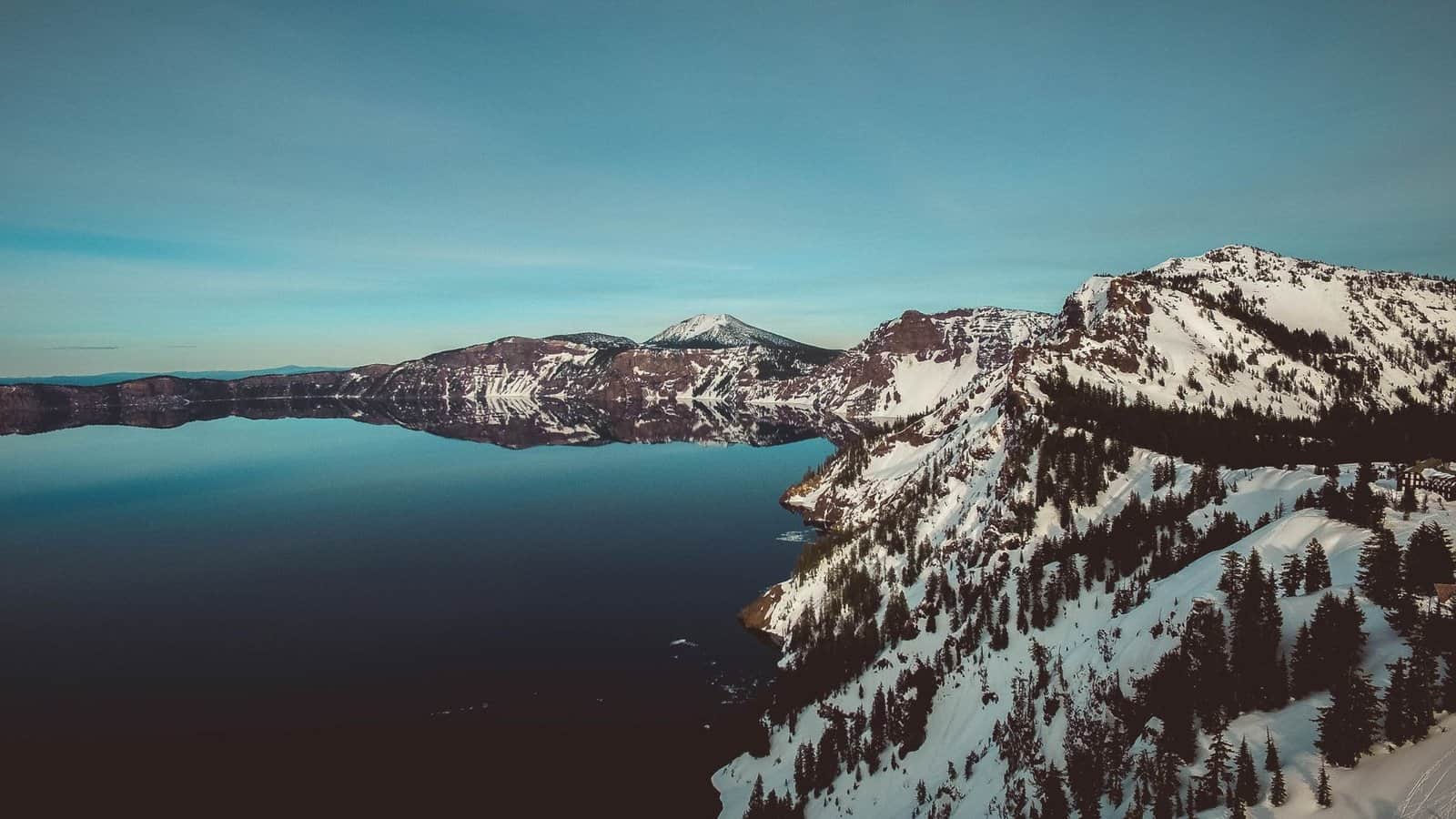
At Rim Village, the snow can be piled high, sometimes taller than visitors. Walking to the rim viewpoints may require following packed paths. When the sky is clear, the view of the lake, more than 1,900 feet deep and an intense blue, is striking against white cliffs. When clouds cover the caldera, the lake can disappear entirely.
Here is what you can do:
- Look out over the lake from Rim Village viewpoints.
- Visit the Rim Village Café and gift shop, which are often open in winter.
- Stop at the Steel Visitor Center at park headquarters for exhibits and information.
- Join ranger-led snowshoe walks, typically offered on weekends and holidays from late fall to spring.
- Cross-country ski or snowshoe on unplowed roads and trails.
- Snow camp with a permit in designated areas.
Getting There and Road Conditions
Highway 62 provides year-round access to the park’s southern entrance. From there, the road to Rim Village is plowed but can close temporarily during storms or for snow removal. Chains or traction tires may be required. Check the park’s road conditions and weather before you go.
Winter storms can drop several feet of snow in a short time. Plan for delays, and carry emergency supplies in your car.
Ranger-Led Snowshoe Walks
Ranger-led snowshoe walks are one of the best ways to experience the park in winter. They usually last about two hours and cover a mile or so, with rangers explaining winter ecology, geology, and the history of the lake. Snowshoes are often provided free of charge.
Reservations may be required, and walks depend on weather. Check the park website or call ahead.
Skiing and Snowshoeing on Your Own
Rim Drive becomes a route for skiers and snowshoers in winter. Some visitors attempt to circle the lake, a journey of about 33 miles that requires winter camping skills and avalanche awareness. Shorter trips along the rim offer great views.
Trails near Rim Village and park headquarters offer options for different skill levels. Be prepared for changing weather and avalanche risk in some areas.
Weather and Visibility at Crater Lake in Winter
Crater Lake’s weather in winter is unpredictable. Storms can bring heavy snow, strong winds, and low visibility. Clear days can be cold and bright. The lake is often hidden by clouds, so flexibility is key.
Check webcams before heading up to see if the lake is visible. If clouds are thick, consider waiting or adjusting your plans.
Facilities in Winter
- Crater Lake Lodge is closed in winter.
- The Rim Village Café and gift shop are often open with limited hours.
- The Steel Visitor Center at park headquarters is open with reduced hours.
- Restrooms are available at limited locations.
- There is no gas in the park.
How Deep and How Old Crater Lake Is
Crater Lake formed about 7,700 years ago when Mount Mazama, a volcano, erupted and collapsed, forming a caldera. Rain and snow filled it over centuries. At 1,943 feet deep, it is the deepest lake in the United States.
The lake’s water is fed almost entirely by precipitation, which helps explain its clarity and color.
Safety Tips
- Stay back from the rim edge, where snow can form unstable cornices.
- Dress in layers, including waterproof outerwear.
- Carry water, snacks, and a map.
- Tell someone your plans if you go into the backcountry.
- Watch for signs of hypothermia and frostbite.
Why Crater Lake Gets So Much Snow
Crater Lake sits high on the crest of the Cascade Range, with park headquarters at roughly 6,500 feet and Rim Village above 7,000 feet. Storms from the Pacific carry moisture inland, and as air rises over the Cascades, it cools and drops that moisture as snow. The result is one of the deepest snowpacks in the country.
The National Park Service notes that the average annual snowfall at park headquarters is about 42 feet, with more at higher elevations. Snow on the ground can reach 10 feet or more by late winter, and banks along roads get even taller after plowing.
Wildlife in the Snow
Winter is quiet, but not empty. Look for:
- Clark’s nutcrackers and Canada jays, which often visit Rim Village.
- Ravens soaring over the caldera.
- Tracks of snowshoe hares, pine martens, and foxes in fresh snow.
- Douglas squirrels in the forest.
Do not feed wildlife, even the bold jays that approach visitors.
Photography Tips
Clear winter days produce some of the most dramatic photos of Crater Lake, with white cliffs and deep blue water. Bring extra batteries, as cold drains them quickly. Use a polarizing filter to cut glare off snow and deepen the blue of the lake. Overcast days can produce moody images when clouds part briefly. Be patient and keep watching.
A Sample Winter Day Trip
- Morning: drive from Medford, about 80 miles away, or from Klamath Falls, roughly 60 miles away. Check road conditions first.
- Late morning: stop at the Steel Visitor Center for information and exhibits.
- Midday: drive to Rim Village and take in the lake if visible.
- Afternoon: join a ranger-led snowshoe walk or ski along the rim.
- Late afternoon: warm up at the café before heading down before dark.
Where to Stay
There is no lodging in the park in winter. Nearby options include towns like Prospect, Fort Klamath, Chiloquin, and Klamath Falls. Some lodges and cabins near the park stay open in winter.
Planning Tips
- Visit midweek for fewer crowds.
- Check road and weather conditions.
- Bring sunglasses and sunscreen for snow glare.
- Carry chains and know how to use them.
- Plan for short days and early darkness.
Fees and Passes
Crater Lake charges an entrance fee per vehicle, and the winter rate has typically been lower than the summer rate. The America the Beautiful annual pass covers entry. Fees change, so check the park website for current prices. Snowshoe walks led by rangers are usually free, though space is limited.
What Winter Visitors Miss, and What They Gain
In winter you will not drive the full 33-mile Rim Drive, take the boat tour to Wizard Island, hike down the Cleetwood Cove Trail to the water, or stay at Crater Lake Lodge. Those are summer experiences, typically available from July through September or October, depending on snowmelt.
What you gain is solitude and a landscape transformed. Summer visitors see a blue lake ringed by gray cliffs and green forest. Winter visitors see the same lake ringed by white, with snow-draped hemlocks and firs and almost no crowds. On a clear, still morning, the reflection of the snowy rim on the water is something summer visitors never get.
Mistakes to Avoid
- Driving up without checking whether the road to Rim Village is open that day.
- Assuming the lake will be visible. Check the webcam first.
- Showing up in sneakers and a light jacket. Snow at the rim can be deep and wind can be fierce.
- Walking past barriers toward the rim edge for a better photo.
- Planning to stay overnight in the park without a snow camping permit and gear.
The Bottom Line
A winter visit to Crater Lake is quieter, snowier, and more unpredictable than summer. Expect closed roads, deep snow, and changing weather. But if you get a clear day, the view from the rim is unforgettable. Go prepared, stay flexible, and enjoy one of the most dramatic national park winters in the country.