Chena Hot Springs Sits 60 Miles From Fairbanks Under the Aurora. Here’s What a Winter Night There Is Like
We may earn money or products from the companies mentioned in this post. This means if you click on the link and purchase the item, I will receive a small commission at no extra cost to you ... you're just helping re-supply our family's travel fund.
Chena Hot Springs Resort sits about 60 miles northeast of Fairbanks, at the end of Chena Hot Springs Road, in a valley surrounded by spruce forest and rolling hills. Interior Alaska sits under the auroral oval, the ring around the North Pole where the northern lights appear most often, and the resort is far enough from city lights that the sky goes fully dark. Chena Hot Springs aurora nights are among the most famous winter experiences in Alaska.
Here is what a winter night there is like. You arrive in darkness, often by late afternoon, after a drive down a snowy road through the forest. You soak in an outdoor rock lake fed by natural hot springs while the air temperature may be well below zero, and steam rises around you as frost forms in your hair and eyelashes. You tour an ice museum where everything, from the bar to the chandeliers, is carved from ice. Then you wait for the aurora, either from the resort grounds, from a heated yurt, or on a tour up a nearby ridge. Many guests stay up past midnight.
The hot springs were discovered by gold miners in 1905, and the resort has grown into a year-round destination. In winter, it is one of the best places near Fairbanks to combine hot springs, aurora viewing, and Alaska’s deep cold.
Here’s What a Winter Night There Is Like
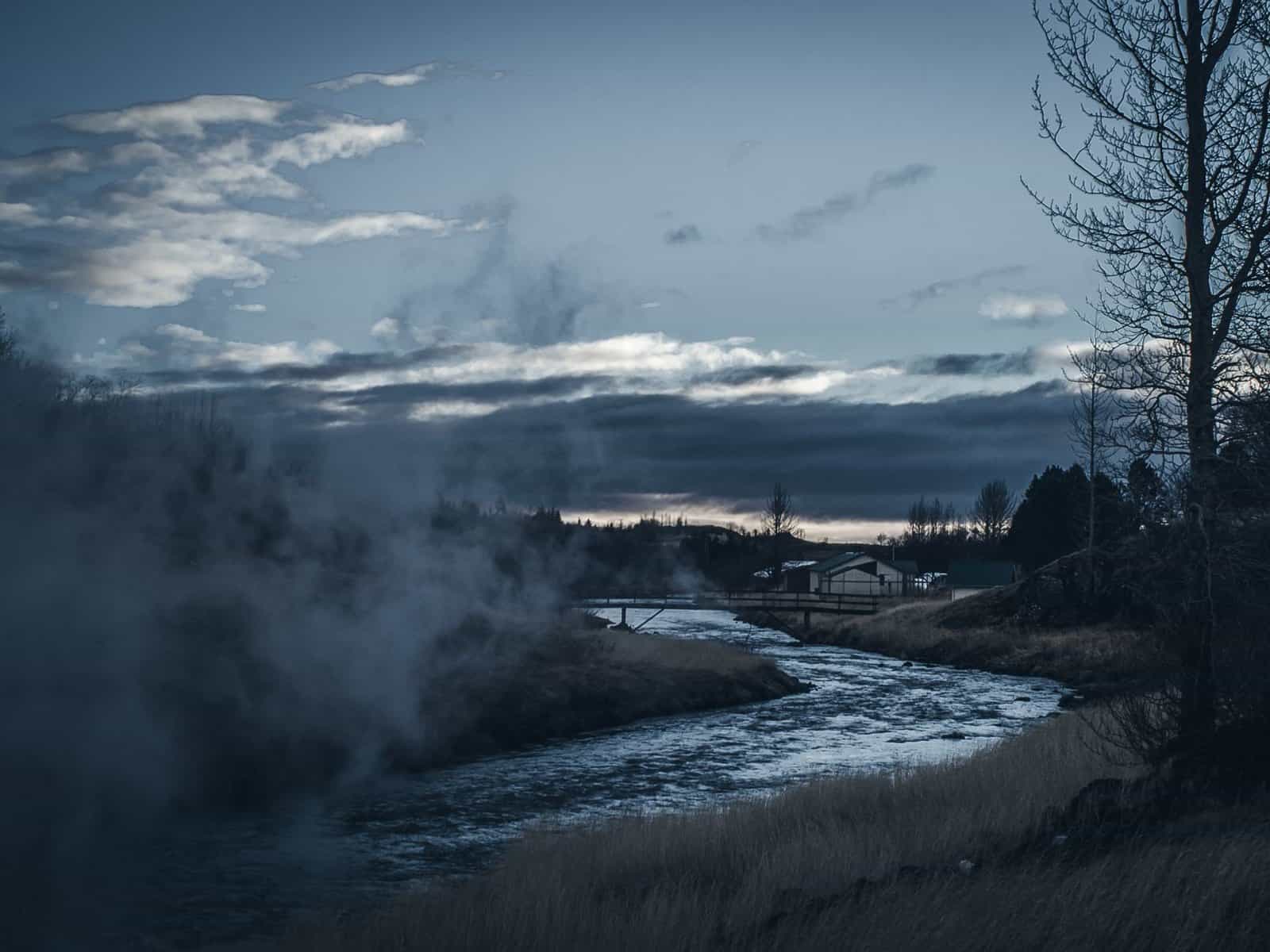
A typical winter night at Chena Hot Springs follows a rhythm.
- Late afternoon: arrive from Fairbanks, check into your room, and have dinner at the resort’s restaurant.
- Early evening: soak in the outdoor rock lake or the indoor pools.
- Mid-evening: take a tour of the Aurora Ice Museum.
- Late evening: check aurora forecasts and head outside or join a tour.
- After midnight: catch the peak aurora hours, which often run from about 10 p.m. to 2 a.m.
The sky is the main event, but the hot springs and the cold make the experience memorable even on nights without lights.
Soaking in the Rock Lake
The outdoor rock lake, a natural-looking pool lined with boulders, is fed by hot springs water. The water is typically hot enough to keep you warm even as the air falls to minus 20 or colder. The rock lake is adults only.
In extreme cold, a few things happen. Steam rises off the water in thick clouds. Wet hair freezes into stiff spikes, and some guests make “frozen hair” photos. Walking from the locker room to the water is the coldest part, so move quickly and wear sandals or water shoes on icy paths.
Indoor pools and hot tubs are available for families and those who prefer a warmer experience.
The Aurora Ice Museum
The Aurora Ice Museum, built in 2005, is made from more than 1,000 tons of ice and snow. It is kept at a constant cold temperature year-round. Inside, ice sculptures, carved chandeliers, an ice bar, and ice furniture create a glowing, colorful space. Tours include a drink served in a glass carved from ice.
The museum is open year-round, and tours run several times a day. Expect it to be cold inside, around 25 degrees Fahrenheit. Parkas are available for visitors.
Seeing the Chena Hot Springs Aurora
The northern lights season at Chena runs from late August to mid-April, when skies are dark enough. Winter months bring long nights, which increase your chances. The aurora depends on solar activity and clear skies, so it is never guaranteed.
The resort offers aurora tours, including trips by snowcat to Charlie Dome, a ridge above the resort with wide views of the sky. A heated yurt at the top gives guests a place to warm up between sightings.
You can also watch from the resort grounds, where the sky is dark. Many guests set alarms or ask the front desk about aurora wake-up calls.
How Cold It Gets
Interior Alaska is one of the coldest places in the United States in winter. Temperatures at Chena Hot Springs regularly drop to minus 20 degrees Fahrenheit or lower, and extreme cold snaps can reach minus 40.
Dress in layers, including thermal underwear, insulated pants, a heavy parka, insulated boots, mittens, and a face covering. Protect cameras and phones from the cold, as batteries drain quickly.
The Hot Springs Story
Brothers Robert and Thomas Swan, gold miners, are credited with finding the hot springs in 1905 while searching for a place to ease the aches of mining life. Word spread, and the springs soon became a destination for miners from the Fairbanks gold fields, who would travel for days by trail to soak in the water. A simple resort grew around the springs over the following decades.
Today the resort runs on its own geothermal power plant, which uses the relatively low-temperature hot water from the springs to generate electricity. That same water heats buildings and greenhouses where the resort grows vegetables year-round, even in the dark of winter. Tours explain how the system works, and the produce often turns up in the restaurant.
Daylight and Darkness
Fairbanks gets less than four hours of direct sun around the winter solstice, so most of a December visit happens in twilight or darkness. The sun rises late in the morning and sets in early afternoon, and the low sun casts long pink and orange light across the snow. For aurora hunters, the long nights are the point: the more hours of darkness, the more chances to catch the lights. By February and March, days lengthen quickly, temperatures often ease, and the nights are still dark enough for strong aurora viewing.
Checking the Aurora Forecast
The northern lights are driven by solar activity, so the forecast changes daily. The University of Alaska Fairbanks Geophysical Institute and NOAA’s Space Weather Prediction Center publish aurora forecasts that show expected activity. A higher forecast level improves your odds, but even a modest level can produce a good display in Interior Alaska, which sits close to the auroral oval.
Clouds matter as much as solar activity. A clear night with modest activity often beats a cloudy night with a strong forecast. Check the local weather as well as the aurora outlook, and plan to stay at least three nights to give yourself several chances.
Photographing the Northern Lights
- Use a tripod. Long exposures are essential.
- Set your camera to manual focus at infinity, with a wide aperture and an exposure of several seconds.
- On phones, use night mode and brace the phone on something steady.
- Keep spare batteries in an inside pocket; cold drains them fast.
- Avoid breathing on the lens or bringing a cold camera straight into a warm room, which causes condensation. Seal it in a bag before going inside.
- Turn off your flash and use a red light to preserve your night vision.
What It Costs
Overnight rates at the resort vary by room type and season, with winter rooms often running roughly $250 to $450 a night. Day passes for the pools are available to non-guests, and the ice museum tour and aurora snowcat tours are priced separately. Winter packages from Fairbanks, which may bundle transportation, lodging, and activities, can be simpler for first-time visitors. Check the resort’s website for current rates.
Other Activities
- Dog sled rides through the forest.
- Snowmachine tours.
- Geothermal tours of the resort’s renewable energy plant and greenhouses.
- Cross-country skiing and snowshoeing.
Common Mistakes Winter Visitors Make
- Booking only one night. A single cloudy night can wipe out your only aurora chance.
- Underpacking. Fashion boots and a light ski jacket are not enough at minus 30.
- Leaving phones and cameras in a cold car, where batteries die.
- Driving Chena Hot Springs Road at night without winter tires or emergency gear. Cell coverage is limited.
- Expecting the aurora on a schedule. It can appear for minutes or hours, and sometimes not at all.
- Staying in the rock lake too long. The hot water and cold air can leave you lightheaded; get out, drink water, and rest.
What to Pack
- Insulated boots rated well below zero, plus thick wool socks.
- A long down parka, insulated pants, and thermal base layers.
- Mittens, which keep hands warmer than gloves, plus thin liner gloves for camera work.
- A warm hat, a neck gaiter or balaclava, and goggles for wind.
- A swimsuit, sandals, and a quick-dry towel for the rock lake.
- Hand and foot warmers, a headlamp with a red-light setting, and a tripod.
Some tour companies in Fairbanks rent cold-weather gear, which can save money if you do not own extreme-cold clothing.
Getting There
Chena Hot Springs Resort is about 60 miles from Fairbanks via Chena Hot Springs Road, a drive of about an hour and a half. The road is paved but can be icy and snowy in winter. Watch for moose.
The resort offers shuttle service from Fairbanks, and some tour operators include it in winter packages.
The Bottom Line
A winter night at Chena Hot Springs is a mix of hot water, deep cold, and, if you are lucky, green skies. Soak in the rock lake, tour the ice museum, and stay up late for the aurora.