I Talked to 12 Americans Who Traveled to Europe This Summer — Here’s What Nobody Is Saying Publicly
We may earn money or products from the companies mentioned in this post. This means if you click on the link and purchase the item, I will receive a small commission at no extra cost to you ... you're just helping re-supply our family's travel fund.
The Numbers Are Real — Here’s What the Data Actually Shows
Let us start with the polling because it is genuinely striking. YouGov’s European favorability tracker showed that favorable attitudes toward the United States dropped between 6 and 28 percentage points across seven major European countries following Donald Trump’s return to office, according to data published in early 2025 and updated through early 2026. By January 2026, net favorability of the USA in Denmark was -73. In Germany it was -51. In Spain -37. Britain -34. France -34. These are not marginal shifts — they represent some of the most negative European views of the United States since YouGov began tracking in 2016, according to their February 2026 analysis.
Denmark is the most extreme case because of the Greenland situation. Fully 84% of Danes had an unfavorable view of the United States in January 2026, up from 70% just two months earlier. That is not a polling artifact. That is a country that feels directly threatened by American foreign policy. The Carnegie Endowment for International Peace described the broader phenomenon in May 2026 as Europeans quietly quitting the United States — distancing from American institutions, military reliance, and consumer goods not out of hostility but out of a strategic reassessment of American reliability. European tourism to the United States has also dropped significantly, with the Carnegie report noting that a fear of arbitrary searches and detention by immigration officials is driving Europeans away from American travel as well.
France: The Political Chill Is Noticeable — But Not Directed at You

France has always had its own complicated relationship with the United States — simultaneously admiring American culture and deeply skeptical of American foreign policy. In 2026, that ambivalence has sharpened. The Los Angeles Times ran a piece in April 2026 by a journalist who returned from Paris describing a noticeable political coldness — a street performer giving a double thumbs-down when the subject of America came up, visible political sentiment in cafes and newsstand headlines.
But here is what the same travelers universally report: the political sentiment does not translate into hostile treatment of American individuals. Travel writer Rick Steves, who logged approximately 100 days of international travel across Europe in 2025, wrote on his blog that he never once felt treated differently because of American politics. Two things can be true at the same time, he wrote: even if the American president is deeply unpopular in Europe, individual Europeans still respect and accept individual American visitors as just that — individuals.
The practical advice for France: political conversations with strangers are more charged than they used to be. If a French person brings up American politics, listen more than you speak. Acknowledge the tension rather than defending or explaining it — you are not the administration’s spokesperson. Learn five sentences of French before you arrive; Parisians genuinely respond better to attempted French than to assumed English. Eat at neighborhood bistros in the 11th and 20th arrondissements rather than tourist-trap brasseries near the Louvre. The France that welcomes you warmly is everywhere — it just requires a slight willingness to meet it halfway.
Spain: Anti-Tourist Protests Are About Airbnb and Cruise Ships, Not You

The images from Barcelona and Mallorca — protesters with water guns, banners reading tourists go home — have made global news. But the people I spoke to who were on the ground in Barcelona in summer 2026 all said the same thing: the protests are emphatically about mass tourism infrastructure, not about individual travelers, and certainly not specifically about Americans.
The targets of the protests are Airbnb-ization — Barcelona has announced it will revoke 10,000 short-term rental licenses by 2028 per BBC reporting — cruise ship volume, and the pricing-out of local residents from neighborhoods that used to be theirs. Individual tourists at a restaurant table are not the enemy. The enemy is the system that made everything about those neighborhoods cater exclusively to visitors.
Barcelona doubled its overnight tourist tax as of April 2026, making it one of the highest visitor levies in Europe. Budget for it — it appears on your hotel bill at checkout. If you want to sidestep the tension, stay in hotels that employ local workers rather than vacation rentals, eat at least half your meals outside the Barri Gotic and El Born tourist corridors, take the metro like a resident, and consider making Girona or the Costa Brava your base with day trips to Barcelona rather than the reverse. You get a better experience and spend money where it matters more.
Germany: Political Distance, Personal Warmth
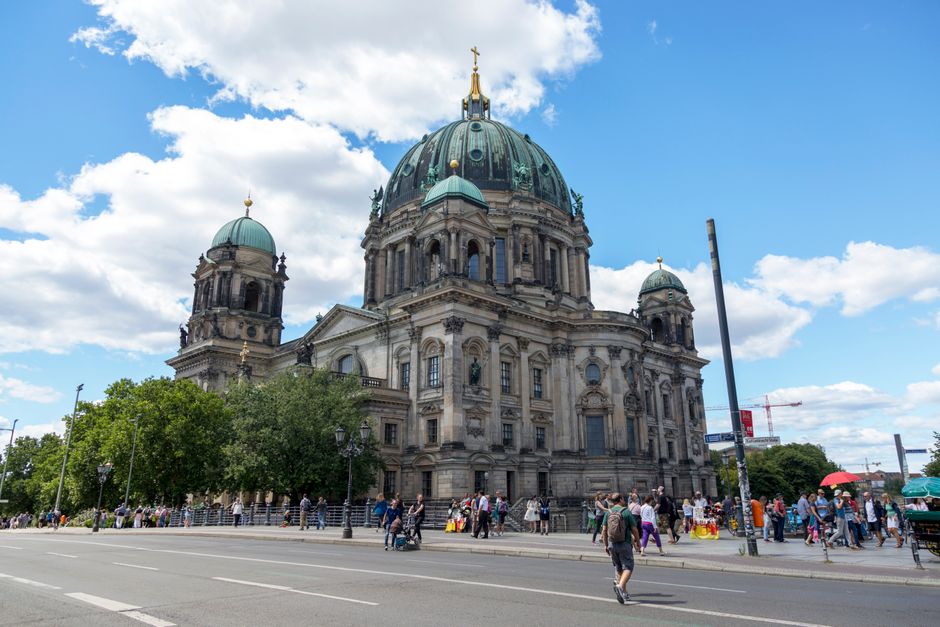
Germany’s favorability toward the United States dropped 23 points in YouGov’s early 2026 tracking, bringing net favorability to -51. The German defense minister publicly said that the US-Iran situation was not Germany’s war and that Germany had not started it. Political distance from American foreign policy has become open, official German government communication.
And yet, travelers to Germany in summer 2026 consistently report warm personal treatment. A family of four from Ohio who spent three weeks in Bavaria and Berlin told me they never experienced a single hostile interaction. Germans do not project politics onto individuals the way we might expect, the father told me. They were curious about us, friendly, helpful. The man at the beer garden in Munich asked what we thought of the current situation in Washington. We said we had concerns. He laughed and said that made him feel better.
The tone of engagement has shifted: more Europeans are openly asking American travelers about U.S. politics in a way they might not have five years ago. They are not trying to shame you. They are genuinely curious and, in many cases, relieved to find that the American in front of them is not a reflection of every policy they find alarming. The traveler who engages thoughtfully — acknowledging complexity, expressing care for the relationship — tends to have a better experience than the one who gets defensive or dismissive.
UK: New ETA Required, New Friction — But Still One of the Friendliest Stops

The United Kingdom is not part of the Schengen Area and is not subject to EES, but it has its own new requirement for American travelers. As of February 25, 2026, Americans and citizens of 85 other non-visa nations must obtain a UK Electronic Travel Authorisation before boarding any carrier to the United Kingdom, according to the UK Home Office. The ETA is a simple online application that costs 10 pounds, takes a few minutes to complete, and is valid for multiple trips over two years. But carriers will deny boarding to passengers who do not have one — strictly enforced with no exceptions.
The application is available at the UK government’s official site at gov.uk/eta. Apply at least 72 hours before travel to be safe, though most approvals come within hours. This applies to all ages — your children need ETAs too. This is separate from EES and separate from ETIAS. Britain has its own system, its own timeline, and its own rules.
Cultural friction in the UK is real but subtle. A few travelers reported post-political side-eyes in certain politically charged settings, but none reported anything approaching hostility on the street, in restaurants, or at attractions. Britain — particularly outside London — remains one of the most naturally welcoming environments for American travelers in Europe. The language helps. The sense of humor aligns. The pub culture is genuinely inclusive in a way that transcends political moment.
Greece: Overcrowded Islands, But Individual Americans Still Welcome

Greece implemented a 20 euro per person port tax during peak summer months at Santorini and Mykonos for cruise passengers, as part of an effort to limit arrivals at its most overwhelmed island destinations, according to The Maritime Executive. Santorini also implemented a rule limiting the number of cruise passengers on shore at any given time. If you are doing a Mediterranean cruise that stops at Santorini, expect delays and manage your expectations.
For independent travelers flying or ferrying to Greece, there is no entry fee and no reduction in welcome. Every American traveler I spoke to who visited the Greek mainland or less-touristed islands in 2026 reported exceptional hospitality. Greeks have historically been among the most genuinely welcoming hosts in Europe to international visitors — that has not changed.
The practical advice for Greece is about choosing islands strategically. Santorini and Mykonos are now genuinely unpleasant in July and August — the overtourism is severe and the experience does not match the social media version. Naxos, Paros, Milos, Sifnos, and the Pelion Peninsula all offer dramatic Aegean scenery with a fraction of the visitors and a much better food and accommodation value. Crete’s south coast remains wild and largely untouched. The Athens Archaeological Museum and the Peloponnese are world-class and virtually uncrowded by comparison to the island circuit.
Denmark, Sweden, Netherlands: Record-Low Favorability — With Important Context

Of the countries tracking the most severe drops in US favorability, Denmark is genuinely an outlier driven by the Greenland situation. Traveling to Copenhagen as an American in 2026 means being in a country where 84% of the population views the United States unfavorably, according to YouGov’s January 2026 data. That is a statistic that matters for self-awareness, even if Danish people are uniformly too polite to say anything hostile to your face.
Sweden and the Netherlands also show significantly decreased favorability — Sweden at 29% favorable in the YouGov tracking, making Scandinavia collectively the region of Europe most skeptical of American power in 2026. Yet travelers to all three countries report the actual experience is professional, courteous, and in many cases warmer than you might expect given the numbers. Scandinavians and Dutch people tend to separate political systems from individual people with more analytical clarity than the polling numbers might suggest.
The practical note: if you travel to Denmark, do not bring up Greenland unless you want a long and uncomfortable conversation. Do not assume that because someone is professionally friendly they are not privately appalled by what they have been watching in the news. A basic graciousness — speaking some Danish or Dutch words, showing genuine interest in local culture, not behaving as though America is the default reference point for everything — goes further here than it might in more politically relaxed destinations.
How to Travel Europe as an American in 2026 — The Practical Playbook

After everything I have gathered from travelers on the ground this summer, here is the actual playbook — not the feel-good version, the real one.
Lower your volume, literally. Americans talk louder than almost any nationality when traveling. On public transit, in restaurants, in hotel lobbies. Europeans notice it instantly and it marks you as someone who is not paying attention to their context. This is not about shame — it is about fitting in and signaling awareness.
Learn the greeting. Bonjour, Guten Tag, Hola, Ciao — saying the word in the local language when you enter a shop or restaurant shifts the interaction more than any other single behavior. It signals respect. It costs you nothing. Every traveler I spoke to who made this habit reported dramatically warmer receptions.
Do not apologize for being American. This surprises people, but travelers who lead with apologies or disclaimers about American politics often have awkward experiences. A straightforward, non-defensive acknowledgment when politics comes up — something like, it is a complicated time and I understand why people feel that way — lands far better than either defensiveness or performative embarrassment.
Spend thoughtfully. Eat local, stay local, tip appropriately for each country — tipping norms vary widely, and heavy American tipping habits can actually be awkward in Germany or France where it is not expected. Your money is a form of communication. Spend it in ways that benefit the community you are visiting.
And finally: go. The surest way to erode the genuine affection that still exists between American people and European people is to stop showing up. Your presence — as a curious, respectful, engaged individual — is exactly the counterweight that keeps the relationship alive at the level that actually matters. The politicians can fight. The people should keep meeting.