About 7,500 Elk Winter Right Next to Jackson, Wyoming. Here’s How to See Them by Sleigh
We may earn money or products from the companies mentioned in this post. This means if you click on the link and purchase the item, I will receive a small commission at no extra cost to you ... you're just helping re-supply our family's travel fund.
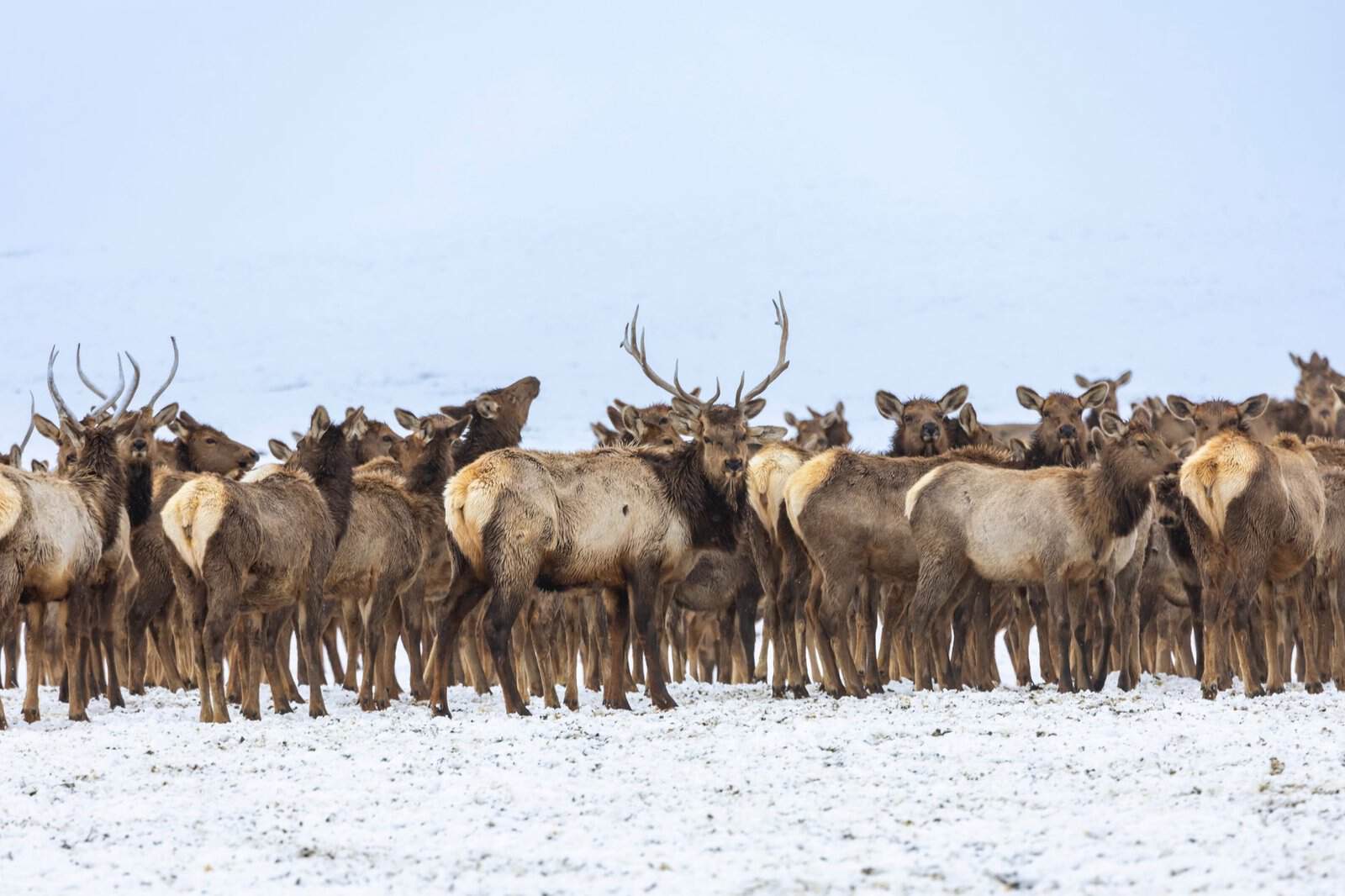
Each winter, an average of about 7,500 elk gather on the National Elk Refuge, a valley-floor sanctuary that borders the town of Jackson, Wyoming. The easiest way to see them up close is a National Elk Refuge sleigh ride: a horse-drawn sleigh that carries visitors out among the herd while guides explain what you are seeing.
The refuge was created in 1912 to protect winter habitat for one of the largest elk herds in North America, and today it covers about 24,700 acres of meadows, marshes, and foothills, according to its history. The U.S. Fish and Wildlife Service says elk are typically visible on the refuge from mid-December through early April, when deep snow pushes them down from higher summer ranges.
The sleigh ride season for 2026 to 2027 runs from December 19 through April 3, conditions permitting, according to the ride operator. Here is how it works and how to plan.
How a National Elk Refuge sleigh ride works
Sleigh rides are run by a concessionaire in partnership with the refuge. According to the operator, tickets are sold at the National Elk Refuge Visitor Center, also known as the Jackson Hole and Greater Yellowstone Visitor Center, at 532 N. Cache St. in Jackson. Online reservations are available for the season.
Here is what to expect:
- Check in at the visitor center. The operator asks visitors to arrive about 30 minutes before their scheduled ride time.
- Take a short shuttle to the sleigh. A bus carries riders from the visitor center to the sleigh boarding area on the refuge.
- Ride among the elk. Horse-drawn sleighs, often pulled by large draft horses, travel across the snowy meadows. Elk are generally used to the sleighs and may be only a short distance away.
- Listen to the guide. Drivers share information about elk behavior, the refuge’s history, and other wildlife you might see.
Rides run daily from 10 a.m. to 4 p.m. during the season, with a closure on Christmas Day. Times are approximate, and conditions can affect the schedule. Call the operator or check the website for current information.
Why the elk come to the refuge
Elk in the Jackson Hole area spend the summer in high mountain meadows, including parts of Grand Teton and Yellowstone national parks. As snow deepens in fall, they migrate down to lower elevations where food is easier to find. Historically, many elk wintered on the valley floor, but as Jackson grew and ranches fenced the land, their winter range shrank.
By the early 1900s, harsh winters led to large elk die-offs. Residents and officials pushed for a protected winter range. In 1911, Congress appropriated money to help the herd, and in 1912 it funded the creation of an elk refuge from public and purchased land. It was renamed the National Elk Refuge in 1940 and expanded over the decades.
Today, the refuge borders the town of Jackson to the southwest, Bridger-Teton National Forest to the east, and Grand Teton National Park to the north.
When to go
Elk numbers on the refuge usually build through December and peak in mid to late winter. A ride in January or February often means large groups of elk. Early-season rides in late December can be excellent too, especially if snow has been heavy. By March, elk begin to move as spring approaches, and they usually leave the refuge in April.
The holidays are the busiest time for rides, as Jackson fills with skiers and families on winter break. Reserve ahead for Christmas through New Year’s and Presidents’ Day weekend.
What to bring
Sleigh rides are outdoors in cold, open air. Temperatures in Jackson in winter often fall well below freezing, and wind across the meadows makes it feel colder. Dress in warm layers:
- A heavy coat, hat, scarf, and gloves or mittens.
- Insulated, waterproof boots.
- Warm socks and long underwear.
- Sunglasses for glare off the snow.
- A camera with a zoom lens, or binoculars.
Some sleighs provide blankets, but do not count on it. Bring hand warmers if you get cold easily.
Other wildlife you might see
The refuge is home to more than elk. Depending on the day, you might see:
- Bighorn sheep on Miller Butte, a rocky hill on the refuge visible from the road.
- Bald eagles and other raptors.
- Coyotes hunting in the meadows.
- Trumpeter swans on open water near Flat Creek.
- Wolves occasionally, though sightings are less predictable.
Ask your driver what has been seen recently.
Seeing the refuge without a sleigh
If you prefer to explore on your own, the Refuge Road, which leaves Jackson near the east side of town, is open to vehicles in winter for a few miles. It is a good place to look for bighorn sheep on Miller Butte. Elk are often visible from the road, though usually from a greater distance than on a sleigh ride.
Follow refuge rules: stay in your vehicle or near it, use pullouts, and do not approach or feed wildlife. Some areas of the refuge are closed to protect wintering animals.
The antler arches and the annual auction
Each spring, male elk shed their antlers. On the refuge, Boy Scouts have collected shed antlers for decades under a permit, and the antlers are sold at an annual auction in Jackson’s town square, with proceeds supporting the refuge’s winter habitat programs and the Scouts. Antlers are also used to build the famous antler arches at the four corners of Jackson’s town square.
You can see the arches any time of year. They are one of Jackson’s most photographed landmarks, and knowing where the antlers came from adds context to the photo.
Supplemental feeding and disease concerns
The refuge has a long history of supplemental winter feeding of elk, typically with pelleted alfalfa, during harsh winters. Feeding helps keep elk on the refuge and away from private property, but it also concentrates animals, which raises concerns about disease. Chronic wasting disease, a fatal illness that affects deer and elk, has been detected in the Jackson area, and wildlife managers have been working on plans to reduce reliance on feeding over time.
Your sleigh guide may discuss these issues. They are part of a larger conversation about how to manage wildlife in a rapidly growing region.
Photography tips
Elk photos from a sleigh can be spectacular, but cold and motion make them tricky. A few tips help. Use a fast shutter speed, since the sleigh moves and bounces. A zoom lens in the 100 to 400 millimeter range is ideal for close portraits of bulls, but even a phone can capture wide shots of the herd against the mountains. Keep spare batteries warm in an inside pocket, and avoid breathing on your viewfinder, which can fog or frost in the cold. Overcast days soften the light and reduce glare off the snow, while bright days give deep blue skies behind the Sleeping Indian, the mountain ridge east of the refuge.
Combining the ride with a Jackson winter day
A sleigh ride usually takes about an hour including the shuttle, which makes it easy to fit into a winter day in Jackson. You can pair it with:
- A morning on the slopes at Snow King Mountain, right in town, or Jackson Hole Mountain Resort in Teton Village.
- A drive toward Grand Teton National Park for views of the Teton Range in snow.
- A visit to the National Museum of Wildlife Art, which overlooks the refuge just north of town.
- Dinner in downtown Jackson near the antler arches.
What it costs
Sleigh ride tickets are priced per person, with separate adult and child rates. Prices change from season to season, so check the current rates on the operator’s website before you go. Compared with many winter activities in Jackson, the ride is relatively affordable for families.
Visiting the refuge itself is free. Driving the Refuge Road, stopping at the visitor center, and viewing the antler arches in town cost nothing.
Getting to Jackson in winter
Jackson Hole Airport, inside Grand Teton National Park, has seasonal flights from several major U.S. cities in winter. It is about a 15-minute drive from town. Many visitors also fly into Idaho Falls or Salt Lake City and drive, though mountain passes such as Teton Pass can close or require chains during storms.
Roads in Jackson Hole are plowed, but conditions change quickly. Rent a vehicle with four-wheel or all-wheel drive and good winter tires, and check the Wyoming Department of Transportation’s road reports before driving.
Tips for a better ride
- Book early for holiday periods.
- Arrive 30 minutes early.
- Dress warmer than you think you need.
- Bring binoculars for distant wildlife.
- Ask questions. Drivers know the herd well.
- Sit on the side facing the herd if you get the choice.
The bottom line
About 7,500 elk spend the winter on the National Elk Refuge, right next to Jackson, Wyoming. A horse-drawn sleigh ride from December 19, 2026, through April 3, 2027, is the simplest way to see them up close. Buy tickets at the visitor center on North Cache Street or reserve online, dress for the cold, and give yourself time to explore the refuge road, the antler arches, and the museum that overlooks the herd.