We may earn money or products from the companies mentioned in this post. This means if you click on the link and purchase the item, I will receive a small commission at no extra cost to you ... you're just helping re-supply our family's travel fund.

Shark bites in the United States are still uncommon, but they are not evenly spread across the map. Certain beaches show up repeatedly because they mix warm water, shallow sandbars, baitfish, and heavy time-in-water from swimmers and surfers. That does not make these coasts off-limits. It means the ocean deserves the same practical respect as weather and rip-current flags. The beaches below are places where shark awareness is part of local routine, and where the smartest beach day is the one that stays calm, observant, and unhurried.
New Smyrna Beach, Florida
New Smyrna Beach’s reputation comes from simple math: lots of people, lots of time in the water, and a shallow sandbar system where baitfish move close to shore. Small coastal sharks follow that food line, and the overlap happens in the same knee-to-waist-deep zone where surfers paddle out and families cool off. The safest rhythm mirrors what locals do: stay near lifeguards, give wide space to anglers, avoid cloudy water after heavy rain, and take a break when birds start diving and baitfish ripple in tight schools along the trough.
Cocoa Beach, Florida

Cocoa Beach is built for long sessions, and that is why awareness matters here more than drama. Warm water, forgiving breaks, and long sandbars keep swimmers and surfers in the surf for hours, while shifting currents and bait schools can pull wildlife into the same nearshore lanes. A calm beach day is usually won by timing and distance: skip dawn and dusk, stay away from active fishing and cut bait, and step out after storm runoff when visibility drops and fish stack along the shoreline. The goal is not fear, just fewer avoidable overlaps.
Juno Beach and Jupiter, Florida

Juno and Jupiter sit in clear water shaped by inlets, currents, and steady fishing activity, which keeps the food chain organized and close to shore. When baitfish gather along sandbar edges, movement can be visible in a way that feels sudden, especially near pier lines and inlet mouths where water is deeper and more active. The easiest way to keep the day relaxed is spacing: choose guarded stretches, avoid fish-cleaning areas and chum lines, and treat bait balls and frantic birds as a cue to pause the swim, reset on the sand, and let the water settle.
St. Augustine Beach, Florida

St. Augustine Beach has a calm surface story and a busy underwater one, shaped by shifting sandbars that form troughs where baitfish gather. Those troughs are also where people stand, paddle, and drift while watching waves roll in, which makes the overlap easy to miss on a pretty afternoon. After storms, cloudy water and reworked sand reduce visibility for everyone in the shallows, so restraint matters: keep shiny jewelry off, avoid murky troughs, stay near lifeguards, and wait for clearer conditions when flags or local notices signal rough water and poor sight lines.
Myrtle Beach, South Carolina

Myrtle Beach stays crowded through much of the warm season, and heavy beach traffic is a big reason it stays in shark-incident conversations. Warm surf, long sandbars, and people lingering in the shallows from late morning to sunset create countless small chances for a quick, mistaken bite, often involving smaller coastal species moving through bait-rich lanes. The risk remains low, but it drops lower with steady habits: avoid swimming near piers and bait lines, keep groups close, skip dawn and dusk, and take a beach break when baitfish are running tight to the shoreline and birds are working hard.
Folly Beach, South Carolina

Folly Beach sits near tidal inlets and jetties where currents carve deeper cuts beside shallow sand, creating sharp edges between calm-looking water and fast-moving channels. Those edges concentrate baitfish, and that draws attention, especially when the tide is ripping and visibility changes by the minute around jetty corners. The safest visits respect the geometry: stay inside guarded zones, avoid inlet mouths, and treat jumping fish, hard-diving birds, or swirling bait as reasons to spend time on the sand until conditions ease. A quiet reset often beats pushing for one more swim in unstable water.
Atlantic Beach, North Carolina

Atlantic Beach can look gentle until the tide shifts and the sandbar pattern changes the whole feel of the water. Barrier-island troughs and bars move constantly, and in warm months baitfish gather in the same knee-to-waist-deep zone where people float, wade, and boogie board for long stretches. That overlap does not guarantee trouble, but it explains why sightings and occasional bites follow familiar patterns here. The steady approach is simple: stay near guarded areas, avoid active fishing, and pause swimming when water turns cloudy or bait schools press tight to shore.
Nauset Beach and Chatham, Massachusetts

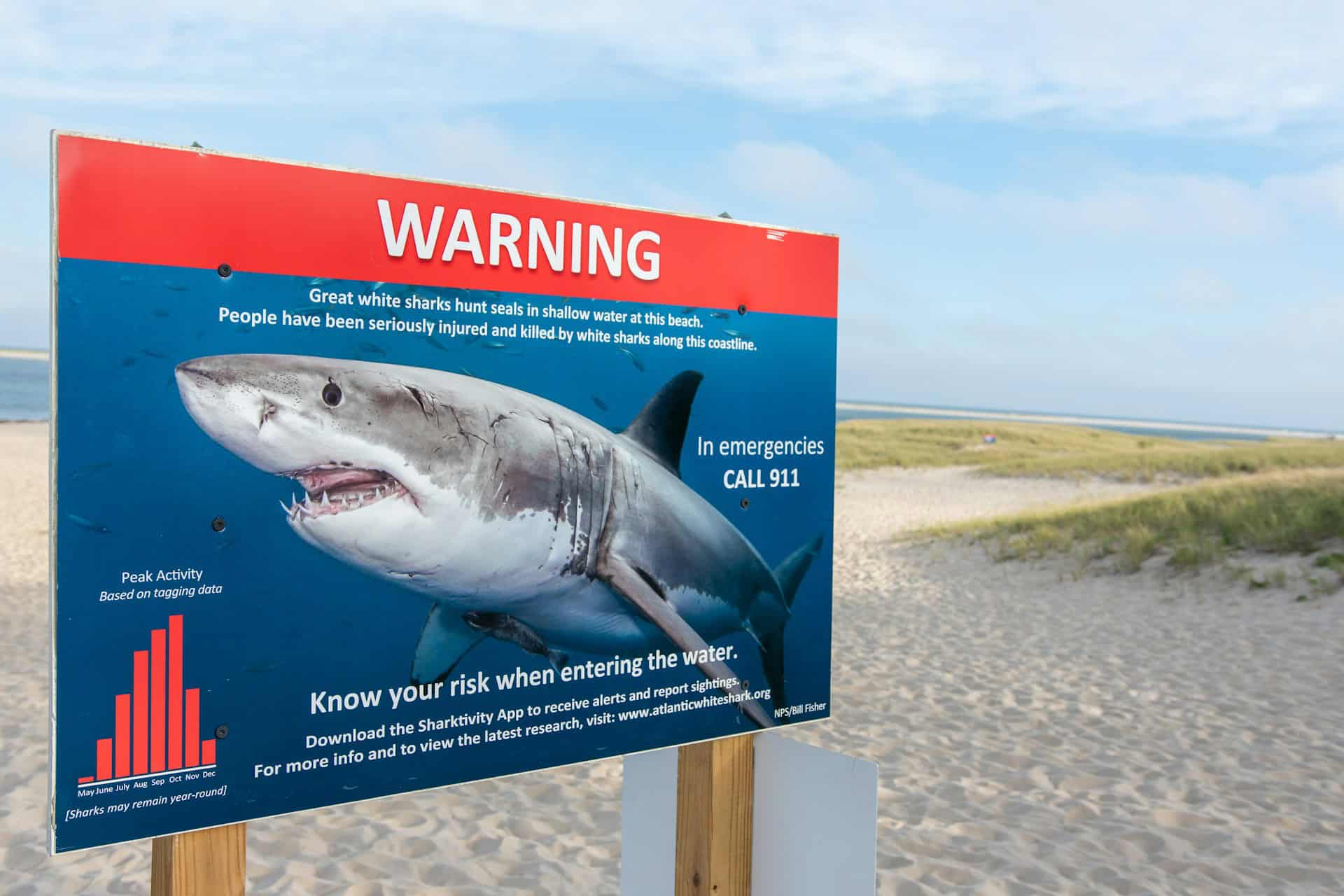
Cape Cod’s Atlantic side is known for white shark awareness, largely because seals are common and sightings travel fast through alerts, signage, and local reporting. These beaches can feel wild even on clear days, with cold water, strong surf, and long stretches where the horizon looks empty until something breaks the surface near the outer bar. The safest visits accept the rules: heed closures, avoid swimming near seals or bait schools, and treat warnings as normal coastal management rather than spectacle. The point is a beach day that stays peaceful for people and wildlife alike.
Del Mar City Beach, California

Del Mar is not a national hotspot, but it proves that Southern California’s calm look can hide complexity. Warm seasons bring more swimmers, and nearby nursery and feeding areas can overlap with popular beaches in ways that are not obvious from shore, especially when surf is choppy or the water is murky. A sensible day leans on lifeguards and spacing: avoid swimming far out, keep clear of bird frenzies and bait schools, and leave the water when conditions shift. Small cues often show up early, and paying attention keeps the whole day lighter.