9 Airplane Cabin Details That Look Pointless Until You Know What They’re For
We may earn money or products from the companies mentioned in this post. This means if you click on the link and purchase the item, I will receive a small commission at no extra cost to you ... you're just helping re-supply our family's travel fund.
Look around the next time you board, and you’ll spot airplane cabin features that seem to serve no purpose. There’s an ashtray on the bathroom door of a plane where smoking has been banned for decades. There’s a tiny hole in your window. There are little triangles stuck above a few random rows.
None of them are random. Almost every one of these details exists because of a safety rule, an engineering problem, or a lesson learned the hard way. Some are written into federal aviation regulations. Others are design choices that help the crew do their jobs in the few seconds that matter most.
Here are nine cabin details that look pointless, what each one actually does, and how knowing about them can make your next flight a little easier.
Why Airplane Cabin Features Are Rarely Random
Airliners flown by US carriers are built to the Federal Aviation Administration’s transport-category standards, a long set of rules known as Part 25. Those rules cover everything from how seat cushions burn to how bright the emergency lights must be. Airlines then layer their own procedures on top.
A lot of what you see in the cabin traces back to one goal: getting everyone off the plane quickly if something goes wrong. Manufacturers have to show that a full plane can be evacuated in 90 seconds with half the exits blocked. That requirement explains a surprising number of the details below, from the lights on the floor to the shades on the windows.
9 Airplane Cabin Features and What They Actually Do
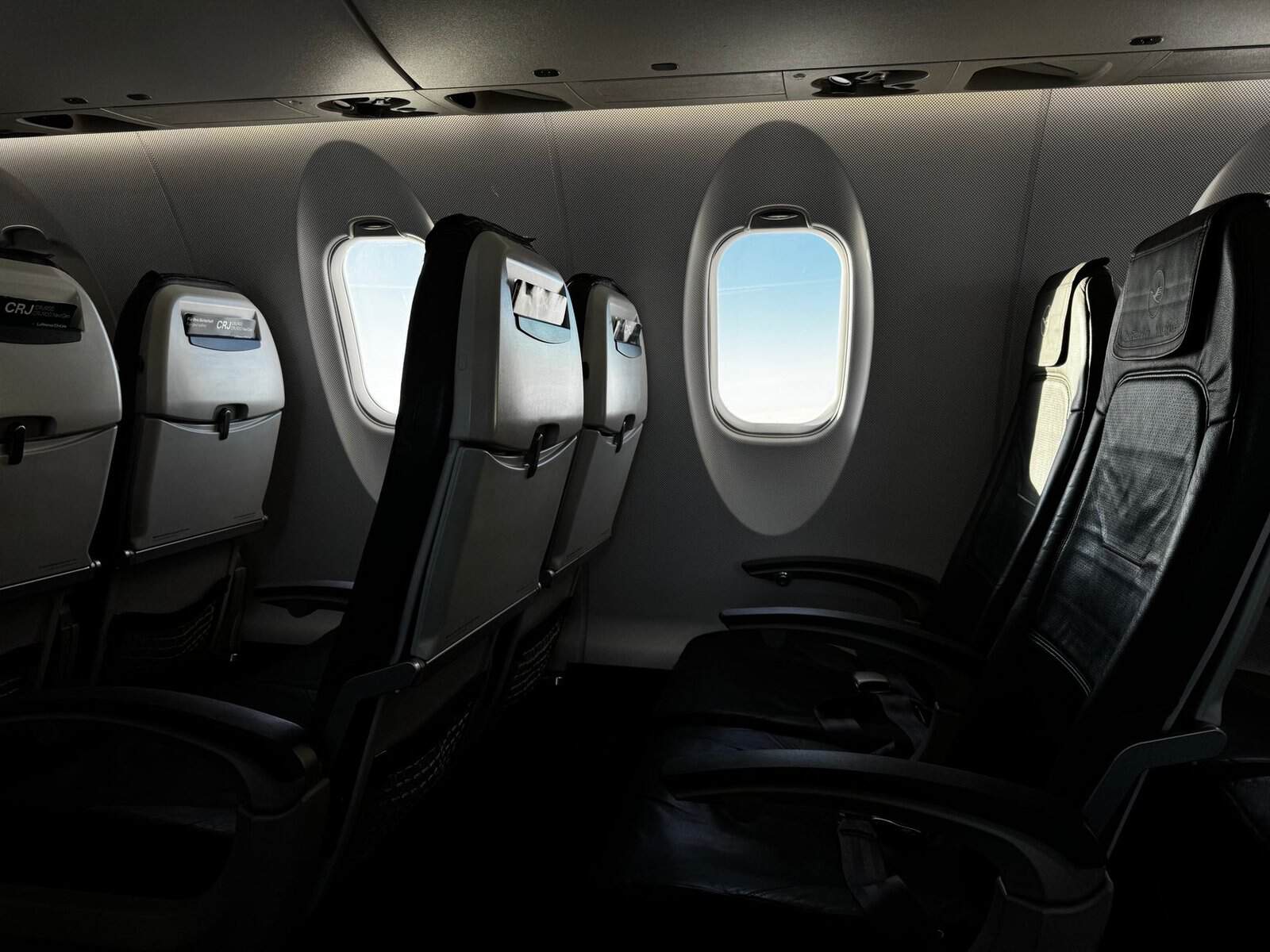
1. The tiny hole in your window
Most airplane windows have three layers of acrylic, not glass. The inner layer you can touch is a scratch pane that protects the others. The middle and outer panes are the structural ones, and each is strong enough on its own to hold back the pressure difference between the cabin and the thin air outside.
The tiny hole, called a breather hole or bleed hole, is drilled through the middle pane. It lets cabin air into the gap between the middle and outer panes, so under normal conditions the outer pane carries the pressure load and the middle pane sits ready as a backup. As a Boeing engineer explained to Slate, the hole has a second job: it lets moisture escape from the gap so the window doesn’t fog up or frost over and block your view. If you ever see a small ring of frost around it at cruising altitude, that’s the hole doing its work.
2. The ashtray on the lavatory door
Smoking is banned on all US airline flights, yet new planes still come with ashtrays, usually built into or next to the lavatory door. That’s because federal rules require them. Under 14 CFR 25.853, regardless of whether smoking is allowed anywhere on the plane, lavatories must have removable ashtrays on or near the entry side of each lavatory door.
The reasoning is practical. The FAA’s rule came after fires started in lavatory trash bins, often from cigarettes dropped in with paper towels. If someone lights up anyway and panics when the smoke detector goes off, the FAA would rather that cigarette end up in a metal ashtray than in a bin full of paper. The FAA treats the ashtrays as required equipment, and a plane can fly only a limited number of days with one missing.
3. The lavatory sign that hides a lock
The little metal LAVATORY or NO SMOKING sign on the outside of the bathroom door often lifts up. Underneath is a latch that lets crew lock or unlock the door from the outside. FAA design guidance says lavatory doors must be built so no one gets trapped inside, and any lock has to be capable of being opened from outside.
Flight attendants use it when a passenger is sick or unresponsive, when a child locks themselves in, or when they want to keep the lavatories closed for landing. Some airlines also lock lavatories during expected turbulence. It isn’t meant for anyone else to use, and crew will typically knock and ask before opening an occupied door.
4. The small triangles above certain windows
On many planes, you’ll find small black or red triangle stickers above a few windows near the wings, usually two on each side. They mark the windows with the best view of the wing, lined up with its leading and trailing edges.
If the pilots want a visual check of the wings, flaps, or slats, a flight attendant knows exactly where to look instead of leaning over row after row of passengers. On some aircraft, those windows can also help crew confirm that parts of the landing gear are in position. For travelers, the triangle rows are also handy for wing photos.
5. The strips of light along the floor
Those glowing strips or small lights running down the aisle are called floor proximity emergency escape path markings, and they’re required. Federal rules say they must guide passengers to exits when all lighting more than 4 feet above the aisle floor is completely hidden by smoke.
The idea is simple. In a cabin fire, smoke rises and fills the upper part of the cabin first. Overhead exit signs can disappear, but the floor markings stay visible near the floor, where the air is clearer. The FAA set these standards in 1984 and required US airliners to have them by November 1986. Many modern systems use photoluminescent strips that glow without power. They lead you along the aisle, and separate markers near the floor show you where each exit is.
6. The cabin lights that dim for night takeoffs and landings
When a plane takes off or lands in the dark, the crew usually dims the cabin lights. It isn’t to help you nap. Takeoff and landing are the most critical phases of flight, and dimming the lights lets everyone’s eyes adjust to the darkness outside ahead of time.
If you had to evacuate at night, you wouldn’t step from a bright cabin into pitch black and lose precious seconds while your eyes caught up. Lower interior light also cuts glare on the windows, so crew can see fire, smoke, or debris outside, and it makes the exit signs and floor path markings easier to spot.
7. The request to keep window shades open
No single US rule requires every passenger to raise the shade for takeoff and landing, but many airlines ask, and the International Air Transport Association recommends it as a best practice. Flight attendants are trained to check conditions outside before opening an exit in an emergency.
Open shades let the crew, and passengers, see fire, smoke, or water on one side of the plane and pick the safest exits. They also help your eyes adjust to outside light, and they let rescue crews outside see into the cabin. If a flight attendant asks you to raise your shade, there’s a reason.
8. The hidden button under the aisle armrest
On many aisle seats, the armrest closest to the aisle looks fixed, but it isn’t. Slide your fingers underneath near the hinge, and you’ll often find a small button or lever that releases it so it can fold up flush with the seatback.
The main purpose is accessibility. Under US Department of Transportation rules, planes with 30 or more passenger seats generally need movable aisle armrests on at least half of the aisle seats, so passengers with limited mobility can slide in and out more easily. United notes on its website that release mechanisms are hidden on purpose to prevent accidental release during takeoff and landing. You can lift it during cruise for a bit of extra room, but it needs to be down for taxi, takeoff, and landing, and keep your elbows clear of the cart.
9. The seat cushion that floats
Safety briefings on many US flights mention that your seat bottom cushion can be used as a flotation device. That’s not a throwaway line. Federal rules require airlines to provide a life preserver or another approved flotation device for every person on board, and on planes that don’t carry life vests for every flight, the seat cushion is often that device.
Approved flotation cushions are designed to stay buoyant, and they usually have straps on the underside that you slide your arms through, holding the cushion against your chest, not your back. They’ve been used in a real emergency. When US Airways Flight 1549 landed on the Hudson River in 2009, the National Transportation Safety Board found that more than half of the passengers evacuated with a flotation seat cushion.
How to Use What You Know on Your Next Flight
Most of these details only matter in rare situations, but a few habits help on every trip:
- Count the rows to your nearest exit when you sit down. If the cabin fills with smoke, you may be following the floor lights by feel and by count.
- Raise your shade and let your eyes adjust for night takeoffs and landings, even if no one asks.
- Look for the triangle stickers if you want wing photos, and pick a seat in those rows when you book.
- Check under the aisle armrest for the release if you’re tall or need extra room getting in and out, and put it back down before landing.
- Leave the lavatory ashtray and smoke detector alone. Tampering with a lavatory smoke detector is a federal offense.
The more you fly, the more you notice that the cabin is full of small fixes for big problems. A pinhole that keeps your view clear. A sticker that saves a flight attendant time. An ashtray that hasn’t been used legally in years but could still stop a fire. They’re easy to overlook. Now you know what they’re for.