We may earn money or products from the companies mentioned in this post. This means if you click on the link and purchase the item, I will receive a small commission at no extra cost to you ... you're just helping re-supply our family's travel fund.
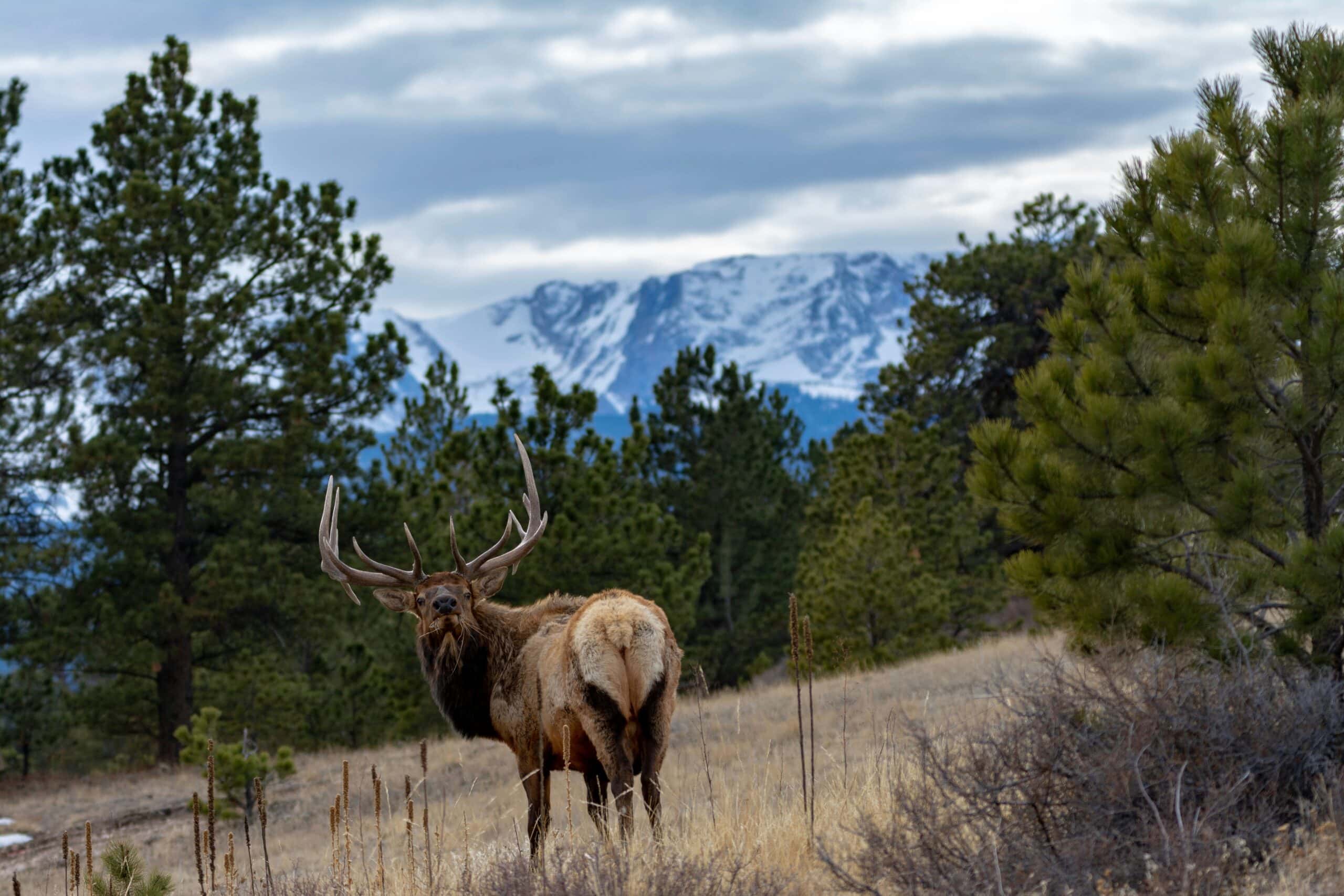
Rocky Mountain National Park holds Colorado at full volume: clear lakes, fast waterfalls, and tundra that feels close to the sky. Hiking is the park’s real language, spoken in switchbacks, granite steps, and long views across the Continental Divide. Weather can flip fast with elevation, so the best routes balance beauty with access and sensible turnarounds. From late May into fall, timed entry rules can shape when some trailheads are reachable. These ten hikes capture the park’s range, from the Bear Lake corridor to quieter corners where wind and water do most of the talking.
Bear Lake Loop
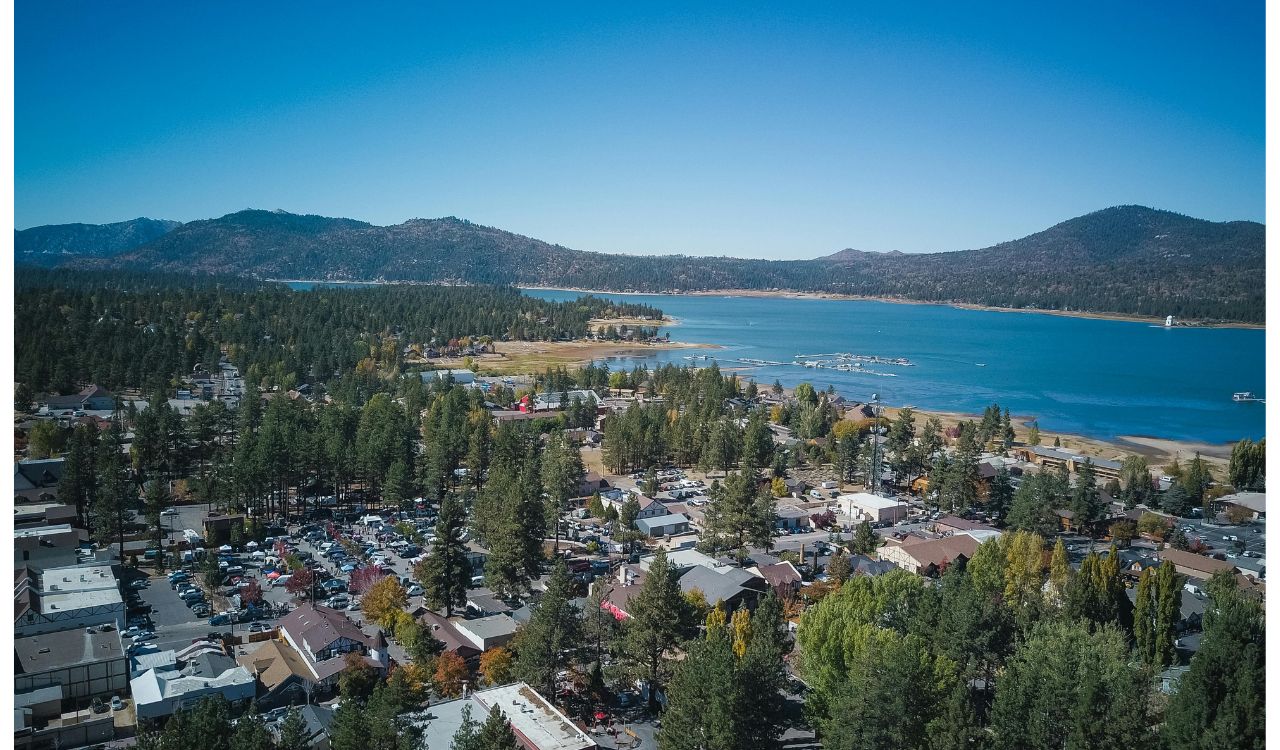
Bear Lake is the park’s front porch, a short loop that still delivers a full alpine mood: dark spruce, cold air, and peaks stacked close enough to feel within reach. Its 0.6-mile path stays approachable, which makes it ideal as a first stop, a rest-day walk, or a late-afternoon reset when thunderstorms start building over the Divide and crowds thin out. The payoff is not distance, it is clarity; the lake frames the Bear Lake Road corridor in one clean glance, and the shoreline often hosts elk sign, crisp reflections, smooth stone, and that quiet hush that tells hikers they have arrived in true mountain country.
Emerald Lake Via Nymph and Dream
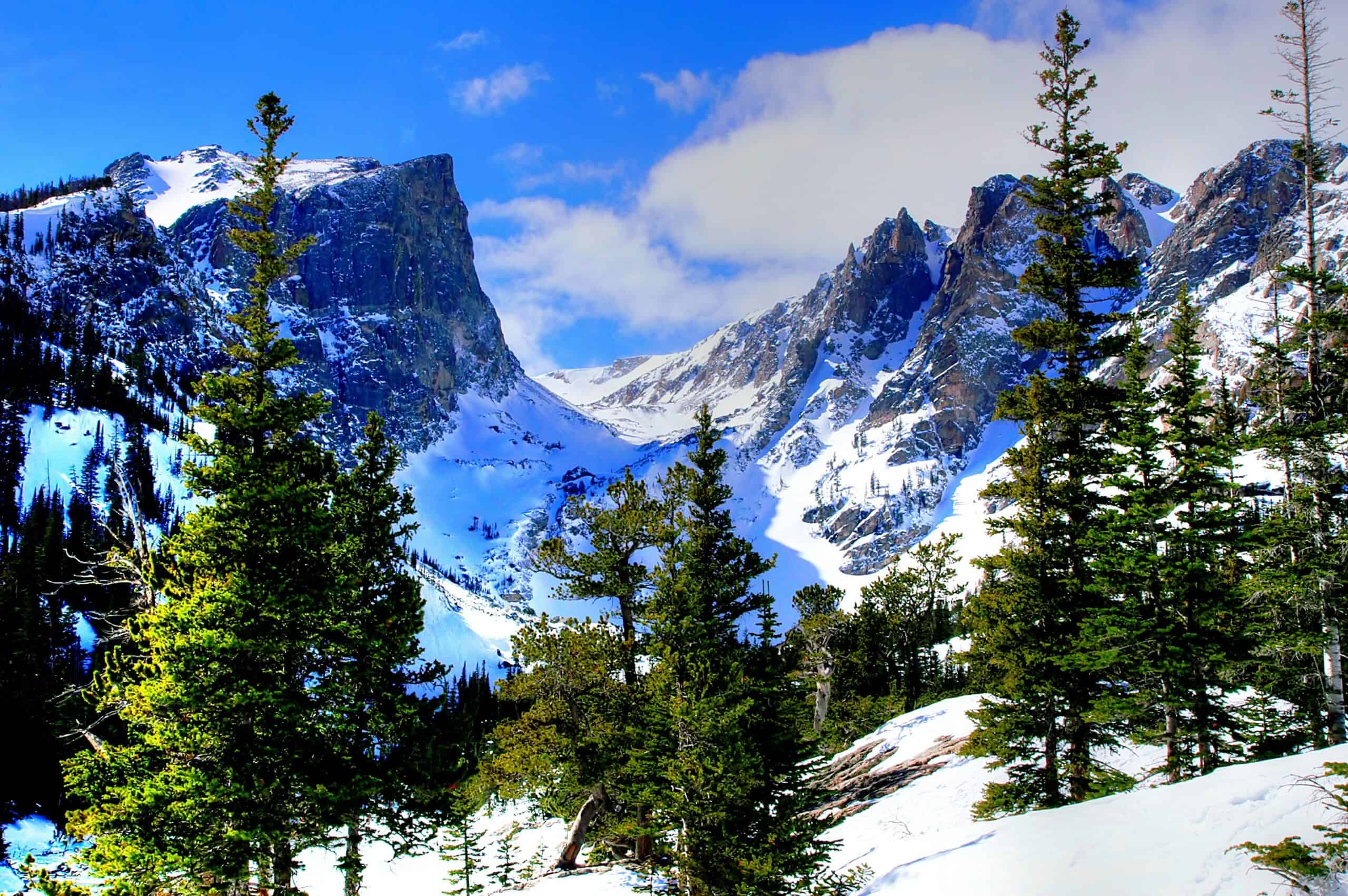
The Bear Lake chain earns its popularity because the scenery changes quickly without feeling rushed, and each lake has its own personality and light. The route threads Nymph Lake and Dream Lake before finishing at Emerald Lake, where cliffs and boulders make the water look darker and deeper and Hallett Peak dominates the view with a near-theater backdrop. At roughly 3.3 miles round trip, it delivers a signature finish without an all-day push, but timing matters: early starts tend to trade crowds for still water, clean photos, steadier footing, and a shoreline calm enough to hear wind, pika chatter, and boots on granite.
Mills Lake
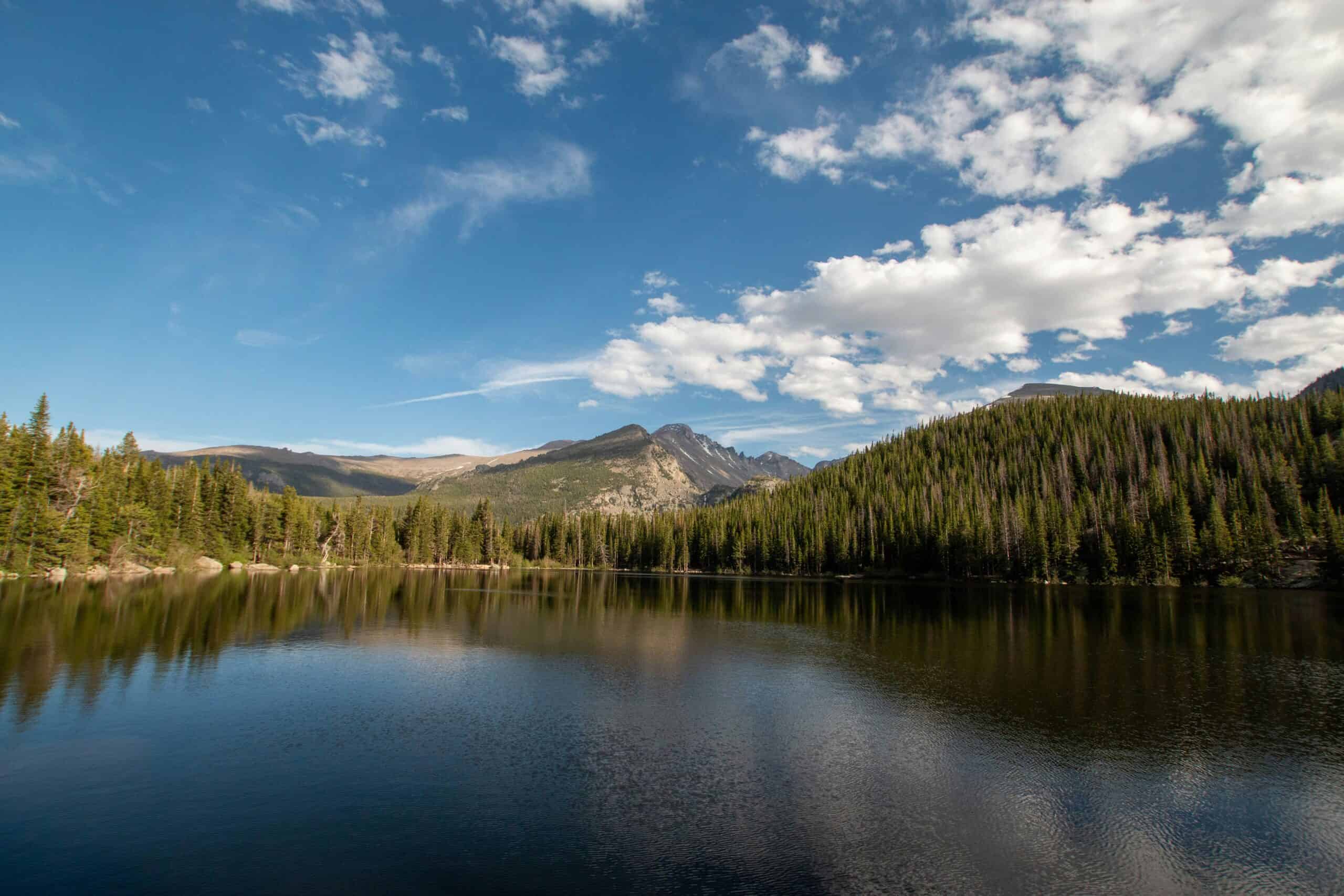
Mills Lake feels like a calm reward for steady effort, with a broad shoreline and reflections that love early light and hold on even when the wind rises. The 5.2-mile round trip from Glacier Gorge builds gradually through forest, boulders, and granite slabs, then opens to a view that puts Longs Peak and surrounding ridges front and center in one wide, satisfying frame, with shoreline room. It is a strong choice when a group wants a real hike without committing to exposed scrambling, and the lake’s open basin makes the park feel bigger than the trail miles suggest, especially when clouds slide across the peaks like slow-moving curtains.
The Loch
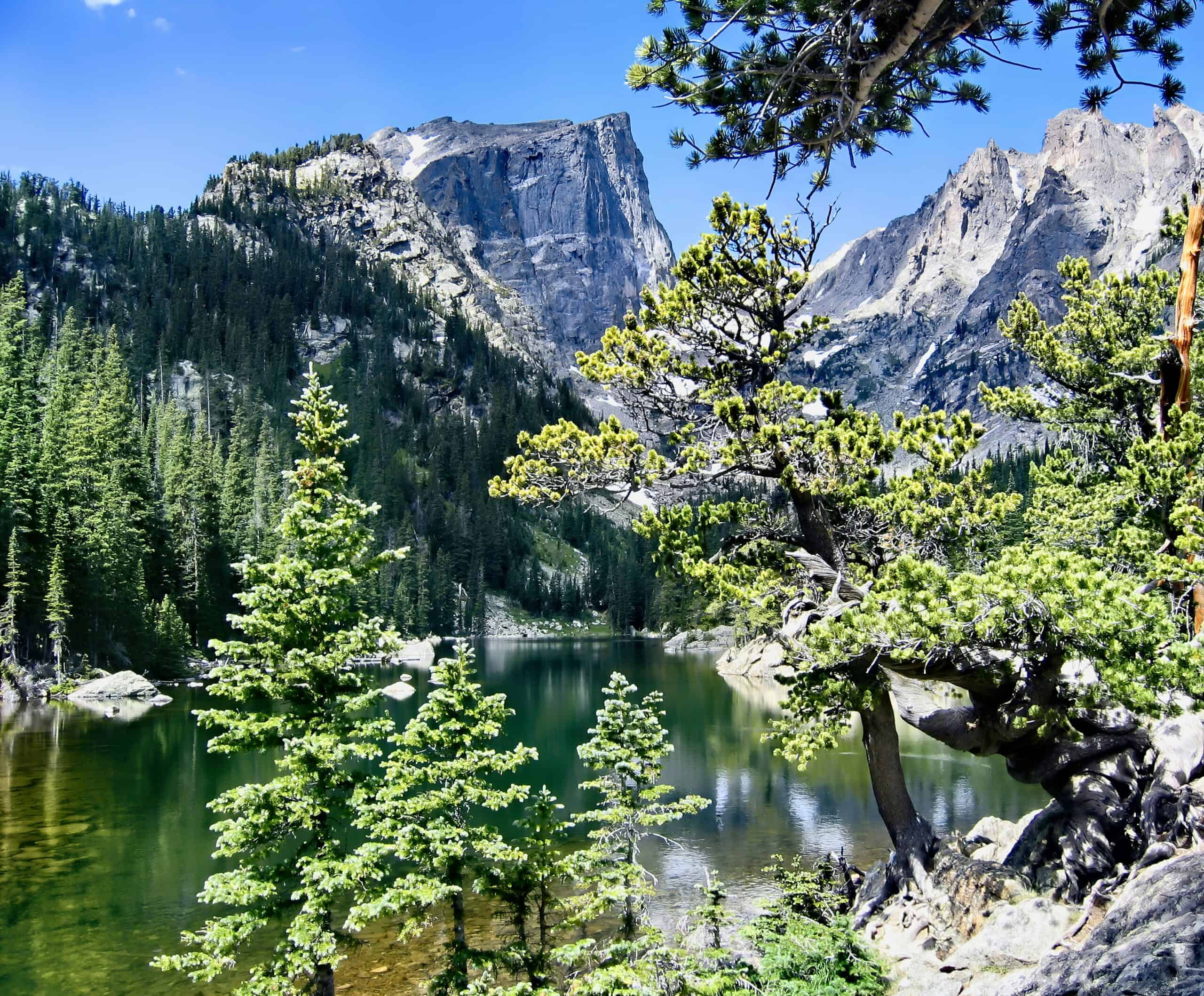
The Loch is a high, quiet bowl that makes Glacier Gorge feel more serious without demanding summit skills, and it rewards persistence with a true alpine finish. At about 6.0 miles round trip, the trail climbs past Alberta Falls and deeper into a valley where cliffs tighten, waterfalls appear, and the air cools as the forest thins and the canyon starts to feel carved. The lake sits tucked under steep walls, and the approach keeps the pace lively with rock steps and cascades; it is a satisfying turnaround for hikers who want mountain atmosphere, a clear sense of arrival, and a scenic return that still feels fresh.
Sky Pond
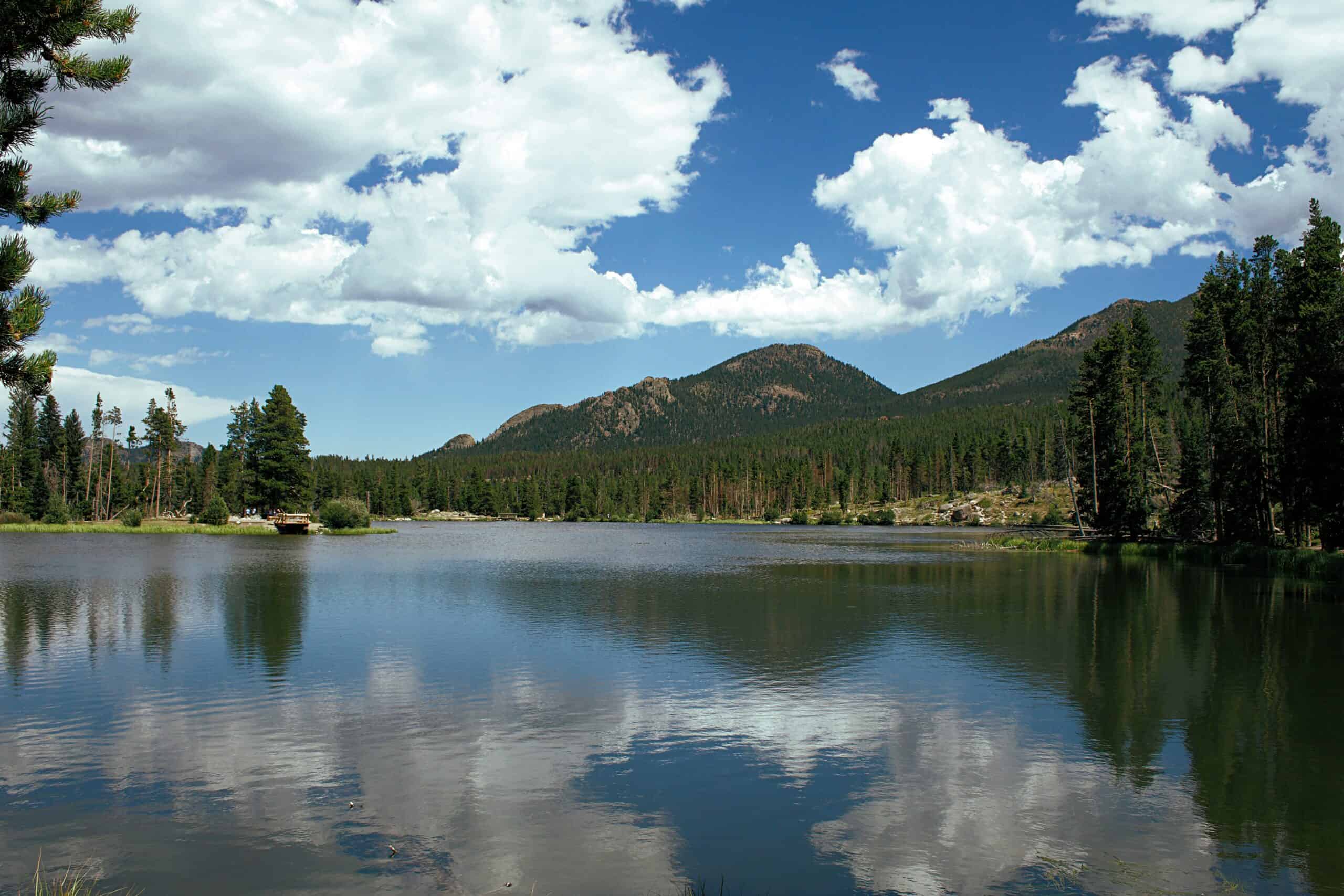
Sky Pond is the Glacier Gorge day hike that feels like a mini expedition because it stacks highlights in layers, from forest waterfalls to raw rock and open sky. The route passes The Loch and Timberline Falls, then climbs into a rugged basin where water, cliff faces, and high light compete for attention, and where the air feels noticeably thinner. Sky Pond is often described as roughly 4.9 miles one way, so it rewards an early start and honest pacing when afternoon storms threaten; the final stretch can feel scrambly and wet near the falls, but the view at the end is pure high-country payoff with a hard-edged beauty that feels earned, not handed over.
Gem Lake
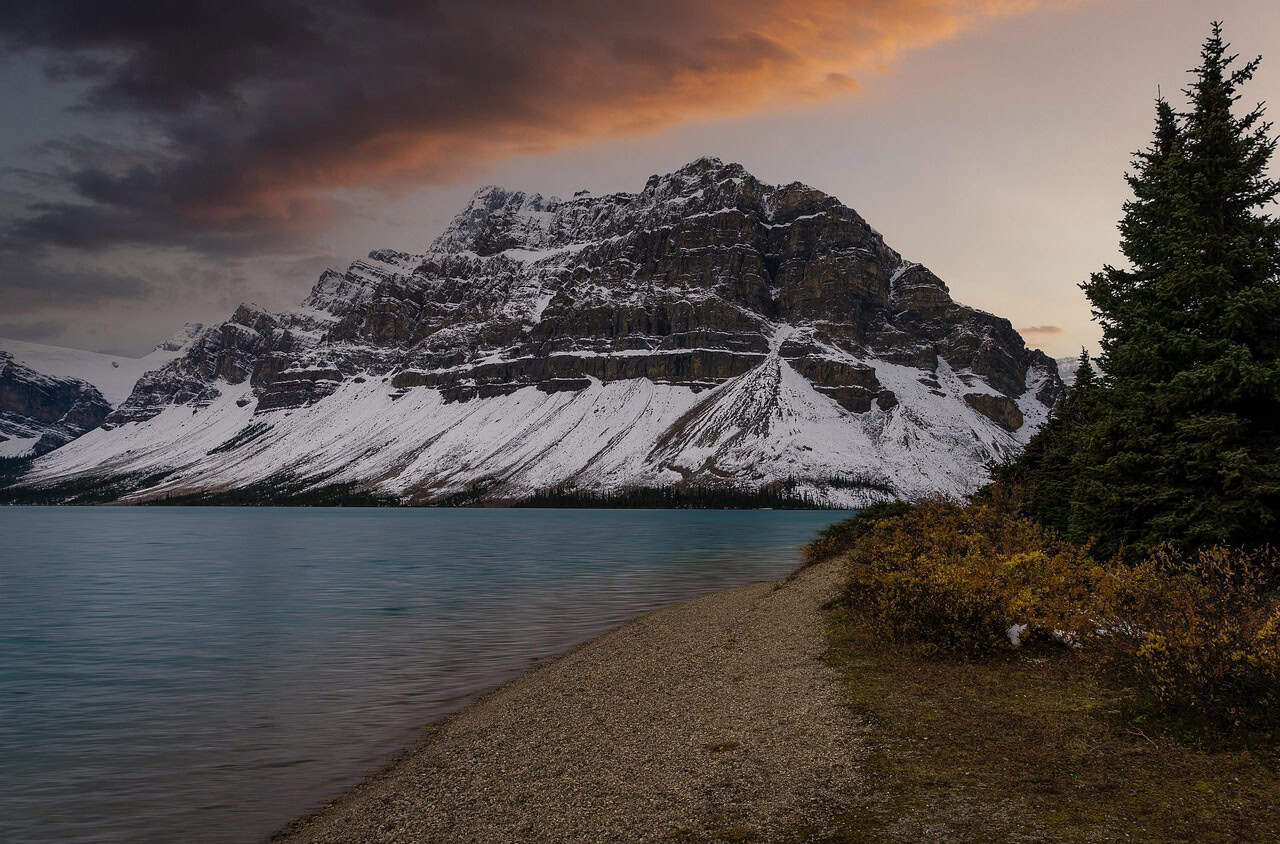
Gem Lake is a front-range-style climb with a high-country finish, reached from the Lumpy Ridge area above Estes Park, where the trail starts close to town and quickly turns rugged. The 3.4-mile round trip gains quickly, then breaks into open granite where views expand toward the plains and the ridge lines sharpen in the distance, with boulders that feel sculpted by wind and time. The lake itself is small and tucked into rock, but the setting is the point: sun-warmed slabs, airy overlooks, and a big sense of space, making it a strong option when higher elevations are socked in yet hikers still want something that feels earned.
Deer Mountain
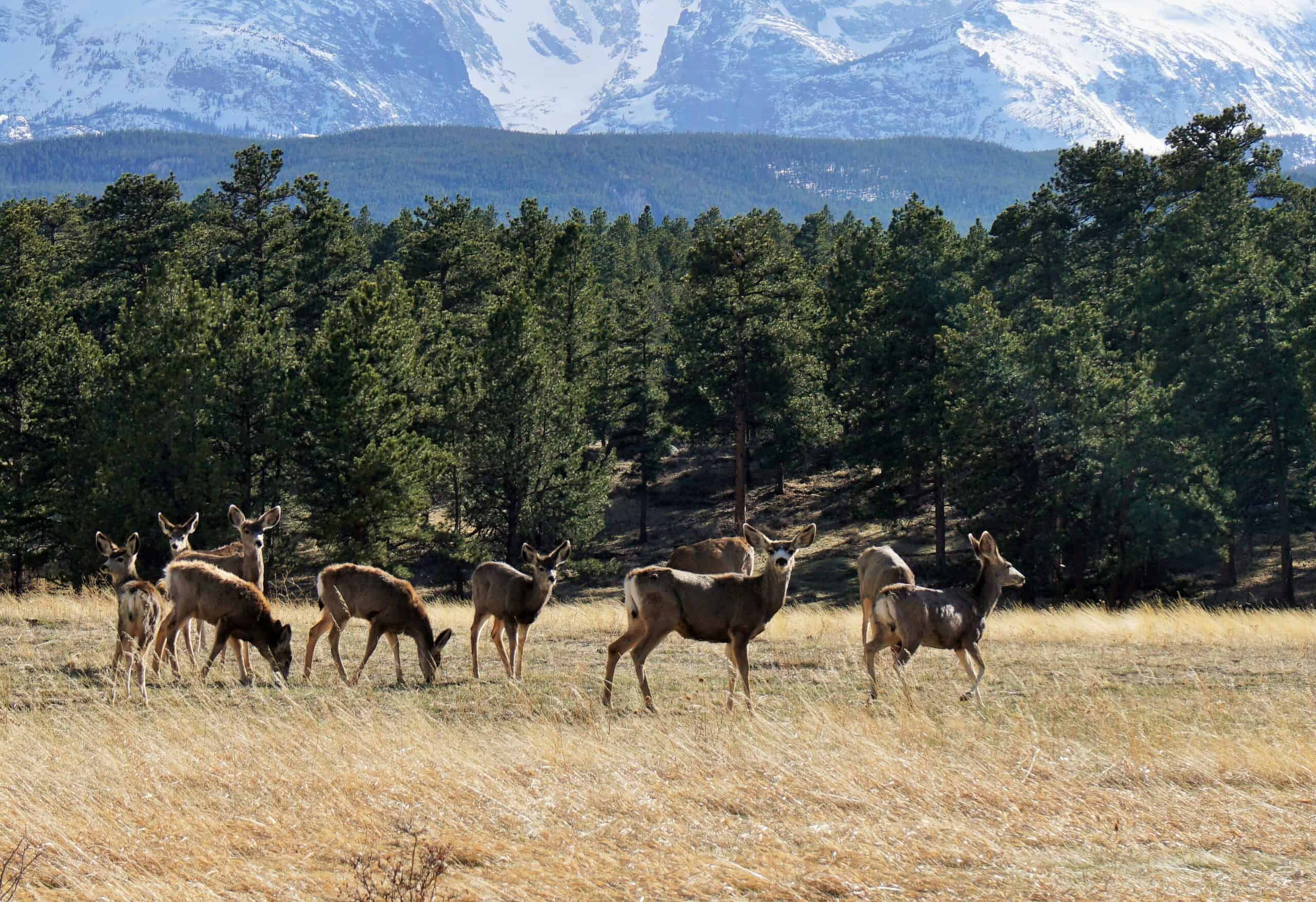
Deer Mountain is a classic big-view hike that stays approachable, offering a summit finish that feels real without demanding technical terrain or a full-day commitment. At 6.1 miles round trip, the trail climbs through pine and aspen before reaching an open top with wide views of the Continental Divide and the higher peaks beyond, a panorama that makes the route’s steady grade feel worth it, even on hazy afternoons. It also shines in shoulder seasons when higher trails hold snow and ice longer; shaded sections can stay slick, but the payoff remains the same: a clear, spacious overlook that turns Estes Park into a postcard below.
Alpine Ridge Trail
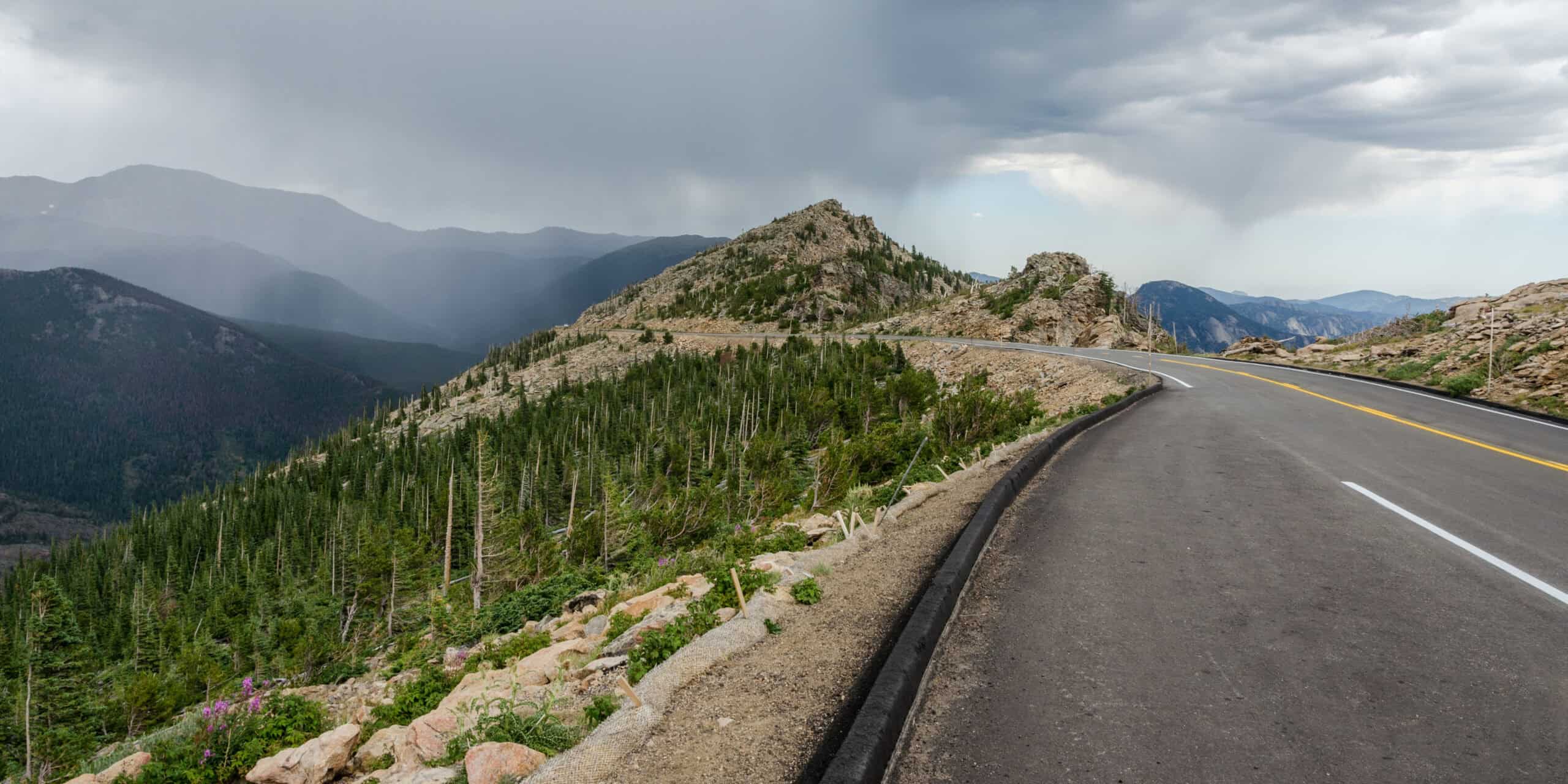
Alpine Ridge is short, but it offers one of the park’s most direct encounters with tundra and thin air, the kind of landscape that looks delicate and feels powerful. Near the Alpine Visitor Center, the 0.6-mile round-trip walk climbs above treeline fast, and wind and light can make the world feel almost oceanic, with clouds racing over the Divide and temperatures shifting in minutes, and the sun feeling closer. It works as a finale after a Trail Ridge Road drive, delivering a big-sky view without a long descent, while reminding hikers that altitude is the main character up here, and that even small miles can carry serious weather.