We may earn money or products from the companies mentioned in this post. This means if you click on the link and purchase the item, I will receive a small commission at no extra cost to you ... you're just helping re-supply our family's travel fund.

America’s lake towns offer a rare mix of dramatic scenery, small-town warmth, and water-focused adventure. From alpine basins carved by glaciers to sprawling freshwater shorelines that feel like oceans, these communities blend nature with culture in surprisingly refined ways. Below are twenty standout lake towns, each presented with practical details, seasonal highlights, and real numbers to help you plan wisely. The first ten appear below, followed by ten more to complete the list.
1. Lake Tahoe, California – Nevada
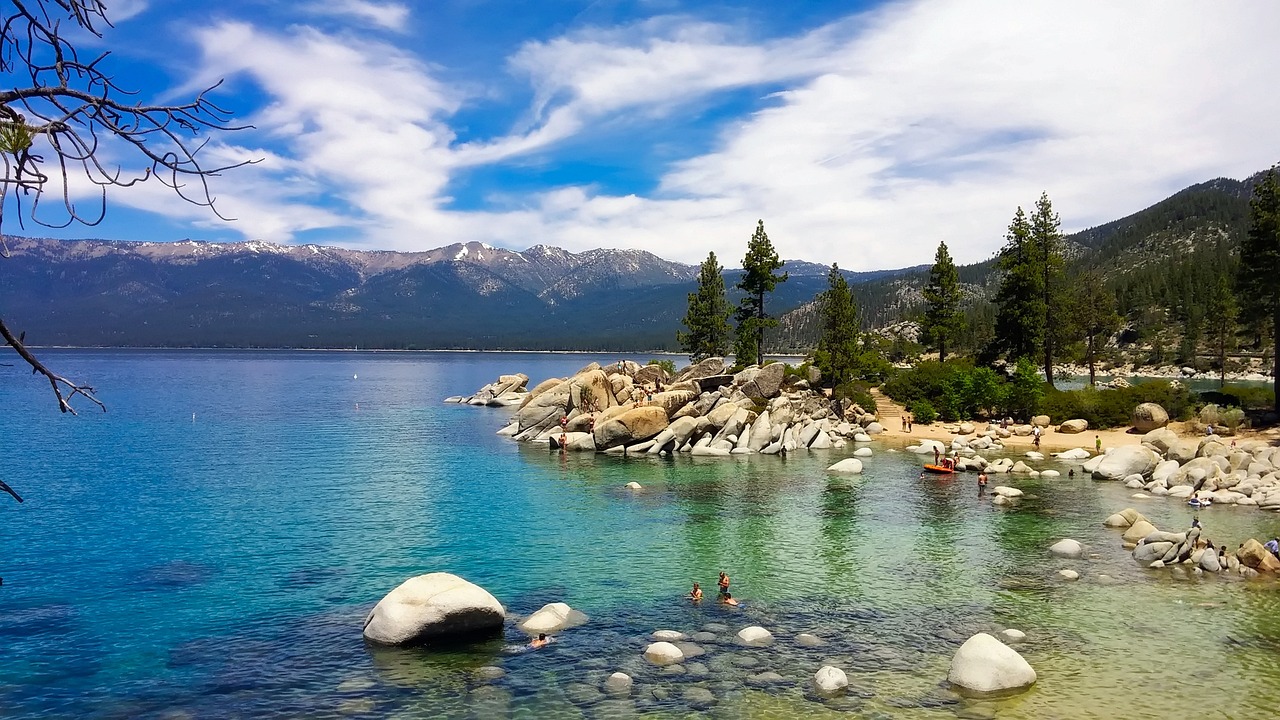
Straddling two states at 6,225 feet above sea level, Lake Tahoe surrounds a 191-square-mile alpine lake famous for visibility that can exceed 60 feet. Summer temperatures average 75°F, ideal for kayaking along 72 miles of shoreline. Winter brings over 300 inches of snow annually to nearby ski resorts. South Lake Tahoe offers lively casinos and dining, while Incline Village feels quieter. Boating permits are regulated, and peak season runs June through September, when lodging prices rise nearly 30 percent.
2. Lake Placid, New York
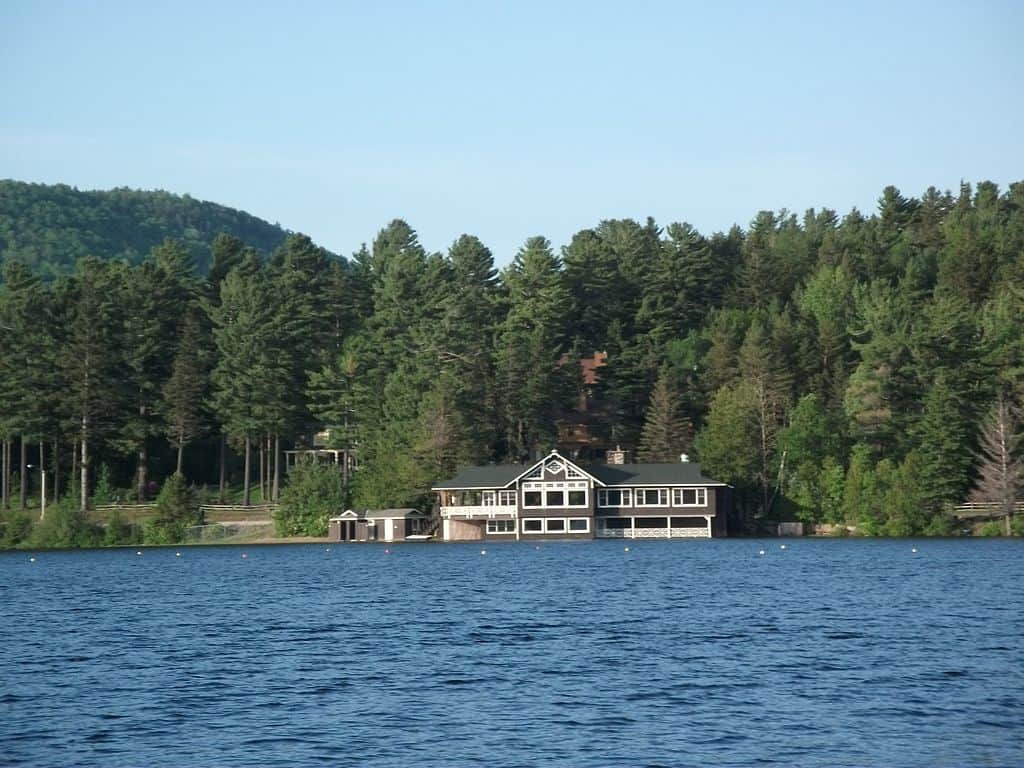
Tucked in the Adirondacks at 1,857 feet elevation, Lake Placid hosted the Winter Olympics twice, in 1932 and 1980. Mirror Lake sits directly in town, spanning roughly 128 acres and freezing solid most winters. Hiking trails exceed 2,000 miles regionally, and Whiteface Mountain rises 4,867 feet nearby. Summer highs average 78°F, while winters can dip below 10°F. The compact Main Street district is walkable in under 15 minutes, filled with historic inns and Olympic landmarks.
3. Traverse City, Michigan
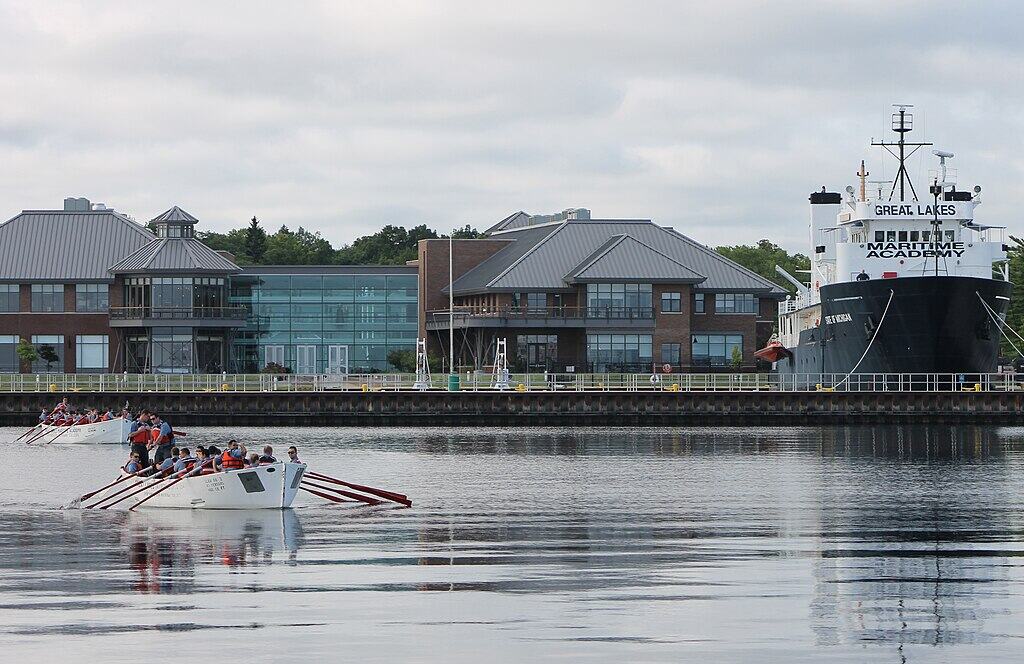
Positioned along Grand Traverse Bay on Lake Michigan, Traverse City has about 15,000 residents yet welcomes more than 2 million visitors annually. The region produces nearly 75 percent of Michigan’s tart cherries, celebrated each July during a week-long festival. Beaches stretch for miles with summer water temperatures reaching 65°F to 70°F. Over 40 wineries operate within a 30-minute drive. Downtown features a restored 1920s theater and a waterfront park ideal for sunset walks.
4. Coeur d’Alene, Idaho
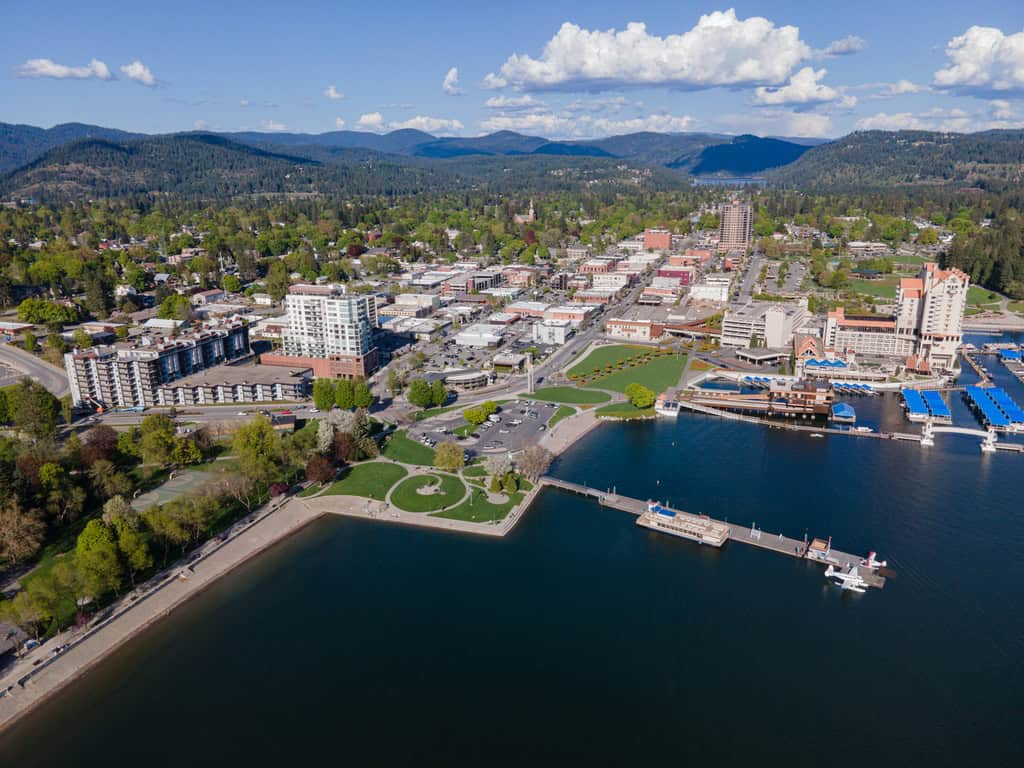
Home to just over 55,000 residents, Coeur d’Alene sits beside a 25-mile-long lake covering 50 square miles. The city’s floating boardwalk extends nearly 3,300 feet, among the longest in the world. Summer highs average 82°F, perfect for boating and paddleboarding. The surrounding hills offer more than 100 miles of biking trails, including the scenic Trail of the Coeur d’Alenes. Winter snowfall averages 70 inches, supporting ski trips less than 40 miles away.
5. Chelan, Washington
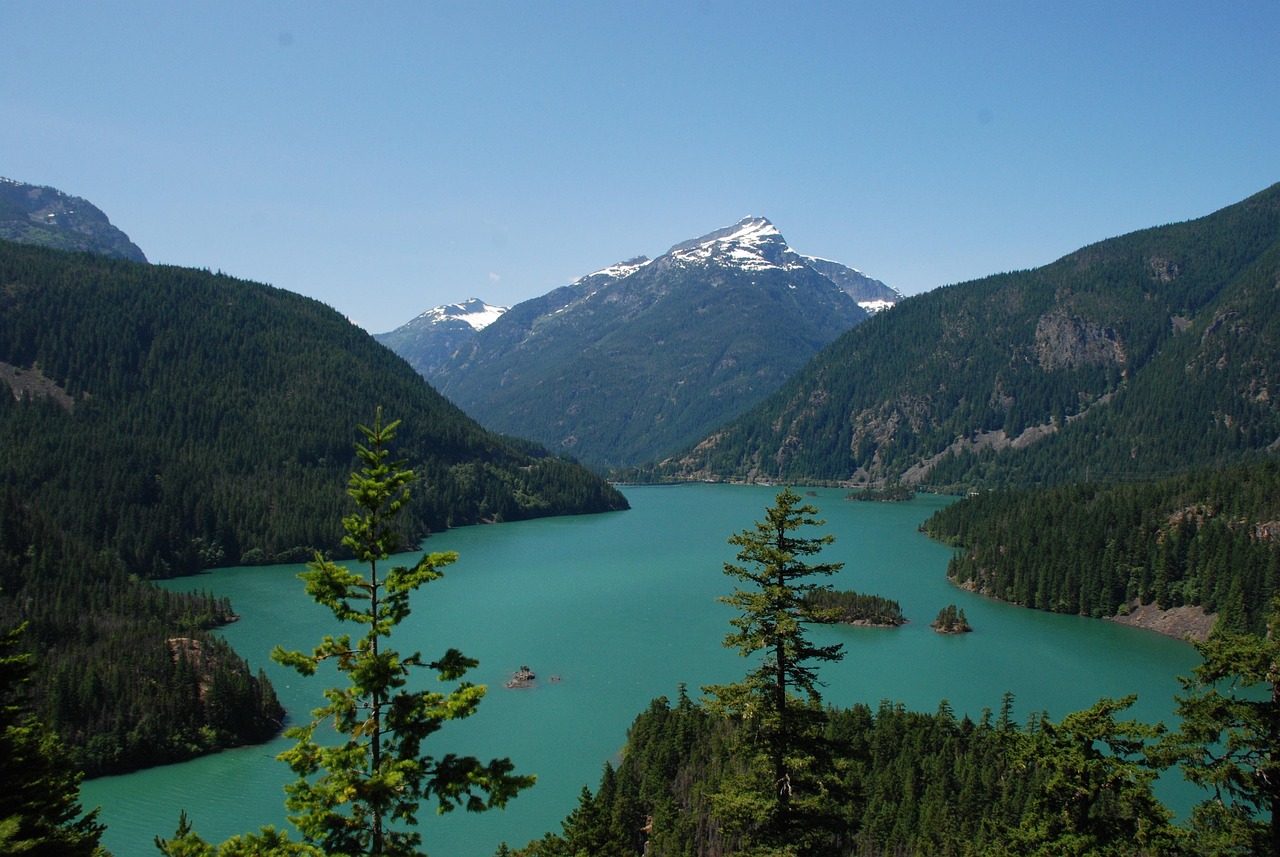
Chelan rests at the southeastern tip of 50-mile-long Lake Chelan, one of the deepest lakes in the United States at 1,486 feet. The town enjoys over 300 sunny days annually, unusual for Washington. Summer highs reach 85°F, drawing boaters and swimmers. More than 30 wineries cluster in the surrounding hills, creating a compact wine region. Boat access to Stehekin at the lake’s far end takes roughly 4 hours, offering a remote wilderness escape.
6. Bigfork, Montana
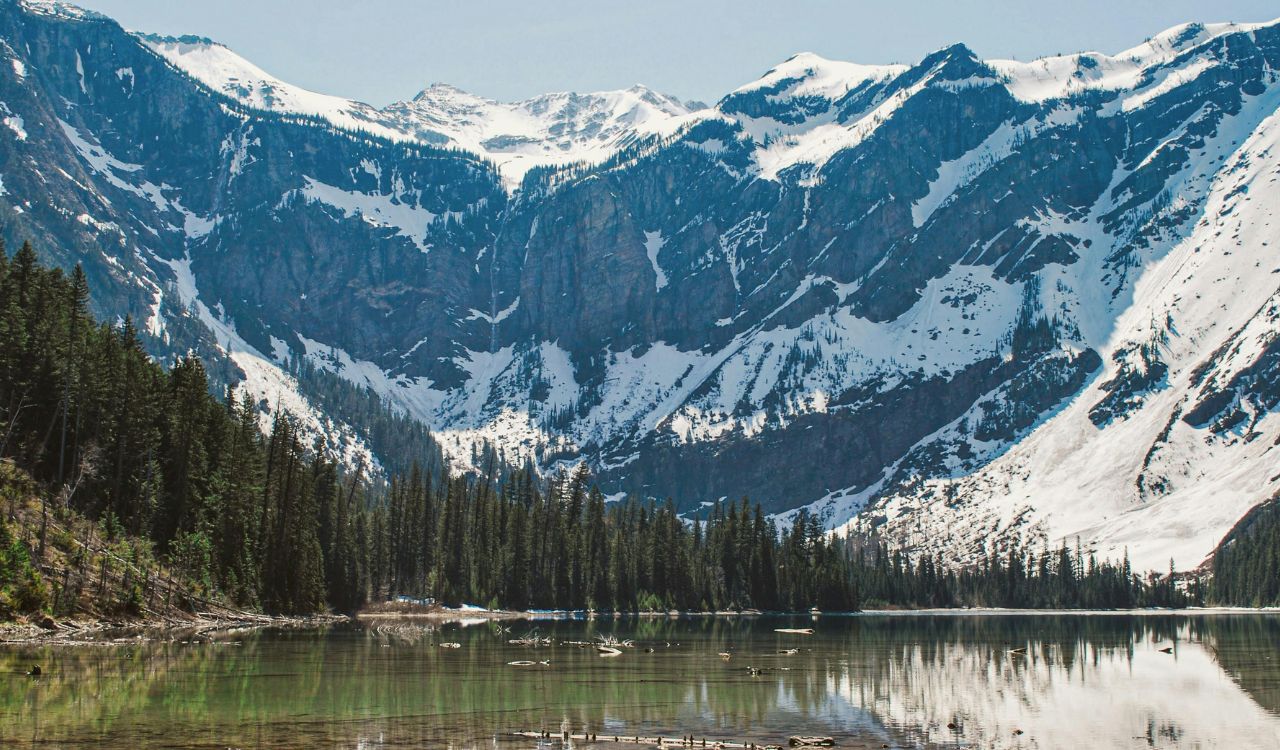
Bigfork lies along the northeast shore of Flathead Lake, the largest natural freshwater lake west of the Mississippi at nearly 200 square miles. The village population hovers around 5,000, giving it an intimate feel. Glacier National Park is about 35 miles away, making it an ideal base. Summer temperatures average 80°F, while winter snow can exceed 60 inches. Art galleries, a professional summer playhouse, and lakeside marinas shape its relaxed yet cultured character.
7. Sandpoint, Idaho
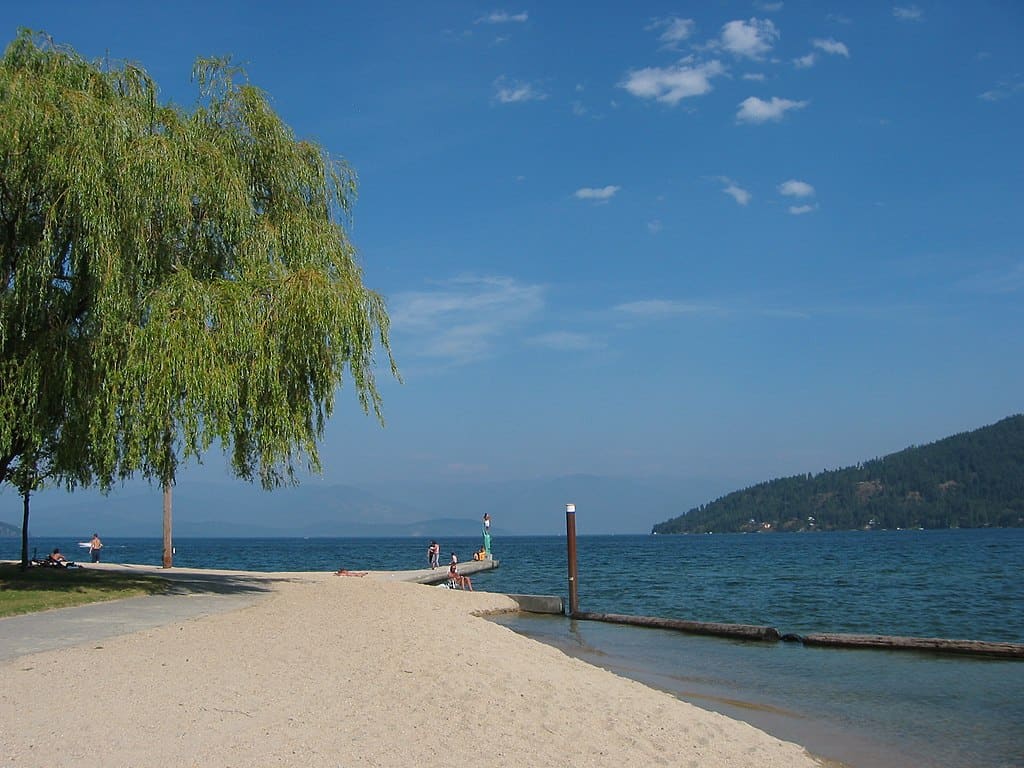
Set on Lake Pend Oreille, which spans 43 miles and reaches depths of 1,150 feet, Sandpoint blends mountain drama with beach culture. The town has roughly 9,000 residents and a lively downtown core. Schweitzer Mountain Resort sits 11 miles away, offering 2,900 skiable acres. Summer highs hover near 83°F, and the city beach park stretches nearly half a mile. Annual music festivals draw thousands, adding energy to this otherwise peaceful lakeside retreat.
8. Geneva, New York
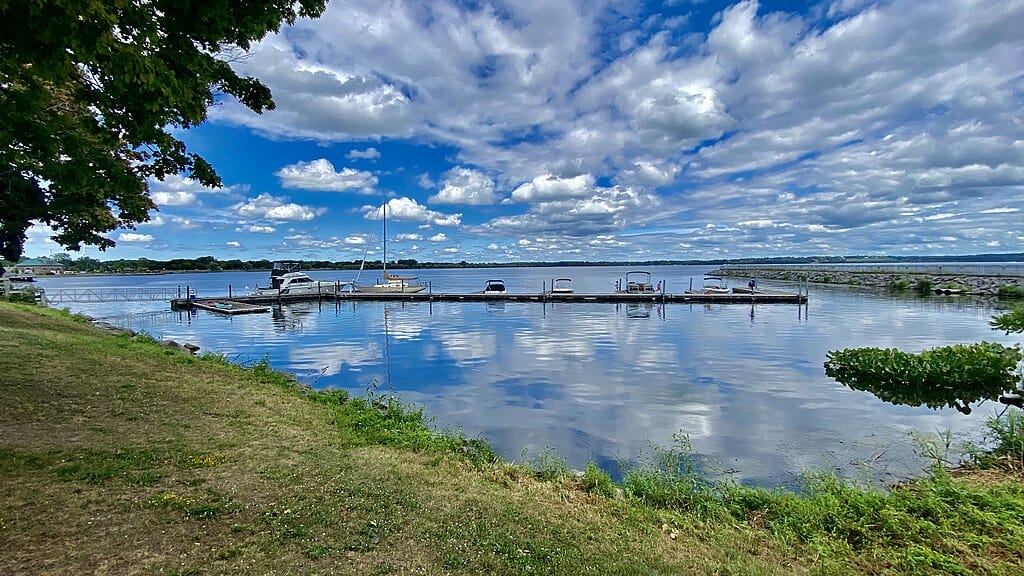
Located on the northern tip of Seneca Lake, Geneva anchors New York’s Finger Lakes wine region. Seneca Lake extends 38 miles and plunges 618 feet deep. More than 100 wineries operate across the wider region, many within a 20-minute drive. The town’s population is around 13,000, giving it both college-town vibrancy and rural calm. Summer averages 79°F, while autumn foliage peaks in October, when vineyard views turn striking shades of red and gold.
9. Wolfeboro, New Hampshire
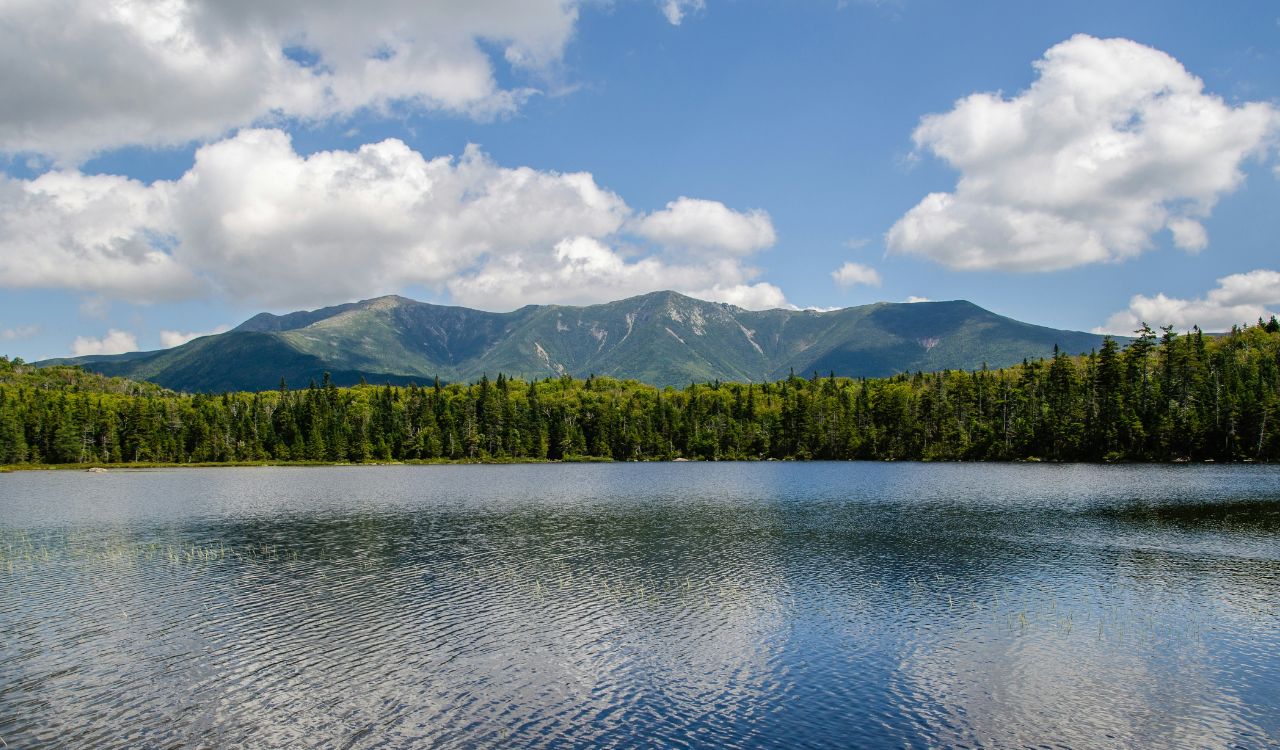
Wolfeboro sits along Lake Winnipesaukee, a 72-square-mile lake with over 250 islands. Often called America’s oldest summer resort town, it has fewer than 7,000 year-round residents. Boating dominates from June through August, when temperatures average 80°F. Mount Major rises 1,786 feet nearby for accessible hiking. The town docks host classic wooden boat shows each summer. Winters are snowy and quiet, with ice fishing common from January to early March.
10. South Haven, Michigan
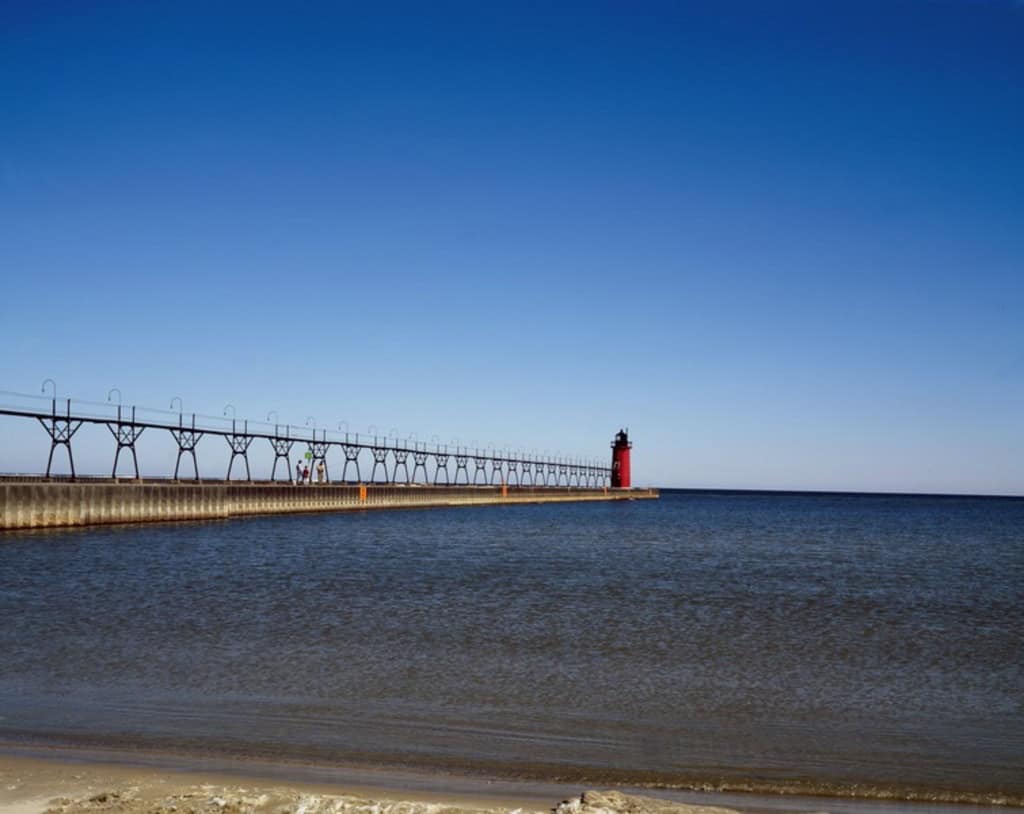
South Haven lines the eastern shore of Lake Michigan, whose surface area exceeds 22,000 square miles. The town has about 4,000 residents but swells in summer. Two historic lighthouses mark the harbor entrance, and sandy beaches stretch for miles. July highs average 81°F, while lake breezes keep evenings cool. Blueberry farms surround the area, with harvest peaking in mid-summer. The walkable downtown offers marinas, cafés, and waterfront parks within a compact radius.
11. Whitefish, Montana
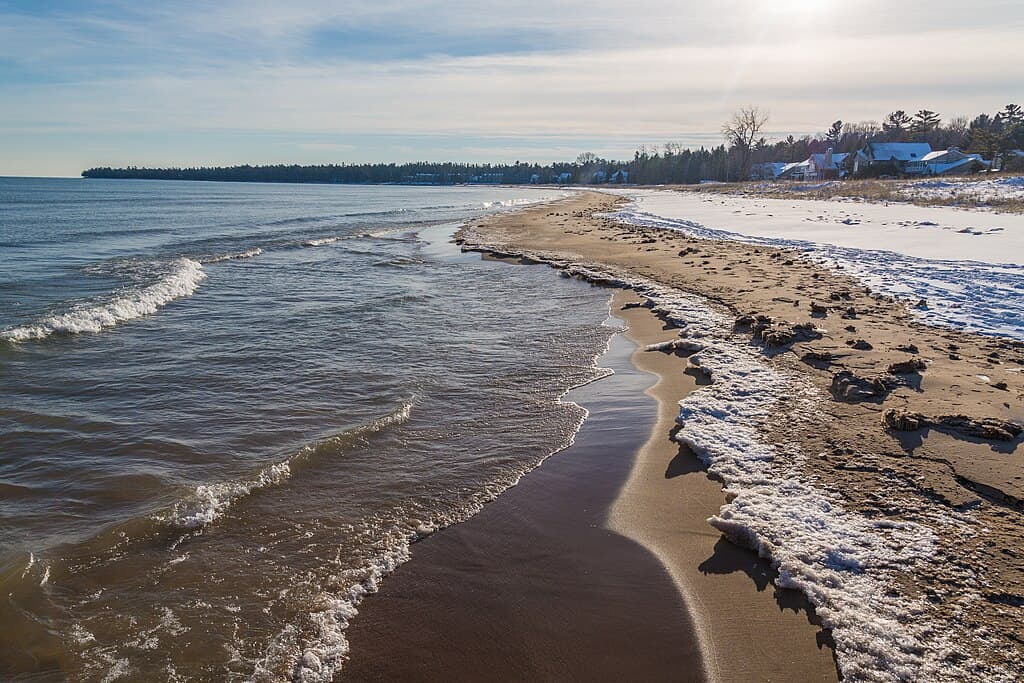
Whitefish sits beside a 7-mile-long glacial lake and serves as a western gateway to Glacier National Park, 25 miles away. The population is roughly 8,500, yet visitor numbers surge each summer. Whitefish Mountain Resort provides 3,000 acres of ski terrain and averages over 300 inches of snow annually. Summer highs reach 82°F, ideal for boating and hiking. The historic downtown spans only a few blocks but includes breweries, galleries, and rail-era architecture.
12. Osage Beach, Missouri
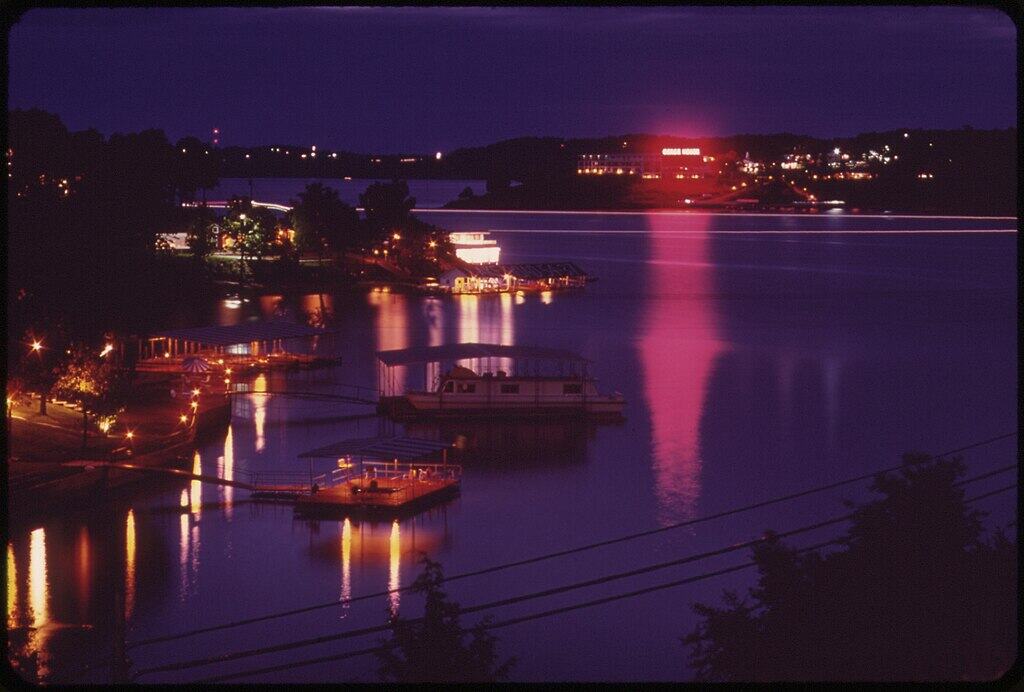
Located along the Lake of the Ozarks, which stretches 92 miles end to end, Osage Beach thrives on waterfront recreation. The reservoir contains more than 1,100 miles of shoreline, exceeding California’s coast. Roughly 5,000 residents live here year-round, though summer weekends multiply that number. Average July highs hit 89°F. Boat rentals, dockside restaurants, and outlet shopping centers cluster within a 10-mile corridor, making it lively and accessible for families.
13. Grand Lake, Colorado
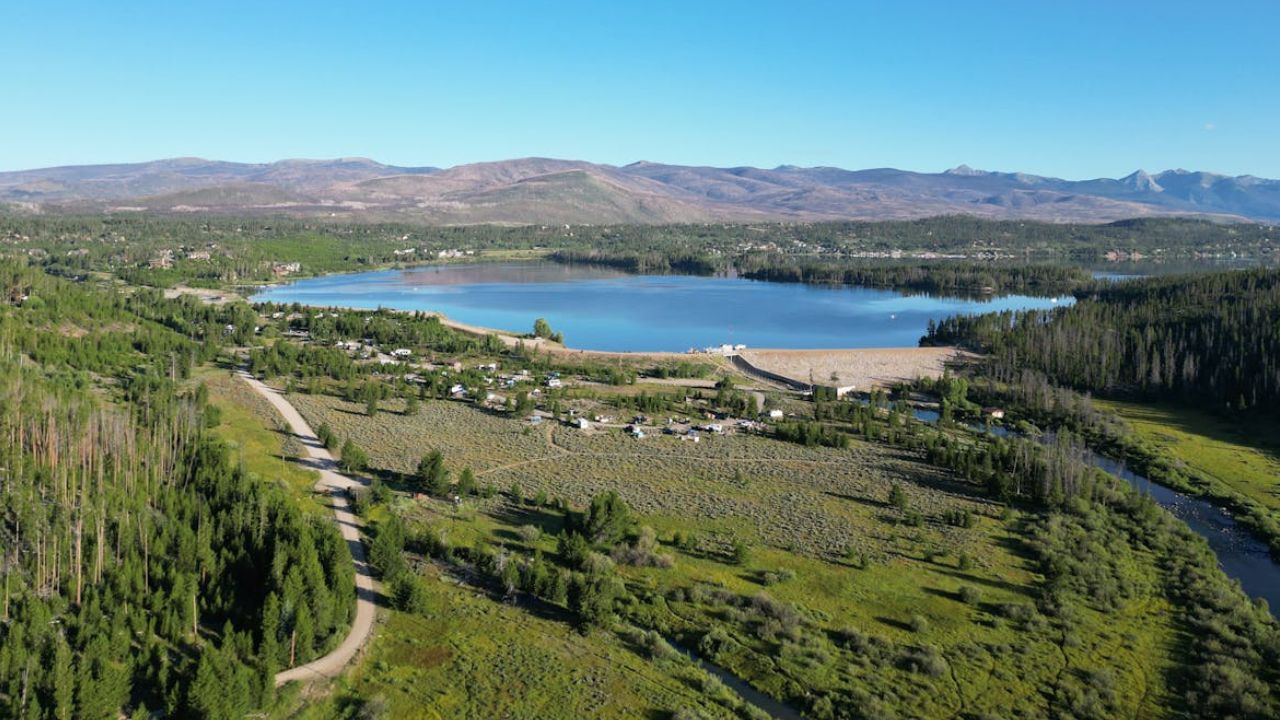
Grand Lake rests at 8,369 feet elevation beside Colorado’s largest natural lake, covering about 500 acres. The town population is under 500, preserving a rustic atmosphere. Rocky Mountain National Park’s west entrance lies 2 miles away. Summer highs average 72°F, while winter lows can drop below 0°F. A wooden boardwalk dating back over 100 years lines the main street. Wildlife sightings, including moose, are common in nearby meadows.
14. Ephraim, Wisconsin
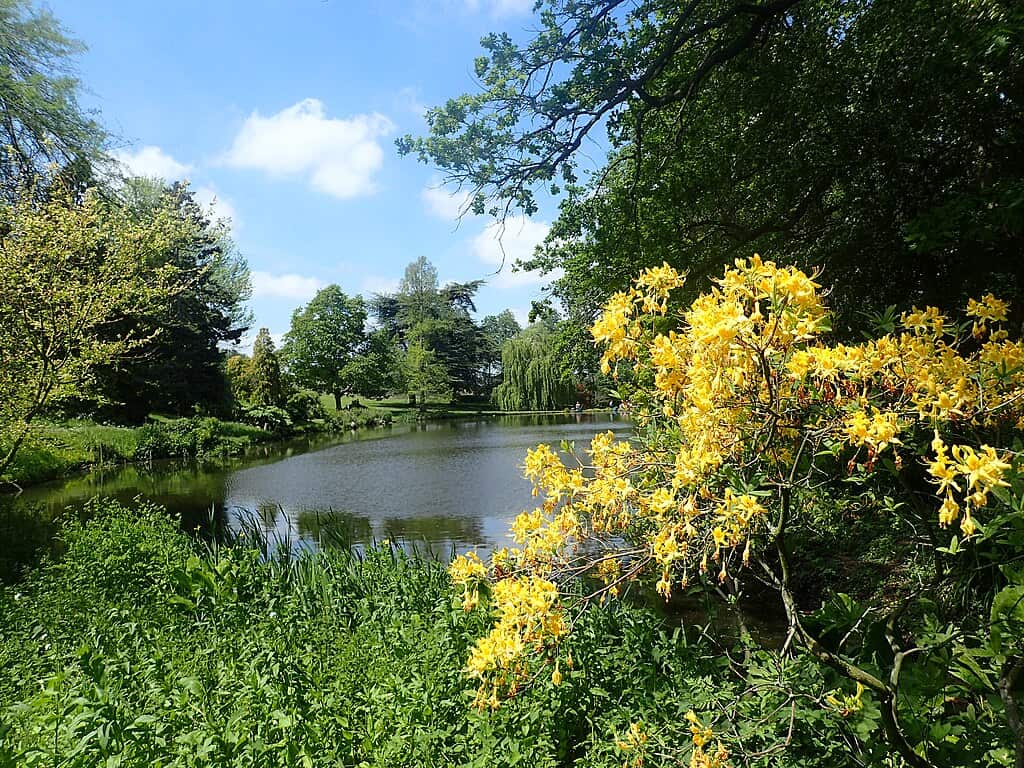
Ephraim overlooks Green Bay along Door County’s peninsula. Fewer than 300 residents live here year-round, yet summer tourism fills its inns and marinas. The waterfront spans roughly 3 miles, framed by white historic buildings and church steeples. July highs average 76°F, making it cooler than many Midwest destinations. Peninsula State Park, covering 3,776 acres, borders the village. Sunsets over the bay are considered among Wisconsin’s most photogenic natural scenes.
15. Alexandria, Minnesota
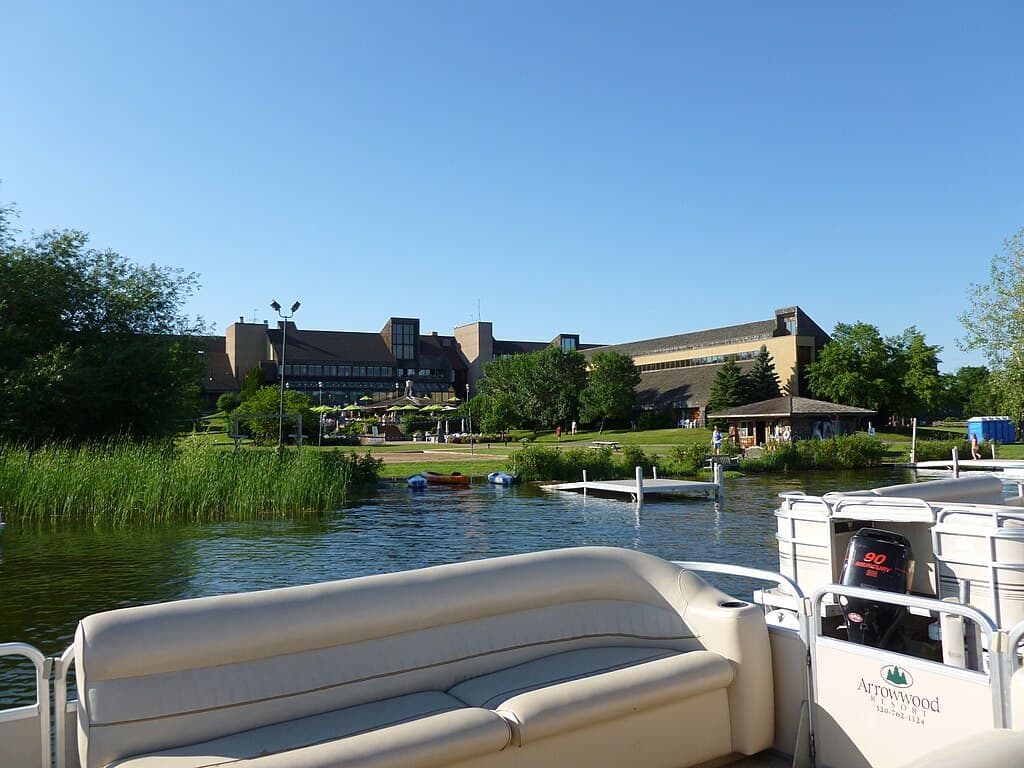
Alexandria anchors a lakes region with more than 300 bodies of water within a 30-mile radius, making it one of Minnesota’s most water-rich hubs. Around 14,000 residents live here year-round, though summer visitors significantly boost that number. Lake Darling and Lake Carlos are local favorites for boating and walleye fishing, with July highs averaging 82°F. The 55-mile Central Lakes Trail draws cyclists from across the state. Winter brings about 50 inches of snowfall, supporting snowmobiling and ice fishing traditions.
16. Lake George, New York
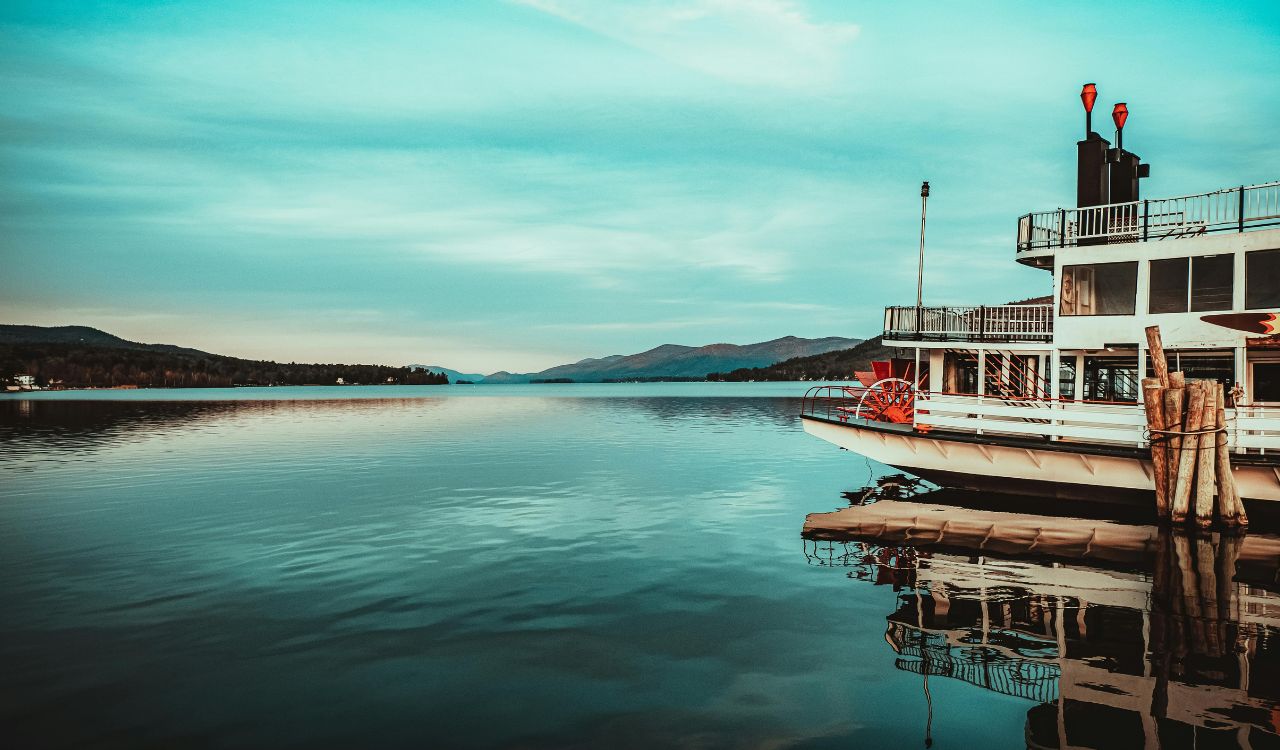
Stretching 32 miles through the Adirondacks, Lake George reaches depths of 187 feet and draws millions annually despite a village population just over 3,000. Summer temperatures average 80°F, perfect for swimming and scenic steamboat cruises operating from May through October. Fort William Henry, dating to 1755, adds historic depth. The surrounding Adirondack Park spans over 6 million acres, offering extensive hiking, camping, and panoramic drives during peak fall foliage in October.
17. Holland, Michigan
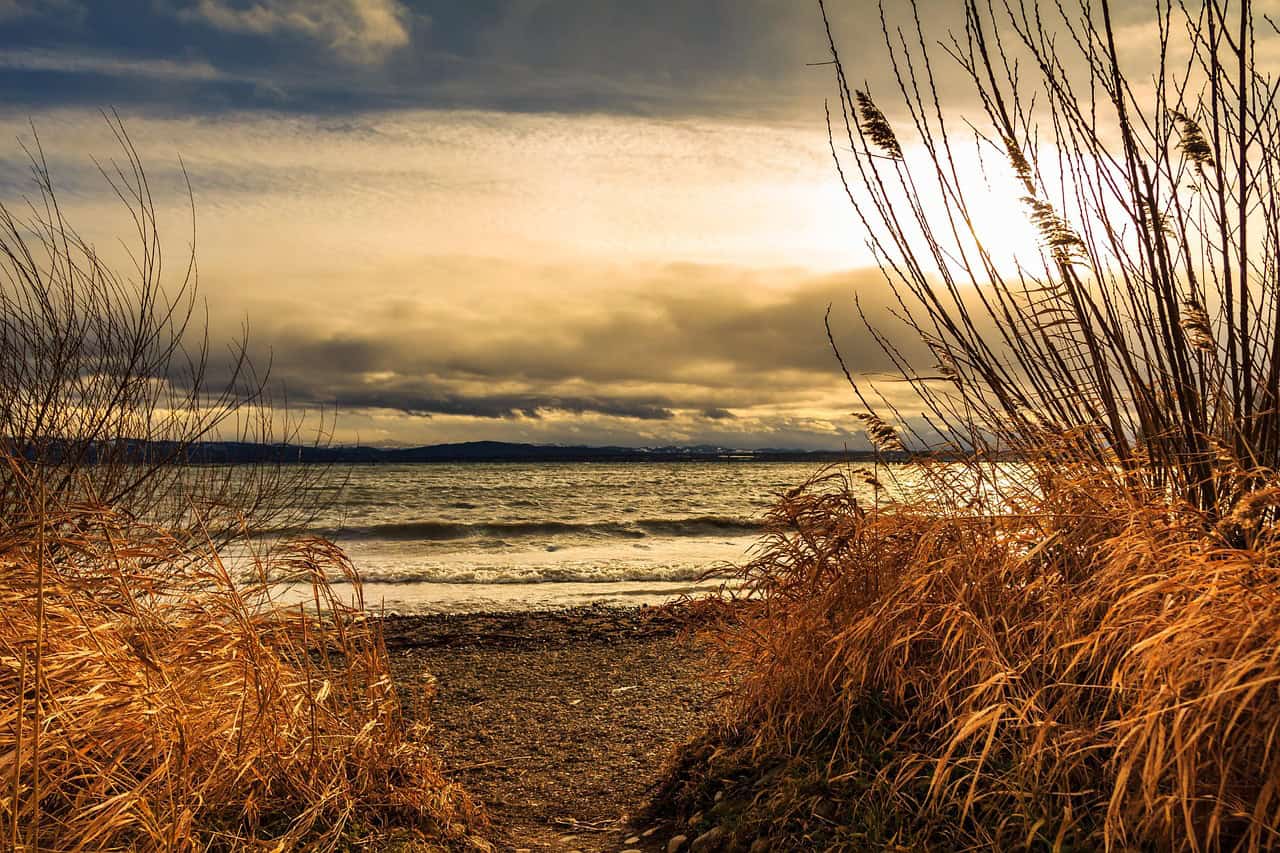
Home to roughly 34,000 residents, Holland sits along Lake Macatawa and lies 6 miles from Lake Michigan’s sandy shoreline. Each May, the Tulip Time Festival showcases more than 5 million blooms, reflecting the town’s Dutch heritage. Summer highs average 81°F, ideal for beach days at the 142-acre Holland State Park. The 125-foot De Zwaan windmill, imported from the Netherlands, anchors Windmill Island Gardens. Downtown streets are compact, walkable, and lined with boutiques and cafés.
18. McCall, Idaho
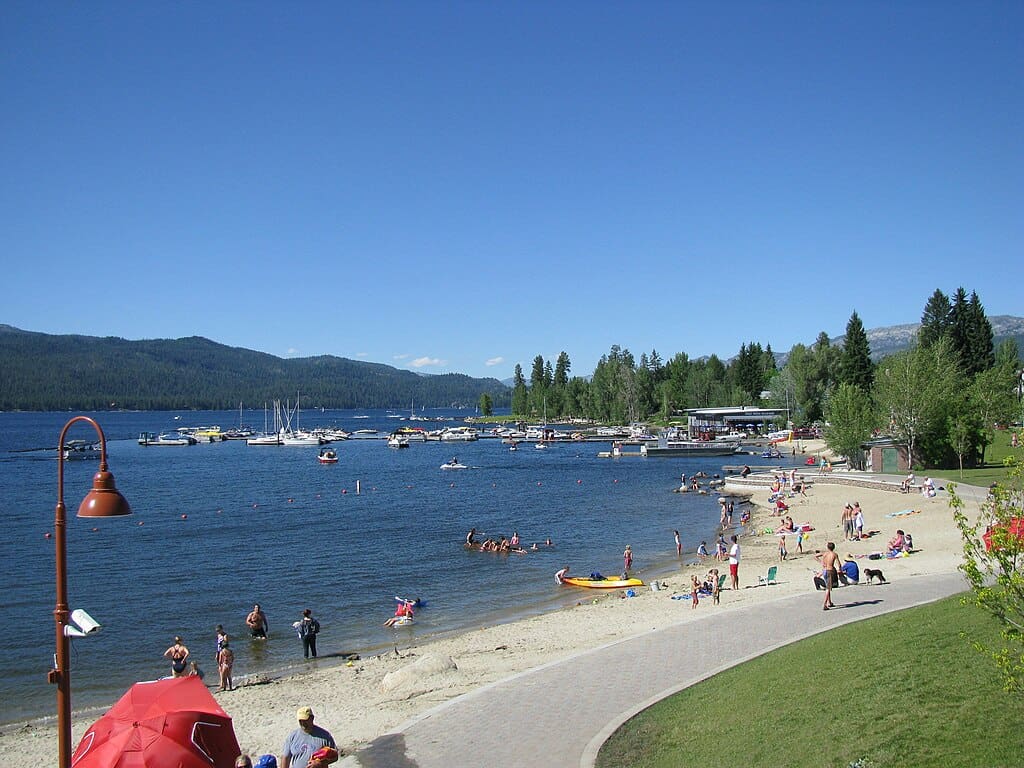
McCall stands at 5,021 feet elevation beside Payette Lake, which spans about 5,330 acres and plunges to 392 feet deep. Fewer than 4,000 residents live here permanently, yet tourism surges in both summer and winter. July highs average 79°F, ideal for paddleboarding and hiking. Brundage Mountain, 8 miles away, averages 320 inches of snowfall annually. The town’s Winter Carnival, running for over 50 years, features towering ice sculptures and community celebrations.
19. Lake Lure, North Carolina
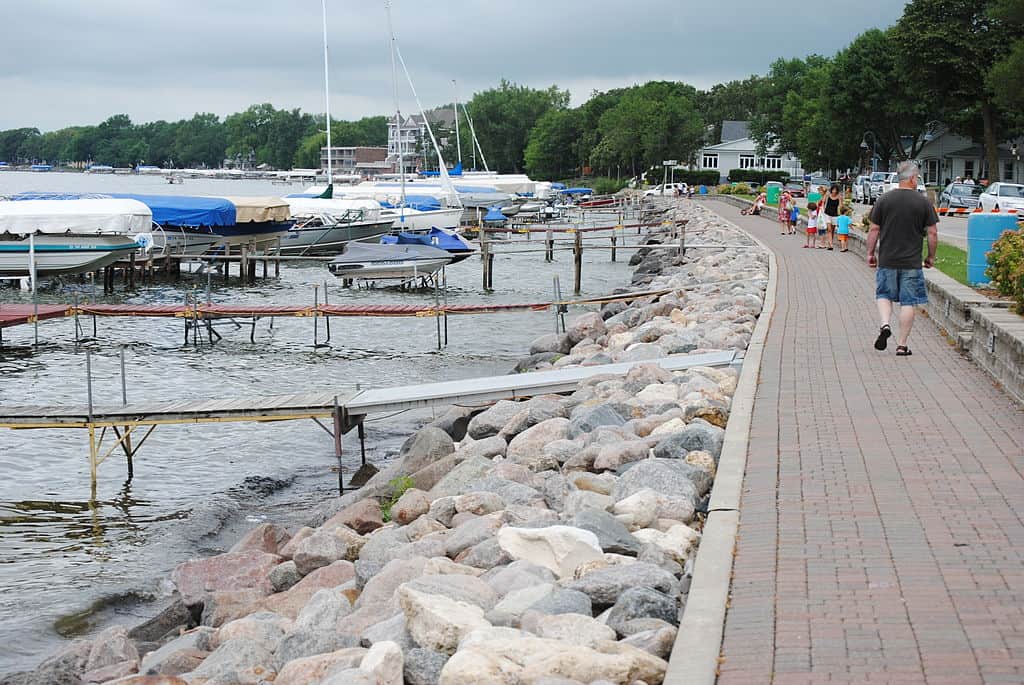
Lake Lure covers roughly 720 acres in the Blue Ridge foothills, with about 27 miles of shoreline. The town has fewer than 1,500 full-time residents, preserving a quiet atmosphere. Chimney Rock rises 315 feet above the lake, providing sweeping views after a moderate hike. Summer highs average 84°F, while autumn foliage peaks in October. The lake’s calm waters are ideal for pontoon tours, and its scenic backdrop has attracted multiple film productions.
20. Clear Lake, Iowa
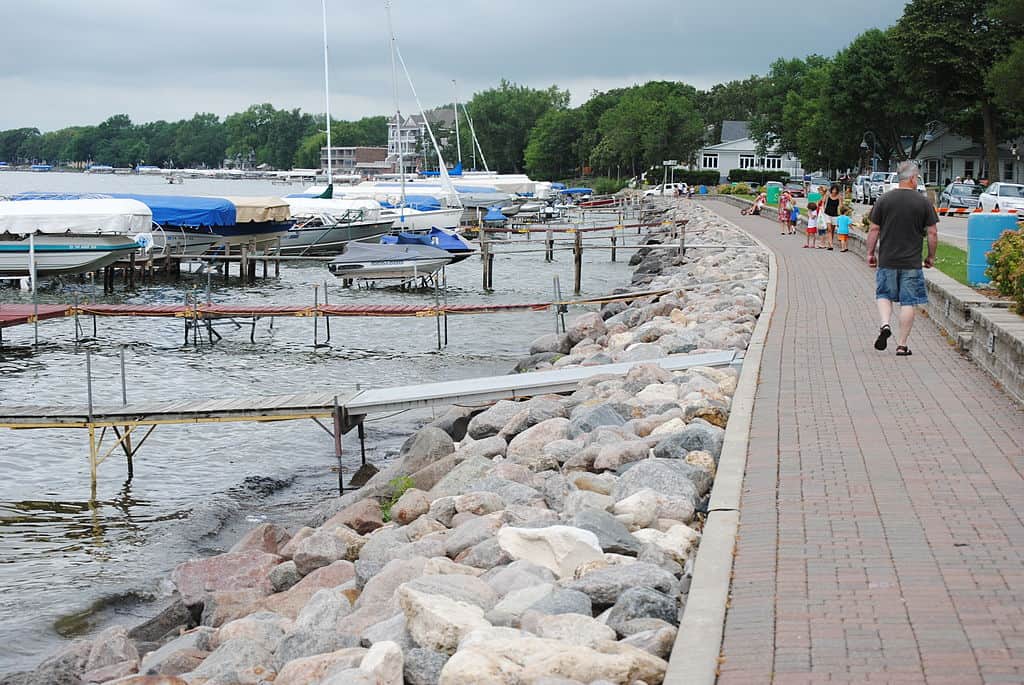
Clear Lake spans 3,684 acres with an average depth of just 10 feet, creating warm, swimmable waters by mid-summer. Around 8,000 residents live here year-round, though seasonal visitors fill marinas and beaches from June through August when highs average 83°F. The 2.5-mile lakeside trail connects parks, docks, and picnic areas, making it easy to explore on foot or bike. Sailing regattas are common thanks to steady prairie winds. The historic Surf Ballroom, opened in 1933, continues to host nationally touring artists.