We may earn money or products from the companies mentioned in this post. This means if you click on the link and purchase the item, I will receive a small commission at no extra cost to you ... you're just helping re-supply our family's travel fund.
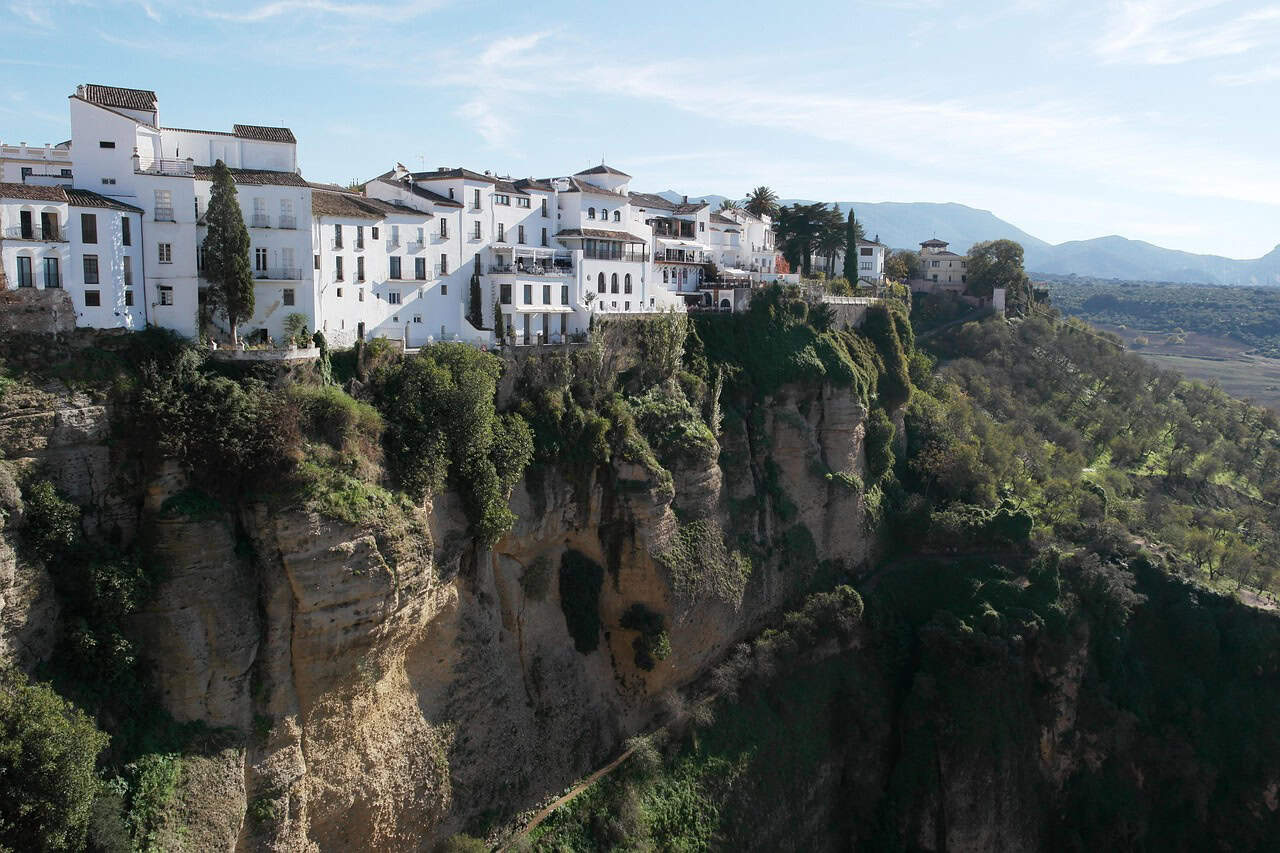
Europe has a rare talent for preserving places that feel suspended in time. Beyond major capitals, dozens of small towns still carry medieval layouts, traditional architecture, and landscapes so dramatic they feel imagined rather than built. These towns are not theme parks; they are lived‑in places where history quietly shapes daily life. From alpine lakes to coastal cliffs, each destination below blends scenery, culture, and human scale in a way that naturally evokes fairytales. The following list explores twenty such towns, detailing what makes each special, how it developed, and why it still feels magical today.
01. Hallstatt, Austria
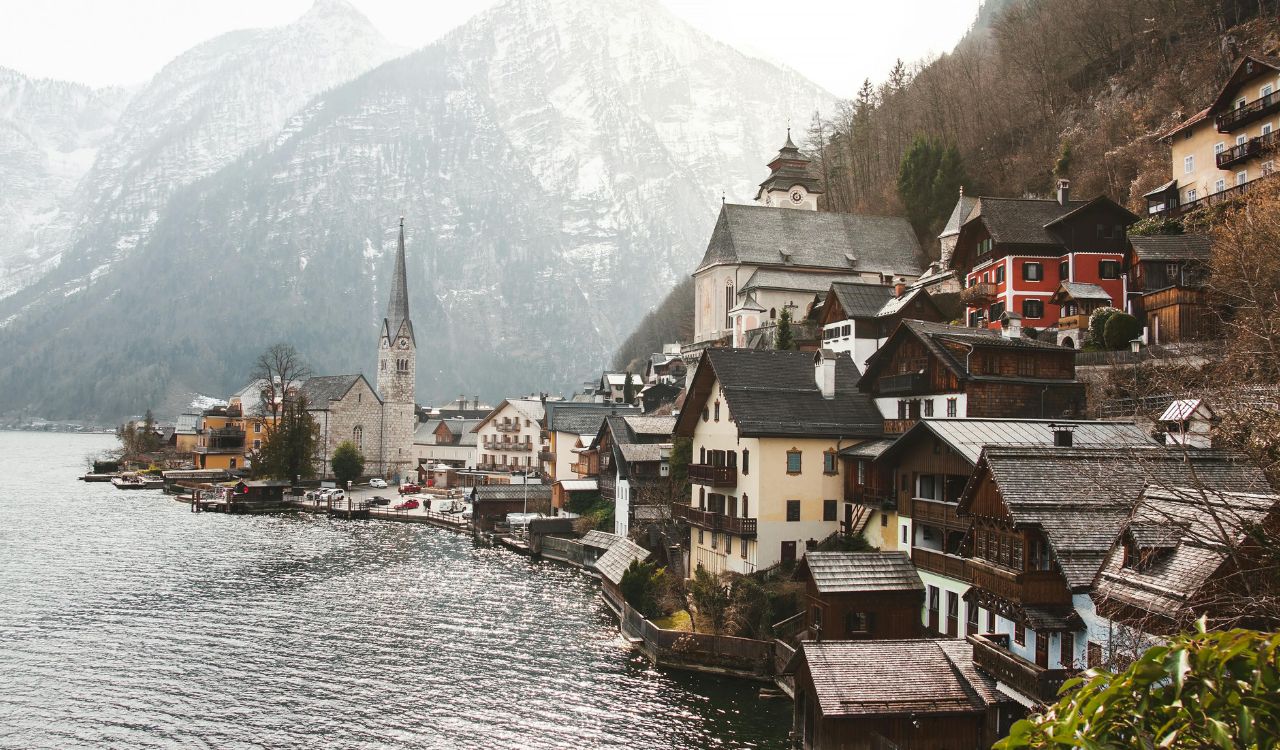
Tucked between Lake Hallstatt and the Dachstein Alps, Hallstatt is one of Europe’s oldest continuously inhabited villages, with salt mining records dating back over 7,000 years. The town sits at roughly 511 meters above sea level and has a population of about 750 residents, giving it an intimate, almost miniature scale. Wooden alpine houses rise directly from the lakeshore, their reflections doubling the visual impact. The surrounding peaks climb beyond 2,900 meters, enclosing the village in dramatic silence. Narrow lanes replace roads, reinforcing a slow rhythm of life. Annual visitor numbers exceed one million, yet early mornings reveal a quiet, authentic settlement shaped by geography and history rather than spectacle.
02. Colmar, France
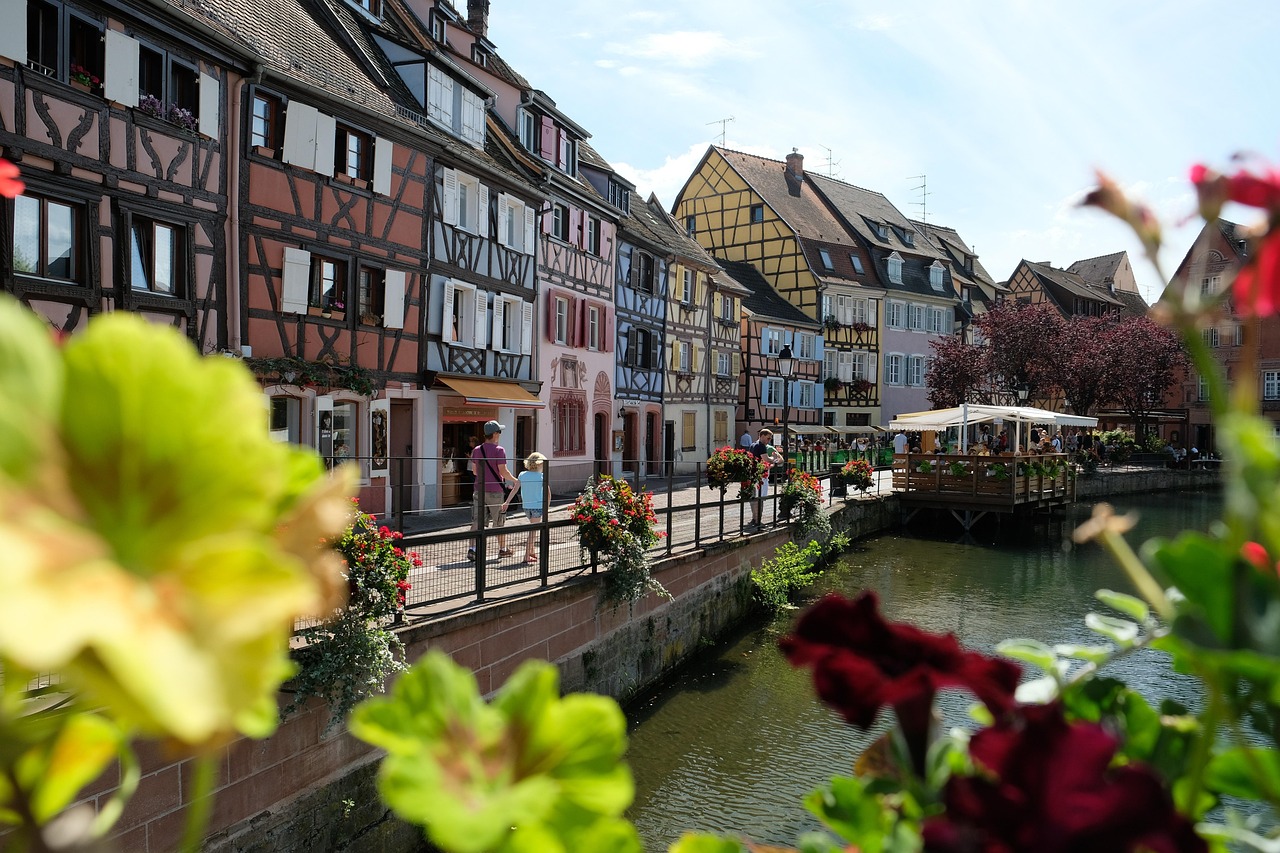
Colmar lies in northeastern France’s Alsace region, near the German border, and has a population of approximately 68,000. Dating back to the 9th century, the town is famed for its half‑timbered houses painted in soft pastels and arranged along canals known collectively as “Little Venice.” Colmar sits at an elevation of around 214 meters and benefits from one of the driest microclimates in France, which helped preserve its medieval architecture. Many buildings date between the 14th and 17th centuries, featuring carved wood and steep roofs. Distances are compact; most landmarks sit within a one‑kilometer walk. Seasonal markets and flower-lined streets heighten its storybook charm.
03. Rothenburg ob der Tauber, Germany
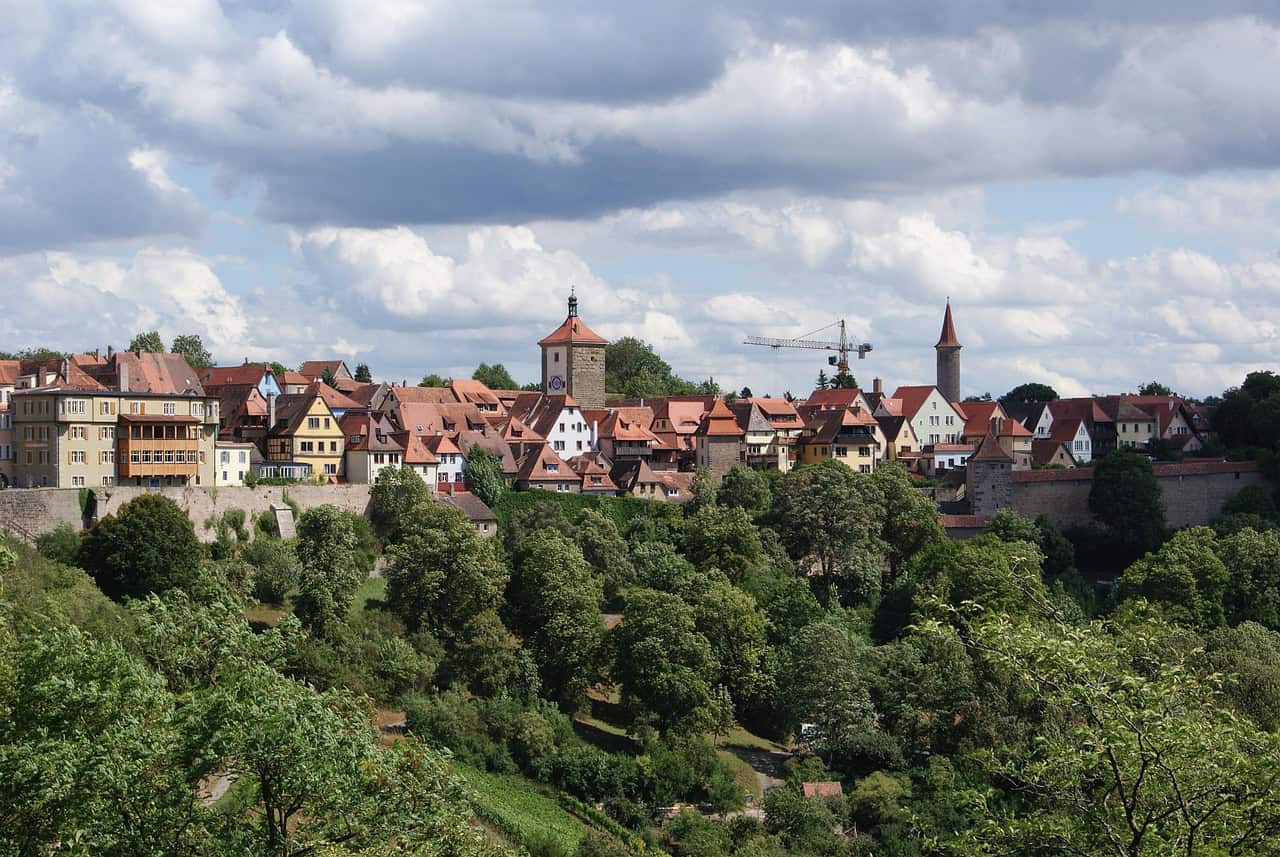
Rothenburg ob der Tauber is a walled medieval town in Bavaria with roughly 11,000 inhabitants. Positioned at about 430 meters above sea level, it rose to prominence in the 13th century as a free imperial city. Its defensive walls stretch nearly four kilometers and remain largely intact, encircling red‑roofed houses and cobbled streets. The town’s layout has barely changed since the 1500s, when its population peaked at around 6,000. Towers, gates, and a central market square define daily movement. Despite receiving over two million visitors annually, Rothenburg retains a quiet rhythm after sunset, when day‑trippers leave and lantern‑lit streets restore its fairytale atmosphere.
04. Český Krumlov, Czech Republic
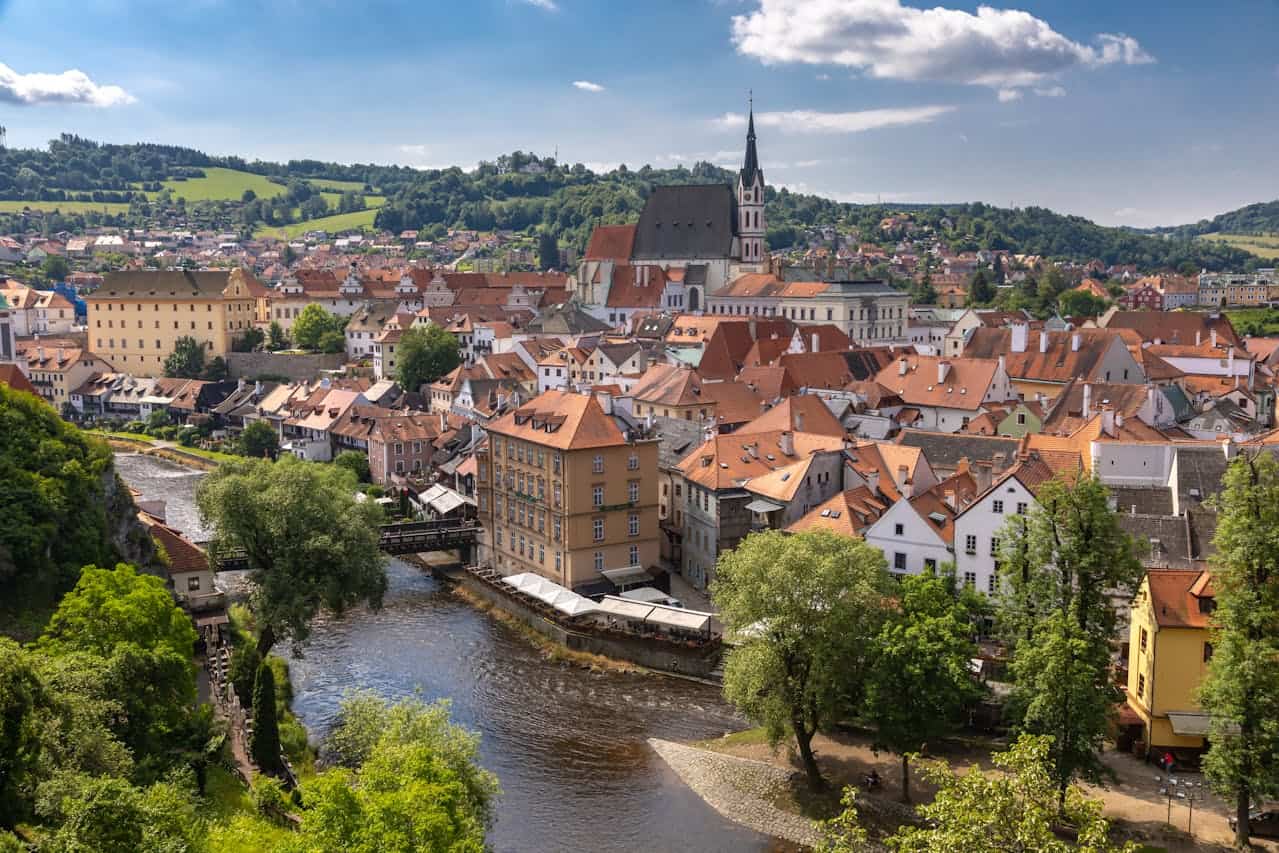
Český Krumlov sits in southern Bohemia and is home to about 13,000 people. Built around a tight curve of the Vltava River, the town developed in the 13th century and is crowned by a vast castle complex covering over seven hectares. The castle tower rises nearly 54 meters, offering panoramic views of terracotta rooftops packed closely together. The historic center spans less than one square kilometer, making it easily walkable. Elevation averages 492 meters, and surrounding forests add to its secluded feel. Preserved almost untouched by modern redevelopment, Český Krumlov feels like a living illustration, where Renaissance and Baroque details quietly dominate everyday life.
05. Giethoorn, Netherlands
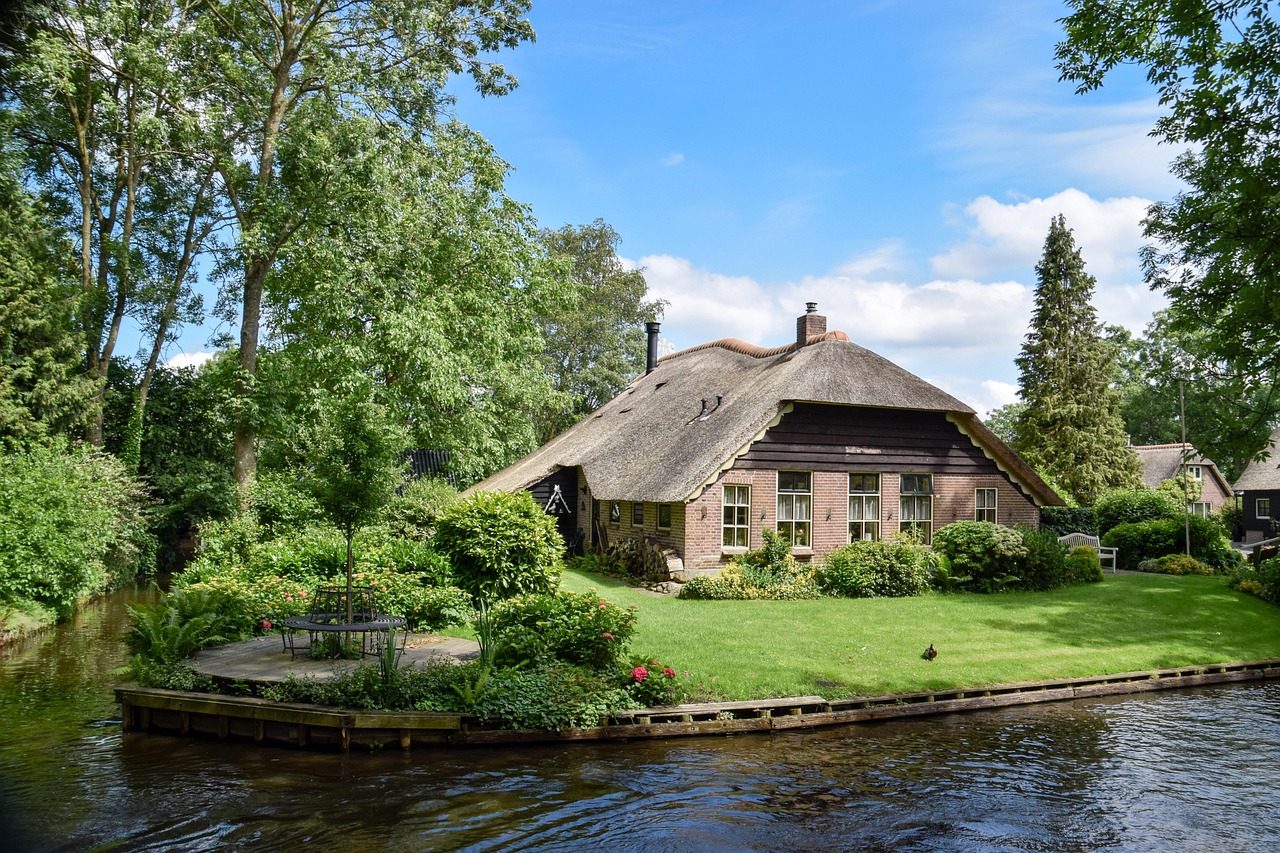
Giethoorn is a small Dutch village with approximately 2,800 residents, located in the province of Overijssel. Founded in the 13th century, it is famously car‑free in its historic core, relying instead on about seven kilometers of canals. Thatched-roof farmhouses sit on narrow islands connected by more than 170 wooden footbridges. The village lies just one meter above sea level, surrounded by wetlands within Weerribben‑Wieden National Park. Boats replace cars, creating near‑silence broken only by water and birds. Distances are short, yet movement feels ceremonial. Giethoorn’s layout, shaped entirely by water, gives it a dreamlike quality rarely found in modern Europe.
06. Sintra, Portugal
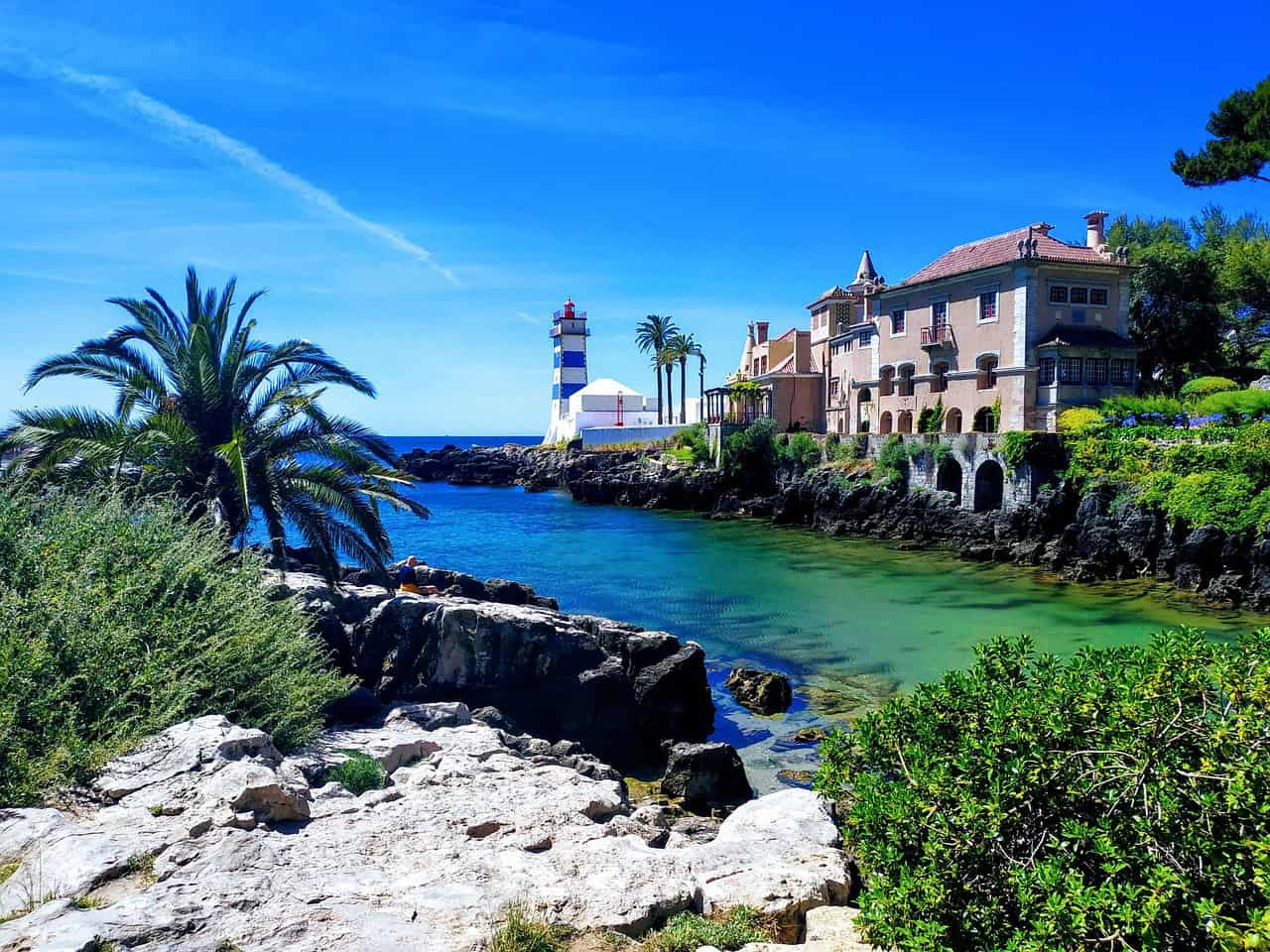
Sintra rests in the hills northwest of Lisbon and has a population close to 385,000 across the wider municipality. The historic town itself sits around 450 meters above sea level, benefiting from a cool, misty microclimate. Sintra became a royal retreat in the 19th century, resulting in extravagant palaces like Pena Palace, perched at 529 meters. Forested slopes, hidden paths, and ornamental gardens dominate the landscape. The old town spreads across steep lanes less than two kilometers wide, emphasizing vertical movement rather than sprawl. Layers of Moorish, Gothic, and Romantic architecture coexist, giving Sintra a surreal, almost theatrical presence shaped by imagination and elevation.
07. Reine, Norway
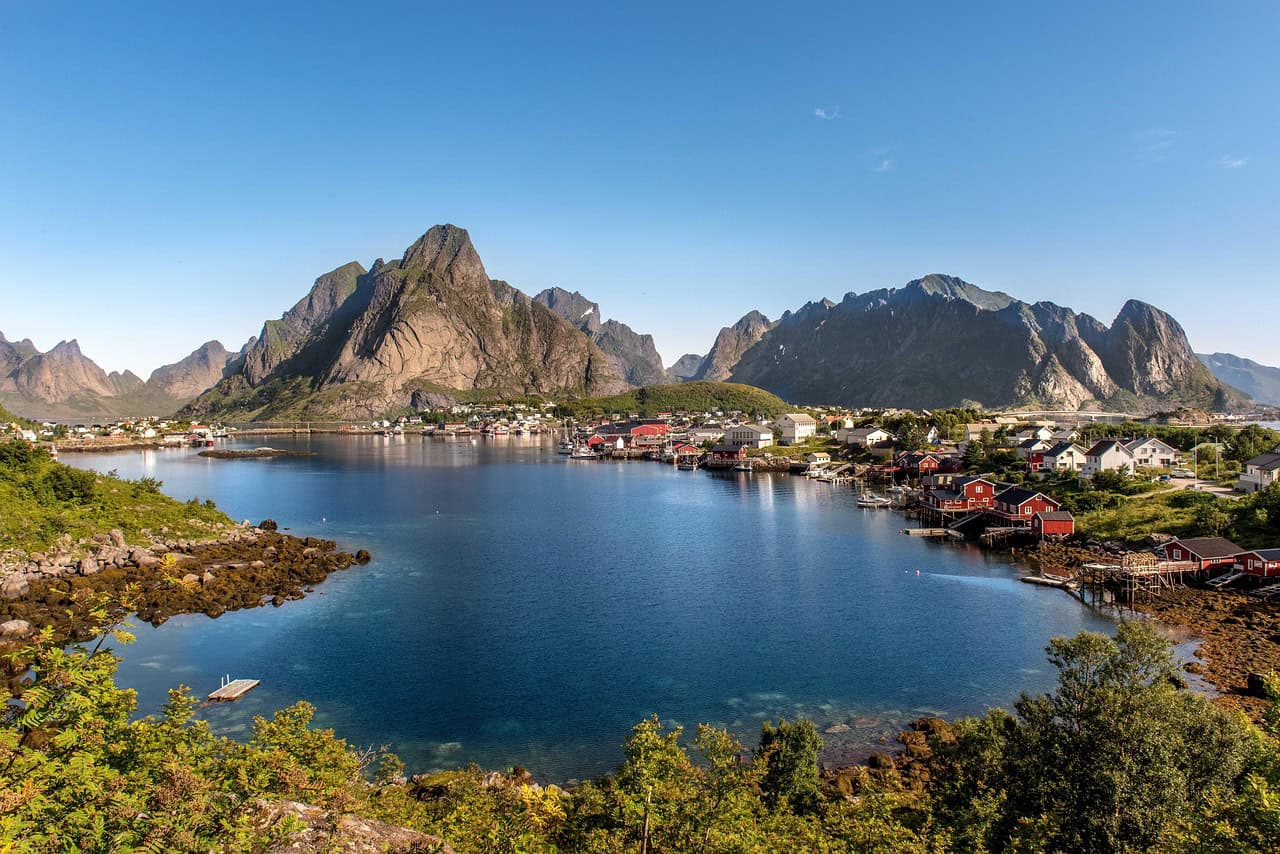
Reine is a fishing village in Norway’s Lofoten Islands with fewer than 400 permanent residents. Set at sea level, it is surrounded by jagged peaks rising over 1,000 meters almost directly from the water. Traditional red wooden rorbuer cabins line the shoreline, originally built for seasonal cod fishing dating back centuries. The village covers less than one square kilometer, intensifying the scale of its dramatic scenery. Winter brings polar night, while summer offers near‑constant daylight. Despite harsh weather conditions, Reine feels improbably delicate, as if placed carefully within the landscape. The balance between human settlement and overwhelming nature gives it a strikingly mythical tone.
08. Bled, Slovenia
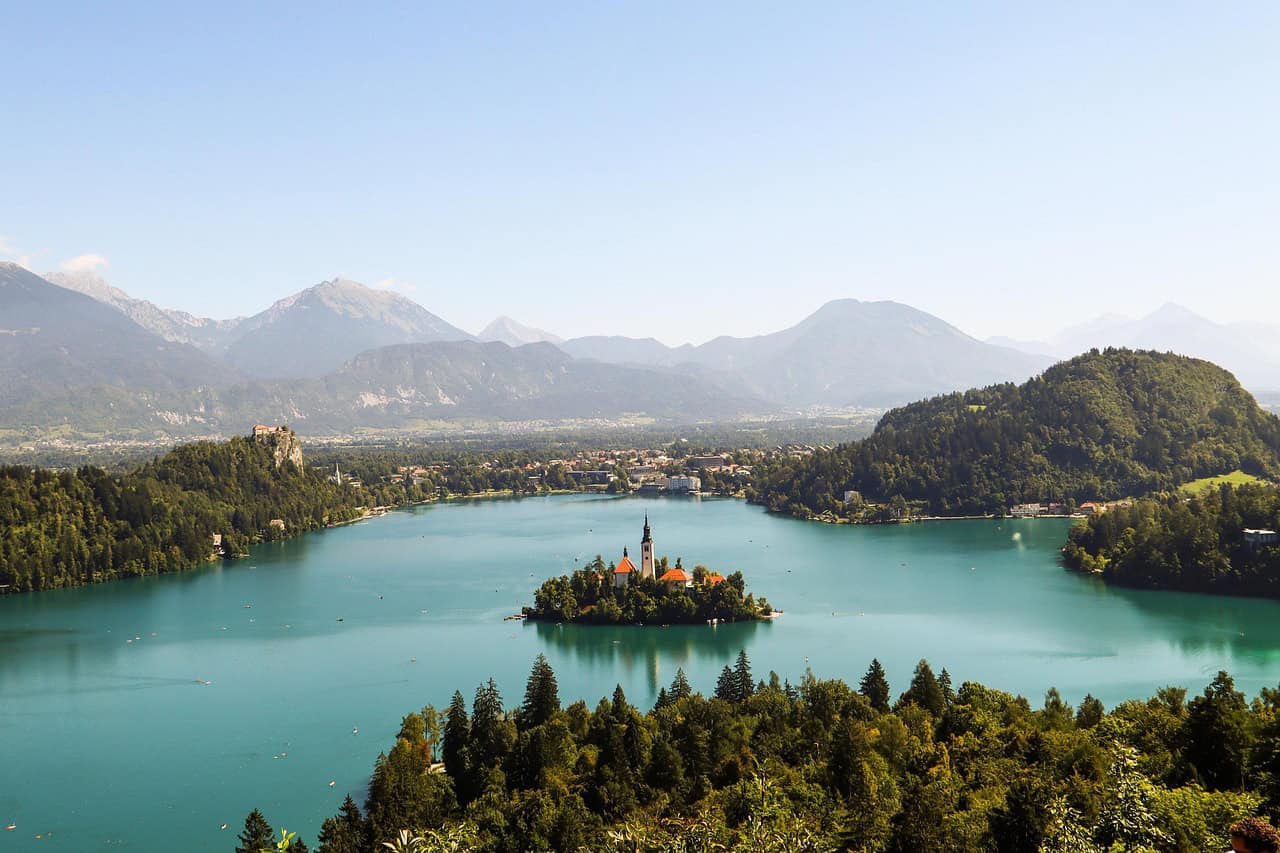
Bled is a resort town of about 8,200 residents in northwestern Slovenia, sitting at an elevation of roughly 507 meters. Its defining feature is Lake Bled, spanning 1.45 square kilometers, with a small island at its center. A Baroque church rises from the island, while Bled Castle towers 130 meters above the lake on a cliff. Settlement here dates back over 1,000 years, making it one of Slovenia’s oldest towns. Walking paths encircle the lake, totaling about six kilometers. The combination of water, forest, and vertical stone creates a setting that feels deliberately composed, as though designed for legend rather than tourism.
09. Bibury, England
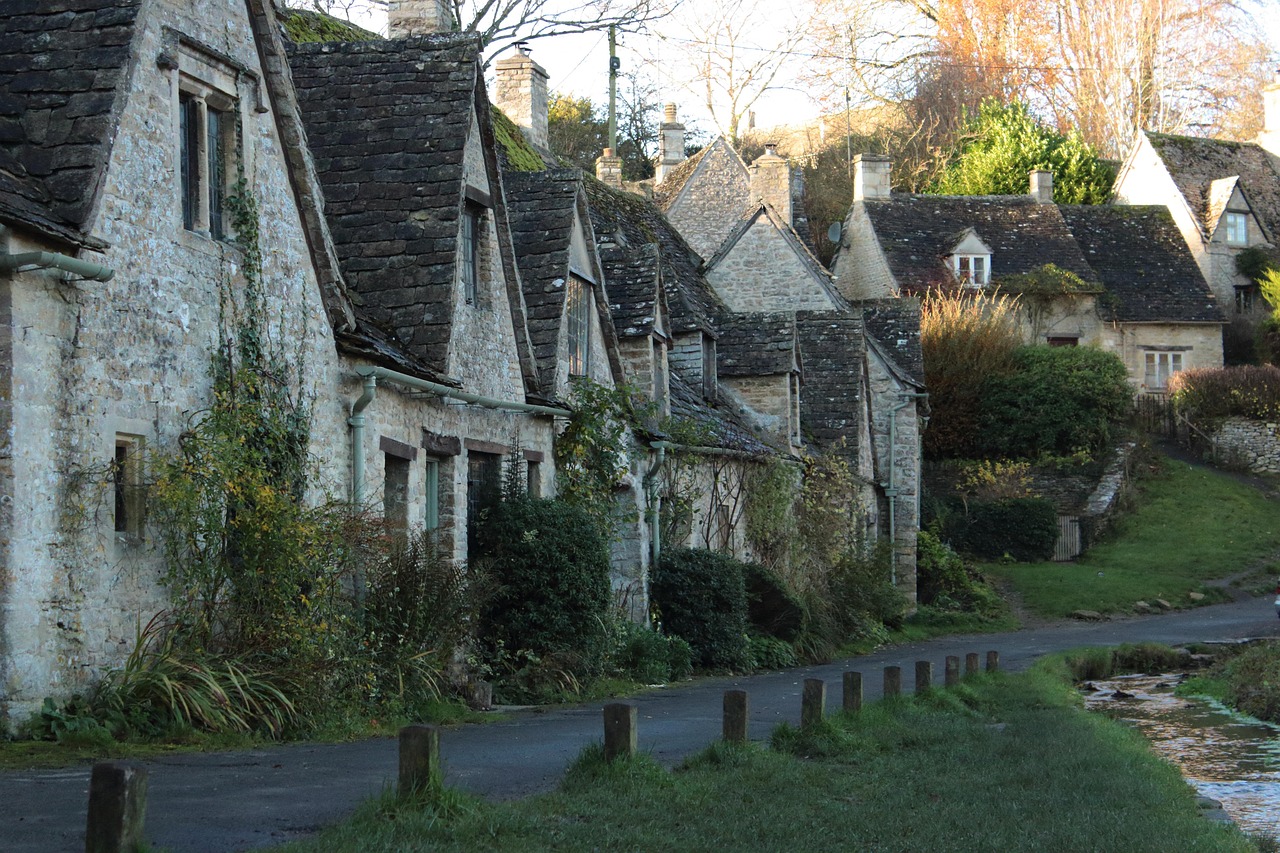
Bibury is a village in England’s Cotswolds with a population of around 600 people. Located at approximately 100 meters above sea level, it developed mainly between the 14th and 17th centuries as a wool‑producing settlement. Arlington Row, a line of steep‑roofed stone cottages built in 1380, is one of the most photographed streets in Britain. The River Coln flows gently through the village, shaping its layout and pace. Distances are minimal, with most landmarks within a few hundred meters. Local limestone gives buildings a warm, muted tone, reinforcing Bibury’s soft, pastoral aesthetic that feels preserved rather than staged.
10. Eguisheim, France
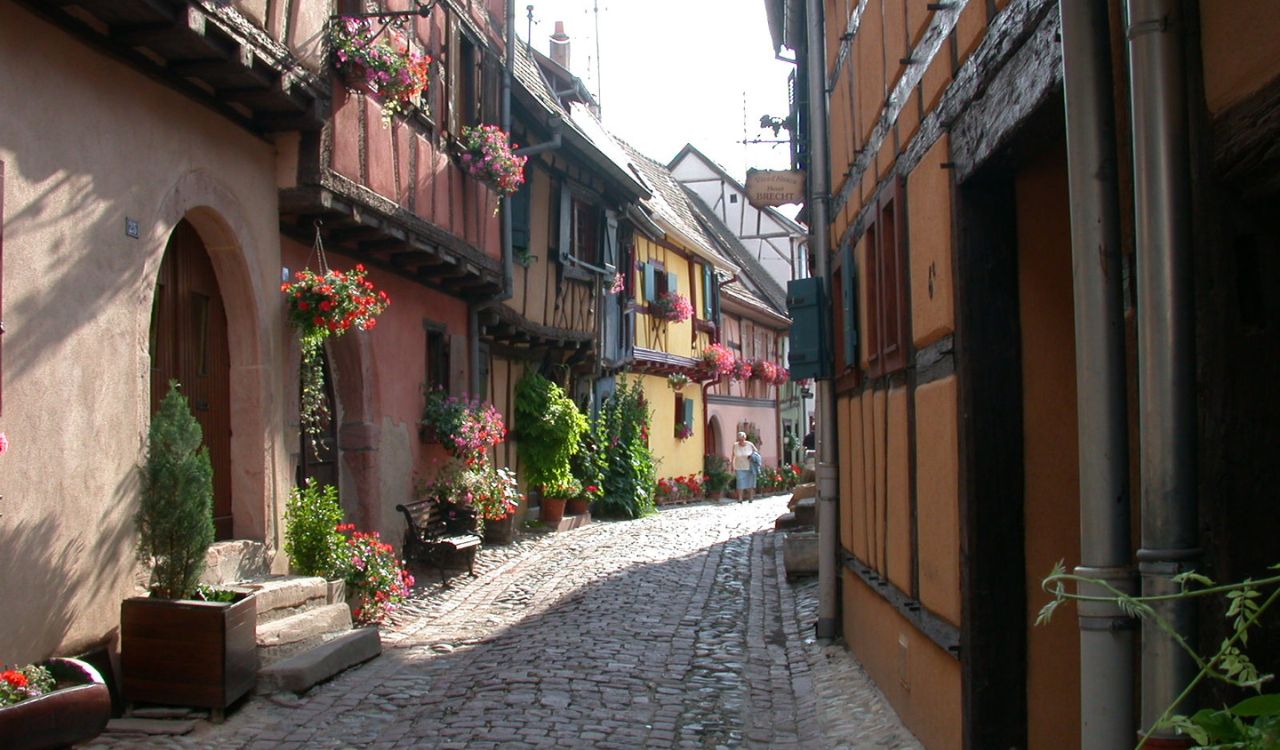
Eguisheim is a small Alsatian village with roughly 1,700 inhabitants, arranged in a distinctive circular layout. Founded in the 8th century, it sits at about 210 meters above sea level and is surrounded by vineyards stretching across gentle hills. Concentric streets wind around a central square, with brightly painted timber houses dating from the 16th century. The entire village measures less than one kilometer across, making it easily explored on foot. Flower boxes decorate nearly every window from spring to autumn. Eguisheim’s compact design, historical continuity, and agricultural setting combine to create a sense of enclosure that feels intimate, decorative, and unmistakably fairytale‑like.
11. Alberobello, Italy
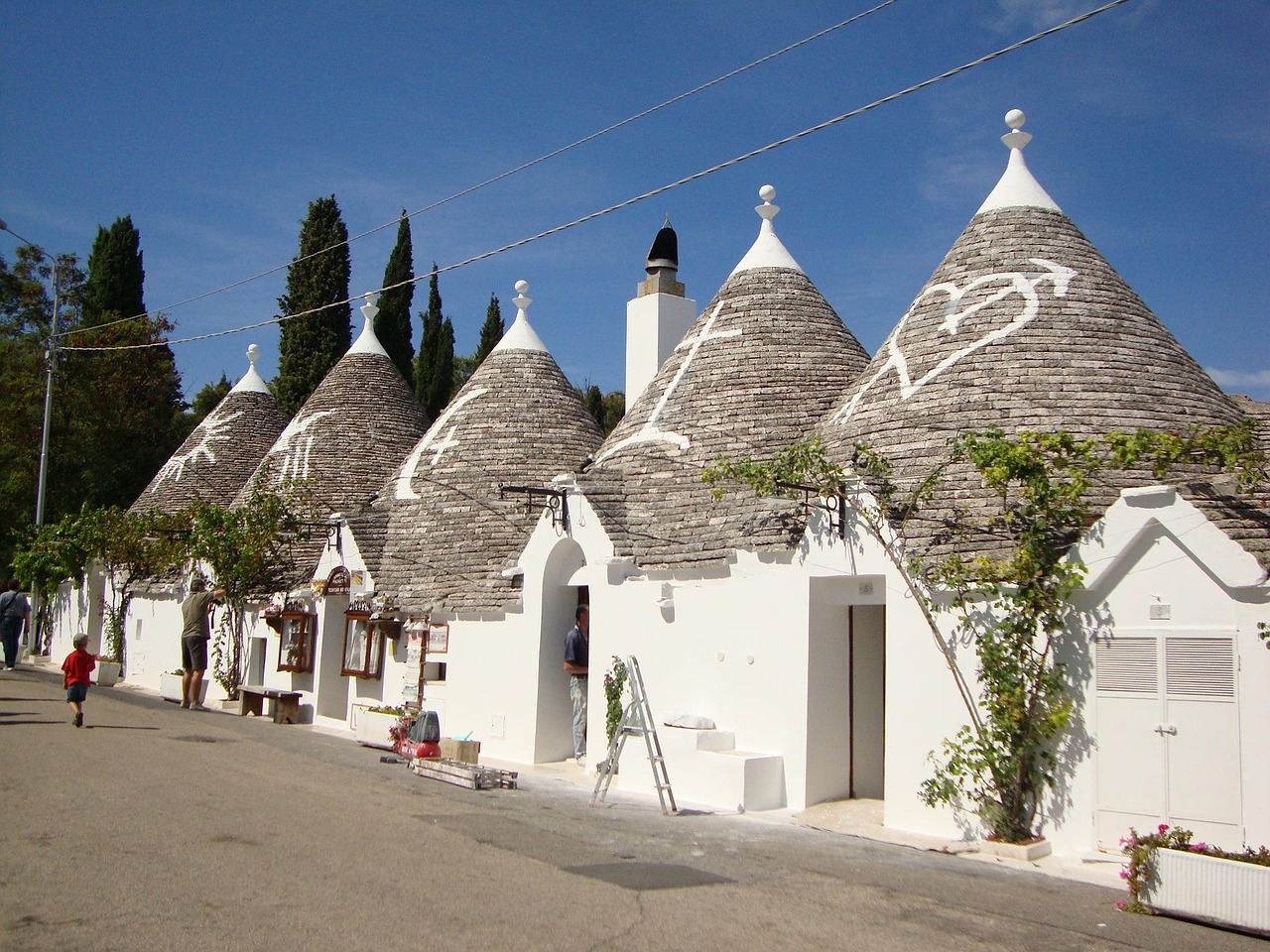
Alberobello is located in southern Italy’s Puglia region and has a population of about 10,500. It is famous for over 1,500 trulli, whitewashed stone houses topped with conical roofs built without mortar. Most date from the 14th to 17th centuries and were designed to be dismantled quickly for tax reasons. The town sits around 428 meters above sea level and spreads across two main districts covering roughly one square kilometer. Symbols painted on rooftops hint at religious or mystical meanings. Walking through Alberobello feels surreal, as repeating geometric forms replace conventional streetscapes, creating a village that looks imagined rather than constructed.
12. Bruges, Belgium
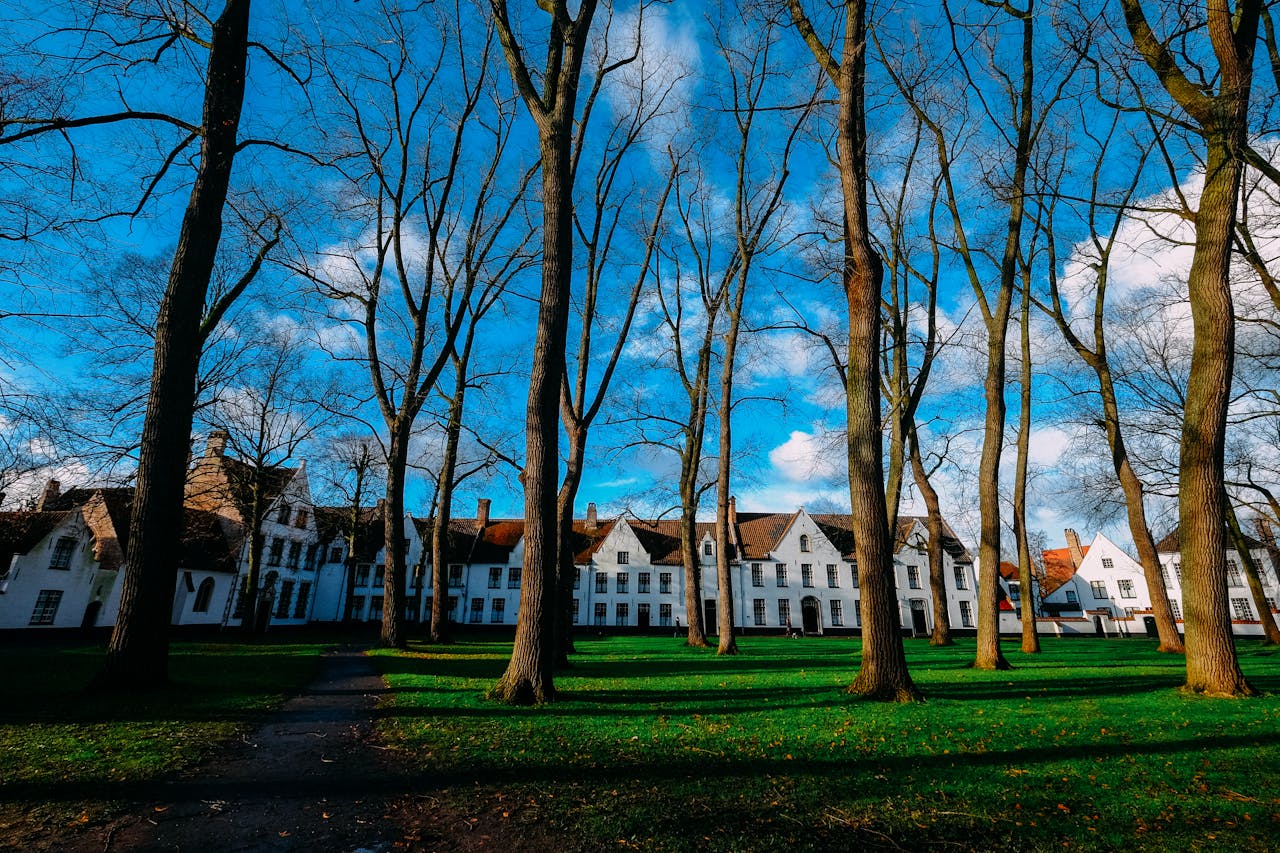
Bruges is a medieval city of approximately 118,000 residents in northwestern Belgium. Founded around the 9th century, it flourished as a trading hub, leaving behind canals totaling over 30 kilometers. The historic center covers about eight square kilometers and is largely intact, with brick Gothic buildings dominating the skyline. The Belfry rises 83 meters above the Markt square, serving as a visual anchor. Bruges sits just three meters above sea level, contributing to its reflective waterways. Despite its size, the city retains a hushed atmosphere inside streets, where stone bridges and narrow alleys preserve an almost cinematic sense of old Europe.
13. Monschau, Germany
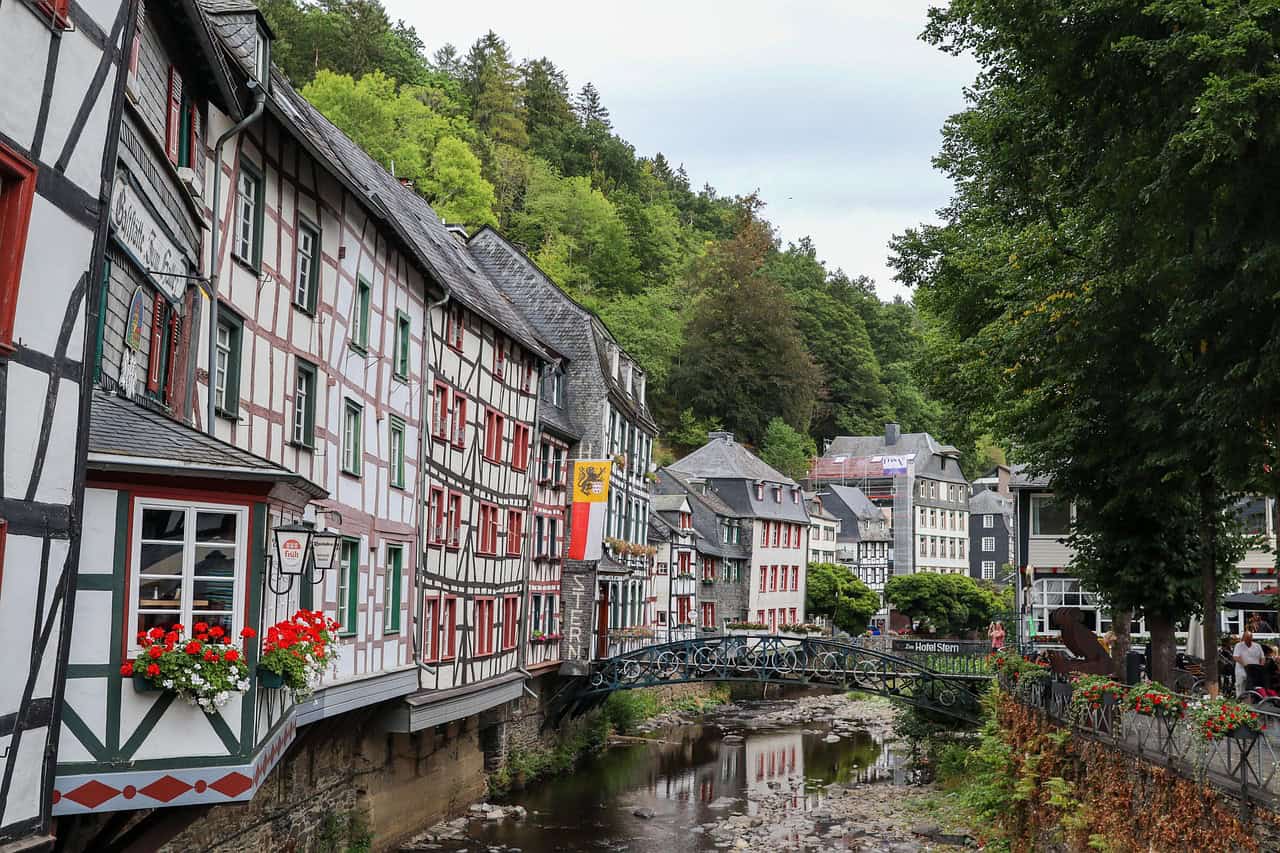
Monschau is a small town in western Germany with roughly 12,000 inhabitants. Nestled in the Eifel hills at around 410 meters elevation, it developed along the Rur River in the 12th century. Timber‑framed houses stack tightly along steep slopes, creating vertical streets barely wide enough for vehicles. The historic core spans less than one square kilometer, emphasizing density over spread. A hilltop castle overlooks the town, reinforcing its enclosed feel. Monschau escaped major wartime destruction, preserving its original layout. The combination of narrow valleys, dark wood facades, and flowing water gives it a quietly dramatic, almost storybook mood.
14. Gruyères, Switzerland
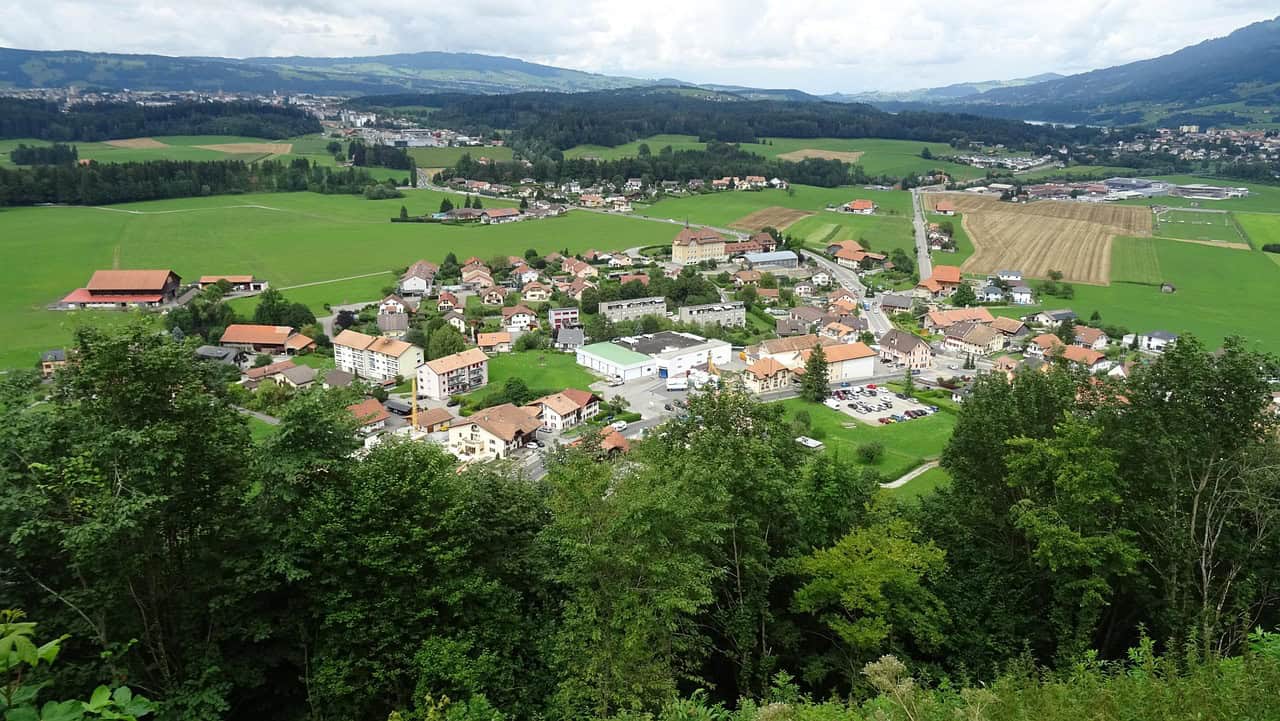
Gruyères is a medieval hill town in western Switzerland with about 2,200 residents. Sitting at roughly 810 meters above sea level, it overlooks rolling pastures central to the region’s famous cheese production. The town dates back to the 13th century and is anchored by Gruyères Castle, which dominates the skyline. The car‑free main street stretches just 200 meters, lined with stone buildings and small museums. Surrounding farmland extends for kilometers, reinforcing isolation and calm. Gruyères feels intentionally contained, with walls and elevation separating it from modern life, making the experience of walking through it feel ceremonial and removed from time.
15. Piran, Slovenia
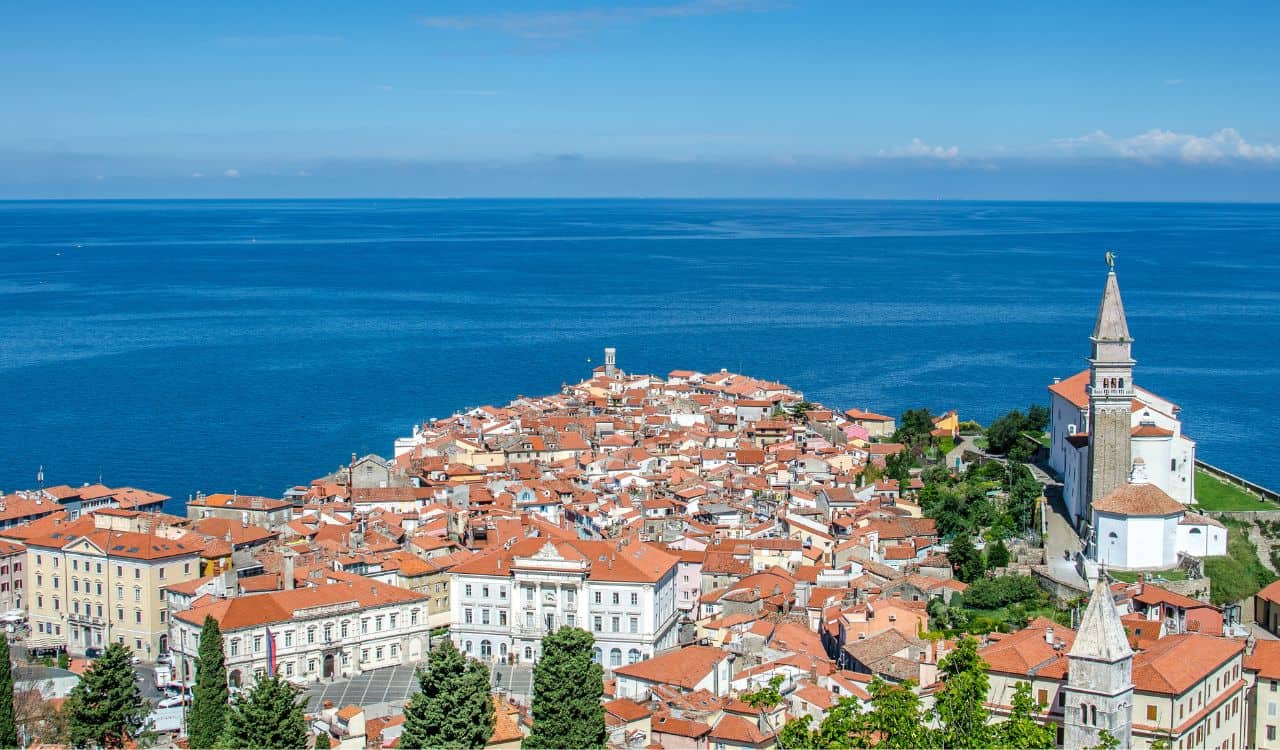
Piran is a coastal town on Slovenia’s Adriatic coast with a population of around 17,000. Built on a narrow peninsula, it rises gradually from sea level to hilltop viewpoints around 80 meters high. Venetian rule from the 13th to 18th centuries left a legacy of pastel facades, arcaded squares, and narrow alleys. The historic core covers less than one square kilometer, intensifying its sense of enclosure. Cars are largely restricted, encouraging walking. Sea, stone, and light dominate daily life. Piran’s compact scale and maritime setting give it a luminous, almost illustrated quality reminiscent of old nautical tales.
16. Annecy, France
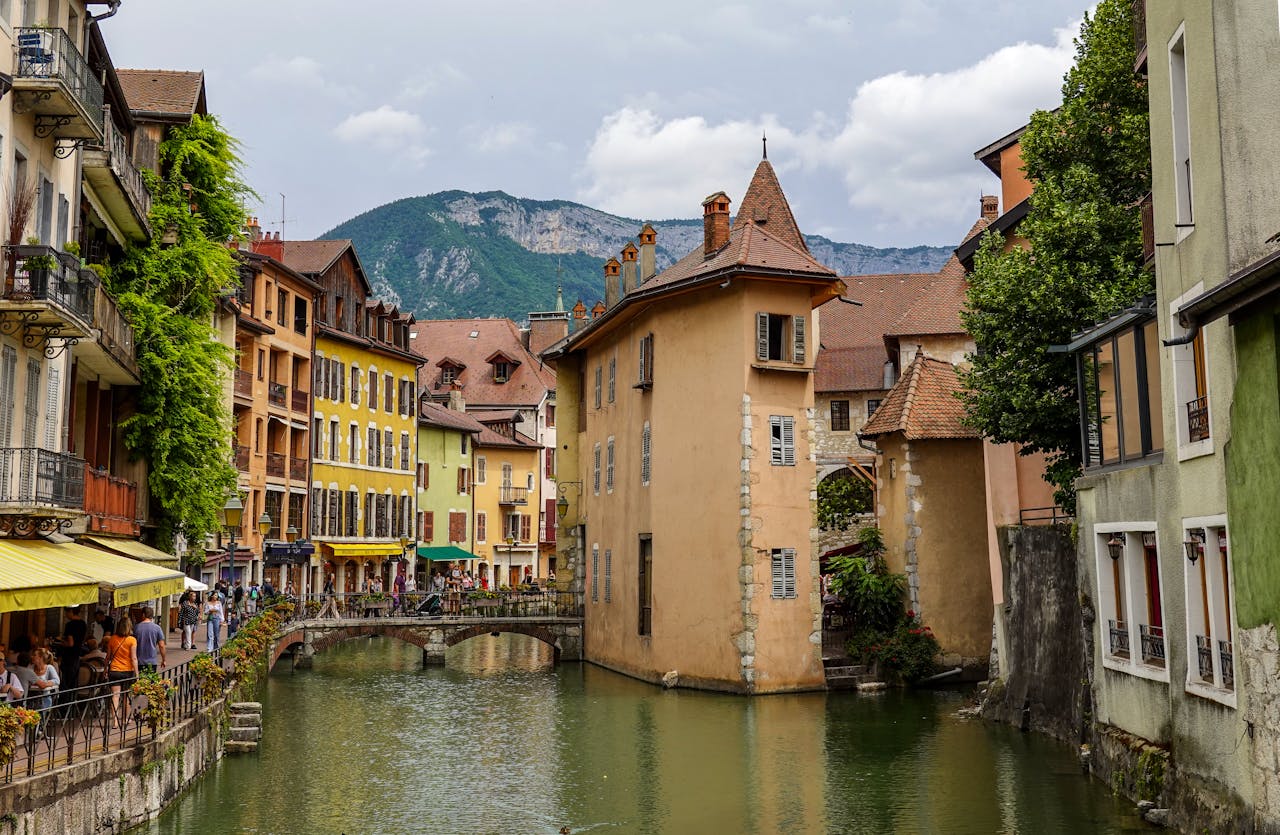
Annecy lies in southeastern France and has a population of about 130,000. The old town sits at 448 meters above sea level, between Lake Annecy and the surrounding Alps. Canals thread through pastel‑colored buildings dating from the medieval and early modern periods. The historic center spans roughly one square kilometer, making it dense yet navigable. Lake Annecy itself covers 27 square kilometers and is known for exceptional water clarity. Mountain peaks rise beyond 2,000 meters nearby, framing the town dramatically. This blend of water, color, and altitude gives Annecy a refined fairytale quality that feels elegant rather than exaggerated.
17. Sighişoara, Romania
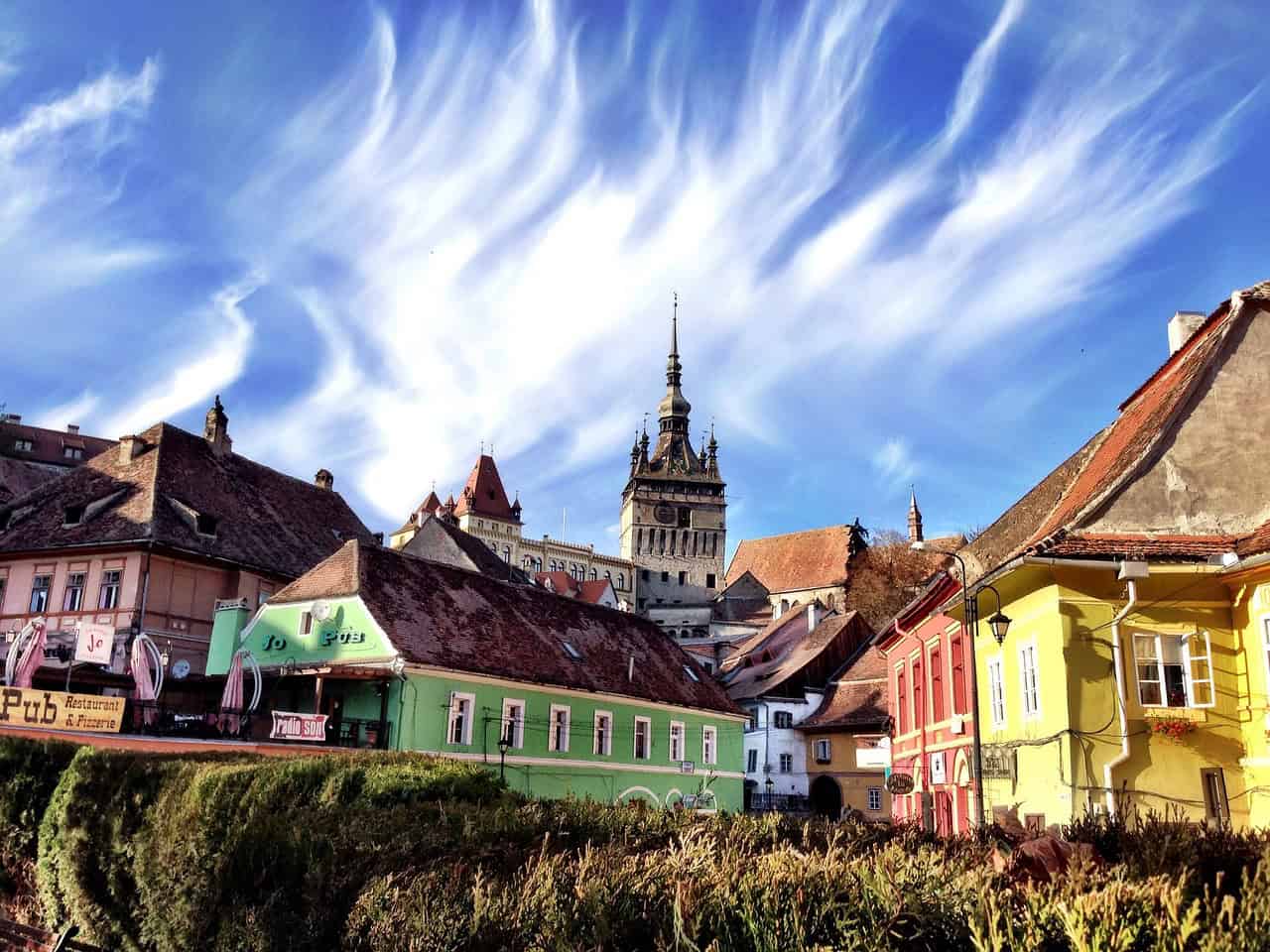
Sighişoara is a fortified medieval town in central Romania with about 28,000 residents. Founded by Saxon settlers in the 12th century, it sits at approximately 430 meters elevation. The historic citadel occupies a hilltop less than half a square kilometer in size and is enclosed by stone walls and towers. The Clock Tower rises 64 meters and remains the town’s defining landmark. Cobblestone streets climb steeply, emphasizing vertical movement. Unlike many preserved towns, Sighişoara remains fully inhabited. Its layered colors, defensive structures, and compact form give it an authentic, lived‑in fairytale atmosphere rather than a museum feel.
18. Ronda, Spain
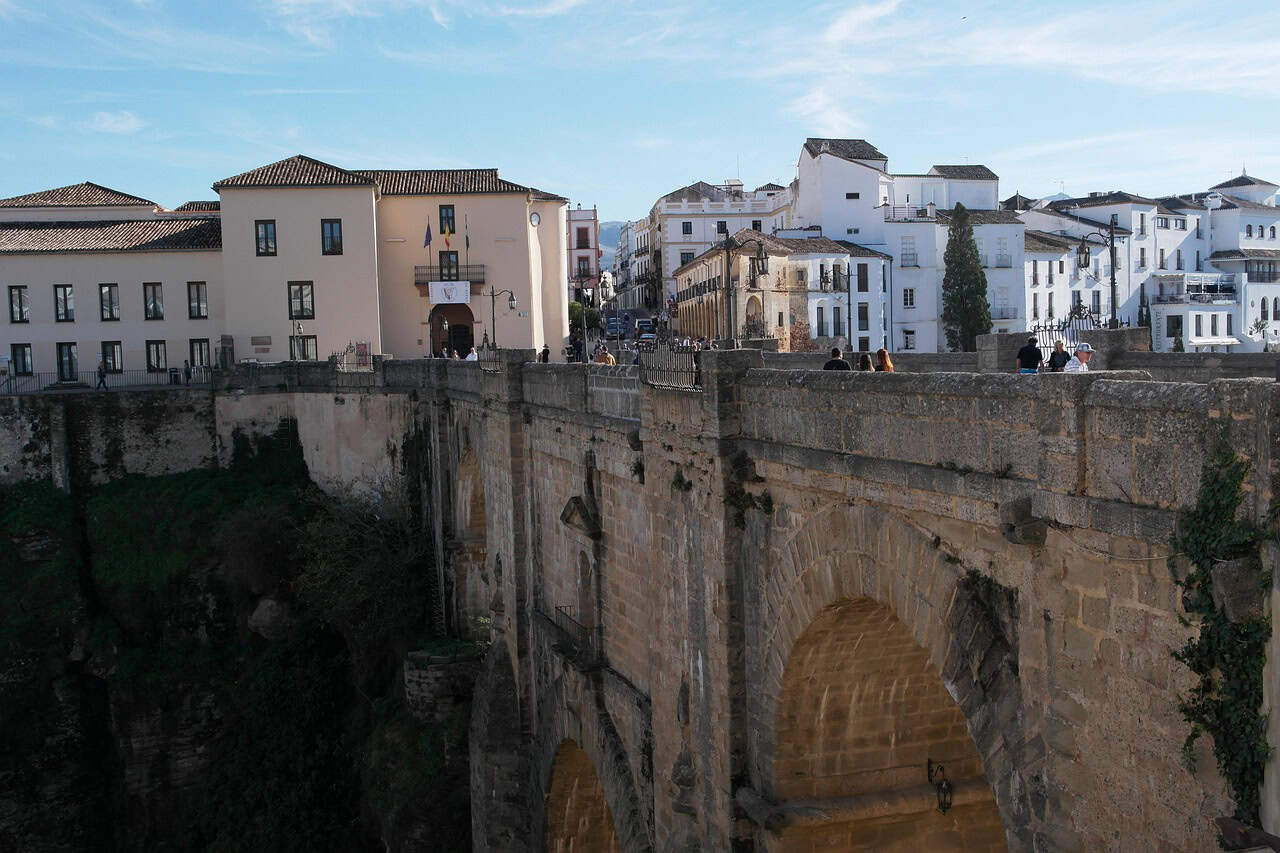
Ronda is a town of roughly 33,000 people in southern Spain, dramatically divided by the El Tajo gorge. The gorge plunges about 120 meters, with the Puente Nuevo bridge connecting both sides. Ronda sits at an elevation of around 740 meters, contributing to cooler temperatures than surrounding plains. The settlement dates back to Roman times, but much of its character comes from Moorish and later Spanish influences. The old town spreads across less than two square kilometers. Standing at the gorge’s edge, the scale feels epic, as though the town was placed there for dramatic effect rather than convenience.
19. Wengen, Switzerland
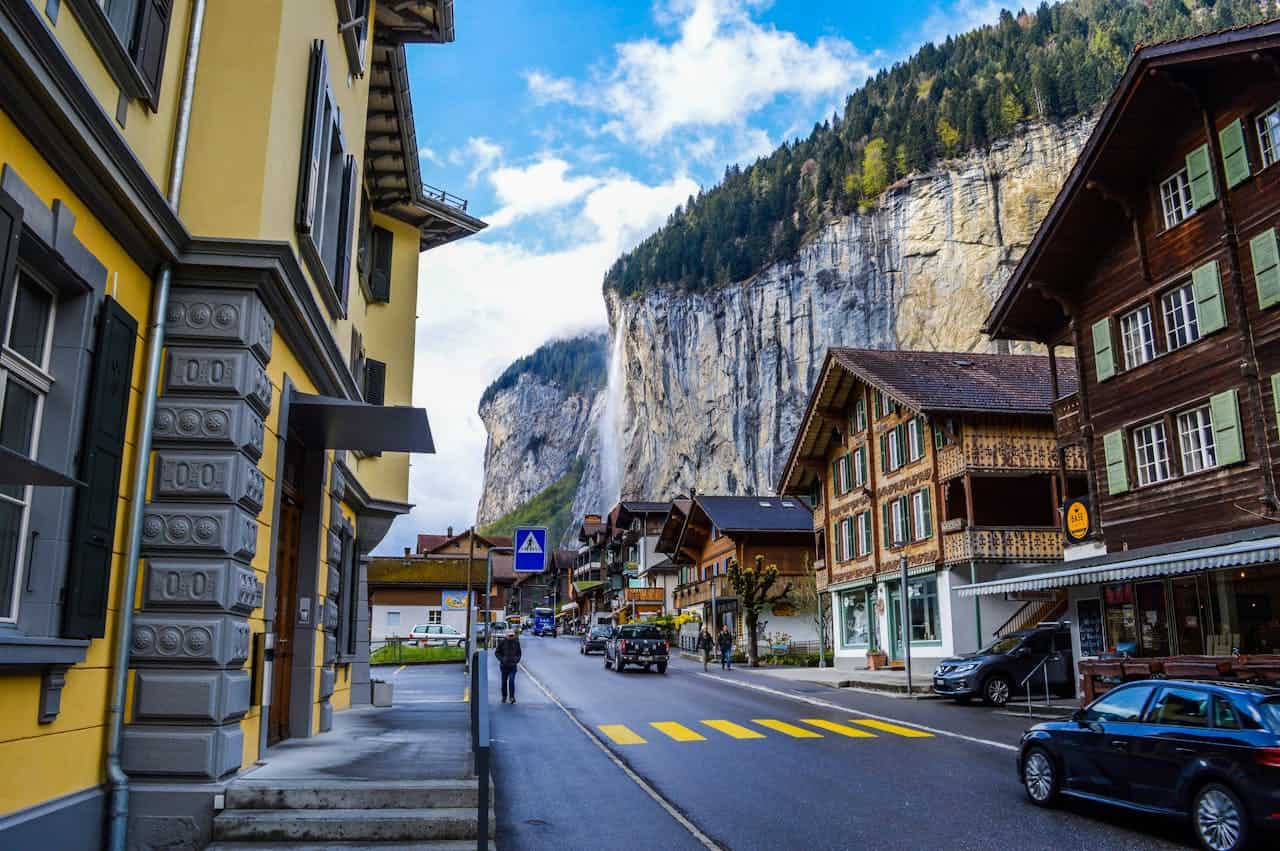
Wengen is a car‑free alpine village with approximately 1,300 residents, perched at 1,274 meters above sea level in the Bernese Oberland. Accessible only by cogwheel train, it overlooks the Lauterbrunnen Valley and faces peaks exceeding 4,000 meters, including the Jungfrau. Wooden chalets dominate the architecture, many dating back over a century. The village spans less than two square kilometers, reinforcing its secluded feel. The seasonal population swells during winter sports months, yet daily life remains quiet. The absence of road noise and the dominance of mountain scenery give Wengen an unreal calm, as if suspended above the modern world.
20. Èze, France
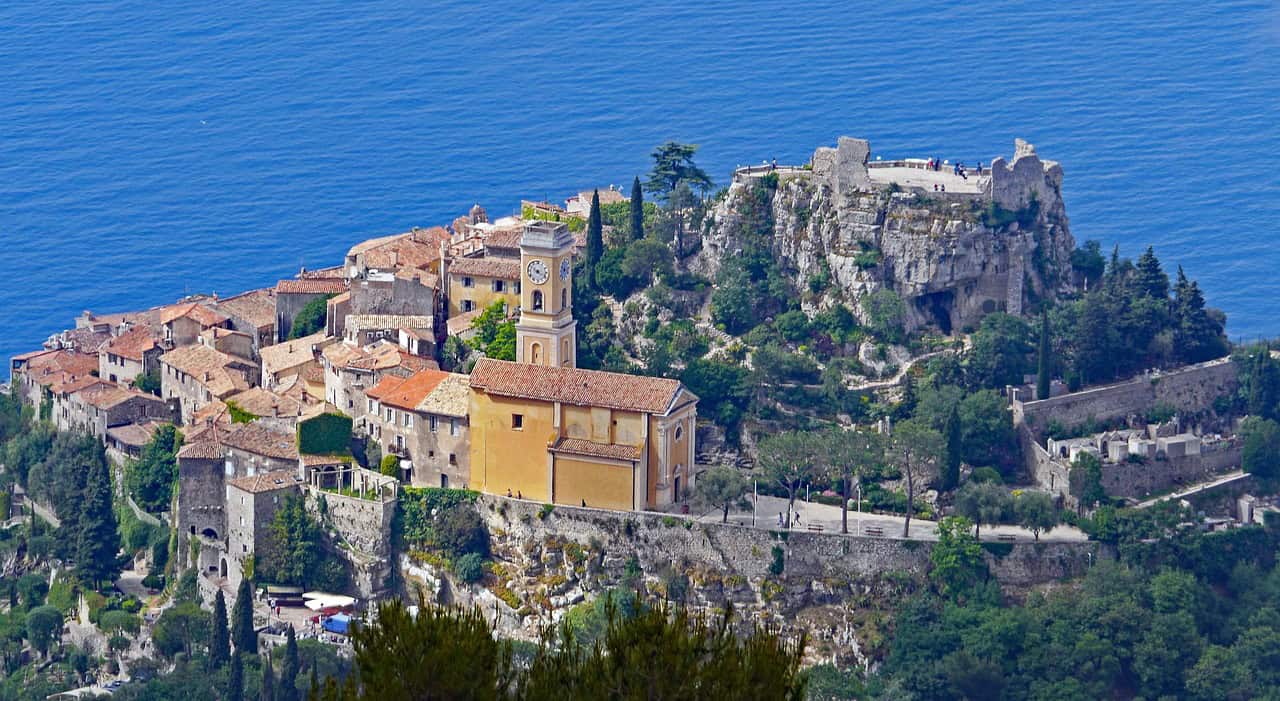
Èze is a medieval village on the French Riviera with fewer than 2,000 inhabitants. Perched on a rocky hill about 427 meters above sea level, it overlooks the Mediterranean from dramatic heights. The village dates back over 1,000 years and is built almost entirely of stone. Narrow pathways wind upward through arches and terraces, covering less than half a square kilometer. Exotic gardens crown the summit, offering panoramic views stretching over 50 kilometers on clear days. Èze’s vertical layout, ancient materials, and sea‑to‑sky perspective create a setting that feels deliberately fantastical, balancing ruggedness with refinement.