We may earn money or products from the companies mentioned in this post. This means if you click on the link and purchase the item, I will receive a small commission at no extra cost to you ... you're just helping re-supply our family's travel fund.
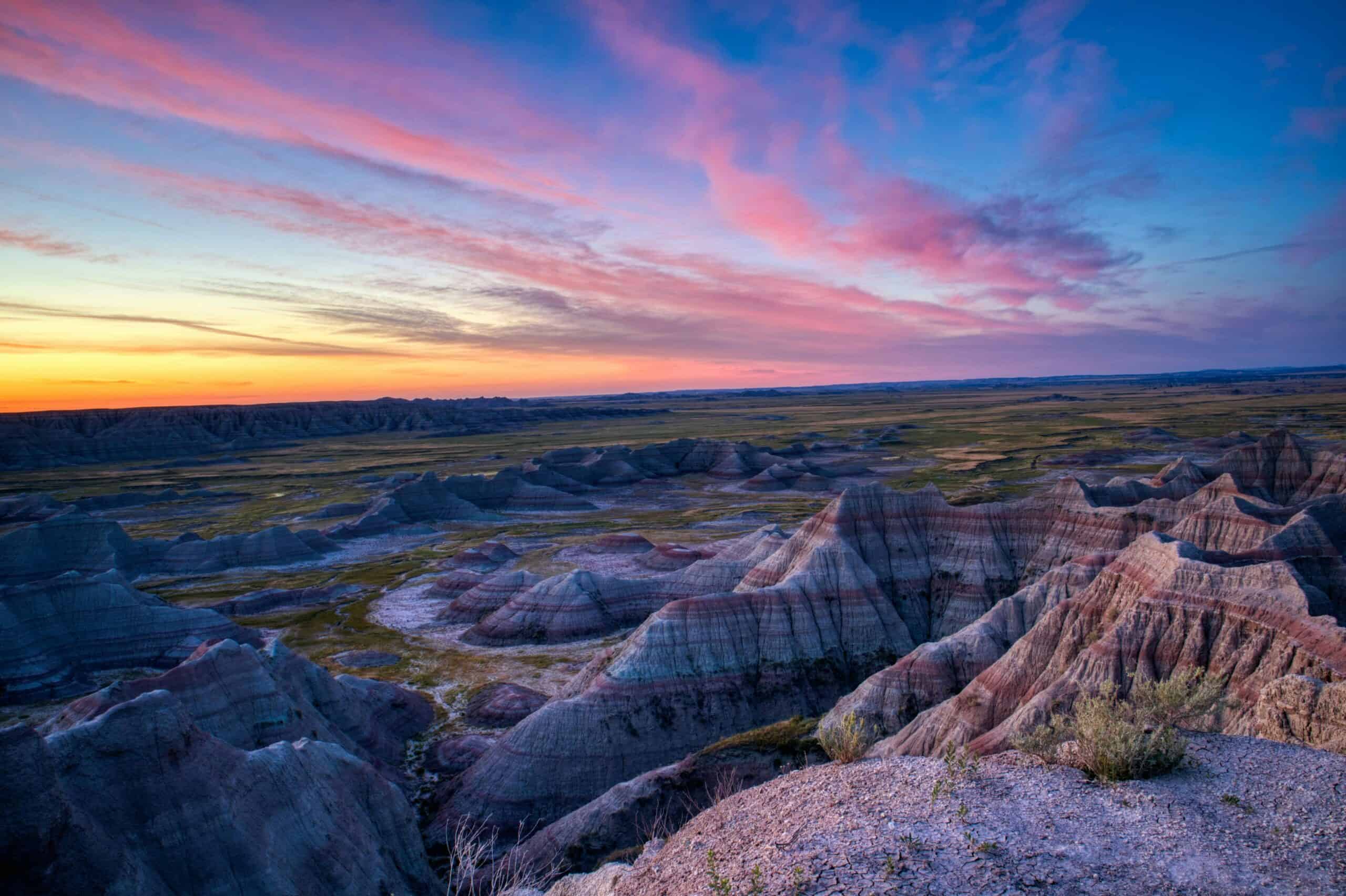
America’s best-known parks often take the spotlight, while quieter corners hold equal wonder with fewer crowds and deeper stillness. Across deserts, barrier islands, old-growth floodplains, volcanic fields, and far-northern tundra, these places reward slower attention and curiosity. Each destination carries its own texture: salt air, pine shade, canyon echo, or Arctic wind. Together they trace a different map of beauty, one shaped less by hype and more by atmosphere, regional history, and landscapes that continue to surprise long after the first glance.
Great Basin National Park, Nevada
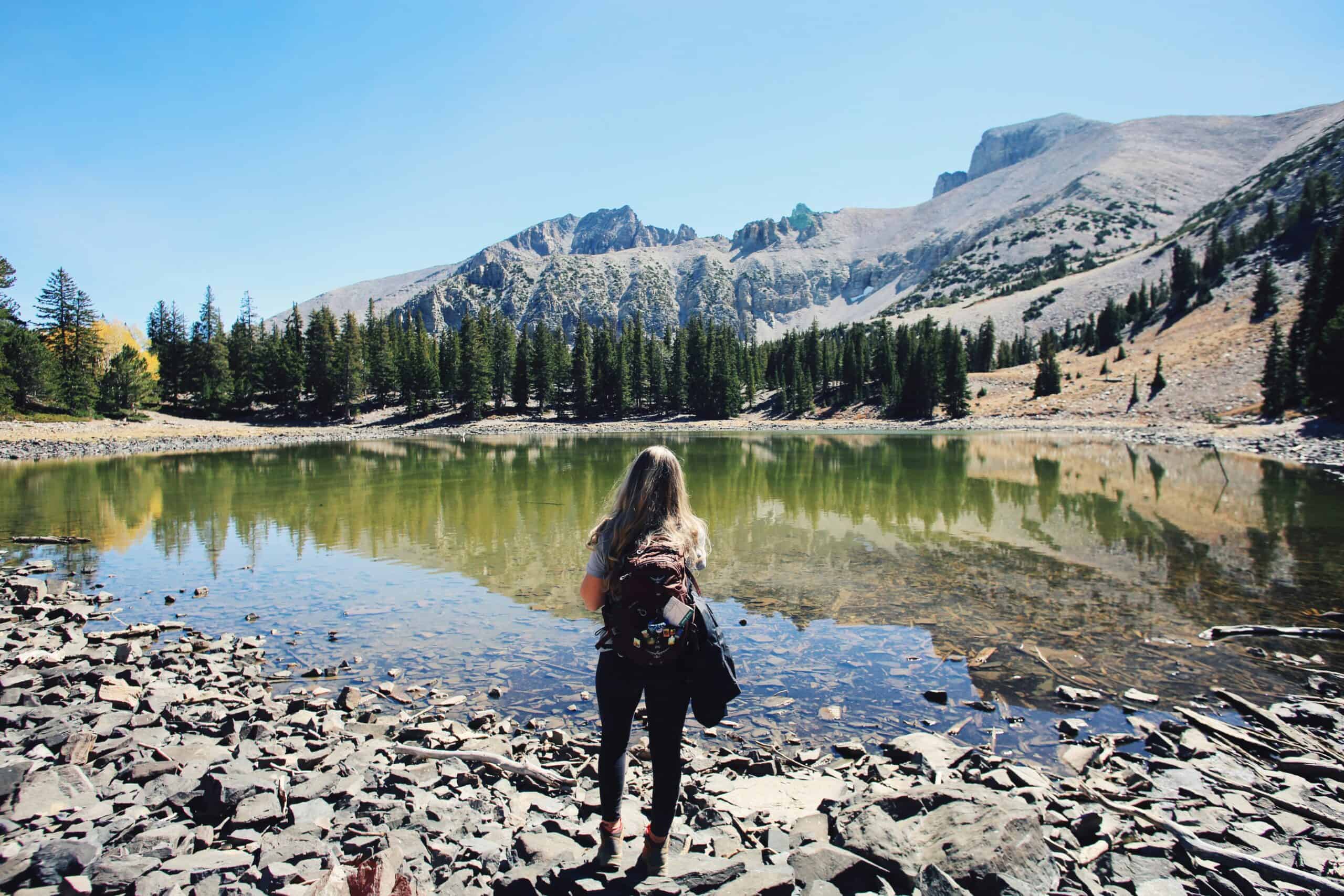
Great Basin feels like two worlds layered together: sagebrush basins below, and alpine silence near Wheeler Peak above. The National Park Service highlights Lehman Caves, ancient bristlecone pines, and some of the darkest night skies in the lower 48, which gives evenings a near-ceremonial calm once daylight fades off the ridgelines. Daylight brings crisp mountain air and long trails, but twilight shifts everything, as constellations sharpen over desert slopes and solitude becomes the central experience rather than a side benefit.
Chiricahua National Monument, Arizona
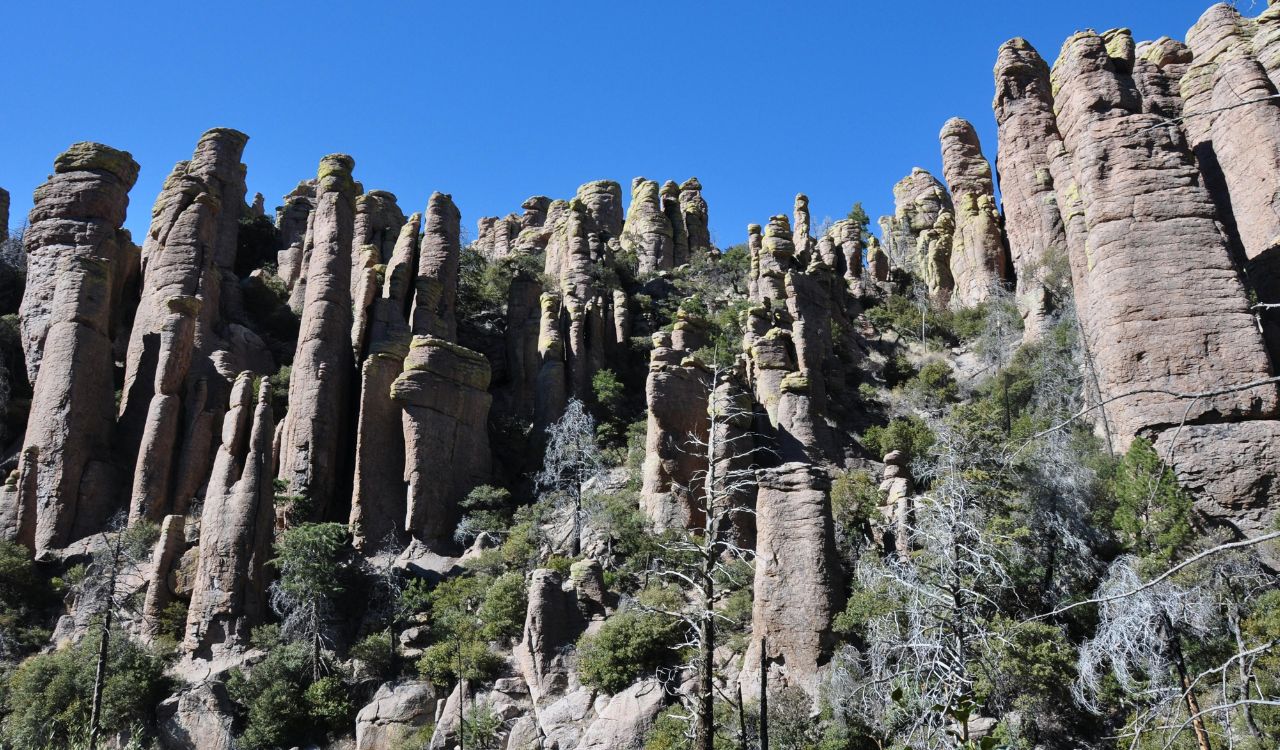
Chiricahua rises from southeastern Arizona like a city of weathered stone towers, shaped over time into balanced rocks, narrow corridors, and sheer pinnacles. NPS notes an eight-mile scenic drive to Massai Point and 17 miles of hiking trails, and both routes reveal why the monument feels dramatic even in silence and shade. Morning light pulls warm tones from every cliff face, then evening lowers the temperature and opens a deep, clear sky, creating a landscape that feels both geologic and quietly theatrical from start to finish.
Organ Pipe Cactus National Monument, Arizona
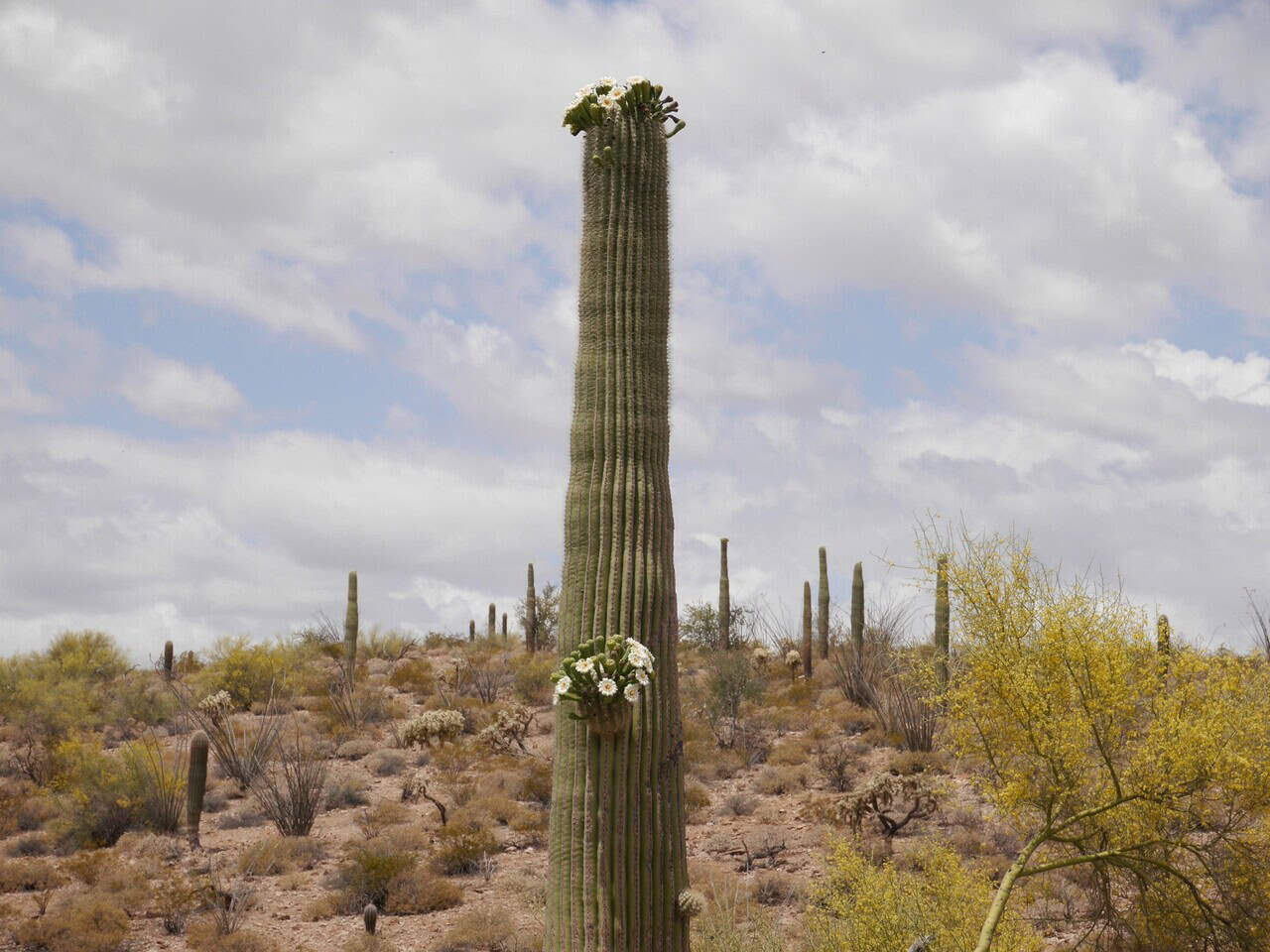
At Organ Pipe, the Sonoran Desert does not present as empty space; it reads as precise, living structure shaped by heat, scarcity, and resilience. NPS identifies the monument as an International Biosphere Reserve and describes a thriving community of plants and animals, with human stories rooted in thousands of years of desert life. Scenic roads and hiking routes cross giant cacti, dry washes, and sudden seasonal color, while sunset turns the terrain copper and violet, giving the entire borderland horizon a slow, deliberate grandeur.
Capitol Reef National Park, Utah
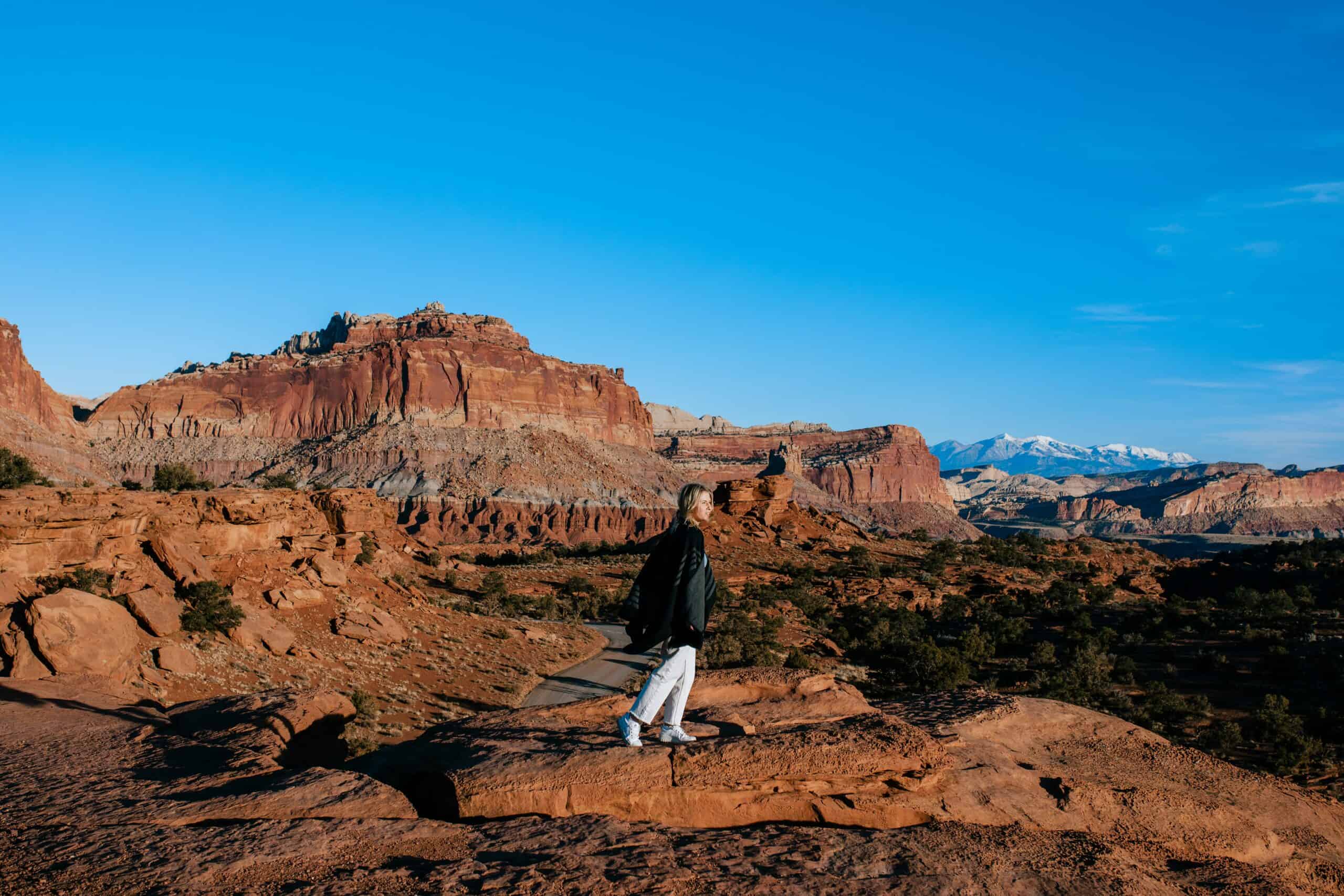
Capitol Reef still surprises travelers who assume Utah’s big scenic story ends with its most famous parks. NPS describes the Waterpocket Fold as a nearly 100-mile geologic wrinkle, where cliffs, domes, bridges, and canyons stack into a landscape that looks carved by intention rather than erosion. Orchards, winding washes, and quiet overlooks keep the pace grounded, so scale and detail rise together instead of competing, and the park delivers something rare: red-rock drama with room for reflection, silence, and unhurried time on the trail.
Cedar Breaks National Monument, Utah
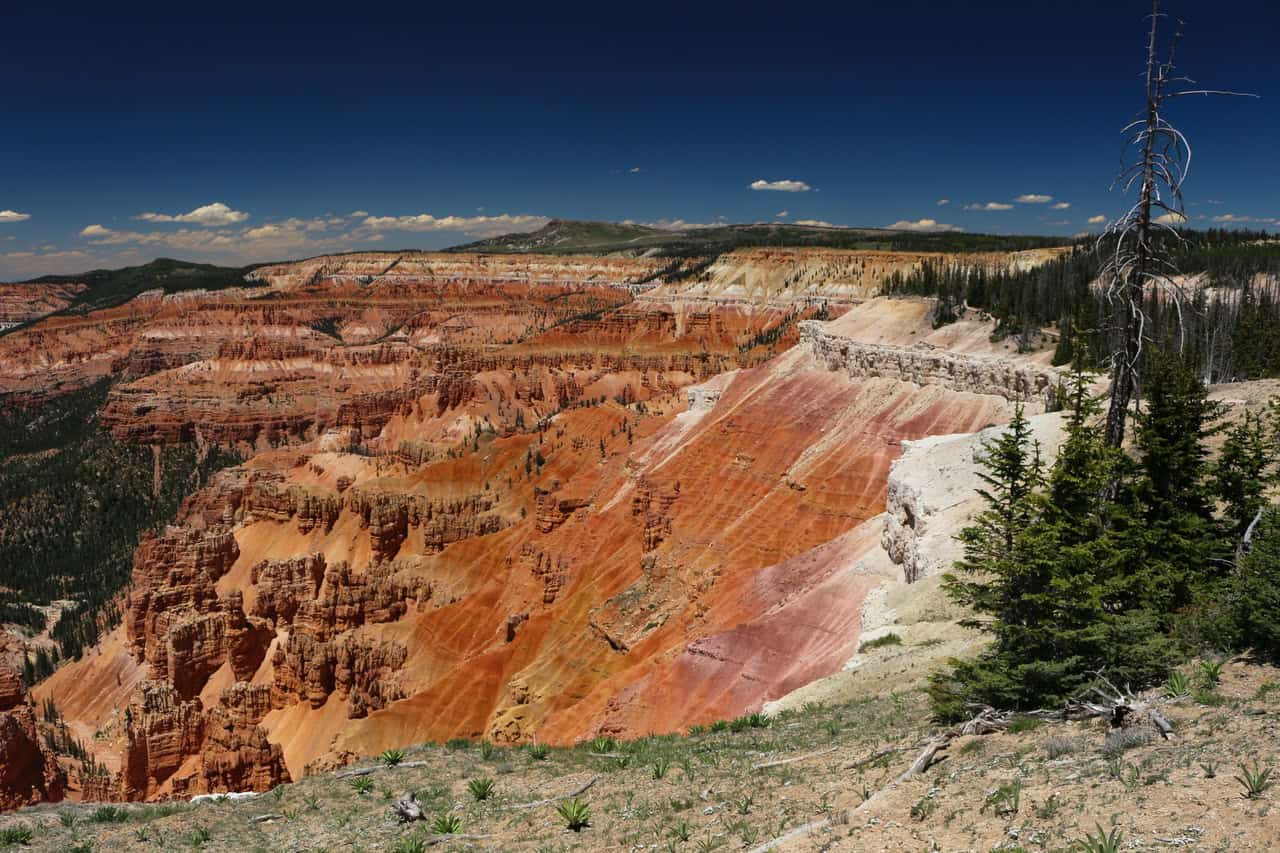
Cedar Breaks sits above 10,000 feet, and that elevation changes every part of the visit: sharper light, cooler air, and wider horizons. NPS describes a half-mile-deep geologic amphitheater ringed by vivid stone, plus bristlecone pines, subalpine forest, and summer wildflower meadows that soften the monument’s rugged edges. In daylight, the rim feels like a natural balcony over the Grand Staircase; after dusk, crystal-clear skies and thin mountain air reveal stars with striking clarity, giving the place a dual identity as both canyon theater and night-sky sanctuary.
Craters Of The Moon National Monument And Preserve, Idaho
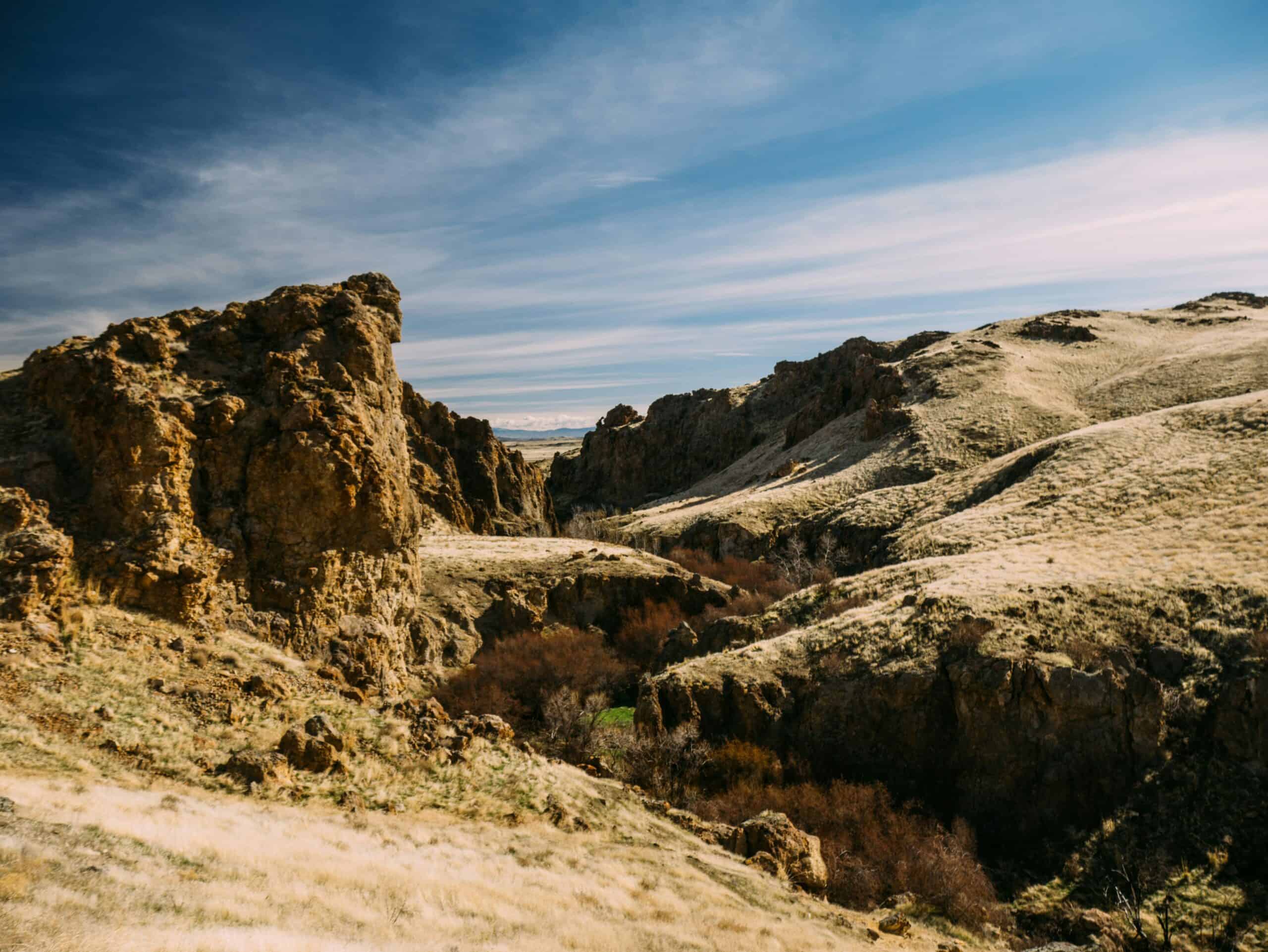
Craters of the Moon looks less like familiar Idaho and more like a young planet still settling after eruption. NPS calls it a vast ocean of lava flows with scattered cinder cones and islands of sagebrush, and that description becomes literal as black basalt stretches toward distant ridges. Trails and overlooks reveal shifting textures, from smooth ropey surfaces to fractured clinker fields and cave-like voids that trap shadow and cool air. The mood stays stark but magnetic, especially in low light when the volcanic terrain starts to glow instead of darken.
North Cascades National Park, Washington
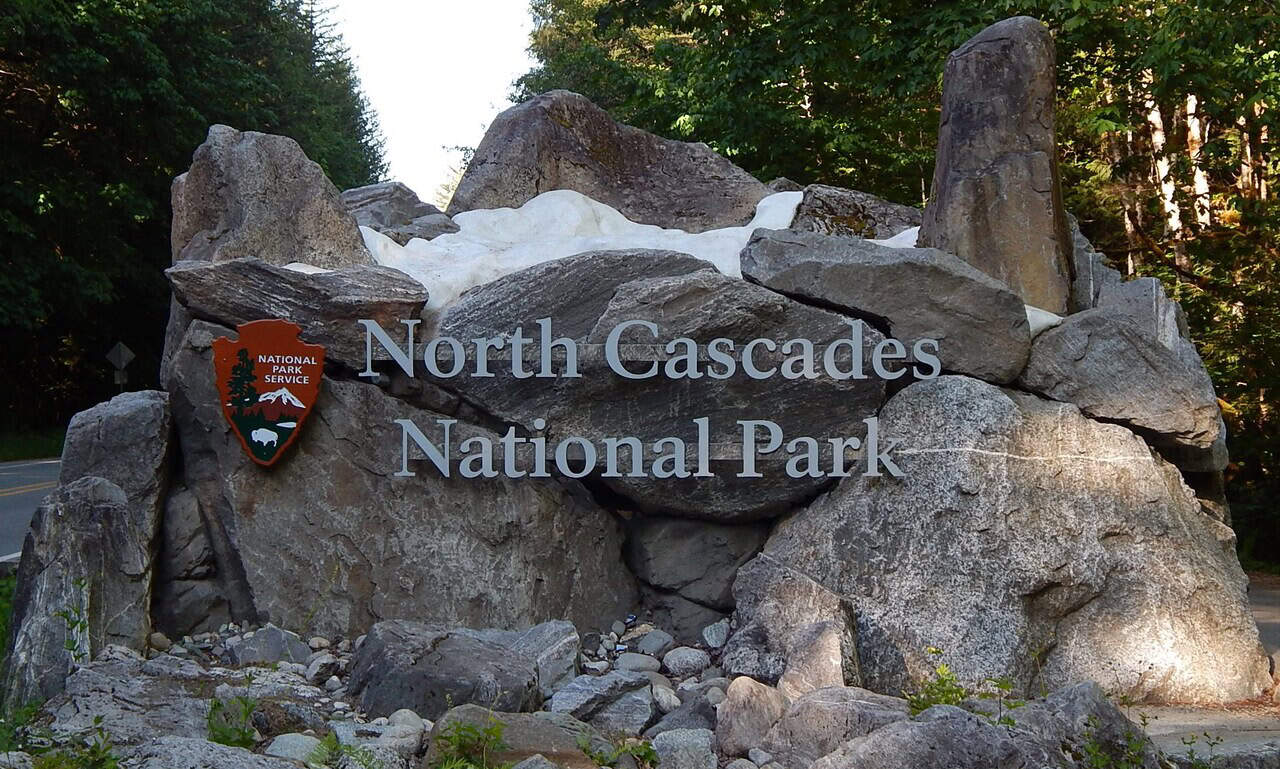
North Cascades carries alpine drama without the constant churn that defines more famous mountain corridors nearby. NPS notes the park lies less than three hours from Seattle and includes more than 300 glaciers, along with jagged peaks, forested valleys, and water systems shaped by snowpack and fire cycles. That mix creates a landscape that feels both lush and severe, where moss, ice, and granite share one frame. Even short trails can feel immersive here, because each bend shifts from river roar to ridge silence in only a few miles.
Lassen Volcanic National Park, California
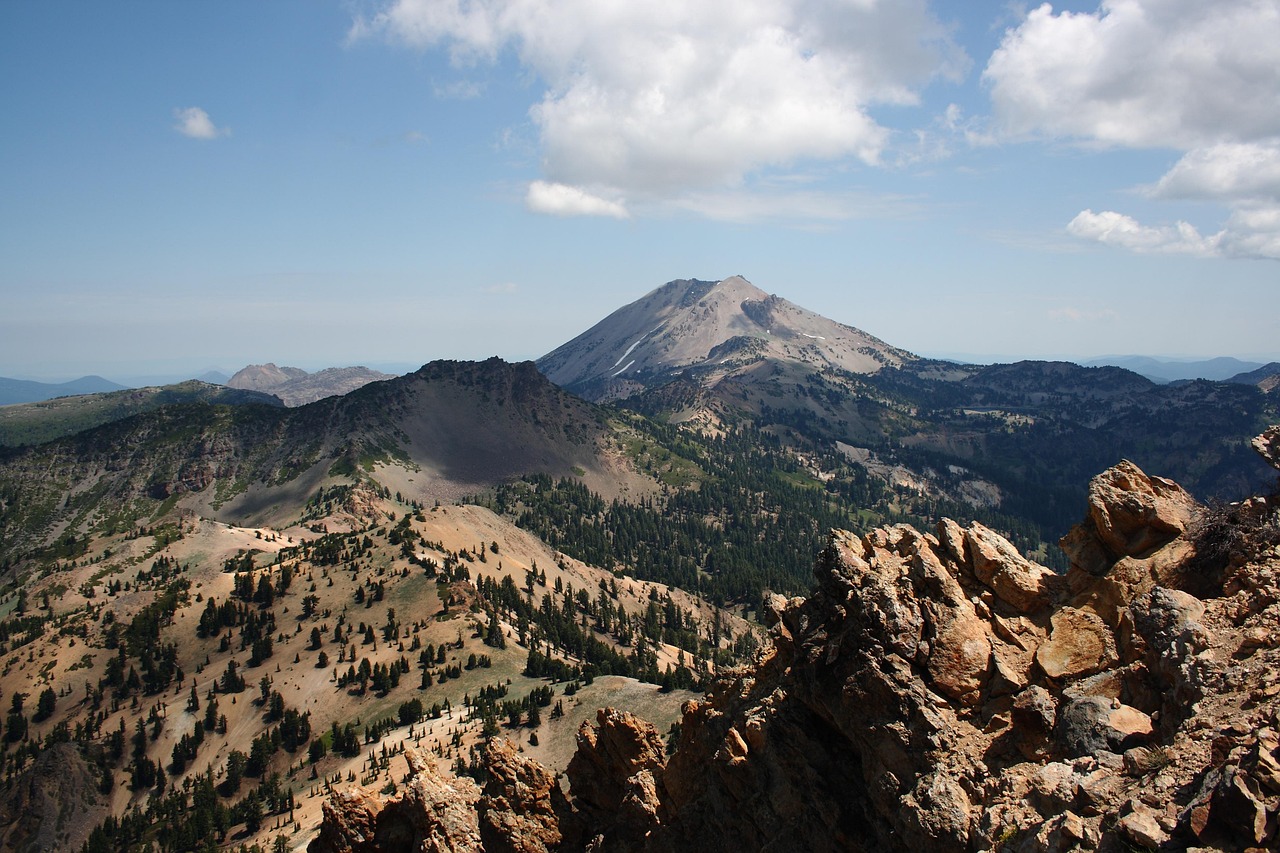
Lassen Volcanic offers a rare combination: active geothermal energy beside quiet alpine lakes and wildflower meadows. NPS highlights steaming fumaroles, multiple volcanoes, clear mountain water, and terrain still shaped by eruptive history, which makes geology feel immediate rather than historical. In one day, the setting can move from sulfur vents and volcanic rock to pine forest shade and open sky, without ever feeling disjointed. That elemental contrast gives the park its character, a place where force and calm occupy the same landscape and remain in visible conversation.
Channel Islands National Park, California
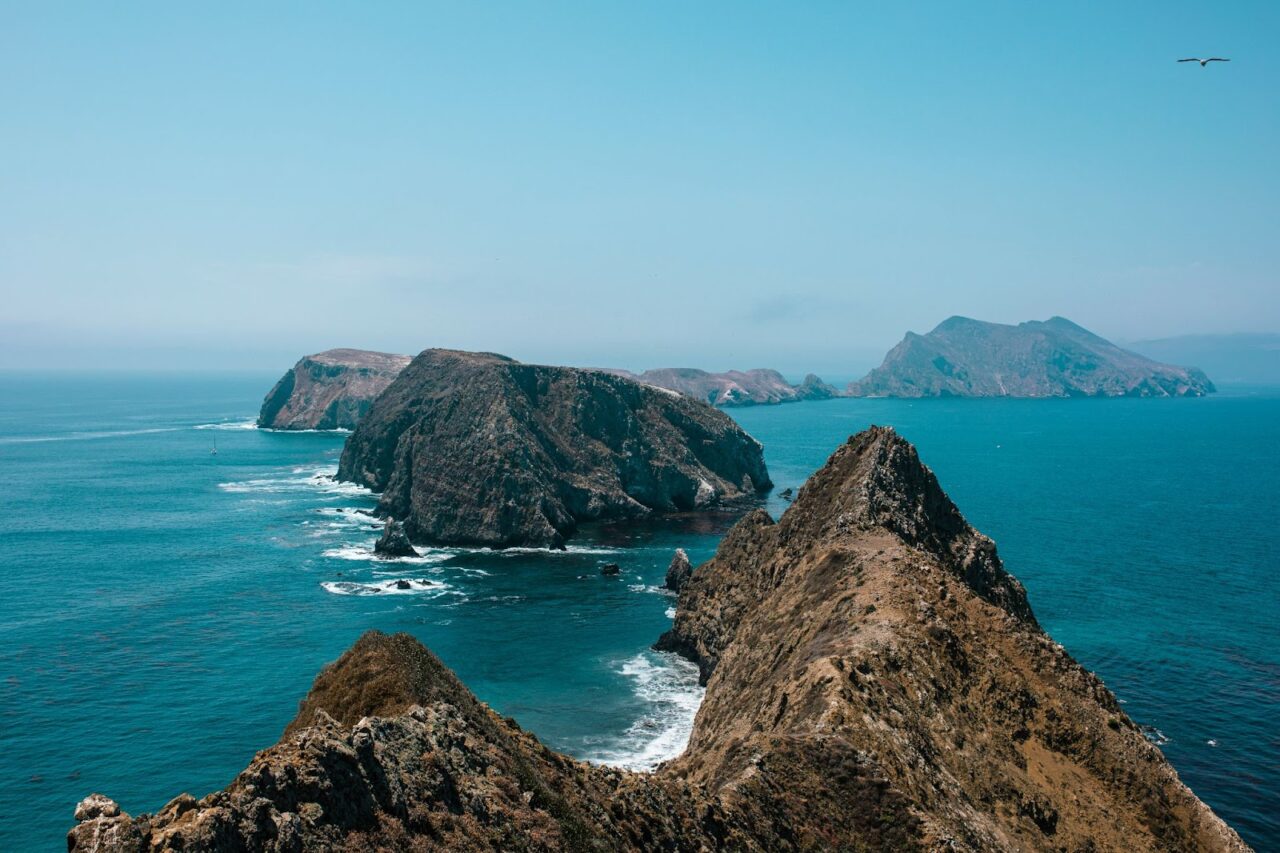
Channel Islands feels improbable from mainland Southern California: five islands that remain wild, windswept, and ecologically distinct. NPS notes that long isolation created unique species and plant communities found nowhere else, while archaeological resources preserve long cultural continuity across land and sea. Boat access naturally limits volume, so sea cliffs, grasslands, and beaches retain an uncommon quiet even during peak season. Kelp forests, seabirds, and open ocean frame nearly every view, giving the park a remote, time-shifted atmosphere despite its proximity to major cities and ports.
Theodore Roosevelt National Park, North Dakota
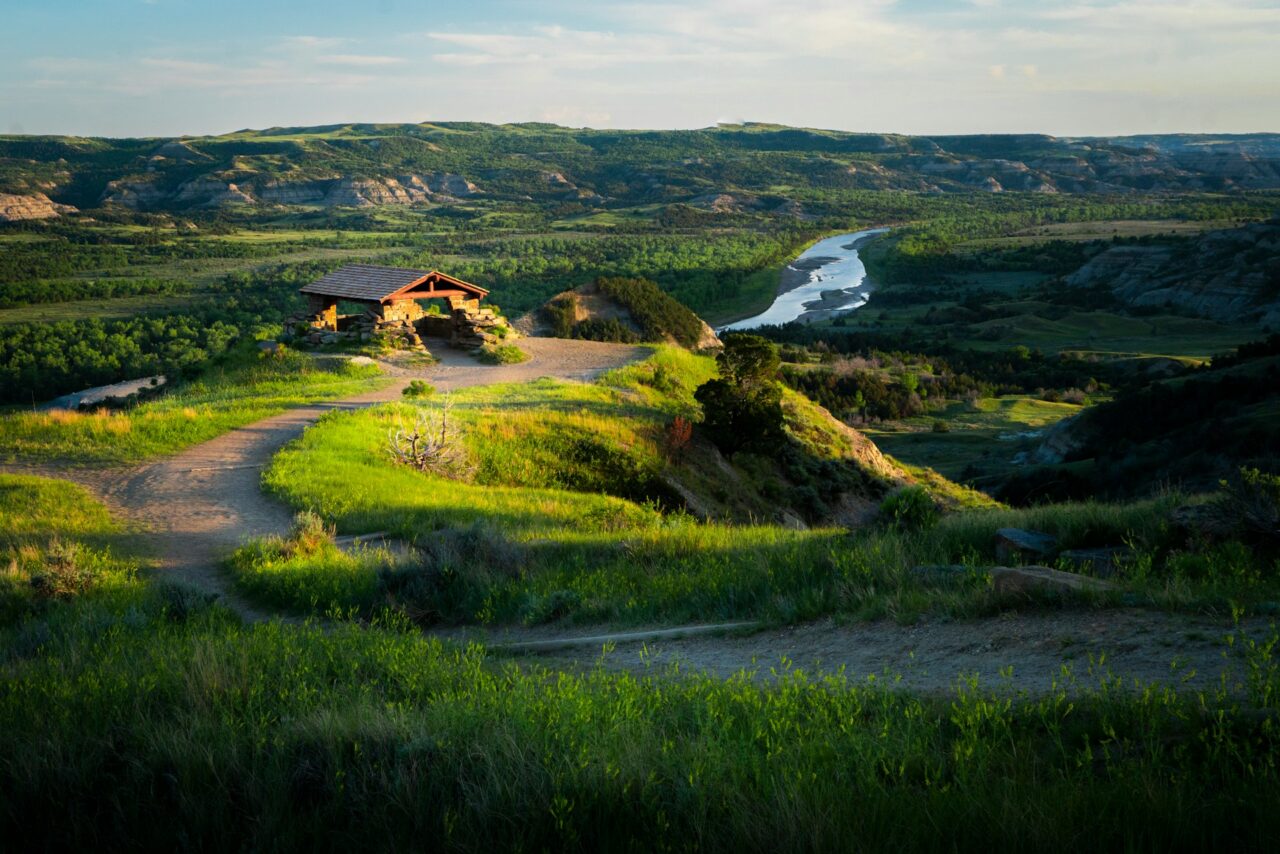
Theodore Roosevelt National Park preserves three badlands areas in southwestern North Dakota, each shaped by erosion, prairie weather, and river movement. NPS notes the Little Missouri River as a key feature across all three units, sustaining wildlife while carving the terrain into bent valleys, steep walls, and layered overlooks. The landscape reads austere at first, then grows richer as light shifts across clay and grass, especially near sunrise and late afternoon. It carries a reflective, unscripted quality that rewards patience more than speed or spectacle-based travel habits.
Voyageurs National Park, Minnesota
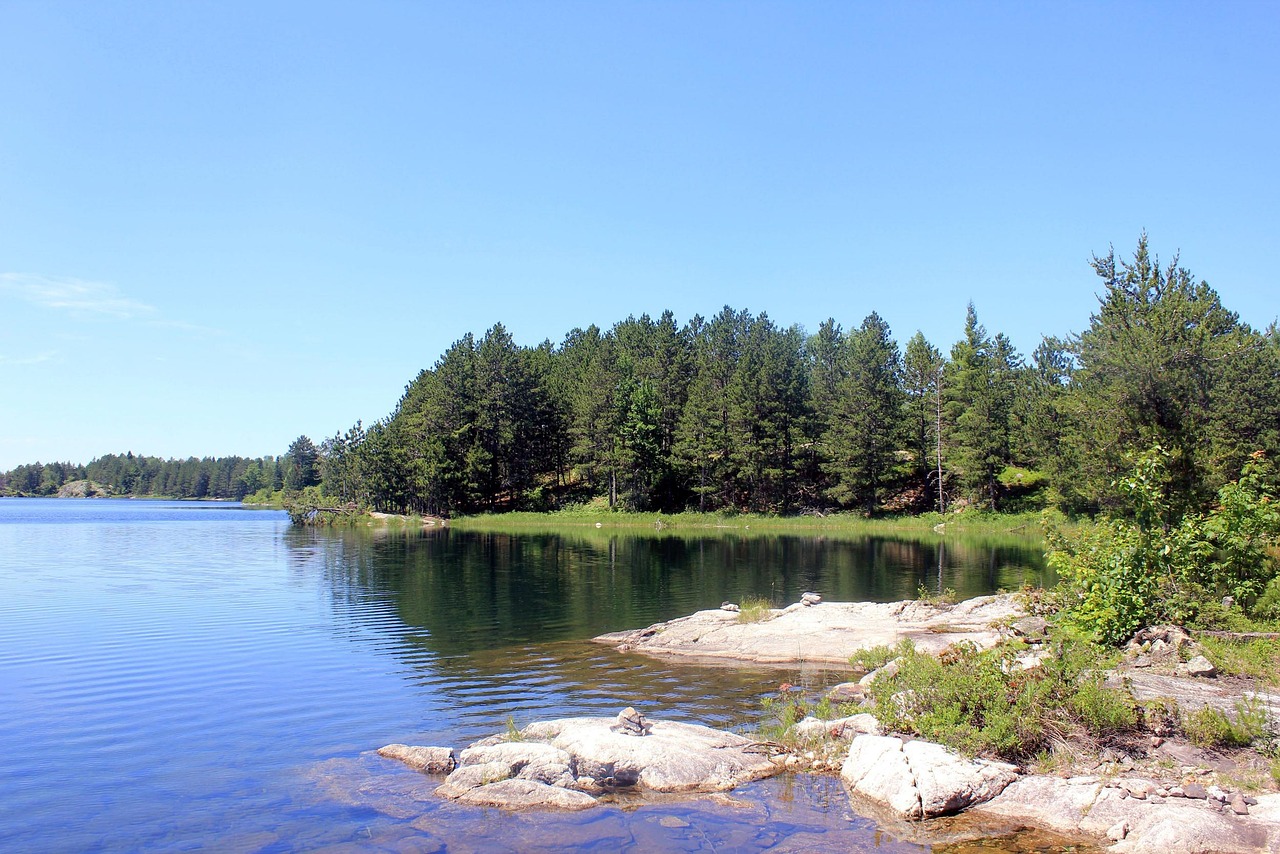
Voyageurs is a water-first wilderness where routes are mapped by lakes, channels, and islands more than by roads. NPS lists 218,000 acres of northern Minnesota landscapes and traces the park’s name to French-Canadian voyageurs who once navigated and traded through these connected waters. Canoes, houseboats, and shoreline trails now share that same geography, but the rhythm remains slow and deliberate. Wind over open water, loon calls at dusk, and broad northern sunsets create a calm that feels earned, steady, and deeply tied to place rather than programming.
Apostle Islands National Lakeshore, Wisconsin
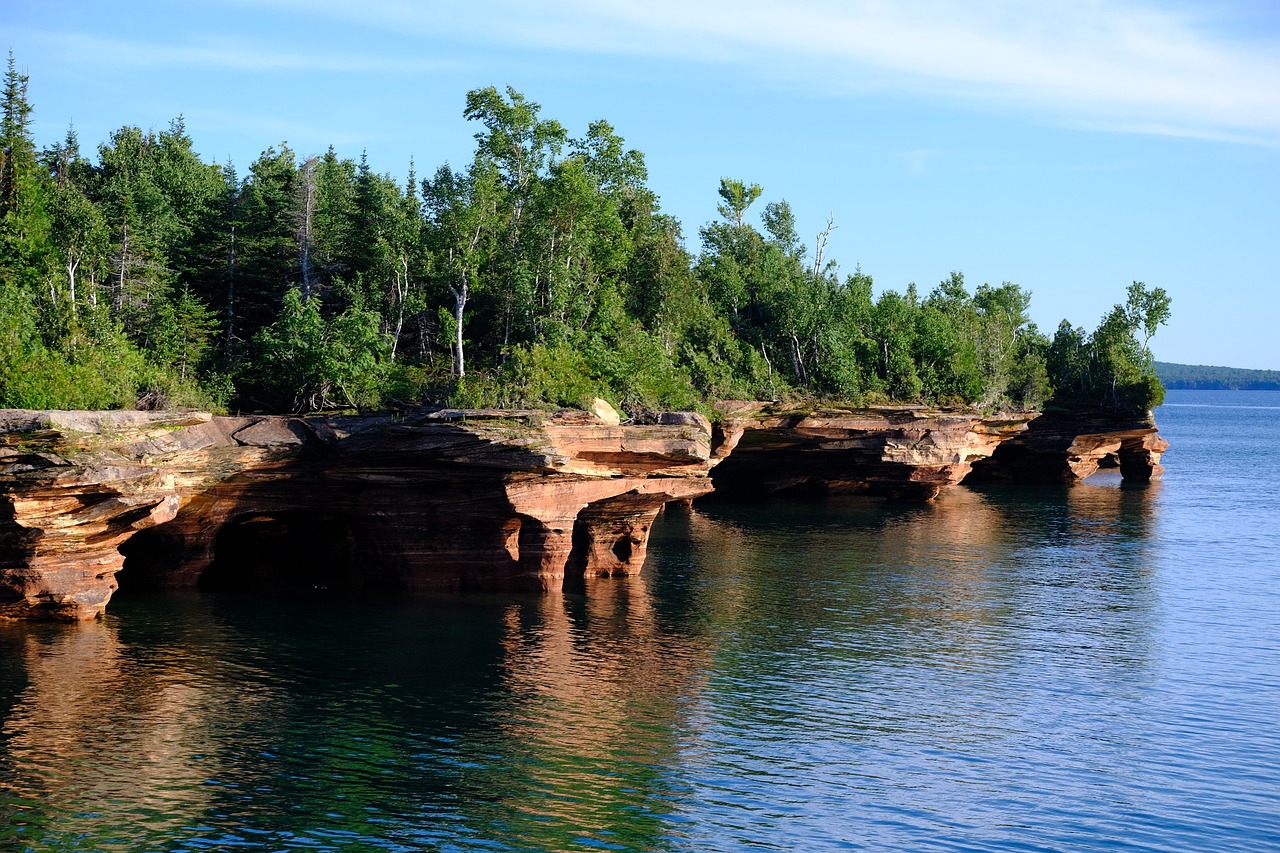
Apostle Islands combines Great Lakes scale with a coastal feel that seems almost oceanic in changing weather and light. NPS describes 21 islands and a 12-mile mainland shoreline near Bayfield, with sandstone sea caves, beaches, and the largest collection of lighthouses in the National Park System. Seasonal conditions reshape the experience, from summer paddling routes to winters when ice can transform cliffs into temporary corridors. Even on quiet days, the red rock, cold water, and lighthouse silhouettes create a mood that feels cinematic without becoming crowded or overproduced.
Isle Royale National Park, Michigan
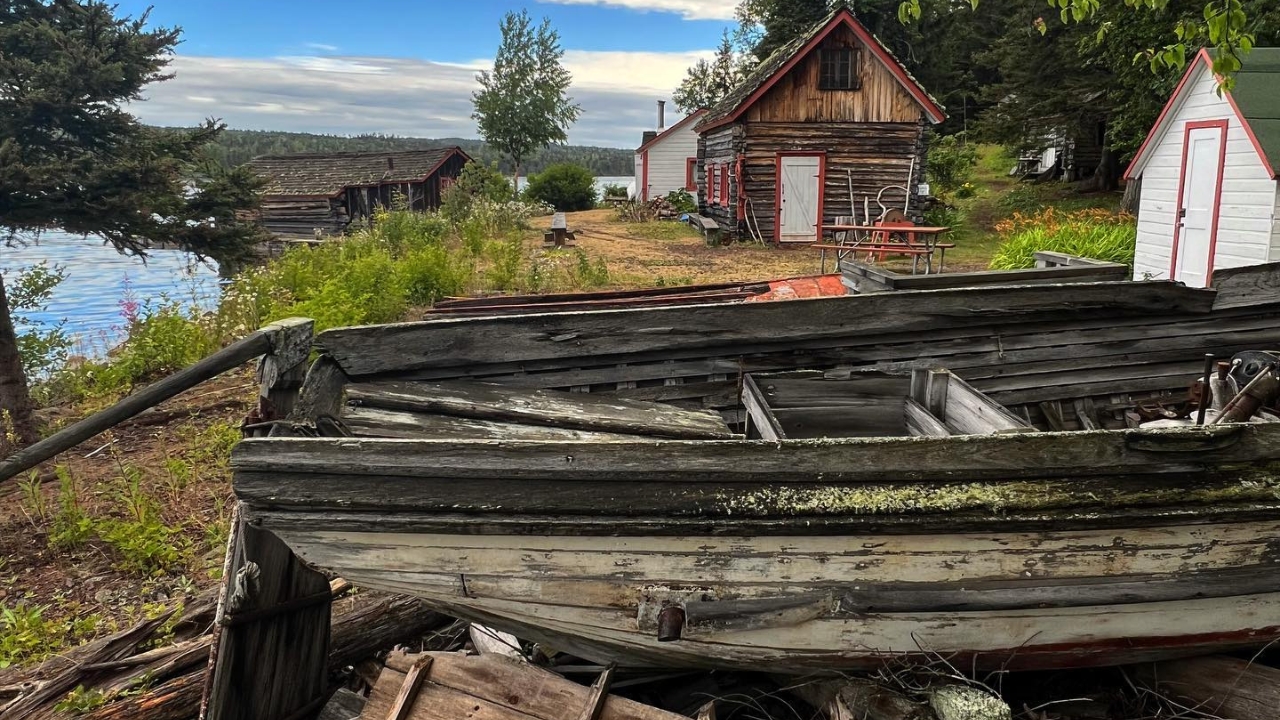
Isle Royale asks for commitment, then returns something rare: true separation from mainland pace and constant signal. Reached by crossing Lake Superior, the park is framed by NPS as a rugged island wilderness for hikers, paddlers, divers, and boaters willing to slow down and stay present. Forest trails, rocky ridges, and wind-cut shorelines make weather part of the experience rather than background detail. The destination does not cater to convenience tourism; it offers immersion, where distance, effort, and quiet combine into a lasting sense of clarity.
Congaree National Park, South Carolina
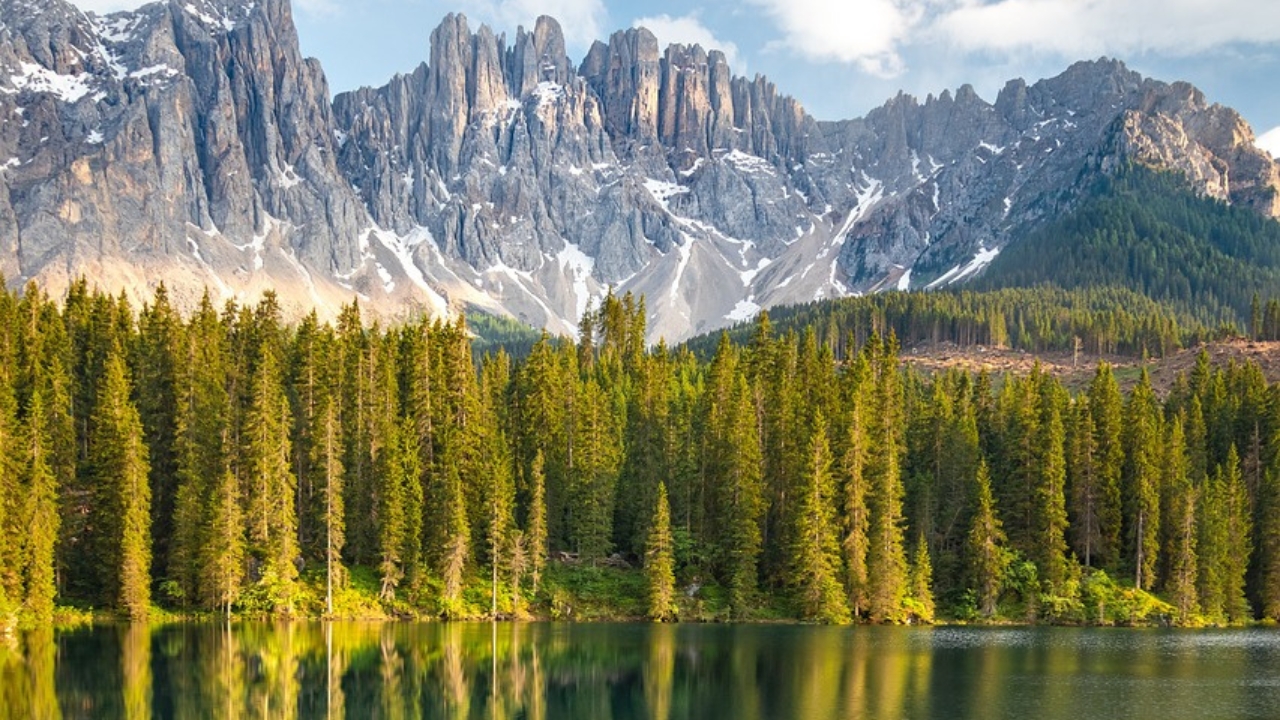
Congaree offers a quieter form of grandeur, shaped not by peaks but by living floodplain forest and river cycles. NPS describes it as the largest intact expanse of old-growth bottomland hardwood forest in the southeastern United States, renewed by waters that carry nutrients through the system. Boardwalks and paddling routes reveal towering trees, rich biodiversity, and a soft green light that often feels almost cathedral-like beneath the canopy. The park’s beauty is humid, layered, and fully alive, proving scale can be measured in age, complexity, and ecological continuity.
Cumberland Island National Seashore, Georgia
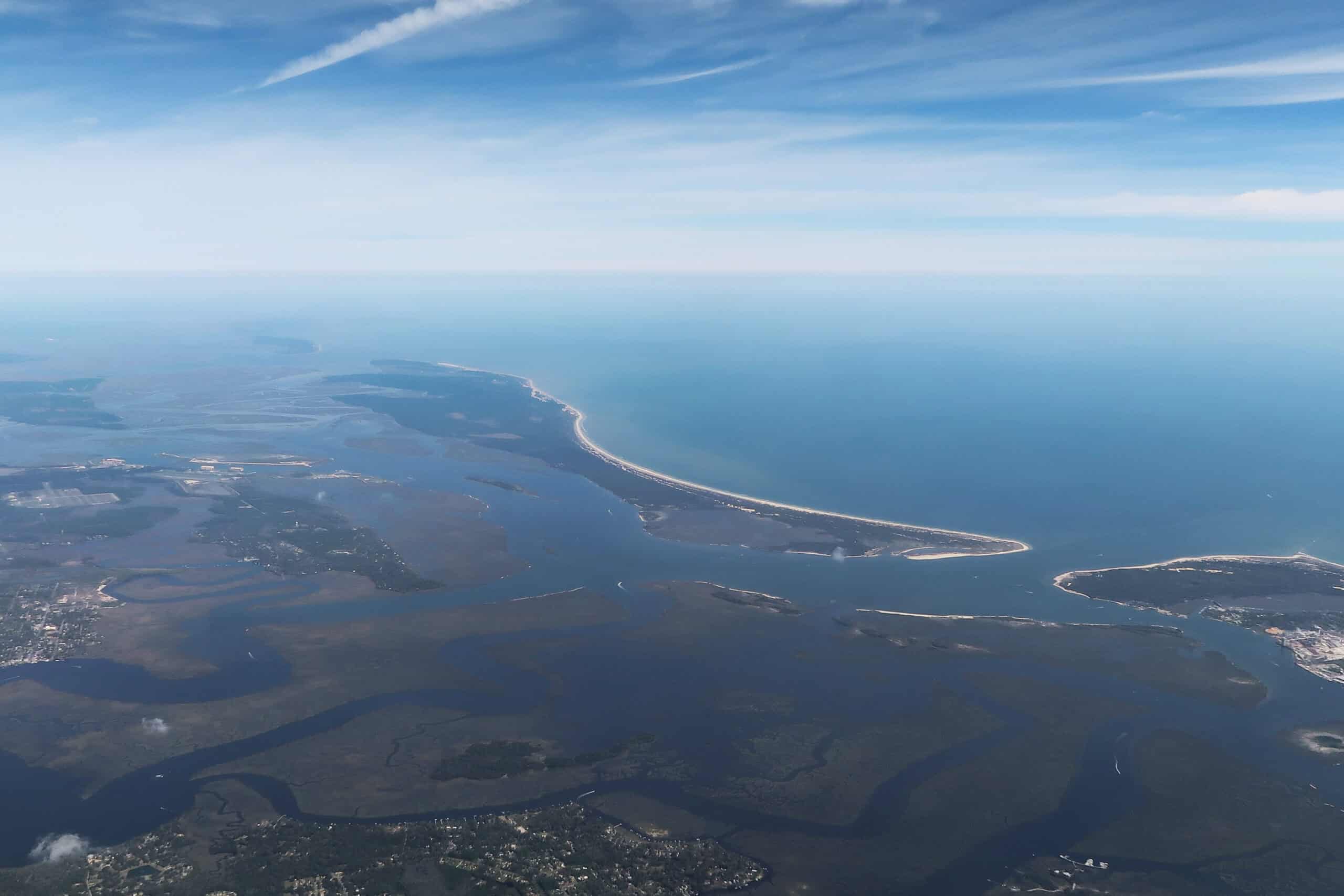
Cumberland Island holds coastal wilderness and layered American history in one continuous stretch of dunes, forest, and marsh. NPS describes Georgia’s largest and southernmost barrier island, with undeveloped beaches, maritime woodland, and more than 9,800 acres of congressionally designated wilderness. The island also carries stories of Native communities, missionaries, enslaved African Americans, and industrial-era families whose footprints remain in place and memory. That overlap gives Cumberland unusual depth, where wind, ruins, and wild shoreline combine into an atmosphere that feels both tender and enduring.
Dry Tortugas National Park, Florida
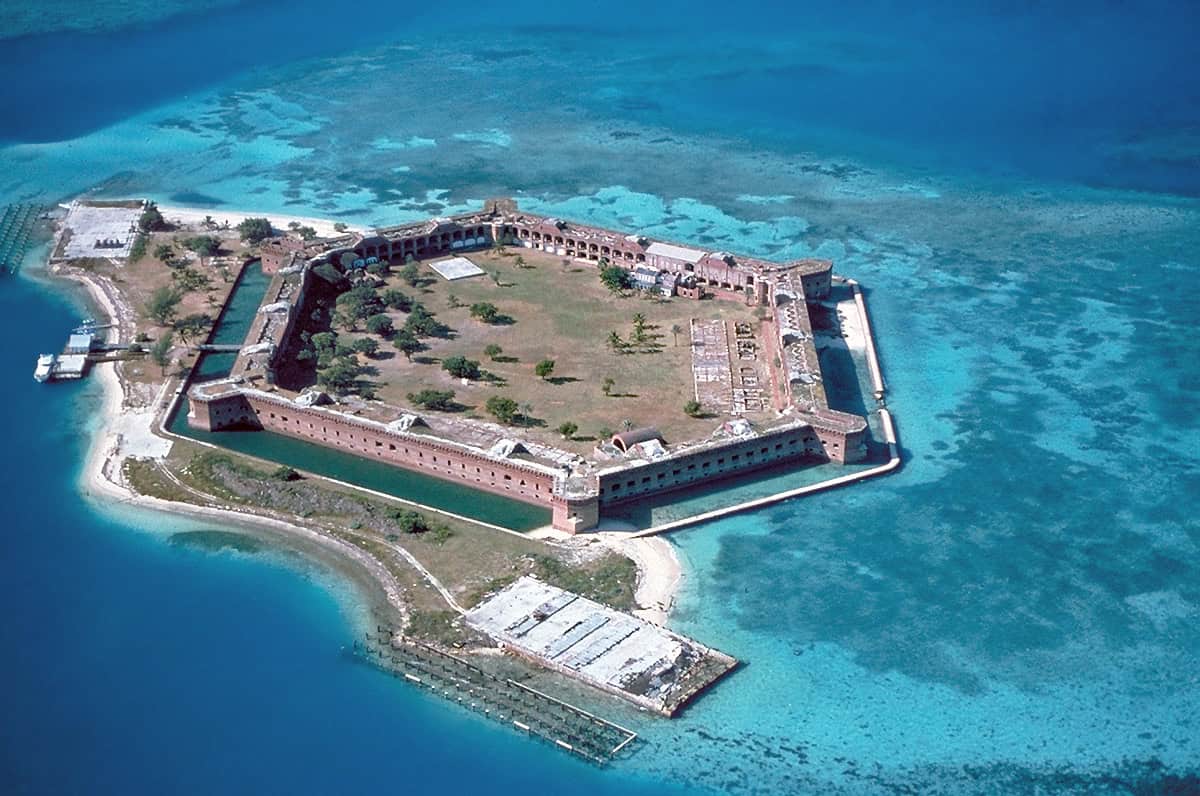
Dry Tortugas feels like a horizon escape, far offshore and dominated by clear water in nearly every direction. NPS places it about 70 miles west of Key West and describes a 100-square-mile park with seven small islands, reachable only by boat or seaplane, which preserves its sense of distance. Fort Jefferson anchors the scene with nineteenth-century scale, while coral reefs and marine life keep the surrounding waters vibrant and active. Few U.S. places blend military history, bird habitat, and tropical seascape so seamlessly in such a compact footprint.
Wrangell-St. Elias National Park And Preserve, Alaska

Wrangell-St. Elias operates at an Alaskan scale that resists quick summary. NPS identifies it as America’s largest national park at 13.2 million acres, rising from coastal zones to 18,008 feet, with room for both extreme terrain and long-standing subsistence traditions. Mountains, glaciers, and broad river valleys create constant visual motion, even in still weather and wide silence. It feels less like a stop on an itinerary and more like an active geographic system, where land, weather, and human history remain deeply connected and visibly ongoing.
Lake Clark National Park And Preserve, Alaska
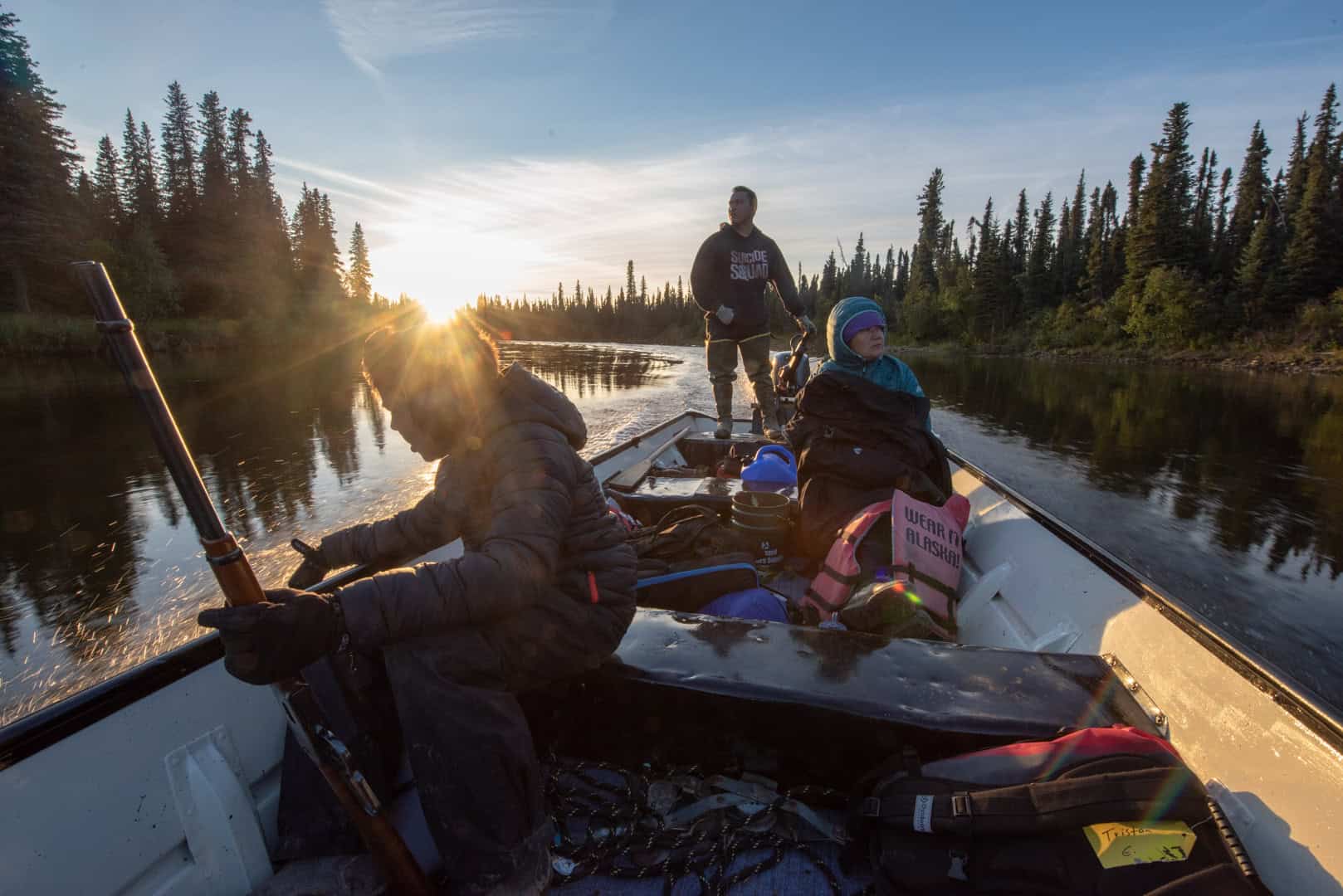
Lake Clark gathers many Alaskan signatures into one landscape without flattening them into a postcard. NPS describes steaming volcanoes, salmon runs, foraging bears, craggy ranges, and turquoise lakes that mirror changing light through long northern evenings. Local communities remain closely tied to land and water, so cultural continuity sits alongside wilderness rather than outside it. That balance gives the park unusual resonance, where dramatic scenery and everyday dependence on place coexist, and where the feeling of remoteness carries meaning beyond distance alone.
Gates Of The Arctic National Park And Preserve, Alaska
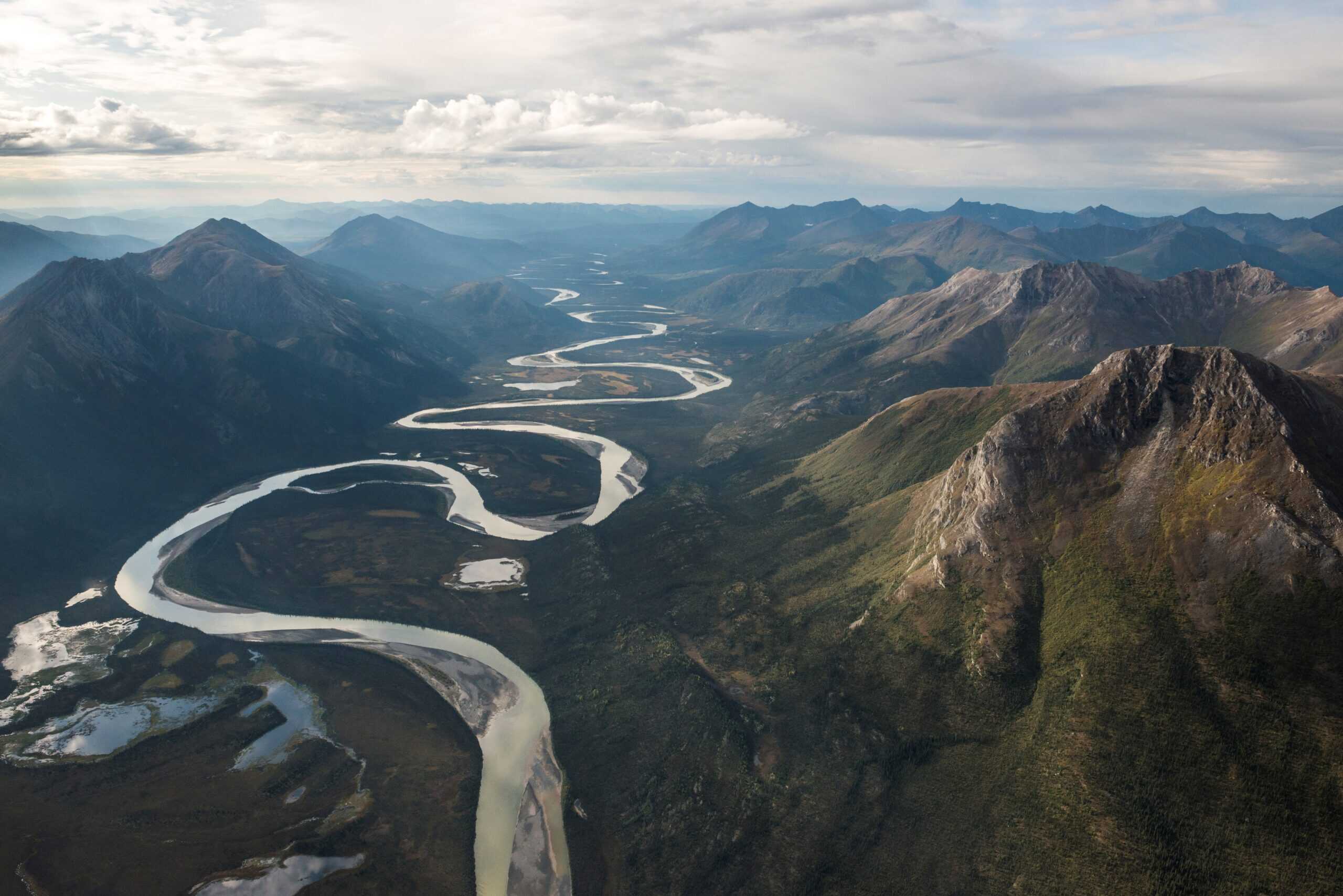
Gates of the Arctic is defined as much by what it lacks as by what it contains: no roads, no formal trails, and no softened boundaries. NPS describes intact ecosystems, glacier-carved valleys, wild rivers, and cultural continuity extending back more than 10,000 years, making the park both ecological refuge and living homeland. Travel here requires preparation, humility, and comfort with uncertainty, but that difficulty is part of the integrity that sets it apart. The Brooks Range remains largely unchanged, shaped more by weather, migration, and river flow than by infrastructure.
Kobuk Valley National Park, Alaska
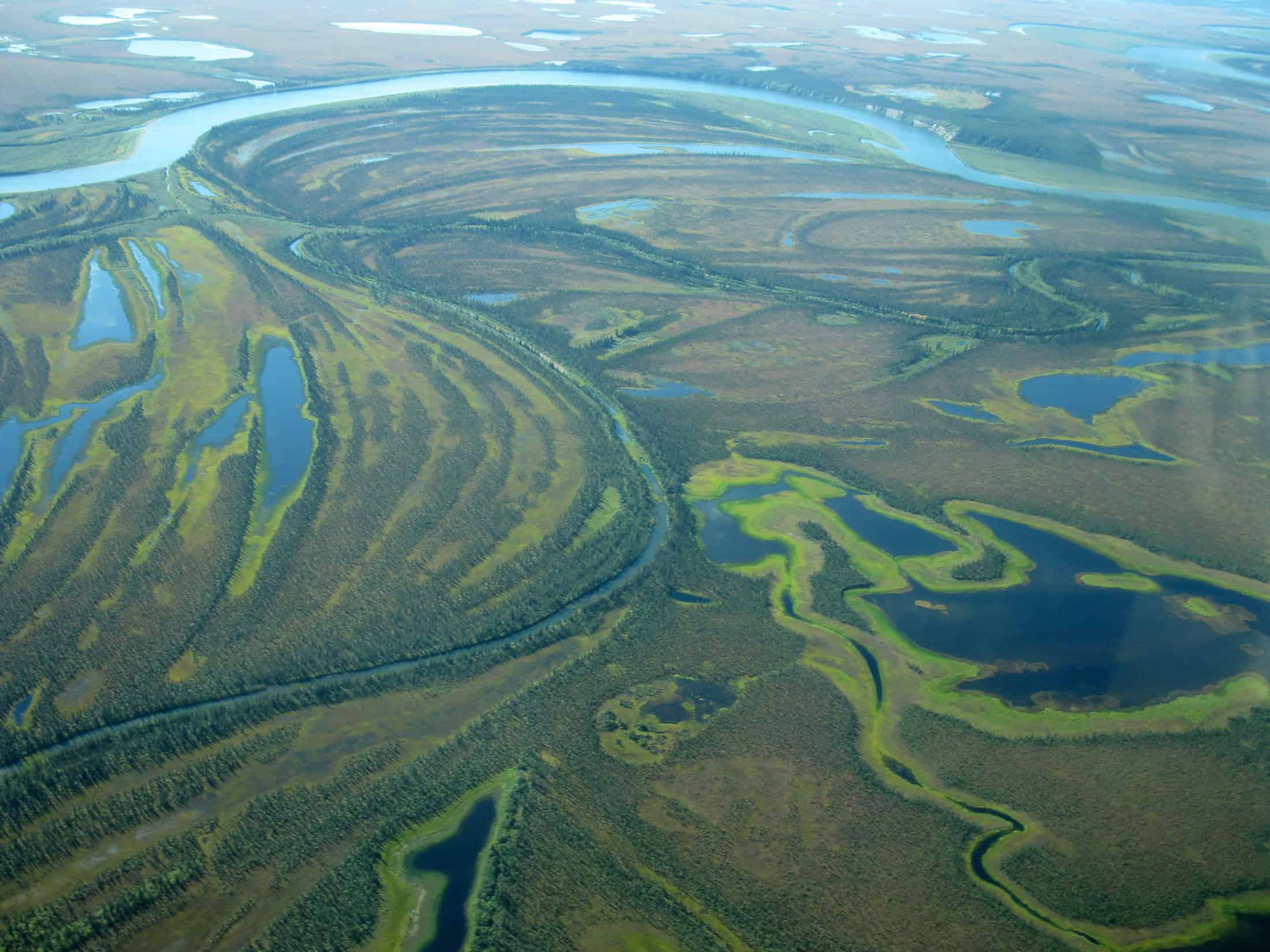
Kobuk Valley surprises first-time visitors with giant sand dunes rising unexpectedly from tundra and river country. NPS highlights thousands of migrating caribou, the Kobuk River corridor, and Onion Portage, where people have gathered for about 9,000 years as herds crossed the water. Those overlapping movements, ecological and cultural, give the park a rhythm that feels ancient yet immediate in every season. Wind across dune crests, animal tracks near riverbanks, and uninterrupted open space turn the landscape into a living record rather than a static scenic backdrop.