We may earn money or products from the companies mentioned in this post. This means if you click on the link and purchase the item, I will receive a small commission at no extra cost to you ... you're just helping re-supply our family's travel fund.
Some destinations save their best moments for after the day crowds thin out. At night, water can glow, deserts can turn silver, and wildlife steps into the open because the heat finally drops. Noctourism works because it slows travel down in a useful way. It rewards patience, quiet, and a willingness to let timing run the schedule. These places offer experiences that truly belong to the dark hours, not daytime attractions stretched later. The payoff is consistent: fewer distractions, sharper senses, and a night that feels earned.
Merritt Island Bioluminescence, Florida
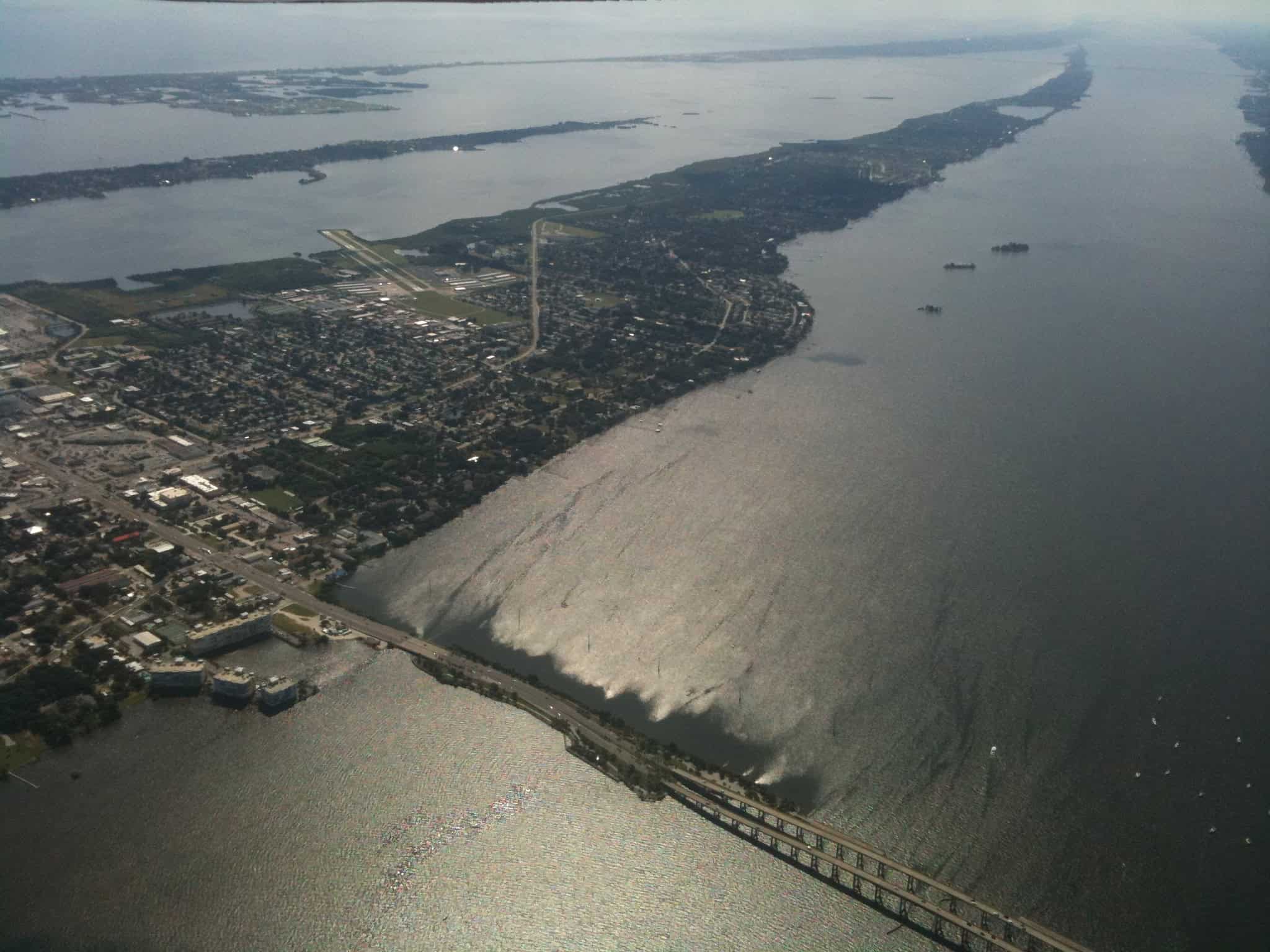
Merritt Island’s lagoon country changes after dark, when bioluminescent organisms flash blue-green with every paddle stroke and fish leave glowing commas in the wake. Guided tours time launches for the darkest skies, because moonlight and nearby glow can wash out subtle color, while calm water makes the spark look cleaner and brighter. The best nights feel strangely quiet: warm air, mangrove edges, and a kayak trail that looks like it is drawing light across ink. Wildlife adds tension in the best way. A mullet jump or a dolphin pass can set off a sudden burst of sparkle, and the group goes silent for a beat, listening to water and watching it glow.
Mosquito Bay Bioluminescence, Vieques, Puerto Rico
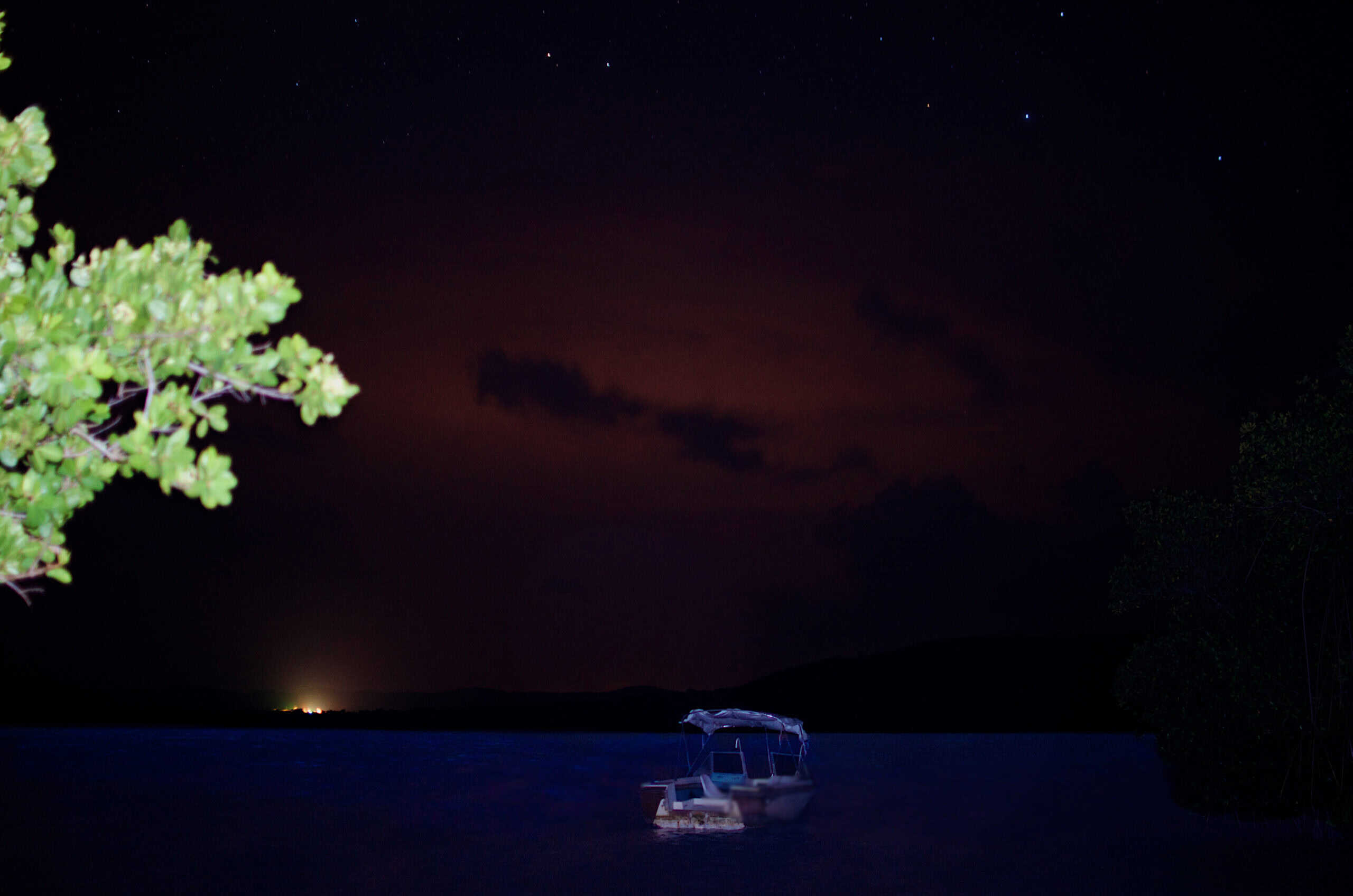
Mosquito Bay on Vieques is famous for a reason, and the reason shows up the moment a paddle hits the surface and the water answers with light. Tours keep the experience controlled, using timed launches, low-light rules, and quiet guidance so the glow stays visible instead of getting drowned in noise and flashlight beams. On moonless nights, each hand in the water draws a brief blue trail, and the bay can look like stirred stardust in motion, especially when fish and small currents set off shimmering streaks under the boats. The scene feels both gentle and intense, because it is beautiful, but also fragile, and everyone behaves accordingly.
Manta Ray Night Snorkel, Kona, Hawaii
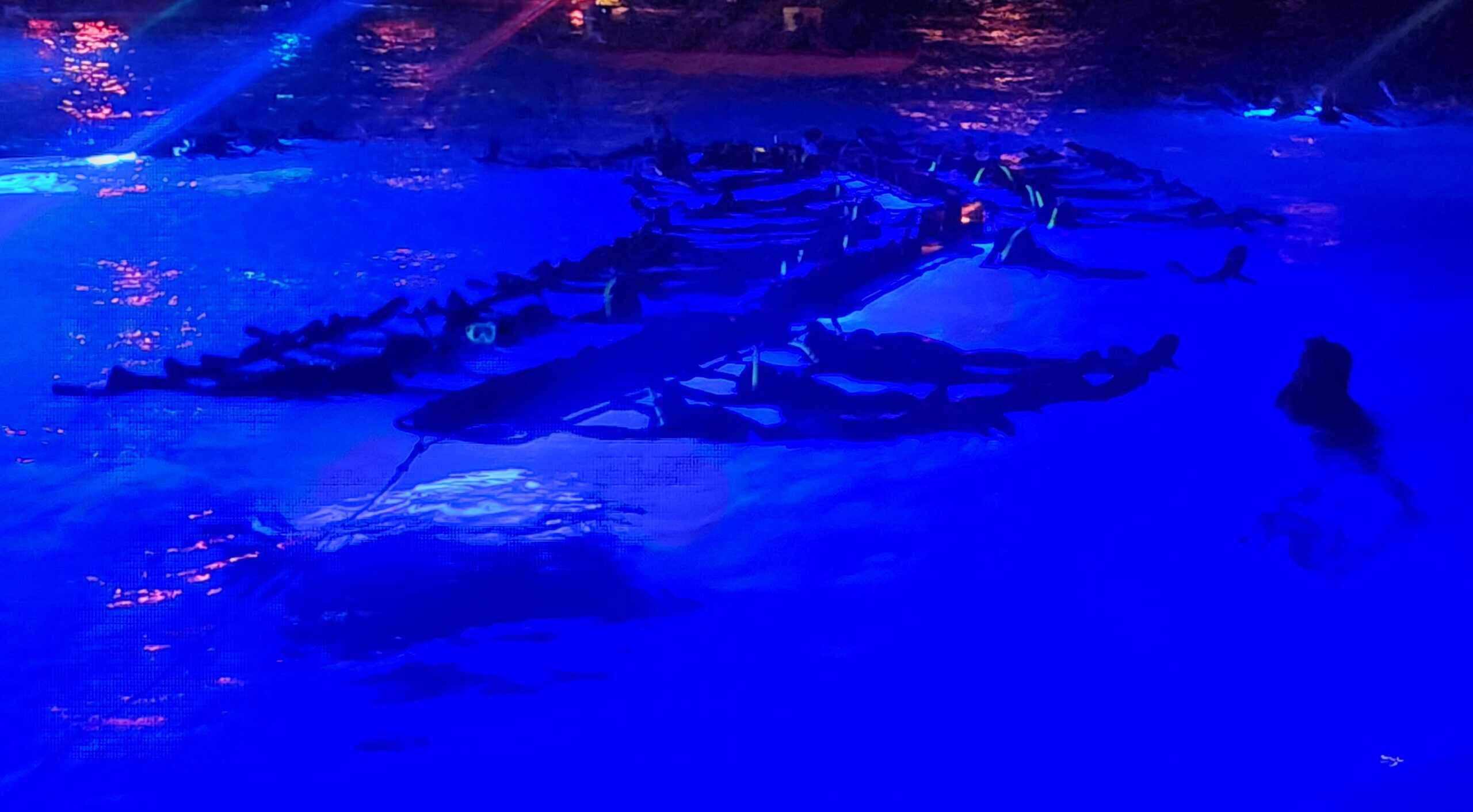
Kona’s manta ray night snorkel feels like a live show staged by the ocean. Lights lowered into the water draw plankton, and manta rays glide in to feed, looping through the glow with slow, confident passes that make people forget to speak. The routine is simple but strict: groups float in a fixed area, guides manage spacing, and cameras stay controlled so nobody kicks or crowds the animals. What makes it special is the repetition. The rays return again and again, turning a single encounter into a rhythm, with wingspans that look unreal under the light. The night ends with wet laughter on deck, then a quiet ride back under stars.
Bat Flight Program, Carlsbad Caverns, New Mexico
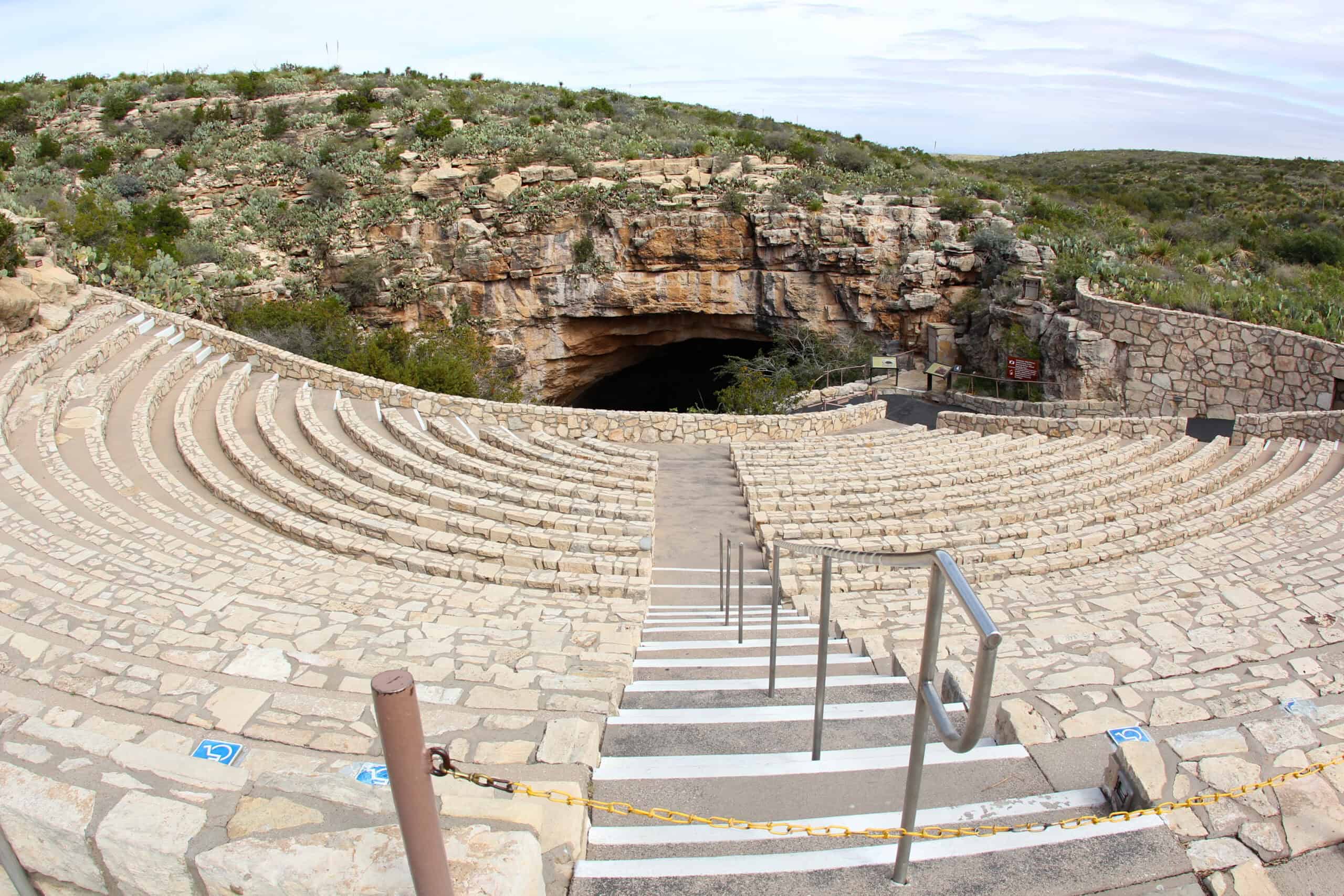
Carlsbad’s bat flight is a nighttime spectacle that feels almost old-fashioned: no fireworks, no amplified music, just a living river of bats leaving the cave at dusk. The ranger talk sets the tone, then the amphitheater goes quiet as the first movement begins, and the sky starts to fill with spiraling shapes that tighten into a steady stream. The moment lands because it is both huge and ordinary. The bats are simply heading out to feed, yet the scale is hard to hold in the mind. As the desert cools and the last light slips away, the column can continue long enough for time to lose its grip, and people stop checking phones because watching feels more useful.
Congress Avenue Bridge Bats, Austin, Texas
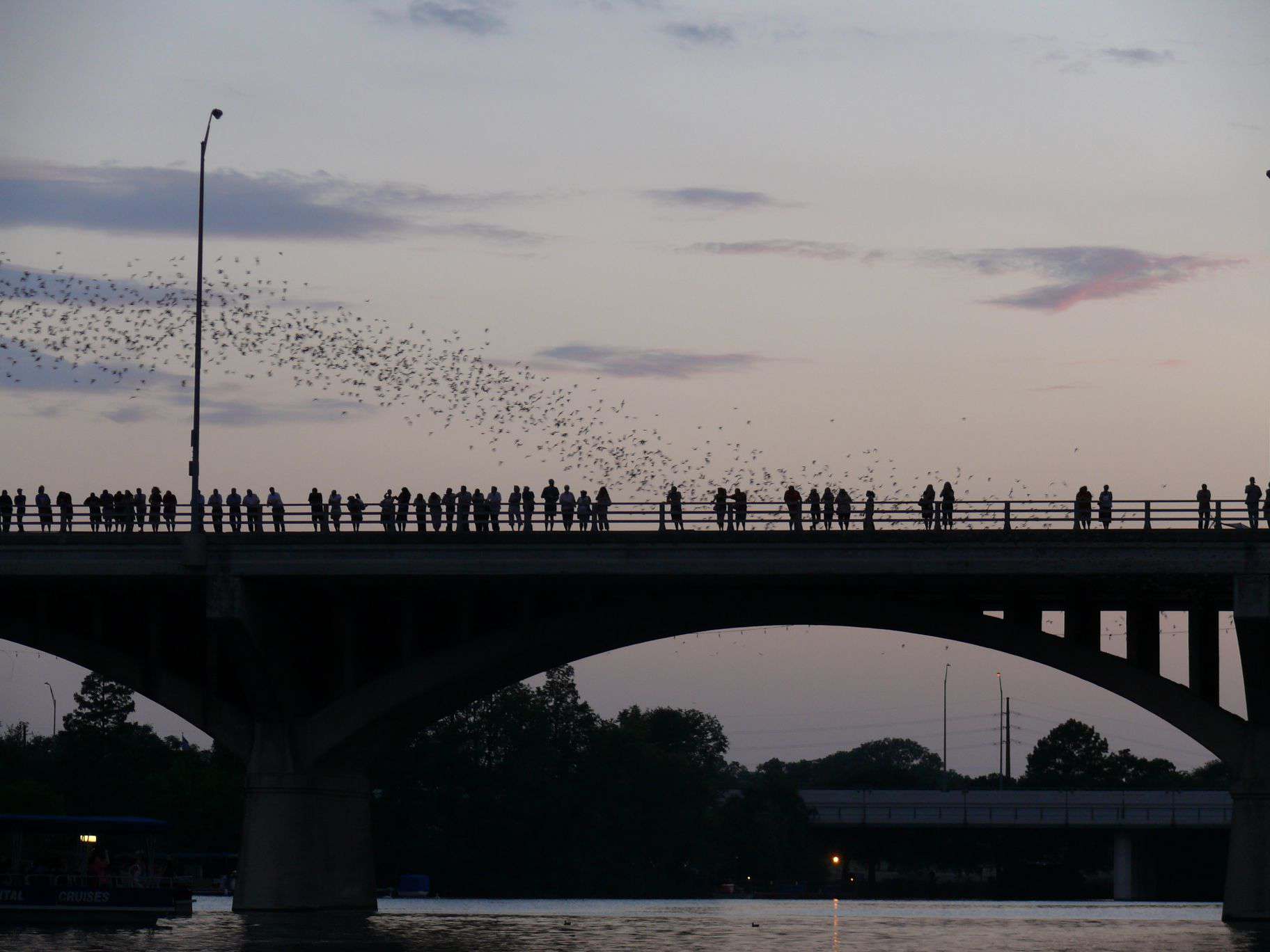
Austin turns a downtown bridge into a nightly wildlife event, and it works because the setup is simple and the payoff is dramatic. At sunset in peak season, crowds line the rail and trail edges, then wait through the first quiet minutes until the flow thickens into a dark ribbon streaming out over Lady Bird Lake. The bats do not rush. They build momentum, and that slow build is what makes the moment feel real rather than staged. Kayakers float below, tourists whisper above, and the city noise fades into a single shared focus. It is one of those rare night activities that costs nothing and still feels like a headline, especially when the last glow on the horizon turns the swarm into silhouette art.
Moonlight Hikes and Full Moon Nights, White Sands, New Mexico
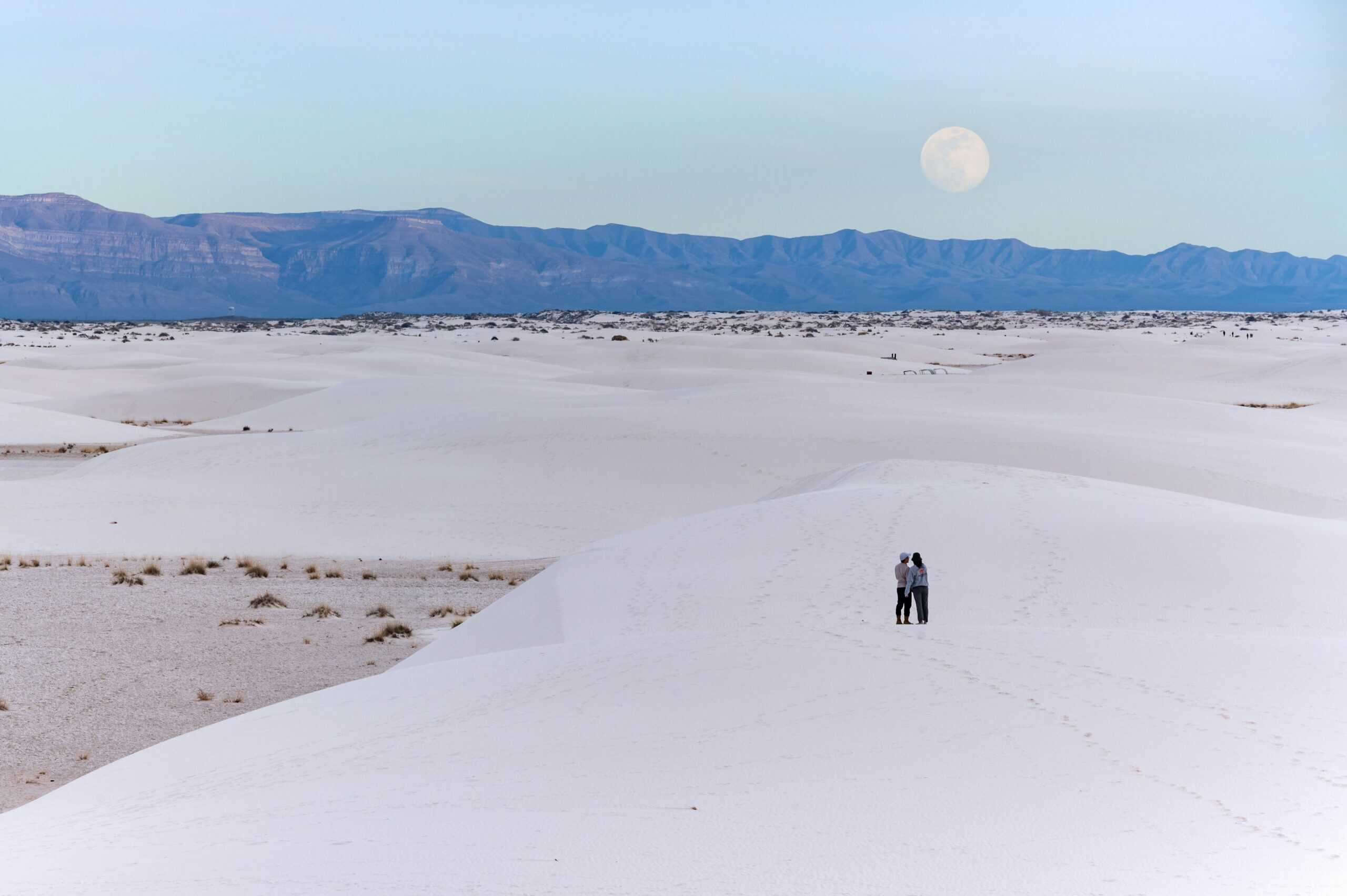
White Sands becomes a different park at night, when gypsum dunes glow under the moon and footprints look etched in silver. The National Park Service schedules moonlight hikes around full moons, and full moon nights can extend park hours, turning a daytime landscape into something quieter and cooler, with shadows that move slowly across ridgelines like waves. The appeal is practical as much as beautiful. Temperatures drop, crowds thin, and the dunes stop feeling like a bright tourist scene and start feeling like a wide, listening place. People walk slower here at night, partly to avoid tripping, partly because the silence feels delicate, like it could break if rushed.
Synchronous Fireflies, Great Smoky Mountains, Tennessee
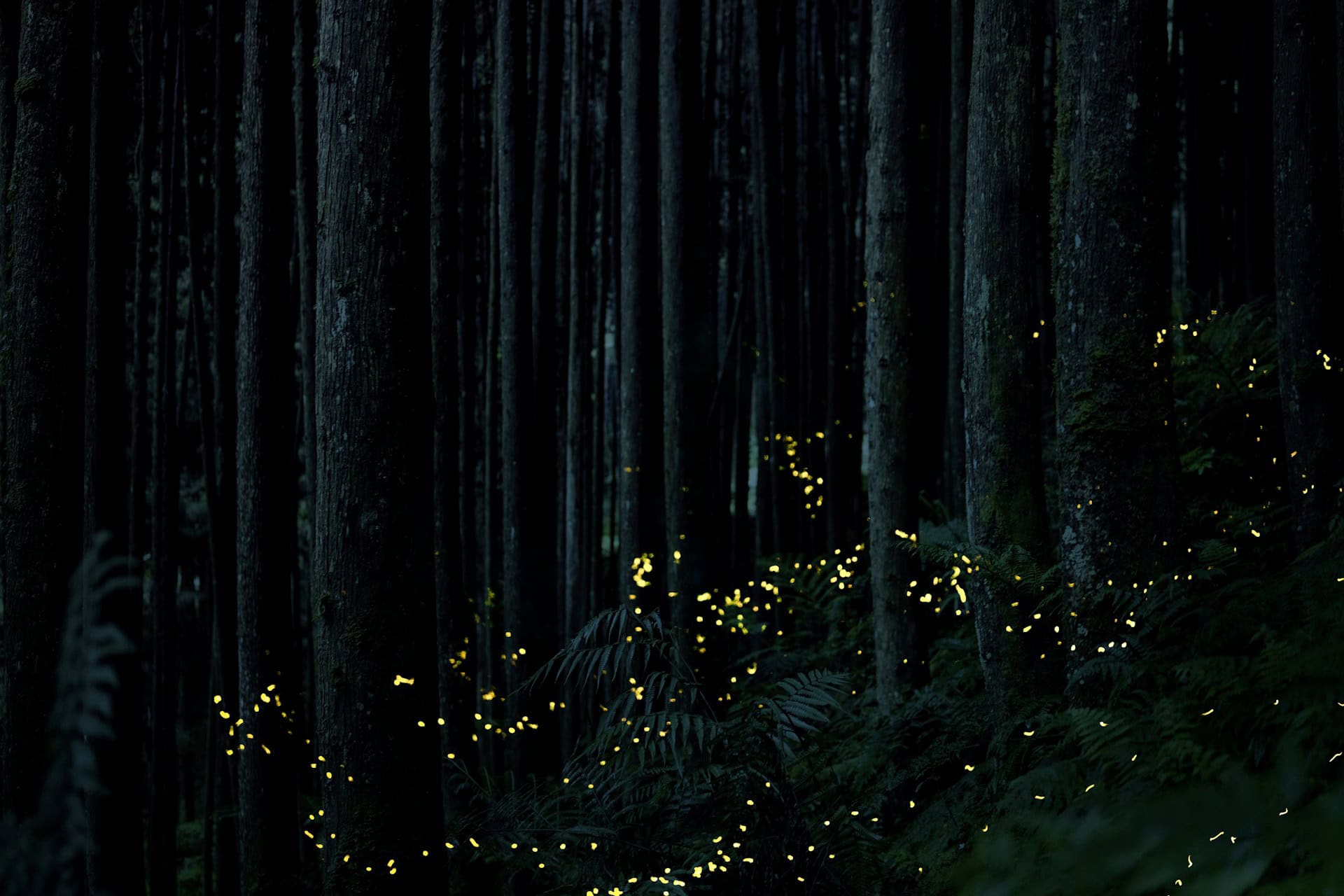
For a short window each year, the Elkmont area becomes a nighttime-only event that feels almost impossible to describe without sounding exaggerated. Synchronous fireflies flash in coordinated pulses, so the forest floor seems to blink, then fall dark, then blink again, like a slow heartbeat. The National Park Service manages viewing with a lottery and controlled access, which keeps traffic and light pollution from ruining the show, and it forces visitors into a quieter posture. Phone lights stay covered. Voices drop. People stand still and let their eyes adjust. The effect is not loud. It is mesmerizing, a natural rhythm that feels organized without feeling artificial, and it makes the river sound nearby feel even calmer.
Guided Sea Turtle Walks, Florida’s Atlantic Coast
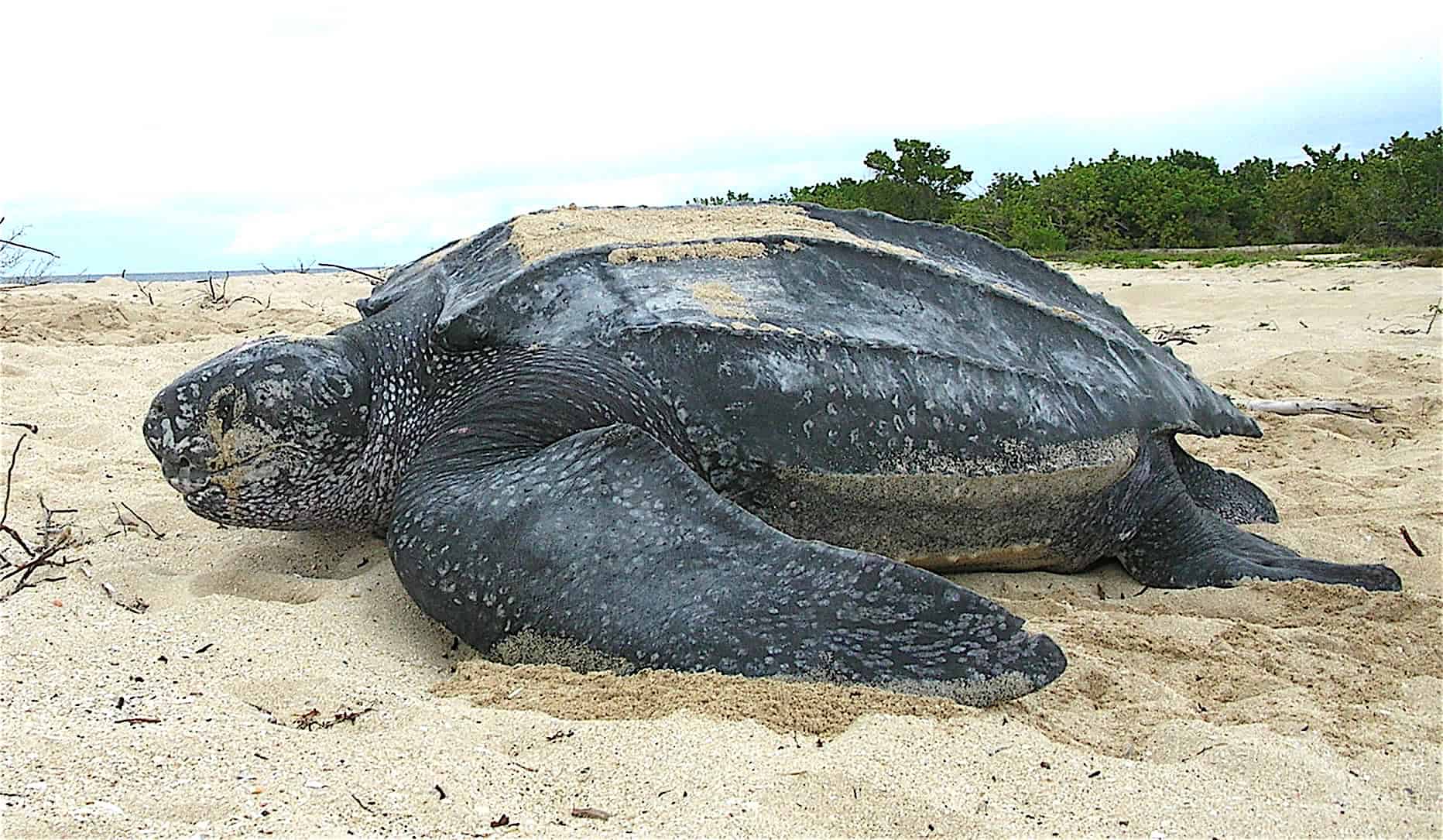
On Florida nesting beaches, the most meaningful wildlife viewing often happens after dark, when a loggerhead or green sea turtle hauls herself up the sand to lay eggs. Permitted turtle walks are tightly run, with low-light rules and careful spacing so the turtle is not disturbed, and the structure matters because the moment is both fragile and powerful. Participants often begin with a short talk, then move quietly to the beach, waiting for the right cues from trained guides. The hush is part of the experience. No one wants to be the reason the turtle turns back. When it happens, it feels like witnessing a private ritual, not consuming an attraction, and that difference stays with people long after the walk ends.
Headlands International Dark Sky Park, Michigan
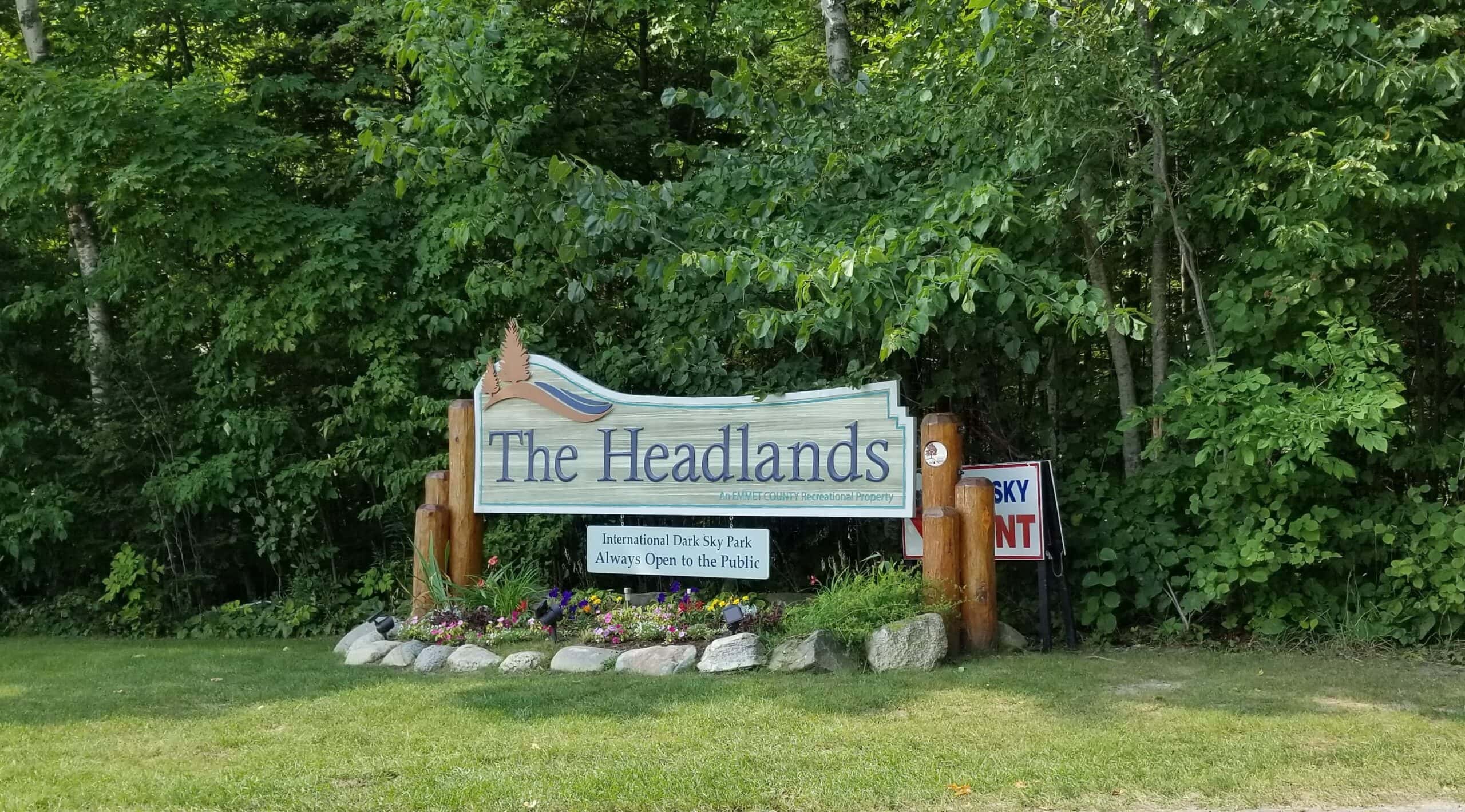
Headlands near Mackinaw City is built for staying up, not just stopping by. The park is open overnight, with a Lake Michigan horizon that stays dark enough to make the Milky Way look textured instead of faint. It feels welcoming in a practical way: parking, clear viewing areas, and a culture of red flashlights and quiet conversations rather than bright screens. On the right night, the lake adds scale, making stars feel wider and closer at the same time. People settle into chairs and blankets, talk less as their eyes adjust, and start noticing things that are easy to miss in busy places, like satellites crossing slowly or a meteor that appears without warning and vanishes before anyone finishes a sentence.
Big Bend Night Skies, Texas
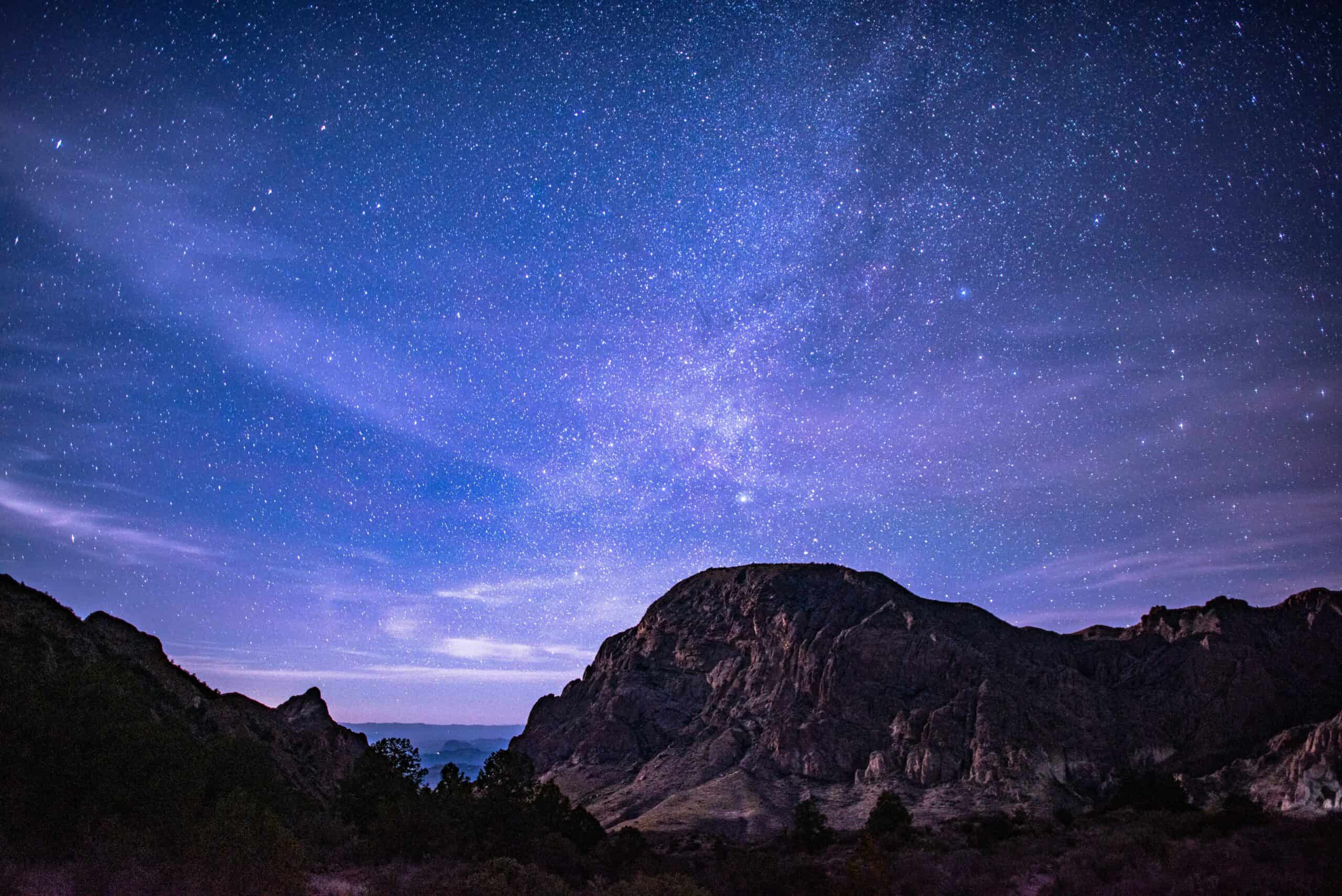
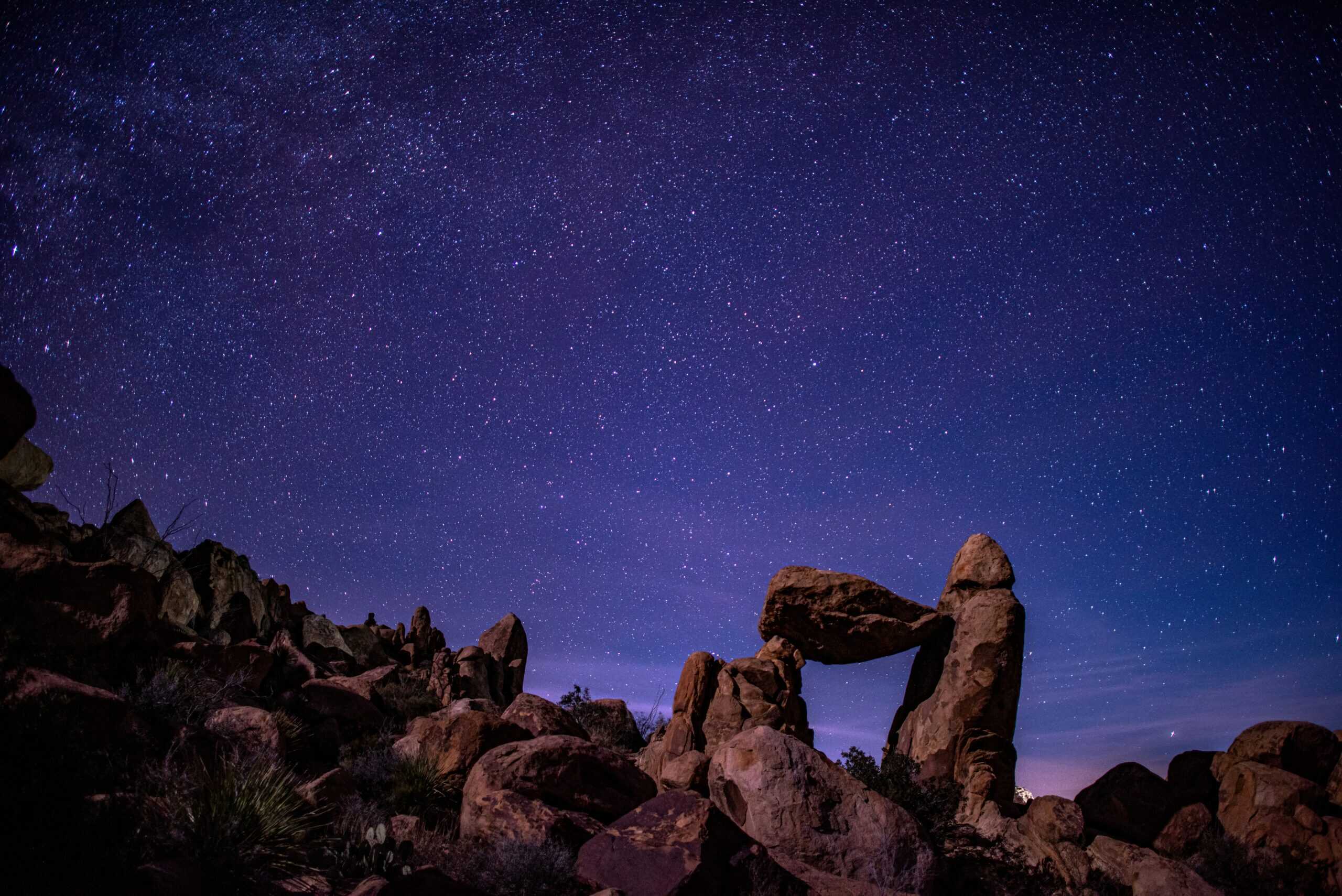
Big Bend becomes a different country after sunset, when the Chihuahuan Desert cools and the sky becomes the main attraction. The park is recognized for its dark skies, and the difference is immediate. Stars are not a backdrop. They are the whole ceiling, thick enough to make the Milky Way look like a pale river. Nighttime here is wonderfully simple: a short drive to a pullout, a slow scan for constellations, and the steady surprise of meteors. The silence is part of the power. Even a small voice feels loud, and the desert seems to hold still while the sky keeps moving. It is the kind of night that makes people sleep better because their minds finally stop racing.