Zion in November Has Thinner Crowds and Shorter Days. 8 Things to Plan Around Before You Go
We may earn money or products from the companies mentioned in this post. This means if you click on the link and purchase the item, I will receive a small commission at no extra cost to you ... you're just helping re-supply our family's travel fund.
Zion in November can be one of the most rewarding times to visit the park. The summer heat is gone, the cottonwoods along the Virgin River can still hold gold leaves early in the month, and the trails feel far less packed than in spring or summer. But late fall in southern Utah comes with its own set of rules, and visitors who plan for July conditions get caught off guard.
The changes are not dramatic, but they add up: the shuttle system is in its final weeks of the regular season, the sun drops behind the canyon walls early, mornings can be near freezing, and the Virgin River turns cold enough to make wading a serious decision. Here are eight things to plan around so your November trip works.
Visiting Zion in November: what changes
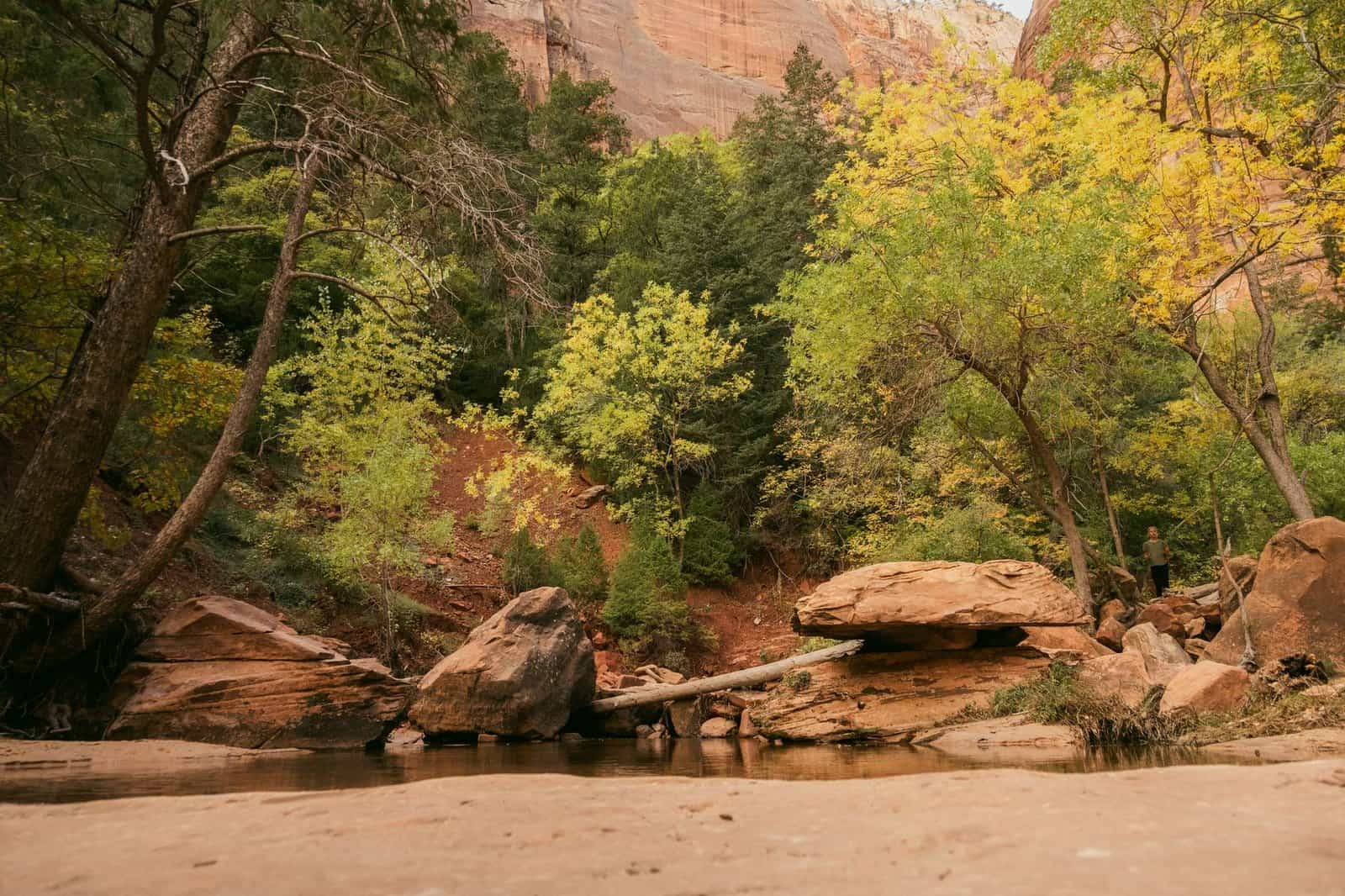
Zion is Utah’s most visited national park, and the main canyon is narrow. That geography shapes everything. The canyon floor sits around 4,000 feet, while the high country climbs much higher, so conditions can vary sharply within a few miles. In late fall, the canyon gets less direct sun each day, which keeps shaded trails cold and icy longer than you might expect.
1. The shuttle season is winding down
From spring through fall, the Zion Canyon Shuttle System is the only way to reach Zion Canyon Scenic Drive aside from walking or biking. According to the Utah Department of Transportation’s Zion area traveler information, the shuttle operates from March through November, plus the holiday period at the end of December, and it is free with no reservation required. Personal vehicles are not allowed on the Scenic Drive while the shuttle is running.
That means most of November still runs on shuttle rules. Check the National Park Service’s shuttle page for the exact end date and first and last bus times, because those hours shorten as the days get shorter. Missing the last bus out of the canyon means a long walk back in the dark.
2. Daylight is short, and the canyon makes it shorter
In November, sunset in southern Utah comes around 5 p.m. local time, and early in the month it moves earlier still after daylight saving time ends. Inside a deep canyon, the sun disappears behind the walls well before official sunset. Trails can fall into shade by mid-afternoon.
Plan your longest hike for the morning, carry a headlamp even on a short walk, and know your turnaround time before you start. The number of people who need help after dark on Zion trails tends to rise when visitors underestimate how fast the light goes.
3. Mornings can be near freezing, and shaded trails can ice up
Average November highs in Zion Canyon tend to sit in the 50s and low 60s Fahrenheit, with nights that can fall near or below freezing. A trail that feels pleasant at 1 p.m. can be slick with frost at 8 a.m. in the shade. Higher-elevation trails and sections near the Kolob area can see snow.
Pack layers, gloves, and a warm hat even if the afternoon forecast looks mild. Microspikes or traction devices are worth carrying if you plan on steep or shaded routes after a cold snap or storm. Check the park’s current conditions page before any major hike.
4. The Narrows are cold, and conditions can close them
The Narrows, where hikers walk up the Virgin River between towering walls, is one of Zion’s signature hikes. In November, the water is cold, and you will be wading in it for hours. Many hikers rent dry suits or drysuit-style bibs, neoprene socks, canyoneering boots, and walking sticks from outfitters in Springdale.
The NPS also closes the Narrows when river flow is too high, and flash flood risk depends on weather upstream, not just in the canyon. Check the park’s flow and flash flood forecast the morning of your hike. If you are not prepared for cold water, the Riverside Walk at the Temple of Sinawava gives you the start of the canyon without the wading.
5. Angels Landing still requires a permit
The chained final section of Angels Landing requires a permit year-round, and the slower season does not change that. The NPS runs seasonal and day-before lotteries for permits through Recreation.gov. If you do not have one, you can still hike the West Rim Trail up to Scout Lookout, which gives big canyon views without the chains.
In cold weather, the chains and sandstone can be icy. Even permit holders should reconsider the hike after a storm or on a frosty morning.
6. The Zion-Mount Carmel Tunnel has size limits
If you are coming from the east side of the park, you will drive the Zion-Mount Carmel Highway and its 1.1-mile tunnel, built in the 1920s. Large vehicles over certain dimensions cannot use it, and some vehicles near the limits require a tunnel permit and escort during set hours. Rules are posted by the park, and oversized RVs and trailers are a common source of trouble.
Measure your vehicle before you go. If it is too big, plan a route that avoids the tunnel or park outside and use other transportation.
7. Springdale changes its pace
Springdale, the town at the park’s south entrance, stays open year-round but operates at a slower pace in late fall than in summer. Some restaurants, shops, and outfitters may cut hours or close certain days. That is a gain if you want easier dinner reservations, but it can surprise you if you expect summer-style late hours.
The SunTran Zion route, which runs from St. George to Springdale year-round on weekdays and Saturdays, can help if you are staying in St. George, about an hour away, where lodging is usually cheaper. A park-and-ride in nearby Virgin offers parking with shuttle connections to the park entrance.
8. Lodging gets cheaper, but holiday weeks fill up
November is generally one of the cheaper months for rooms in Springdale, and you will often find better rates than in spring and summer. The exceptions are Veterans Day weekend and Thanksgiving week, when families and students on break fill rooms fast. Zion Lodge, the only lodging inside the canyon, stays open, but rooms sell out ahead of popular dates.
Campgrounds also change. Watchman Campground generally remains open, while other campgrounds have seasonal schedules. Reserve as early as you can for holiday weeks, and check the NPS camping page for current openings.
Which hikes work best in November
Late fall rewards hikes that make the most of good light and avoid deep, icy shade late in the day. Strong choices include:
- Pa’rus Trail: A paved, mostly flat path along the Virgin River near the visitor center. Good for an easy walk at any hour.
- Riverside Walk: About two miles round trip to the start of the Narrows, with cottonwoods along the river.
- Canyon Overlook Trail: A short hike east of the tunnel with a sweeping view down Zion Canyon. Parking is limited.
- Watchman Trail: A moderate climb with views of the Towers of the Virgin and Springdale, and it starts from the visitor center area.
- Scout Lookout via the West Rim Trail: A strenuous climb with steep switchbacks and no permit needed.
Start long hikes early, check conditions, and remember that a trail that is sunny on your way up can be shaded and cold on the way down.
What to pack for Zion in November
November days in Zion can swing more than 30 degrees between dawn and mid-afternoon, so layering is the whole strategy. A practical packing list includes:
- A warm base layer and a fleece or light puffy jacket you can take off as the day warms.
- A windproof or waterproof shell for storms and breezy overlooks.
- Gloves and a warm hat for early shuttle rides and shaded trails.
- Hiking shoes with good grip, plus traction devices if a cold front has passed through.
- A headlamp with fresh batteries, even for hikes you expect to finish by mid-afternoon.
- More water than you think you need. Dry desert air dehydrates you even when it is cool.
Food matters, too. With some Springdale businesses on reduced hours, it helps to carry lunch and snacks into the canyon rather than counting on finding something open when you get hungry.
How to handle Thanksgiving week in Zion
Thanksgiving week can feel like a short burst of summer crowds in the middle of a quiet month. Families on break, college students, and regional visitors from Las Vegas and Salt Lake City all converge on the park. Expect fuller shuttles, busier trailheads, and higher room rates in Springdale over that stretch.
If you are visiting that week, arrive at the visitor center early in the morning, have a backup hike ready if your first choice is crowded, and book Thanksgiving dinner in advance if you want a restaurant meal. Some Springdale restaurants offer holiday menus, while others close for the day. Calling ahead saves you from a cold sandwich in the car.
A simple November game plan
Arrive early in the day to find parking at the visitor center or in Springdale. Ride the shuttle up canyon while the morning is cold, and hike in sunnier stretches by mid-morning. Pack lunch so you are not tied to limited dining hours. Head out before the last shuttle, then have dinner in Springdale.
If you plan around these eight things, you get the payoff late fall is known for: cooler temperatures for hiking, fewer people at viewpoints, and red cliffs glowing against the low autumn sun.