Travelers Expect Japan to Feel Far More Foreign—3 Familiar Images Create the Misunderstanding
We may earn money or products from the companies mentioned in this post. This means if you click on the link and purchase the item, I will receive a small commission at no extra cost to you ... you're just helping re-supply our family's travel fund.
Many first-time visitors expect Japan to feel far more foreign than it does, and three familiar images are mostly to blame: geisha and temples, neon cyberpunk Tokyo, and anime and robots. Each is a real part of Japan, but each is a tiny slice, and together they set up a country that looks like another planet. The reality is that most of daily Japan feels oddly familiar: convenience stores on every corner, people in business suits, train maps that look like subway maps anywhere, and chains such as McDonald’s, Starbucks, and Uniqlo. The foreignness is in the details, not the surface, and knowing that makes it easier to enjoy the trip.
Why Travelers Expect Japan to Feel Far More Foreign
Japan is one of the most heavily imagined countries in the world. Films, games, cartoons, food photos, and social media posts have turned it into a set of vivid images. Because those images are vivid, they stick, and because they are often the only images people have, they harden into expectations. A traveler who has seen a hundred photos of Kyoto lanterns and Shibuya neon may arrive expecting to be surrounded by them at every moment.
The country is also modern, wealthy, and thoroughly connected to the rest of the world. Japan has been adopting and adapting Western ideas since the Meiji era in the 19th century. People wear jeans and suits, ride trains with pay-by-tap cards, eat at ramen counters and burger restaurants, and carry smartphones. Cities such as Tokyo, Osaka, and Nagoya look more like other big, modern cities than like a postcard. Visitors who expect a time warp can feel disoriented, and sometimes disappointed, until they notice the differences that matter.
The gap between image and reality is a common source of travel stress. You can reduce it by understanding where each image comes from and what it leaves out.
1. Geisha, Temples, and Kimono
The first image is traditional Japan: a woman in a kimono walking past wooden teahouses, a pagoda behind a cedar grove, monks raking gravel. Kyoto, which has roughly 1,600 Buddhist temples and 400 Shinto shrines, gives you plenty of this. Places such as Fushimi Inari, Kiyomizu-dera, and the Gion district are lovely, and you can see traditional crafts, tea ceremonies, and seasonal festivals.
What the image leaves out is that this is a small share of the country and of daily life. Geisha, called geiko in Kyoto, number in the hundreds, not thousands, and most are working professionals who are rarely seen in public. The people in kimono in Gion are often visitors who have rented them. Most residents wear Western-style clothes every day, and they use kimono for weddings, tea ceremonies, graduations, and festivals.
Temples and shrines are also not museums. Many are active religious sites, with worshippers, local festivals, and neighborhood ties. Etiquette matters: bow lightly at a torii gate, wash your hands at a purification fountain, and keep your voice down. It is also true that many famous temples are crowded with tour groups, especially at peak times, so the quiet scene in photos may require an early morning visit.
How to adjust: treat the traditional sites as one chapter, not the whole book. Visit in the early morning or on a weekday, and then spend time in ordinary neighborhoods, local markets, and small restaurants to see the rest.
2. Neon Tokyo and the Cyberpunk Skyline
The second image is a glowing future city. Movies and games have used Shinjuku, Shibuya, and Akihabara as inspiration for futuristic scenes, with neon signs, rainy alleys, and towering screens. Shibuya Crossing, where hundreds of people cross at once, is a real spectacle, and Kabukicho and Omoide Yokocho are atmospheric at night.
What the image leaves out is that much of Tokyo is quiet, clean, and residential. The metropolitan area has about 37 million people, and most of them live in modest apartments in neighborhoods with small shops, parks, and shrines. Streets can be narrow and calm. Evening neon is concentrated in a few districts, and even there, the scene is warm and human-scale, not dystopian.
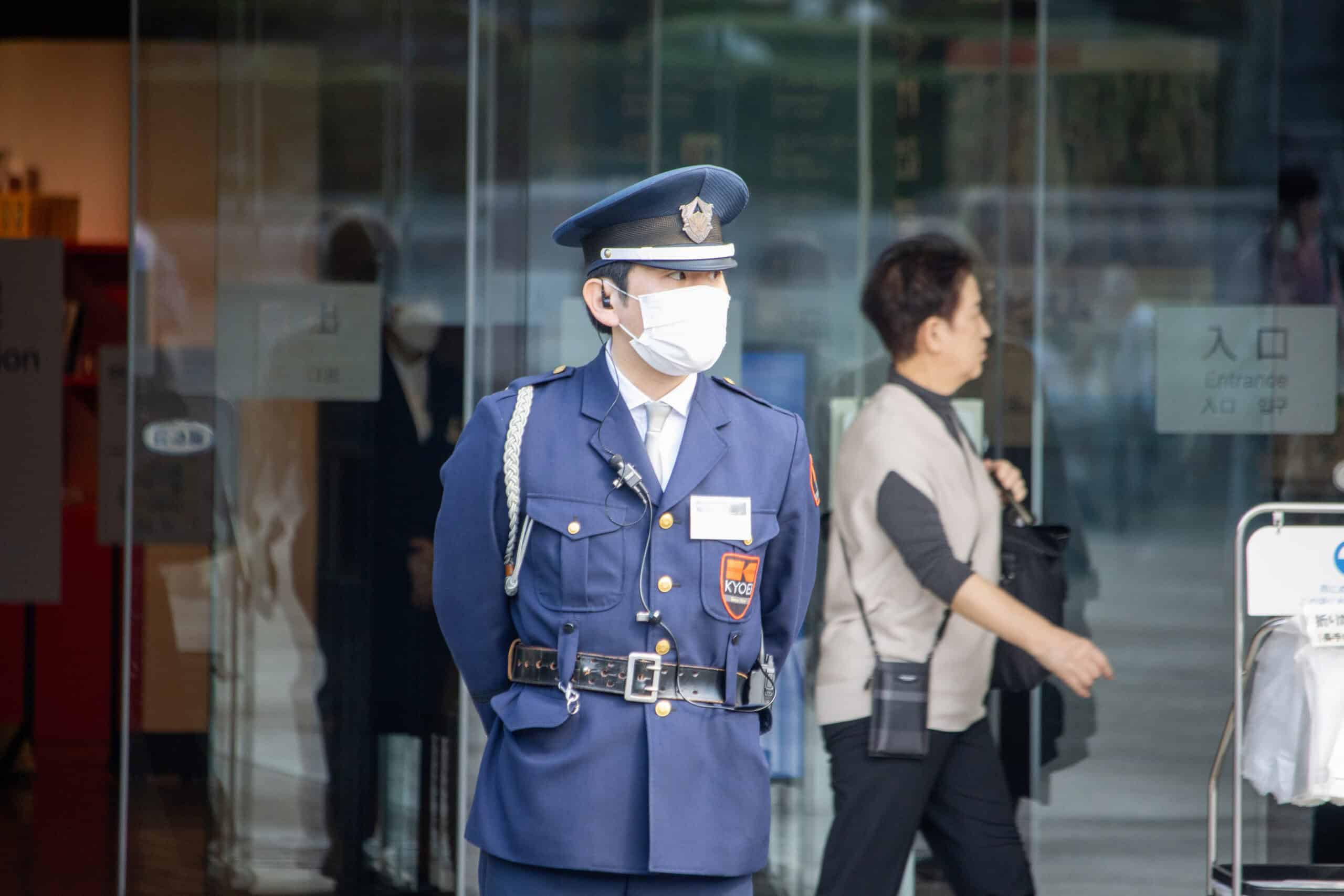
Several things surprise visitors. Tokyo is one of the safest big cities in the world, with low street crime. Trains are punctual, to the minute, and station staff are helpful. Public spaces are clean, though trash cans are scarce, so people carry their garbage with them. Quiet is a social norm on trains, where phone calls are discouraged.
How to adjust: see the neon, but also spend time in neighborhoods such as Yanaka, Kichijoji, or Shimokitazawa, where small shops, cafés, and local life dominate. You will see that the city is both futuristic and familiar.
3. Anime, Robots, and Sushi
The third image is pop culture: anime characters, robot restaurants, maid cafés, vending machines selling everything, and perfect sushi. Japan’s media industry is globally influential, and parts of Tokyo, such as Akihabara and Nakano Broadway, are centered on it. There are also real innovations, such as high-tech toilets, bullet trains, and impeccable service.
What the image leaves out is that these are not everyday experiences for most Japanese people. Anime is popular, but most people watch it the way people elsewhere watch TV shows. The so-called robot restaurants are tourist shows. Sushi is a restaurant meal, but daily food is often rice, miso soup, grilled fish, noodles, curry, or convenience-store sandwiches. Vending machines are common, but they mostly sell drinks.
Another surprise is that Japan can be quite analog. Cash is still widely used, fax machines exist in some offices, and many small shops lack English signs. Online booking systems can be clunky for foreigners, and some restaurants require reservations through local platforms.
How to adjust: enjoy the pop culture, but also try ordinary food, such as a set meal at a local diner, a bowl of udon, or a convenience-store egg sandwich, which is famously good.
What Actually Feels Different
If the surface is familiar, where does the foreignness show up? Mostly in small, practical details.
- Language and writing. Signs use three scripts, and English is limited outside major tourist areas. Translation apps help, and station names are usually in Roman letters.
- Etiquette. Take off your shoes at homes, some restaurants, and ryokan inns. Do not tip, which can confuse staff. Avoid eating while walking in many areas.
- Quiet and order. People queue neatly, speak softly on trains, and rarely jaywalk.
- Cash and payment. Cards are widely accepted in cities, but many small places want cash.
- Food rhythms. Many restaurants close between lunch and dinner, and menus can be specialized, such as a shop that serves only tonkatsu.
- Accommodation. Hotel rooms can be small, and traditional inns have futons and communal baths.
- Seasons and crowds. Cherry blossom season in late March to early April and autumn color in November draw large crowds and higher prices.
How to Set Better Expectations
A few simple habits help you land in the real Japan.
1. Learn a few phrases. “Sumimasen” (excuse me), “arigatou gozaimasu” (thank you), and “onegaishimasu” (please) go a long way. 2. Download the essentials. Maps, a translation app, and a transit app prepare you for the first day. 3. Mix famous and ordinary. For every major sight, schedule an unplanned wander. 4. Plan around crowds. Visit popular spots early, and stay in neighborhoods away from the main tourist zones. 5. Accept small mistakes. Locals are generally forgiving of visitors who make a respectful effort. 6. Check practical details. Seasonal closures, reservation requirements, and transit passes change, so check official sites before you go.
Costs vary. A set lunch at a local restaurant commonly runs from about 1,000 to 1,500 yen, a mid-range hotel in Tokyo or Kyoto often costs from roughly 12,000 to 25,000 yen a night depending on season, and a single subway ride usually costs about 150 to 350 yen. Exchange rates change, so check current prices.
Why It Matters
Expectations shape experience. A traveler who arrives expecting a temple around every corner may feel let down by a gray apartment block. A traveler who arrives expecting an ordinary modern country may be delighted by small surprises, such as a perfect egg sandwich, a quiet shrine tucked between buildings, or a train conductor who bows to an empty carriage. Understanding the images that mislead you lets you see what is in front of you.
Beyond Tokyo and Kyoto
Most first trips run on the same rail line from Tokyo to Kyoto and Osaka, known as the Golden Route, and that route is where the postcard images are strongest. Step off it and the country changes. In Kanazawa, a preserved samurai district and a famous garden sit in a city that is also a working regional center. In Hiroshima, the Peace Memorial is solemn, and the rest of the city is a lively, friendly place with a distinct local pancake style. In Fukuoka, street food stalls line the river at night, and in Sapporo, snow festivals and miso ramen are the draw. Small towns in the mountains offer hot springs and quiet inns, and rural areas show how much of the country is farmland and forest.
Everyday Scenes That Reset Your Picture
Some of the best moments are ordinary: school children in uniforms walking in lines, office workers sharing a late meal at a standing bar, an elderly shopkeeper arranging fruit, a baseball game with chanting fans, a neighborhood festival with portable shrines carried through the streets. They show a country that is warm, busy, and ordinary in the best sense, and they are often more memorable than the famous sights.
The Takeaway
Travelers expect Japan to feel far more foreign than it does because three familiar images, geisha and temples, neon Tokyo, and anime and robots, dominate the imagination. The real country is both ordinary and distinct, with the foreignness found in details of etiquette, language, and rhythm. Arrive with curiosity, check practical details before you go, and let the everyday surprise you.