Thousands of Sandhill Cranes Winter at New Mexico’s Bosque del Apache. Here’s How to Time the Sunrise Fly-Out
We may earn money or products from the companies mentioned in this post. This means if you click on the link and purchase the item, I will receive a small commission at no extra cost to you ... you're just helping re-supply our family's travel fund.
Every winter, thousands of sandhill cranes and tens of thousands of snow geese gather at Bosque del Apache National Wildlife Refuge in central New Mexico. At dawn, they lift off the ponds where they spent the night and fly out to feed in nearby fields. To see the Bosque del Apache sandhill cranes fly-out, plan your visit between mid-November and late January, be at the Flight Deck area before sunrise, and watch the sky in the minutes right around official sunrise.
The refuge covers more than 57,000 acres along the Rio Grande and is managed primarily for wintering birds, including roughly 10,000 to 15,000 sandhill cranes and more than 20,000 snow geese, according to an Albuquerque visitor guide. The same guide says the best time to visit is mid-November through late January. The guide notes that the morning fly-out typically happens within about 15 minutes of official sunrise.
That timing is everything. Arrive late and you may see empty ponds. Here is how to plan it.
How to time the Bosque del Apache sandhill cranes fly-out
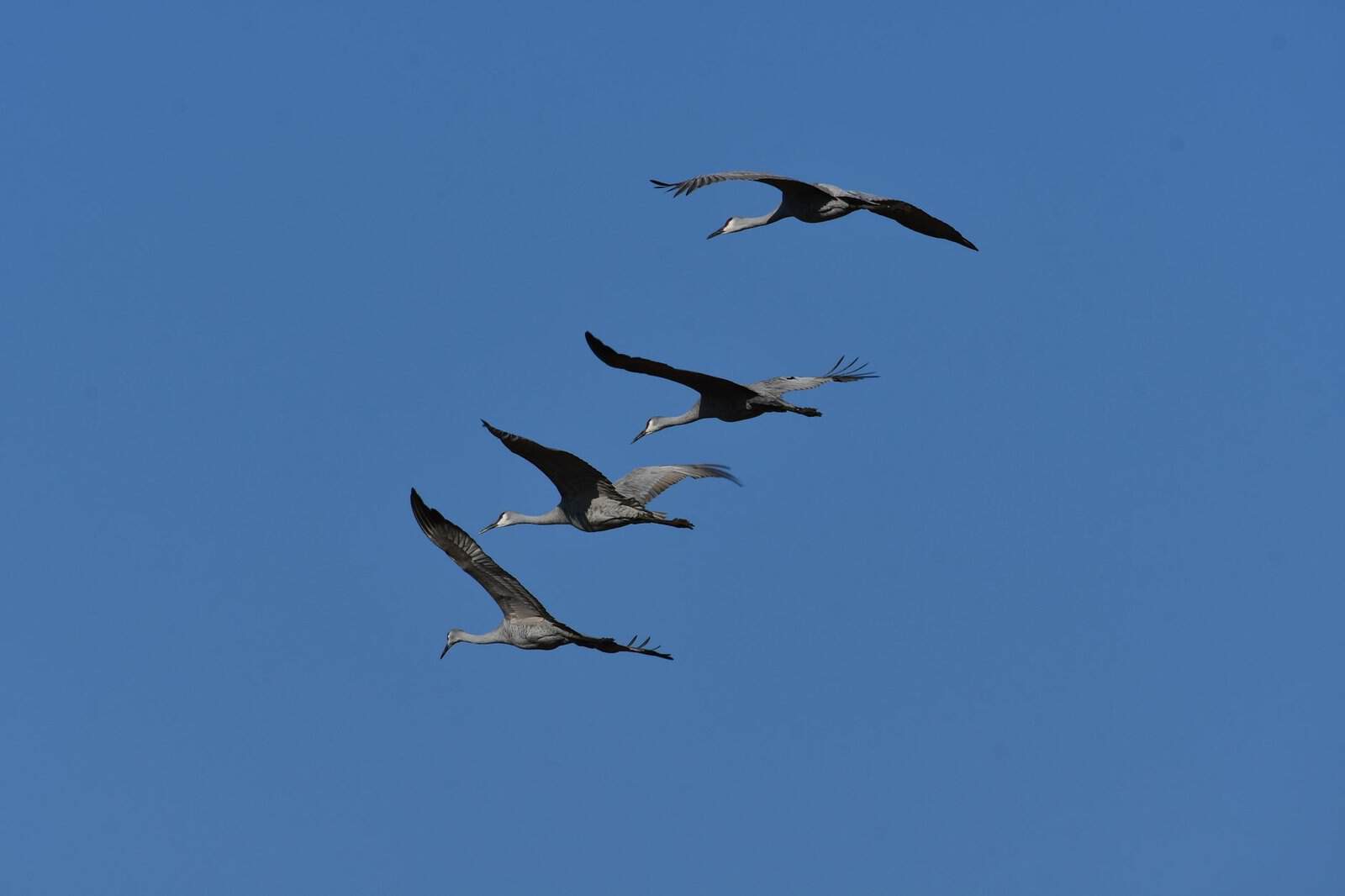
The fly-out is the coordinated departure of birds from their overnight roost ponds as they head to feeding fields. Snow geese often go first, sometimes all at once in a thunderous blast of wings. Cranes tend to leave in smaller family groups over a longer period, calling as they rise.
Check the sunrise time
Look up the official sunrise time for Socorro or San Antonio, New Mexico, for the day of your visit. In late November and December, sunrise in central New Mexico typically comes around 7 a.m. Mountain Time, give or take a few minutes, and gets later through the end of December.
Arrive well before sunrise
Plan to be in position at least 30 to 45 minutes before official sunrise. That gives you time to park, walk to the viewing area, set up a camera or binoculars, and let your eyes adjust in the dim light. The pre-dawn period is also beautiful, with the sky turning pink and orange over the Rio Grande Valley and silhouettes of thousands of birds on the water.
Watch for the peak window
The main fly-out often happens within roughly 15 minutes of sunrise, but it can vary with weather, temperature, and wind. On very cold mornings, birds may linger on the ponds longer. If geese are disturbed by a predator or noise, they may lift off suddenly. Stay alert.
Stay for the cranes
Snow geese tend to leave in big, dramatic bursts. Cranes often depart in waves over a longer period. Even after the main fly-out, stick around to watch cranes leave in smaller groups.
Where to stand
The Flight Deck, a viewing platform along the refuge’s main road near roost ponds, is the most reliable place to watch the fly-out, according to the Albuquerque guide. It can get crowded on weekends and during peak season, especially with photographers. Arrive early for a good spot.
The guide also mentions the nearby Bernardo Wildlife Area, north of the refuge, as another reliable spot for large numbers of cranes. The refuge’s auto tour route has other pullouts and viewing areas. Ask at the visitor center which ponds have been most active recently, since birds can shift roosting sites.
The sunset fly-in
If you cannot make sunrise, the evening fly-in is the reverse: birds return from feeding fields to roost on the ponds around sunset. It can be just as spectacular, with cranes gliding in against a glowing sky, calling as they land.
The fly-in tends to happen over a longer period than the morning fly-out. Plan to arrive about an hour before sunset and stay until dark.
When to visit
- Early November: Cranes and geese are arriving. Numbers build through the month.
- Mid-November through late January: The peak period for large numbers and the best fly-outs.
- February: Birds begin to head north, and numbers decline.
The refuge’s Festival of the Cranes, held around early to mid-December in recent years, features tours, talks, photography workshops, and other events. It is a lively time to visit, but also crowded. Check the festival’s dates if you want to attend or avoid it.
What to bring
Winter mornings at Bosque del Apache can be very cold, often below freezing at dawn. Pack:
- Warm layers, a hat, gloves, and insulated boots.
- A thermos of coffee or tea.
- Binoculars, and a spotting scope if you have one.
- A camera with a telephoto lens for close shots.
- A tripod for low-light photography.
- Snacks and water.
- A headlamp for walking in the dark before sunrise.
Gloves with fingertip openings help if you are operating a camera.
Photography tips
The fly-out is one of the most photographed wildlife events in the Southwest. A few tips:
- Use a fast shutter speed to freeze birds in flight, or slow it down for creative motion blur.
- Expose for the sky to capture sunrise colors, and let birds become silhouettes.
- Watch for reflections on calm ponds.
- Be ready for sudden lift-offs; keep your camera on and settings ready.
- Respect other photographers’ space, and do not block views on crowded platforms.
Refuge basics
Bosque del Apache National Wildlife Refuge was established in 1939 and is managed by the U.S. Fish and Wildlife Service. Its name means “woods of the Apache” in Spanish, referring to the cottonwood forests along the Rio Grande and the Apache people who once camped in the area.
The refuge has a visitor center with exhibits, maps, and information on recent sightings. A tour loop takes you past ponds, fields, and wetlands, with pullouts and short trails. There is an entrance fee per vehicle, and federal recreation passes may be accepted. Check the refuge website for current hours and fees.
More to see besides cranes
The refuge is home to hundreds of bird species over the course of a year. In winter, look for:
- Snow geese and Ross’s geese.
- Ducks of many species.
- Bald eagles and other raptors.
- Roadrunners.
- Mule deer and coyotes.
Spring and fall migrations bring additional species.
Getting there
Bosque del Apache is about 90 miles south of Albuquerque via Interstate 25. Take the San Antonio exit and drive south on NM 1 to the refuge. The drive from Albuquerque takes about an hour and a half.
The nearest larger town is Socorro, about 18 miles north, with hotels and restaurants. The small village of San Antonio is just north of the refuge, known for its green chile cheeseburgers at the Owl Bar and Cafe.
Where to stay
Socorro has several hotels and is a convenient base for early mornings at the refuge. Some visitors stay in Albuquerque and leave very early. A few small lodging options and RV parks are closer to the refuge. Book early during the Festival of the Cranes.
A sample day
Wake up early in Socorro and drive to the refuge in the dark. Arrive at the Flight Deck 45 minutes before sunrise and watch the fly-out. Drive the tour loop afterward to see cranes and geese feeding in fields. Visit the visitor center when it opens, then have lunch in San Antonio. In the afternoon, explore trails and rest. Return to the ponds an hour before sunset for the fly-in, then head back to Socorro for dinner.
Etiquette for crowded viewing areas
The Flight Deck and other popular viewing spots can get busy, especially on weekends and during the festival. A few courtesies make the experience better for everyone:
- Arrive early and park only in designated areas, never on the road shoulder where it blocks traffic.
- Keep voices low before and during the fly-out, since noise can disturb birds and other visitors.
- Avoid using bright white lights or flash. Use a red light if you need to see.
- Set up tripods so they do not block walkways or other people’s views.
- Stay in designated areas and on trails. Do not walk toward the ponds to get closer to the birds.
- Keep pets in the car or follow refuge rules on pets.
Rangers and volunteers are often on hand during peak season and can answer questions about the birds and recent activity.
If the fly-out is a bust
Some mornings, fog, cold, or wind can delay or scatter the fly-out. Do not give up. Drive the tour loop afterward, where cranes and geese often feed in fields close to the road, and return for the sunset fly-in. Staying two mornings improves your odds of seeing a classic fly-out.
Listening for the cranes
Sandhill cranes have a loud, rolling call that carries a long way. Before sunrise, listen for it across the ponds; the sound often builds just before groups lift off.
The bottom line
To see the Bosque del Apache sandhill cranes at their best, visit between mid-November and late January, check the official sunrise time, and be at the Flight Deck area well before dawn. The main fly-out often happens within about 15 minutes of sunrise, and the sunset fly-in offers a second chance. Dress warmly, bring binoculars or a camera, and give yourself time to stay after the first rush. It is one of the most unforgettable wildlife spectacles in the American West.