Mount Rushmore Is Just 25 Miles From Rapid City—Here’s What Keeps the City Moving Beyond the Monument
We may earn money or products from the companies mentioned in this post. This means if you click on the link and purchase the item, I will receive a small commission at no extra cost to you ... you're just helping re-supply our family's travel fund.
Rapid City is regularly introduced as the gateway to Mount Rushmore, which is true and incomplete. The city of roughly 77,000 is western South Dakota’s commercial and medical center, a place where tourism shares the calendar with Ellsworth Air Force Base, health care, education, construction, and regional retail. Mount Rushmore is about 25 miles southwest, close enough to shape visitor traffic but far enough that ordinary life does not revolve around a single parking lot.
The gateway is also a regional capital
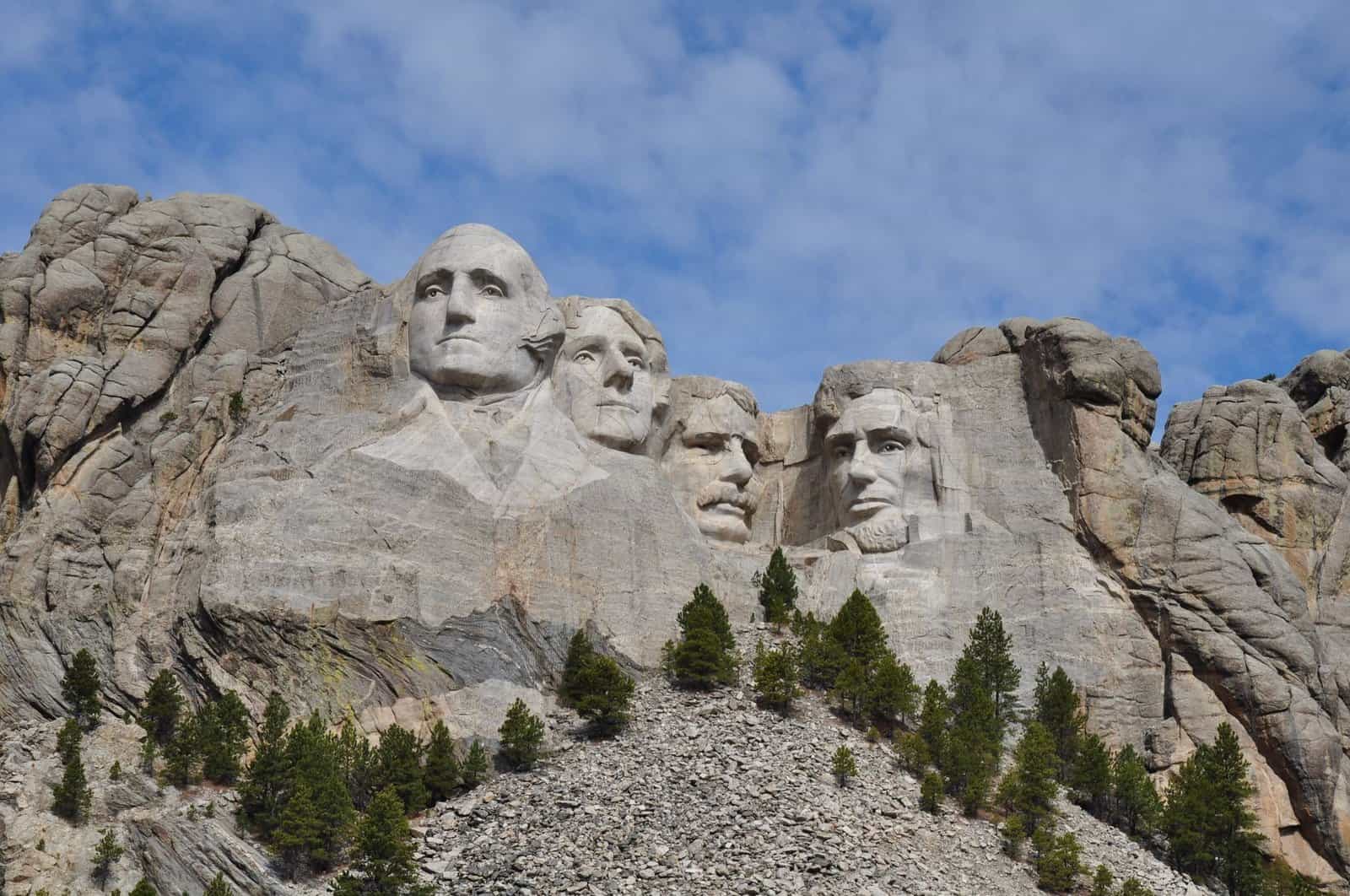
The Black Hills National Forest, Badlands National Park, Custer State Park, and the monument create a broad travel ecosystem rather than one attraction. Rapid City’s airport, hospitals, and big-box corridors support a much larger trade area. That scale explains the landscape: downtown has restored buildings and public art, while major routes carry hotels, chain restaurants, equipment dealers, and everyday services. The city’s economy has a seasonal edge, but it is not a seasonal town.
Neighborhoods reveal the year-round city
Visitors often stay near Interstate 90 and leave before seeing West Boulevard’s older homes, the downtown Main Street Square area, or the neighborhoods climbing toward the hills. Those places do not make Rapid City uniformly affluent or uniformly picturesque. They show a city with military households, long-time western South Dakota families, newcomers in construction and health care, and travelers passing through on compressed schedules. The Black Hills remain visible from many parts of town, so nature is not an excursion bolted onto urban life.
The Black Hills are close, not abstract
The practical advantage is access. A resident can work in a hospital or at the base, run errands in a city-sized retail market, and be on a trail or scenic drive without a full-day commitment. The practical limitation is distance from larger metros and the service constraints that come with a regional hub. Winters are real, wages vary sharply by industry, and the summer tourism surge can make a familiar town feel temporarily overbooked.
Tourism is important, but not sufficient
Housing is central to the current conversation. Like many mountain-adjacent places, Rapid City saw demand rise as construction costs and in-migration pressured supply. It can still look less expensive than resort markets, but that comparison does not make it inexpensive to people paid at local service-sector rates. For travelers, recognizing the distinction means spending in town as well as at national memorials, and avoiding the assumption that every local business exists only for a road trip.
- Use Rapid City as a two- or three-night base rather than a single sleep stop.
- Visit Main Street Square and surrounding downtown blocks outside peak tour-bus hours.
- Build Mount Rushmore, Custer State Park, and Badlands days around driving distances.
- Expect weather shifts and carry layers in every season.
- Support locally owned restaurants and shops that serve residents year-round.
What an attentive visit changes
The most useful way to approach this subject is to separate a memorable image from the system that produces it. The gateway is also a regional capital is not an abstract theme; it is visible in schedules, property choices, staffing, roads, and the small decisions that residents make every week. A traveler does not need expert credentials to notice those connections. They do need enough time to look past the quickest version of the story and enough humility to avoid mistaking a short stay for total knowledge.
That distinction changes the itinerary. Instead of trying to collect every landmark, leave room for a normal block, a local meal at an ordinary hour, a bus or walk that follows daily movement, and a conversation in which the visitor listens more than they perform expertise. The point is not to claim an insider identity after a weekend. It is to come away with a better question about how place, work, culture, and money fit together.
Pay attention to the operating details
Operating details often explain more than promotional language. Look at when a street is busy, how long the drive actually takes, what people carry out of shops, where public space ends, and whether an attraction depends on a fragile landscape or a workforce with limited housing. These observations make travel more interesting because they restore cause and effect. A beautiful view can remain beautiful while becoming less anonymous.
There is also a practical benefit. Travelers who plan with context are less likely to arrive at the wrong hour, overbook a day, ignore seasonal constraints, or spend all their money inside the most expensive corridor. They can make choices that are kinder to their own energy and more useful to the places hosting them. The result is not a perfect trip. It is a trip that has a chance to be both enjoyable and proportionate.
This approach also leaves room for disagreement and change. Local conditions evolve: a storefront closes, a route gains service, a storm alters access, a new employer shifts demand, or a community decides that an old arrangement no longer works. Treating a destination as fixed makes every update look like a disappointment. Treating it as a living place makes updates part of the reason to return. The traveler’s job is not to preserve a preferred image of somewhere else. It is to arrive prepared, observe carefully, and accept that the people who live there have a longer relationship with its future. That is why a return visit can be more valuable than a larger checklist: familiarity makes the changes visible, and it makes a guest less likely to confuse novelty with importance. It can also make a traveler more patient with an imperfect day, more considerate about capacity, and more willing to find value outside the single attraction that originally prompted the trip. Over time, this habit produces a more durable travel memory: not just a record of where someone went, but a more grounded account of how the place worked while they were there. The added context makes recommendations more useful because it explains who benefits, what is fragile, and why a detail that seems minor may shape a local day.
Read Rapid City beyond the souvenir shops
Rapid City’s appeal is its lack of pretense. It is a functioning western city beside an unusually dense collection of national attractions, not a theme-set for them. The monument may bring people in, but the hospitals, base, schools, neighborhoods, and small businesses explain why the place stays on the map after the summer crowds leave.