Puerto Rico’s Mountain Town of Utuado Has Ancient Plazas Lined With Carved Stones
We may earn money or products from the companies mentioned in this post. This means if you click on the link and purchase the item, I will receive a small commission at no extra cost to you ... you're just helping re-supply our family's travel fund.
Key Takeaways
- Caguana is an outdoor Taíno archaeological site in Utuado.
- About 13 ceremonial courts and plazas have been identified.
- Carved stones, called petroglyphs, mark the courts and plazas.
- The site includes a small museum and botanical garden.
- Plan about an hour, with extra time if the grounds are wet.
Where Is Caguana, and How Do You Get There?
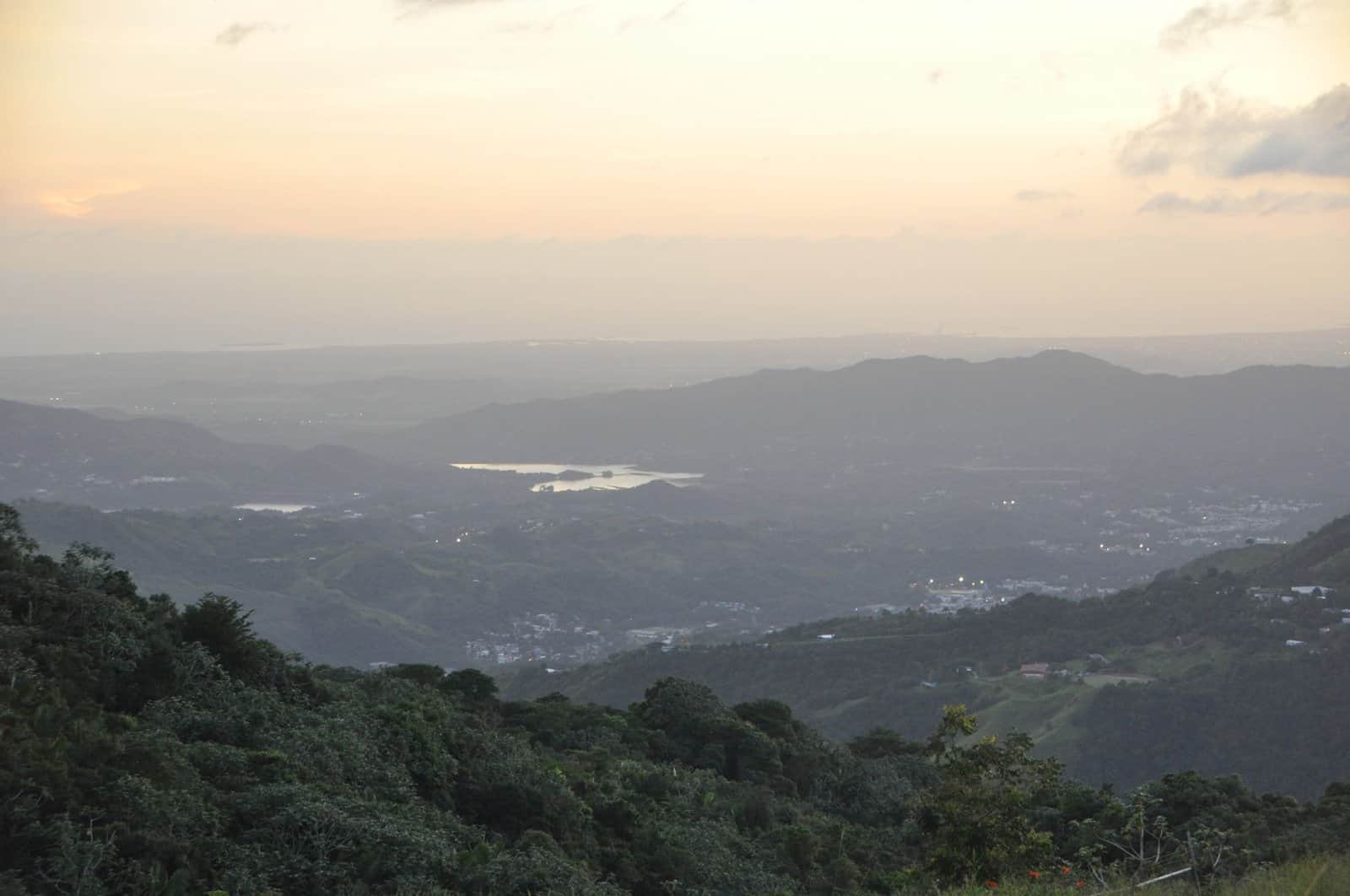
Caguana is at Carr. 111, Km. 48.6, in Utuado, south of San Juan along the mountain route through Route 10. Its Spanish name is Centro Ceremonial Indígena de Caguana, also known as the Caguana Ceremonial Indigenous Heritage Center. The mountain setting makes the drive part of the day. The park is open daily from 9 a.m. to 4 p.m. It sits 310 meters above mean sea level, amid the central mountains of Puerto Rico. The area has a strong coffee-growing past, as Utuado was Puerto Rico’s most prominent coffee-production site before 1898.The admission desk accepts cash only, so bring bills for each visitor’s ticket.
Address and mountain setting
The address makes the site easy to enter in a map app: Carr. 111, Km. 48.6, Utuado. Hotels in Puerto Rico can serve as a base for a mountain-town day trip, though you will need a car for this route. Route 111 passes through the region’s steep, green hills. Allow some time for the winding road, especially if you are not used to driving in the mountains.Driving from San Juan and admission
The drive from the San Juan area takes about 90 minutes via Routes 10 and 111. This gives you a practical day trip from the capital, with time to explore Utuado as well. The adult admission fee is $5 per person, while children ages 6-13 pay $3. The park’s elevation of 310 meters places it well above sea level in the mountain town. Bring cash for the $5 adult admission and the $3 ticket for children ages 6-13.What Is the History of Caguana’s Ceremonial Ball Courts?
The Taíno built Caguana’s ceremonial courts and plazas around 1270 A.D. That makes the site more than 700 years old, with a history rooted in the Taíno people’s ceremonial and community life. Caguana’s three historic listings mark separate forms of recognition. The National Register of Historic Places listing came first, followed by National Historic Landmark status. Puerto Rico later added the site to its own register.Taíno construction around 1270
The Caguana Indigenous Ceremonial Park Utuado history begins with Taíno builders who shaped courts and plazas from stone. Their work created a lasting ceremonial place, not simply a set of ruins. The site is also known as the Caguana Ceremonial Ball Courts Site. Its courts preserve evidence of the Taíno people’s activity in Puerto Rico centuries before European colonization. A case study in the UNESCO Portal to the Heritage of Astronomy describes the site’s construction around 1270 and its possible ties to sky observations. National Historic Landmark status is not the same as World Heritage status.Historic designations
The National Register of Historic Places records properties with historic importance across the United States. A National Historic Landmark is a separate U.S. designation for places recognized for exceptional national significance. Puerto Rico also maintains its own register of historic sites and zones. Each entry below marks a distinct step in Caguana’s formal recognition.| Designation | Date | Register level |
|---|---|---|
| National Register of Historic Places | December 17, 1992 | U.S. register |
| National Historic Landmark | November 4, 1993 | U.S. landmark designation |
| Puerto Rico Register of Historic Sites and Zones | March 15, 2001 | Puerto Rico register |
What Can You See at Caguana Indigenous Ceremonial Park Utuado?
About 13 bateyes have been identified at Caguana, combining ball courts and plazas in a single ceremonial place. Some stone monoliths weigh more than a ton, and researchers think builders brought them from the nearby Tanamá River. Look closely at the stones to see how they frame each court. Caguana has the largest concentration of petroglyphs in the Antilles. The arrangement of its ceremonial plazas may also reflect astronomical events, though that idea remains an interpretation, not a proven fact.Bateyes, ball games, and astronomical alignment
A batey was a Taíno ceremonial court or plaza used for ball games and gatherings. Players used a rubber ball and could strike it with body parts other than their hands. Games could help settle disputes or decisions, giving the contests a role beyond sport. The stone monoliths stand within and around the courts, linking the open spaces to the carved figures. The placement of some plazas suggests possible alignment with astronomical events. This may mean Taíno people observed or predicted events in the sky, but the arrangement does not prove that purpose.Petroglyphs and the Caguana woman
The petroglyphs include human forms and images tied to nature and the sky. One well-known carving, the Caguana woman, has been attributed to Atabey, a fertility zemi or goddess. Other carved motifs include:- The Caguana woman, associated with Atabey
- A heron-like bird
- The moon
- Stars and planets
What Can Visitors Photograph?
Photos of the Caguana center can help you recognize the stone-lined plazas and carved figures during your visit. Frame the monoliths with the courts to show how the stones relate to the open spaces. The Caguana goddess image and other petroglyphs are striking subjects, but the wider view matters too. Photographs that include both a carving and its setting can show how the figures sit within the ceremonial place. Treat the proposed astronomical use as a plausible interpretation rather than a proven explanation.What Does the Museum Add to a Visit?
The museum adds archaeological objects and bilingual interpretation to the open-air visit. It reopened in June 2024 after closing in 2020, and its collection includes more than 200 pieces. The small museum gives you context for the objects and grounds. Placards appear in English and Spanish, so you can learn about Taíno culture without relying on a tour. A report on the renovation by the National Assembly of State Arts Agencies describes the updated exhibition hall and its artifacts.Archaeological pieces and interpretation
The display includes artifacts that help connect the site’s carved stone to daily life. The objects give you another way to think about the people who built and used the courts. The museum is a modest indoor stop, rather than a large exhibit hall. Its bilingual text can help you make sense of what you see outdoors, including the role of the ceremonial spaces. Use the museum as a pause between time on the grounds, rather than expecting a long indoor visit. The objects add detail, while the outdoor setting remains the main attraction.Taíno plants and building materials
The botanical garden grows crops that were part of Taíno food and farming. You can spot these plants:- Sweet potatoes
- Cassava
- Corn
- Yautía
What Should Visitors Know Before They Go?
Plan about an hour for the 7-acre site, with extra flexibility if rain has affected the grounds. Free parking and restrooms by the parking lot make the basic visit straightforward, though the park is not a full-service attraction. The museum is wheelchair accessible, but the ceremonial plazas are not. Access to the grassy areas and bateyes may close when the ground is too wet after rain. The open-air setting can change how much of the site you can reach.Time, facilities, and access
Restrooms are available by the parking lot and inside the museum. You can see the courts and grounds at an easy pace when conditions allow, then use the museum for an indoor stop. The difference in access matters when planning for someone who uses a wheelchair. The museum has wheelchair access, while the plazas do not offer the same access.Wet ground can close grassy areas and access to the bateyes after rain.That closure rule protects visitors and the site when paths and grass are saturated. A rainy spell can limit your outdoor visit even when the museum remains open.
How to judge the visit
A fair review of Caguana Indigenous Ceremonial Park in Utuado weighs its archaeological setting against basic facilities and possible ground closures. The Caguana Ceremonial Ball Courts Site suits visitors interested in Taíno archaeology more than those seeking extensive visitor amenities. The visit’s value lies in seeing the ceremonial park as a real place, rather than viewing its history only through displays. Give yourself room to adjust your plans if weather has changed ground conditions. Check current access conditions before setting out after wet weather.Conclusion
Caguana offers a direct encounter with Taíno heritage in the mountain setting of Utuado. The stone courts and carved figures make the past feel tied to a specific place, not distant or abstract. If you are spending time in Puerto Rico’s central mountains, this stop can add a deeper cultural layer to your day. Before the trip, check the park’s current visitor updates and save its Utuado location in your map.FAQ
What does Caguana mean?
Caguana names the Utuado locality and ceremonial site, but no specific Taíno translation is established here. The name is used for both the place and its archaeological center. You can visit the site to see its courts, plazas, and carved stones in person. Avoid assigning a precise meaning without sound linguistic evidence.
What is Utuado, Puerto Rico known for?
Utuado is known for its coffee-growing history and for Caguana, a major Taíno ceremonial site. Before 1898, it was Puerto Rico’s most prominent coffee-production site. Today, visitors also come to see its mountain setting and archaeological remains. Caguana adds an important Indigenous history to the town’s identity.
Are there any Taíno ruins in Puerto Rico?
Yes, Caguana preserves Taíno-built ceremonial courts, plazas, and carved stones in Utuado. The bateyes show where people gathered and played ball games, while petroglyphs remain carved into stone. The site is an important place to learn about Taíno history in its original setting. Its features are archaeological remains, not reconstructed ruins.
Are there still Taíno Indians in Puerto Rico?
Yes, Taíno identity continues among people in Puerto Rico and among descendants in other places. The pre-contact Taíno society changed through colonization, disease, migration, and cultural change. That history does not mean Taíno identity disappeared. Living identity belongs to people and communities today, not only to the archaeological past.
Do most Puerto Ricans have Taíno DNA?
Indigenous ancestry appears in many Puerto Rican family histories, but ancestry varies from person to person. A DNA result can offer clues about family origins, yet it cannot tell the full story of someone’s heritage. It also does not determine whether a person is Taíno. Identity involves family, community, and personal ties as well as ancestry.