November Is the Peak Month for Deer Collisions. 9 Habits That Cut Your Risk on Holiday Road Trips
We may earn money or products from the companies mentioned in this post. This means if you click on the link and purchase the item, I will receive a small commission at no extra cost to you ... you're just helping re-supply our family's travel fund.
The drive to Thanksgiving dinner lands in the worst month of the year for hitting a deer. If you want to avoid deer collisions on a holiday road trip, the most useful habits are simple: be most alert at dawn and dusk, use your high beams when you can, and brake firmly rather than swerving if a deer steps out.
The timing is not a guess. State Farm’s annual analysis of animal collision claims says the months drivers are most likely to collide with a large animal in the U.S. are, in order, November, October, and December. The insurer attributes the spike to hunting and mating season, when deer move more and cross roads more often. Its data also shows U.S. drivers have, on average, a 1 in 145 chance of an animal collision.
That average hides big regional differences. Some states, many in the Northeast and Upper Midwest, carry far higher odds. If your Thanksgiving drive crosses one of them, the habits below matter even more.
Why November Is the Worst Month
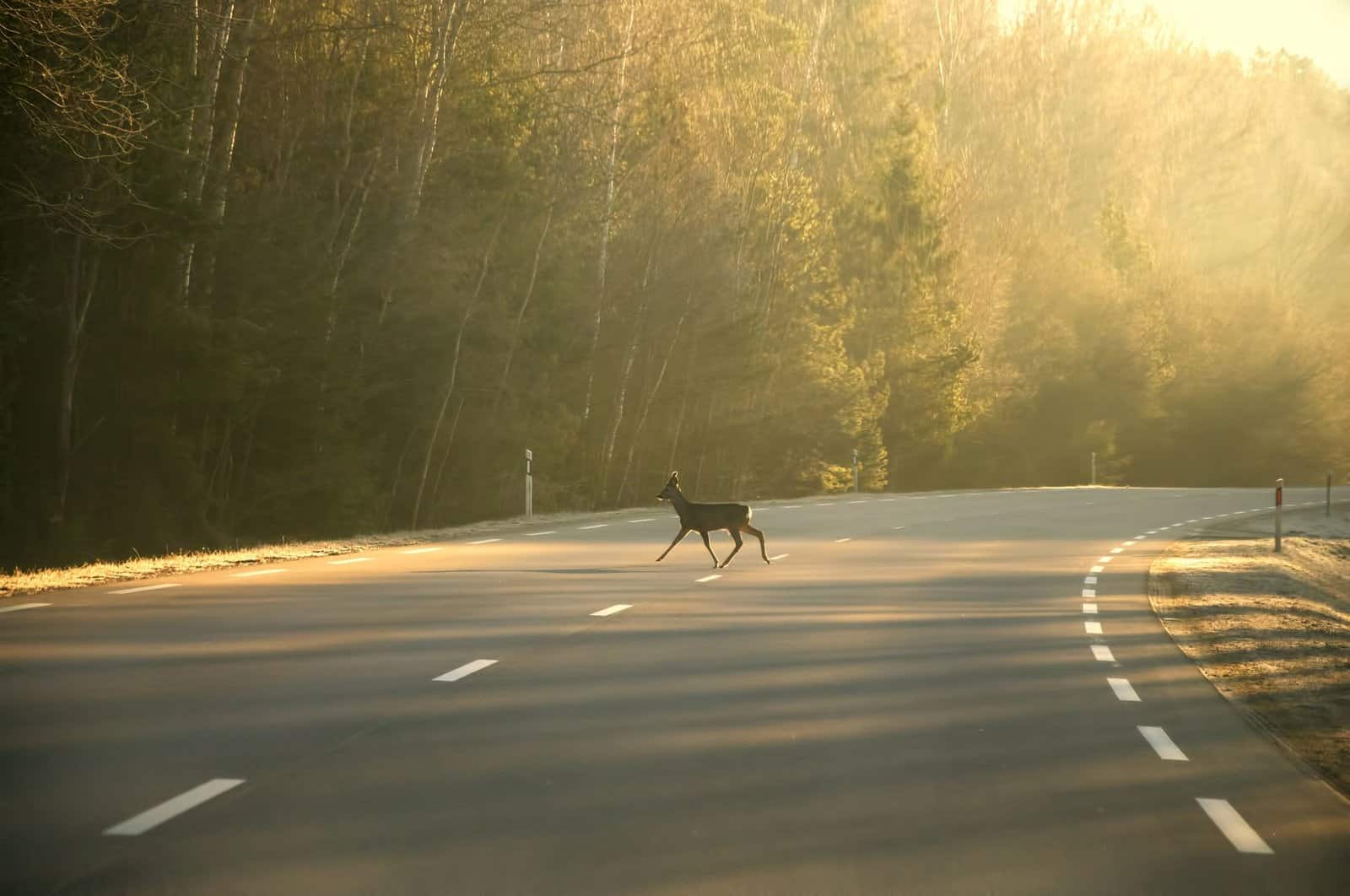
Several things line up in November to make deer collisions more likely.
- The rut: Deer mating season peaks in November across much of the country. Bucks travel farther and pay less attention to roads.
- Hunting season: Hunters push deer out of the woods and across roads.
- Daylight saving time ends: Clocks fall back in early November, shifting the evening commute into darkness, right when deer are most active.
- Holiday travel: More drivers are on unfamiliar rural roads, often at night, during Thanksgiving week.
State Farm ranks the top states by odds of an animal collision. West Virginia leads at 1 in 46, followed by Montana at 1 in 54, Wisconsin at 1 in 62, Pennsylvania at 1 in 64, and Michigan at 1 in 68. Iowa, Mississippi, Virginia, Maine, and South Dakota round out the top 10.
9 Habits That Cut Your Risk on Holiday Road Trips
None of these are complicated. The point is to use all of them together on rural and suburban roads in November.
1. Be Most Alert at Dawn and Dusk
Deer are most active in the early morning and around sunset into the first hours of darkness. In November, sunset can come before 5 p.m. across much of the country, which puts the evening drive home from work, or the drive to Grandma’s, right in the risk window. If you have a choice, plan long rural stretches for midday.
2. Use High Beams When No One Is Coming
High beams light up the road shoulders and the eyes of animals farther ahead. Deer eyes reflect light and show up as bright spots well before you can make out the animal’s body. Use high beams on dark roads whenever there is no oncoming traffic or car close in front, then switch back to low beams when another vehicle approaches.
3. Scan the Shoulders, Not Just the Lane
Most drivers watch the road directly ahead. Deer come from the edges. Train your eyes to sweep the shoulders and tree lines on both sides, especially near fields, woods, and creeks. Ask a passenger to watch the sides too. A second set of eyes helps on dark two-lane roads.
4. If You See One Deer, Expect More
Deer often travel in groups. When one crosses in front of you, slow down and watch for others following it. Many collisions happen when a driver avoids the first deer and speeds up, only to hit the second or third.
5. Slow Down in Deer Crossing Zones
Yellow deer crossing signs mark areas with frequent crossings. They are placed based on local history. Lower speed gives you more time to react and reduces the severity of any impact. Even a reduction of 5 to 10 mph helps on dark, wooded roads.
6. Brake Firmly, Do Not Swerve
This is the most important habit. If a deer jumps out and you cannot avoid it, brake firmly, keep both hands on the wheel, and stay in your lane. State Farm’s safety advice includes braking hard if there are no drivers behind you. Swerving can send you into oncoming traffic, a tree, or a ditch, and those crashes are often more dangerous than hitting the deer.
7. Wear Your Seat Belt Every Time
Seat belts are the best protection in a sudden stop or a collision. Many serious injuries in animal crashes happen when the driver swerves off the road and the car rolls or hits a fixed object. A belt dramatically lowers the risk of serious injury in those crashes. Make sure every passenger, including kids in the back, is buckled.
8. Do Not Count on Deer Whistles
Deer whistles, small devices mounted on the front of a car, are sold to scare deer away with high-pitched sound. Studies have not shown that they reliably work. They are cheap, but they are not a substitute for slowing down and paying attention.
9. Drive Rested and Undistracted
Long holiday drives often mean leaving early, driving late, or pushing through fatigue. Tired and distracted drivers react more slowly. Put your phone away, take breaks every two hours, and switch drivers if you can. Reaction time is everything in a deer encounter.
What to Do If You Hit a Deer
Even careful drivers sometimes hit deer. If it happens, follow these steps.
- Pull over safely: Move off the road if you can, turn on your hazard lights, and stay in the car if traffic is heavy.
- Check for injuries: Call 911 if anyone is hurt.
- Do not approach the deer: An injured deer can kick and cause serious injury. Stay away from it.
- Call the police: Many states require or recommend a police report, especially if the deer is blocking the road or the damage is significant. A report also helps with insurance.
- Document the damage: Take photos of your car and the scene.
- Check the car before driving: Look for leaking fluids, broken lights, loose parts, and damage to the hood. If anything looks unsafe, call for a tow.
- Contact your insurer: Animal collisions are usually covered under the comprehensive part of an auto policy, not collision. Check your coverage before the trip.
Where to Avoid Deer Collisions: The Riskiest Roads
Deer collisions are not limited to remote areas. They happen often on suburban roads near woods and parks, where deer populations are high and traffic is heavy.
- Two-lane rural highways: Especially through farmland bordered by woods.
- Suburban edges: Roads near golf courses, parks, and new subdivisions.
- Roads near water: Creeks and rivers attract deer.
- Interstate edges: Fencing helps, but deer still cross highways, especially at night.
Myths About Deer and Driving
- “Honking scares them off”: Sometimes a long blast of the horn moves a deer, but it is not reliable. Brake first.
- “Deer only cross in the country”: Suburban roads see many collisions because deer live near people.
- “Swerving is safer for the car”: Swerving often causes worse crashes. Brake and stay in your lane.
Check Your Car Before the Trip
Simple maintenance helps you see deer and stop in time.
- Clean headlights: Foggy lenses reduce how far your lights reach. Restoration kits are inexpensive.
- Check brakes and tires: Good tread and responsive brakes shorten stopping distances.
- Clean the windshield inside and out: Night glare from a dirty windshield makes it harder to spot eyes on the roadside.
- Aim your headlights: Misaligned headlights can leave the shoulder dark.
Pennsylvania and Maine: Northeast States With High Risk
For Thanksgiving drivers in the Northeast, two states stand out in State Farm’s rankings. Pennsylvania ranks fourth in the nation, with odds of 1 in 64. Maine ranks ninth, at 1 in 85. Both states have large deer populations, long stretches of two-lane roads through forest and farmland, and heavy hunting seasons in November.
If your drive crosses either state, use extra caution on these kinds of roads:
- Pennsylvania: Rural routes through the central and northern parts of the state, and suburban roads near state game lands and parks.
- Maine: Interior roads away from the coast, especially at dawn and dusk. Maine also has moose in many areas, which are far more dangerous to hit than deer because of their size.
Know Your Insurance Before You Go
Animal collisions can cause thousands of dollars of damage, and how you are covered matters.
- Comprehensive coverage: Most policies treat hitting an animal as a comprehensive claim, not a collision claim. If you only carry liability, you may have no coverage for your own car.
- Deductibles: Check your comprehensive deductible before the trip.
- Rental cars: If you are driving a rental, check whether your personal policy or credit card covers damage to it, and what documentation the rental company needs.
The Bottom Line
November is the peak month for deer collisions, and Thanksgiving week puts more drivers on dark rural roads than almost any other time. You cannot control where deer cross, but you can control your speed, your attention, your lights, and your reaction. Watch the shoulders at dusk, use your high beams, expect more than one deer, and brake straight if one steps out.