Durango, Colorado Has Ski Resorts, a Narrow Gauge Railroad, and Mesa Verde 40 Miles Away. Here’s Why People Stop Moving There Once They Arrive
We may earn money or products from the companies mentioned in this post. This means if you click on the link and purchase the item, I will receive a small commission at no extra cost to you ... you're just helping re-supply our family's travel fund.
Durango, Colorado sits in the La Plata Mountains of southwestern Colorado at 6,500 feet, 40 minutes from Purgatory Ski Resort, 45 minutes from Mesa Verde National Park, and at the terminus of the Durango & Silverton Narrow Gauge Railroad — a coal-fired steam train that has operated continuously since 1882. The combination of attributes in one small city of 20,000 produces the specific kind of livability that makes people who arrive for a weekend conference find themselves checking home listings on the drive out.
What Makes Durango Different from Other Colorado Mountain Towns
Durango isn’t a ski town the way Aspen or Vail is. It’s a real town with ski resort access — a meaningful distinction. Fort Lewis College has 4,000 students who keep the town young and the bar scene active. The Animas River runs through the city and the Animas River Trail provides 7 miles of riverside recreation within city limits. The food scene is better than it has any right to be for 20,000 people. And unlike most mountain Colorado communities, Durango has enough commercial and professional infrastructure — hospital, significant retail, industrial base from oil and gas services — to function economically without depending entirely on ski season.
The Durango & Silverton: An Attraction That Lives Up to the Claims
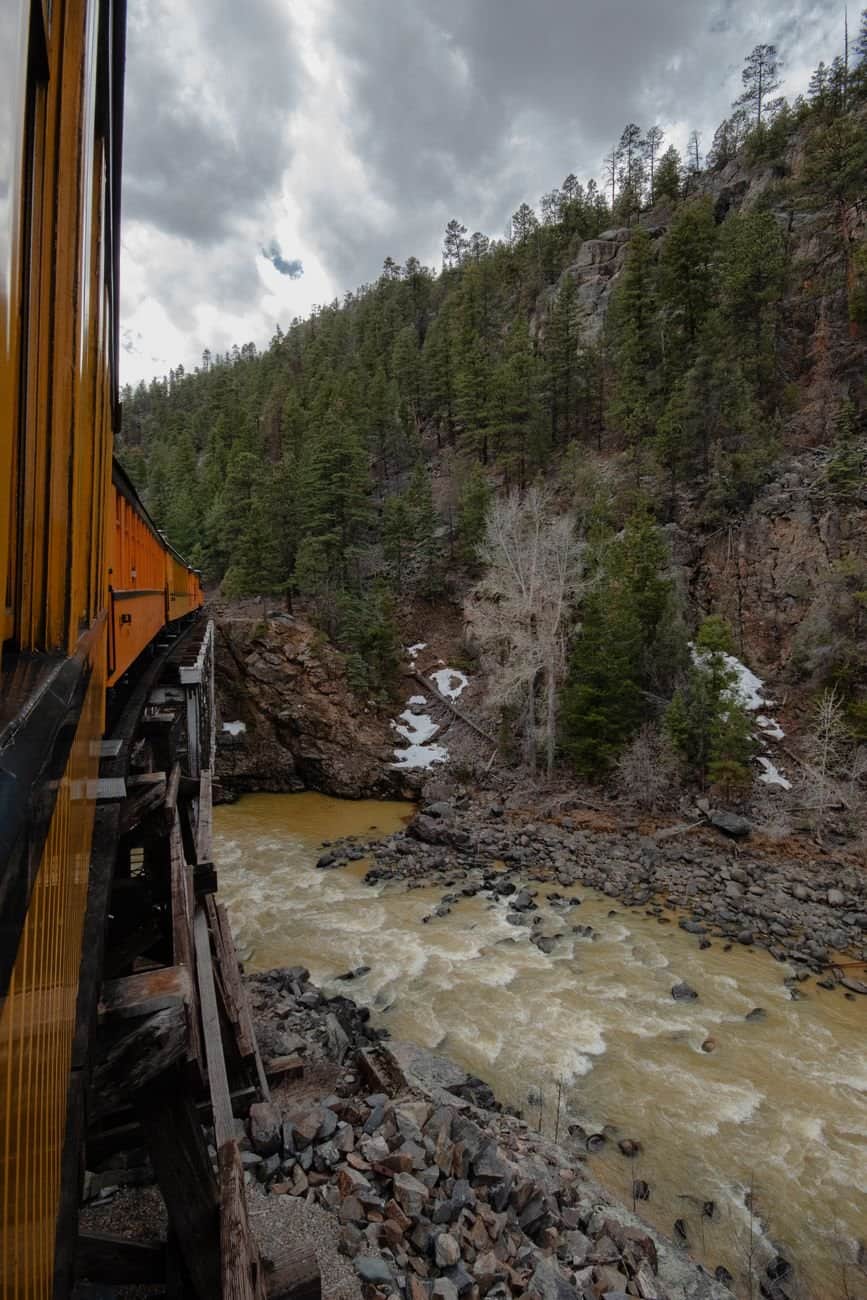
The narrow gauge railroad north from Durango to Silverton follows the Animas River canyon for 45 miles through San Juan National Forest with no road access for significant stretches. The 3.5-hour journey each way is through mountain terrain that’s genuinely inaccessible otherwise. Operating on the original 1881 route with preserved equipment, the D&SNGRR is not a museum attraction — it’s a real railroad that’s been running continuously for over 140 years. Round-trip tickets run $100–$140 per adult depending on the car class and season; September is peak season for fall color.
Mesa Verde National Park: 40 Minutes Away
Mesa Verde contains the most extensive collection of Ancestral Puebloan cliff dwellings in the United States — villages built into the faces of canyon walls in the 12th and 13th centuries. Cliff Palace, the largest cliff dwelling in North America, is toured by ranger-guided groups only and requires advance ticket booking. The park sees significant summer crowds but dramatically fewer visitors than Rocky Mountain or Arches parks. For anyone with interest in pre-Columbian American civilization, Mesa Verde is one of the most significant accessible archaeological sites in the Western Hemisphere.
What Durango Costs in 2026
Housing:
- Median home price: approximately $550,000
- Homes in outlying areas (Bayfield, Ignacio): $350,000–$420,000
- Two-bedroom apartment rent: $1,600–$2,100
- Colorado income tax: flat 4.4% as of 2024
As a visitor:
- Hotel: $160–$250/night in season
- D&SNGRR round trip: $100–$140/person
- Mesa Verde entrance: $35/vehicle (covers 7-day access)
- Purgatory Ski Resort day ticket: $89–$130 (significantly below Telluride or Vail)
Durango keeps showing up on lists of places people retire to, move to for remote work, and return to after visiting once. The mechanism is consistent: it has enough of everything — skiing, history, hiking, outdoor recreation, food, community character — in a package that doesn’t require trading one thing for another. The housing price reflects that combination. For visitors, it’s one of the few small Colorado cities where a four-day trip runs out of time before it runs out of things worth doing.
Durango’s Position in the Four Corners Region
Durango is the most accessible base for the Four Corners region — the only point in the United States where four states meet (Colorado, New Mexico, Utah, Arizona) is 90 miles southwest. Mesa Verde National Park, where the Ancestral Puebloans built cliff dwellings in the 13th century that are among the best-preserved in the world, is 45 minutes west. The Weminuche Wilderness — the largest wilderness area in Colorado, 500,000 acres of roadless San Juan Mountains — is accessible from trailheads within 30 minutes of downtown. Durango functions as a cultural hub for the entire Southwest Colorado, northern New Mexico, and southeastern Utah travel region.
The Durango & Silverton Narrow Gauge Railroad — a coal-fired steam locomotive on 45.2 miles of track through the Animas River Canyon to the historic mining town of Silverton — has operated continuously since 1882 and is one of the most intact examples of 19th-century mountain railroad infrastructure in the United States. The round trip takes a full day (3.5 hours each direction with layover in Silverton). Silverton itself is a National Historic Landmark — a 19th-century mining town in a cirque at 9,318 feet elevation that has preserved its original townsite because abandonment after the mining collapse in the 1890s left nothing to demolish and replace. The combination of the train and Silverton is a specific Southwest Colorado experience that has no equivalent anywhere else in the region.