Cruise Ships Got So Big They Now Carry More People Than Some American Towns. Here’s the Engineering Behind It.
We may earn money or products from the companies mentioned in this post. This means if you click on the link and purchase the item, I will receive a small commission at no extra cost to you ... you're just helping re-supply our family's travel fund.
Cruise lines have gotten so large that the biggest ships now carry more passengers than some cities have residents, a scale shift driven by specific economics: larger ships spread fixed costs like fuel, crew, and port fees across more paying passengers, letting cruise lines offer lower per-person prices even as the ships themselves cost billions of dollars to build.
The Engineering Behind the Megaship Era
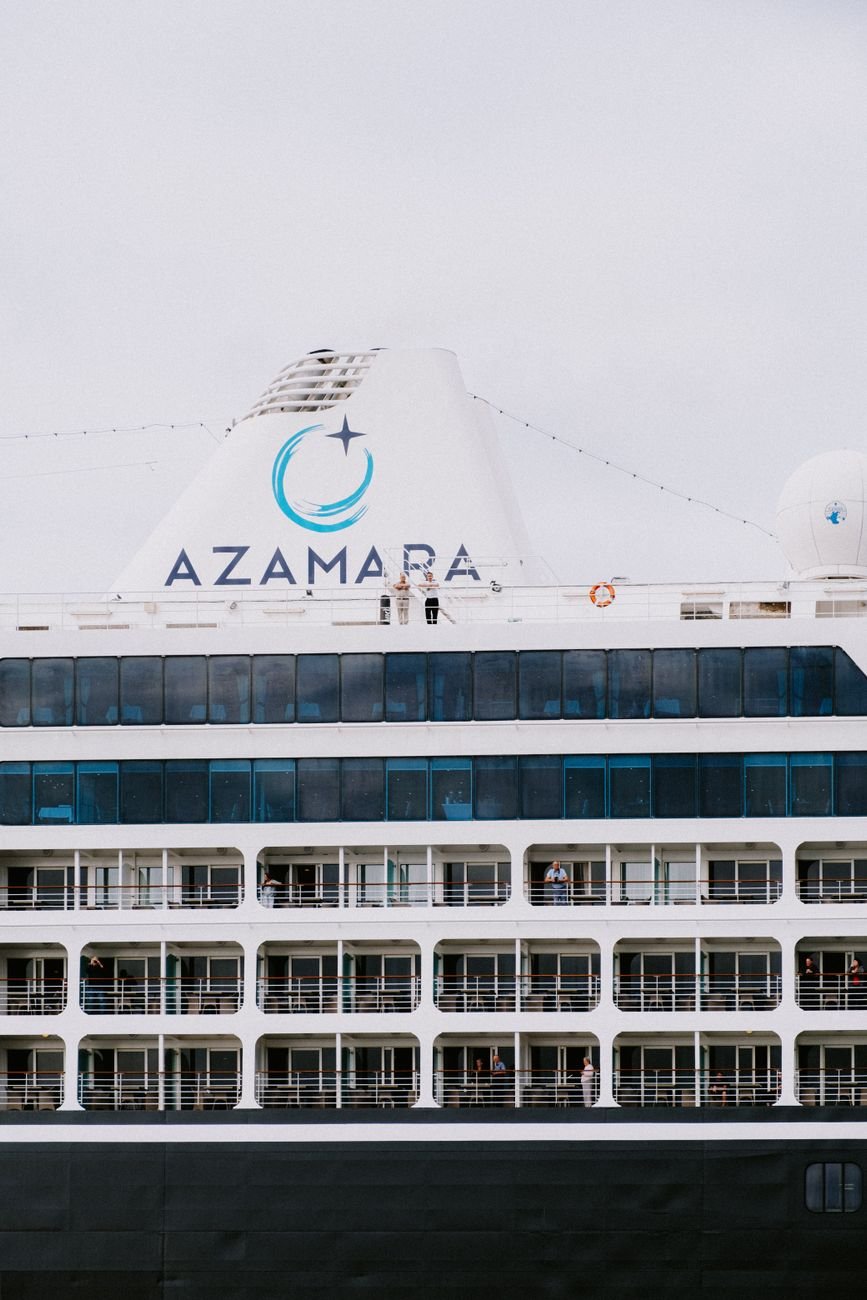
Royal Caribbean’s Icon of the Seas, which debuted in 2024, carries over 7,000 passengers at double occupancy and displaces roughly 250,800 gross tons, dimensions that would have been considered technically impossible for port infrastructure to handle just two decades earlier, before dredging projects and dedicated megaship terminals were built specifically to accommodate this new generation of vessels.
Naval architects designing these ships face genuine engineering constraints beyond simple size, including stability in rough seas, evacuation logistics for thousands of passengers, and propulsion systems efficient enough to keep fuel costs manageable despite the sheer mass being moved, problems that have driven innovations in hull design and hybrid propulsion that didn’t exist in the cruise industry a generation ago.
Why the Business Case Keeps Pushing Bigger
The Economics of Scale
- Per-passenger operating costs generally decrease as ship size increases, up to a point
- Onboard revenue from specialty dining, excursions, and retail has become as important as ticket price
- Port fees and infrastructure investment increasingly favor lines that can fill larger ships reliably
- Newer megaships increasingly function as destinations themselves, reducing dependence on port stops
Cruise lines have increasingly built onboard attractions, water parks, surf simulators, entire neighborhood-style zones with distinct themes, specifically to make the ship itself the primary vacation destination, reducing the relative importance of port stops and giving lines more control over onboard spending, which has become a larger share of total cruise revenue than ticket prices alone.
Critics of the megaship trend point to strained port infrastructure in smaller Caribbean and Mediterranean destinations that struggle to absorb thousands of passengers disembarking simultaneously from a single ship, a capacity mismatch that has prompted some ports to implement passenger caps or fees specifically aimed at managing the sheer volume that a single modern megaship can deliver in one visit.
What the megaship era ultimately represents is a specific business logic taken to its structural limit: bigger ships lower costs and increase onboard revenue opportunities, but only as long as ports, engineering, and passenger demand can keep pace with a scale of vessel that continues to grow every few years without any clear technical ceiling in sight yet.
What This Means Going Forward
The broader pattern here reflects something researchers and local officials increasingly track closely: the gap between how a place or trend is perceived from the outside and how it actually functions day to day for the people living inside it or making decisions about it. That gap rarely closes on its own, and it tends to widen further whenever outside attention, whether from tourism, media coverage, or social platforms, arrives faster than the underlying infrastructure or community capacity can absorb it.
What tends to happen next depends heavily on decisions made by the people closest to the situation, whether that means local governments, longtime residents, or the businesses that have to adapt fastest, and those decisions rarely get the same national attention as the initial trend or story that put the place on the map in the first place, even though they matter considerably more to how things actually turn out over the following decade.
The Longer-Term Trajectory
Longtime observers of this pattern note that the early years after a place or trend gains attention are rarely the ones that determine its lasting character. The more decisive period tends to arrive several years later, once the initial wave of interest either sustains itself through genuine infrastructure investment or fades as attention moves elsewhere, leaving behind whatever changes already took root during the busier years.
That delayed reckoning is precisely why comparisons across a full decade, rather than a single before-and-after snapshot, tend to produce a more accurate picture of what actually changed and what merely appeared to change while the cameras and headlines were still pointed in that direction.
Why This Keeps Getting Overlooked
Part of the reason this dynamic receives less attention than it probably deserves is structural: the initial story, whether a viral moment, a policy change, or a shift in travel patterns, is simply more compelling to cover than the slower, less dramatic process of adjustment that follows it over subsequent years, which rarely fits into a single headline or a short video.
That mismatch between what gets covered and what actually matters most to the people living through the change is a recurring feature of how places, trends, and communities get discussed publicly, and it tends to leave a persistent gap between popular perception and the more complicated reality on the ground.
What This Means Going Forward
The broader pattern here reflects something researchers and local officials increasingly track closely: the gap between how a place or trend is perceived from the outside and how it actually functions day to day for the people living inside it or making decisions about it. That gap rarely closes on its own, and it tends to widen further whenever outside attention, whether from tourism, media coverage, or social platforms, arrives faster than the underlying infrastructure or community capacity can absorb it.
What tends to happen next depends heavily on decisions made by the people closest to the situation, whether that means local governments, longtime residents, or the businesses that have to adapt fastest, and those decisions rarely get the same national attention as the initial trend or story that put the place on the map in the first place, even though they matter considerably more to how things actually turn out over the following decade.
The Longer-Term Trajectory
Longtime observers of this pattern note that the early years after a place or trend gains attention are rarely the ones that determine its lasting character. The more decisive period tends to arrive several years later, once the initial wave of interest either sustains itself through genuine infrastructure investment or fades as attention moves elsewhere, leaving behind whatever changes already took root during the busier years.
That delayed reckoning is precisely why comparisons across a full decade, rather than a single before-and-after snapshot, tend to produce a more accurate picture of what actually changed and what merely appeared to change while the cameras and headlines were still pointed in that direction.