A Perfect 24-Hour Strasbourg Christmas Itinerary
We may earn money or products from the companies mentioned in this post. This means if you click on the link and purchase the item, I will receive a small commission at no extra cost to you ... you're just helping re-supply our family's travel fund.
Idyllic Pursuit is a luxury and experiential travel blog, and this itinerary is designed for travelers who want Strasbourg’s Christmas season to feel personal and unhurried. A well-paced 24 hours gives you a vivid taste of Strasbourg’s Christmas lights, historic markets, and Alsatian hospitality. One day and night can feel rich and unhurried when you choose a few meaningful stops. You’ll begin with quiet canals, spend the afternoon among historic squares, then wake near the old center.
Strasbourg has long been known as Europe’s historic “Capital of Christmas.” Its appeal reaches beyond the stalls: the Grande Île brings together grand architecture, neighborhood charm, and the traditions of the Alsace region. This plan treats your winter city break as an experience, not a race through every square.
A thoughtful 24-hour holiday itinerary can include a morning walk, market visits, dinner, an overnight stay, and a final morning pause. Plan for a full day, but leave space for the small details that make the city feel personal. A quiet reflection in the water or a warm pastry can matter as much as another market stop.
Key Takeaways
- Start the day with canals and half-timbered houses in Petite France.
- Use the afternoon for the historic markets around Place Broglie and Strasbourg Cathedral.
- Take a slow evening walk through decorated streets before dinner.
- Stay in the historic center to keep the route easy on foot.
- Save a gentle breakfast and final city view for the next morning.
For more holiday inspiration, explore these nostalgic Christmas markets and their old-world traditions. Treat the day as a chance to savor a few distinct moments rather than race through every market.
When Are the Strasbourg Christmas Markets Open, and How Do You Arrive?
For the 2026 season, Strasbourg’s markets run from November 27 through December 24, with the Place Broglie market scheduled daily from 11:30 AM to 9 PM. The 2026 market dates are November 27 to December 24. The city has nine Christmas markets in its historic center, and you can visit them without buying tickets.
Place Broglie’s scheduled hours give you a useful afternoon anchor, while other market opening times can differ. Trains connect Paris and Strasbourg, and the city center closes to vehicle traffic during market season. Stalls generally take cash, so bring some euros for small purchases.
Plan around the 2026 dates, not a past season’s calendar. For a 2027 visit, use the dates announced for that season.
This itinerary is planned for the 2026 season, rather than the 2025 market calendar. The English-language official Christmas guide includes a map of the market squares, which helps you find your way around the historic center.
For a lighter crowd, consider early December or a midweek visit. These simple arrival steps can make the first hour easier:
- Save the English-language market map before you leave.
- Carry some cash for market stalls.
- Choose an early-December or midweek date for lighter crowds.
Tickets are not needed to enter the markets, though your train ticket and overnight plans need separate planning. Save the official English-language map before setting out so the market squares are easy to locate.
A Strasbourg Christmas Itinerary from 8 AM to 8 AM
Start at 8 AM in the quieter lanes of Petite France and finish at 8 AM the next morning after a night close to the historic center. This proposed route gives you a full day and night without treating every stop as a timed appointment. Market opening times are listed separately, so adapt the first market visit to the day’s schedule.
The three principal stops at Place Broglie, Place Kléber, and Place de la Cathédrale span the Grande Île. Strasbourg Christmas markets are spread through this historic island center, making a walking route feel natural. Use the schedule as a framework, then linger where the city catches your attention.
| Time | Focus | Area | Experience |
|---|---|---|---|
| 8-11:30 AM | Petite France walk and café stop | Petite France | Canals, façades, and breakfast |
| 11:30 AM-1 PM | Market lunch and Place Broglie | Place Broglie | A savory bite and historic stalls |
| 1-5:30 PM | Cathedral and Place Kléber markets | Grande Île | Market lanes and Grand Sapin |
| 5:30-7 PM | Decorated streets and evening views | Historic center | Lights, façades, and river reflections |
| 7 PM-8 AM | Food tour, overnight stay, and final morning pause | Central Strasbourg | Regional tastes, rest, and breakfast |
The Christmas market day can feel full without becoming hurried. A relaxed lunch gives you a chance to reset before the larger squares, while the night close to the center keeps the next morning simple.
Keep the route flexible enough to linger over a view or a tasting that captures your attention.
Morning: Wander La Petite France Before the Crowds
Begin where Strasbourg’s canals slip between half-timbered façades, and let the first hour unfold at a leisurely pace. Petite France is best approached on foot, with no need to chase a long list of sights. Its narrow streets and water views offer a calm start to your Strasbourg Christmas visit.
Use the morning for architecture and riverside scenery, before the market-focused afternoon. This timing means you enjoy the neighborhood rather than trying to shop before the stalls open. The water moves quietly beside old façades, and each turn brings a different view of the old quarter.
Begin with canals and half-timbered façades
Follow the canals toward Pont du Faisan, where the close-set buildings frame the water. Continue past half-timbered houses, then walk to Écluse A de la Petite France for another riverside pause. The route stays close to the neighborhood’s defining features without demanding a strict order.
Keep your camera ready, but leave room to notice the small details: a timber beam, a window box, or the sound of water near the lock. This is a good place to let the city set the pace.
- Canals and riverside lanes
- Pont du Faisan
- Half-timbered houses
- Écluse A de la Petite France
Pause for breakfast in the old quarter
Café Bretelles is a Petite France stop for breakfast. A warm drink and a quiet table turn an early walk into a considered start, rather than a rush to reach the markets. Take a moment to plan the rest of your day while the neighborhood wakes around you.
Keep breakfast simple enough to leave appetite for later. The café pause also gives your feet a break before the longer stroll between squares.
Leave a little time for coffee before leaving the neighborhood.
Pause for Alsatian Lunch and a Market Snack
A crisp slice of flammekueche offers a distinctly Alsatian pause between the canals and the market squares. Flammekueche is a thin, crisp Alsatian flatbread topped with crème fraîche, onions, and lardons. Share one for lunch or treat it as a substantial snack before the afternoon walk.
A flexible, food-led stop suits this itinerary better than a long formal lunch. The dish brings a savory taste of the Alsace region without taking too much time from the market visit. If you are traveling with someone, sharing makes it easy to save room for another small bite later.
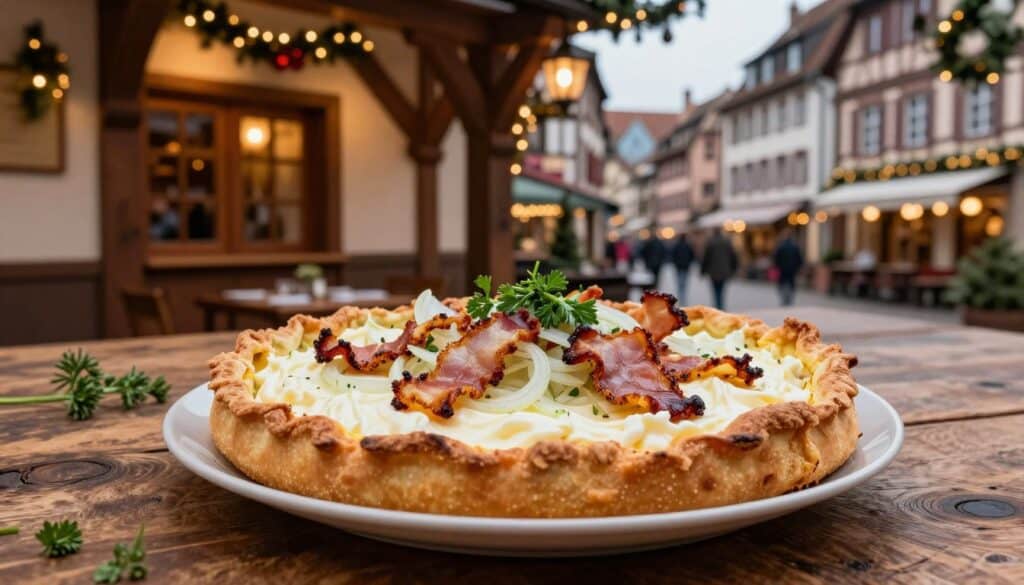
Keep the meal relaxed and let your appetite guide the next choice. A small taste can be enough before you return to the streets, especially if you have already had breakfast in Petite France.
This is a useful bridge between a morning spent among old buildings and an afternoon built around market squares. Choose a portion that leaves room to sample something sweet later.
Step Into Strasbourg’s Oldest Market at Place Broglie
Place Broglie brings centuries of Christmas-market tradition into the heart of a lively afternoon stroll. The Christkindelsmärik began in 1570, making it one of Europe’s oldest Christmas markets. It has had a permanent home at Place Broglie since 1871.
The dates mark two different parts of its story: the market began in 1570, then settled at its current square in 1871. That long tradition gives this stop a distinct character within the wider Christmas markets of Strasbourg.
Follow the Christkindelsmärik’s history
The market’s history is tied to the city’s winter customs and its changing public squares. Its name and traditions still give the place a different feel from the market lanes around the Cathedral. For a closer look at the city’s place among nostalgic holiday markets, consider how old customs shape a present-day visit.
Rather than treating the oldest Christmas market as a quick stop, let the setting guide a slower pace. Pause to take in the rows of chalets before choosing where to browse.
Browse its chalets and classic stalls
More than 100 stalls fill Place Broglie, with food choices that include sausages, fresh pretzels, flammekueche, crêpes, and gingerbread. You do not need to try every option to enjoy the square. Pick one food to share, then give the stalls your attention.
Wooden chalets bring the market close to eye level, with small gifts and seasonal goods beside the food counters. Choose a clear browsing pace, and let the square’s details unfold rather than turning each stall into a task.
Let the market’s long history set the pace for a slower browse.
Spend the Afternoon Around Strasbourg Cathedral and Place Kléber
The Cathedral market gives the afternoon its grandest architectural setting, with Place Kléber adding Strasbourg’s signature Christmas tree. The Cathedral market is one of the city’s most popular, and it stretches from Place de la Cathédrale to Place du Château. Plan time for both the market lanes and the Cathedral’s surrounding views.
A medieval Klausenmärik, or St. Nicholas market, once took place near Strasbourg Cathedral around December 6. It sold gingerbread and herbs, a tradition distinct from today’s Christmas market. The older custom adds context, but the present-day stalls are their own experience.
Explore the Cathedral market
Start at Place de la Cathédrale, then follow the market toward Place du Château. The Cathedral’s stonework gives the square a sense of scale, while the stalls create a closer, more intimate rhythm at street level. Take time to look up between browsing stops.
For a clear afternoon plan, give this area the longer browsing pause. The market’s spread makes it easy to slow down without staying in one small square.
Look for the Grand Sapin at Place Kléber
Place Kléber is home to the Grand Sapin, Strasbourg’s large city Christmas tree and a symbol of the city. Its scale offers a striking contrast with the old lanes and smaller market chalets. Leave enough time to take in the tree before returning to the tighter streets.
| Stop | Location | Distinctive focus | Why pause |
|---|---|---|---|
| Cathedral market | Place de la Cathédrale | Popular market beside the Cathedral | See the setting and stalls together |
| Market extension | Place du Château | Continuation of the Cathedral market | Browse beyond the main square |
| Grand Sapin | Place Kléber | Large city Christmas tree | Take in a symbol of Strasbourg |
Allow time to look up from the stalls and take in the Cathedral’s setting.
Follow the Christmas Lights Into the Evening
As daylight fades, Strasbourg’s decorated streets turn the walk between markets into an experience of its own. Storefronts, windows, and festive details bring a new mood to the old center. Follow the lights at a walking pace instead of trying to cover every decorated street.
Rue des Orfèvres and Rue du Chaudron make natural first stops. Continue toward Rue Mercière and Rue du Maroquin, where the decorated façades and busy sidewalks give the evening a warm street-level feel.
Find the decorated streets
Choose a few short stretches and let the lights shape the route. The storefront decorations create a festive scene without needing a fixed show time. You can pause at a window, notice the details, and move on when the street begins to feel crowded.
- Rue des Orfèvres
- Rue du Chaudron
- Rue Mercière
- Rue du Maroquin
Return to Petite France after dark
Petite France takes on a softer look after dark. Holiday lights glow across its half-timbered façades, then reflect in the River Ill. The familiar morning lanes feel different when the water catches the evening colors.
This return visit adds another layer to the day without requiring a new sightseeing plan. Let the reflection and the quiet along the river hold your attention for a few minutes.
Pause by the River Ill for the reflected lights before settling in for dinner.
Join a Cozy Alsatian Food Tour for Dinner
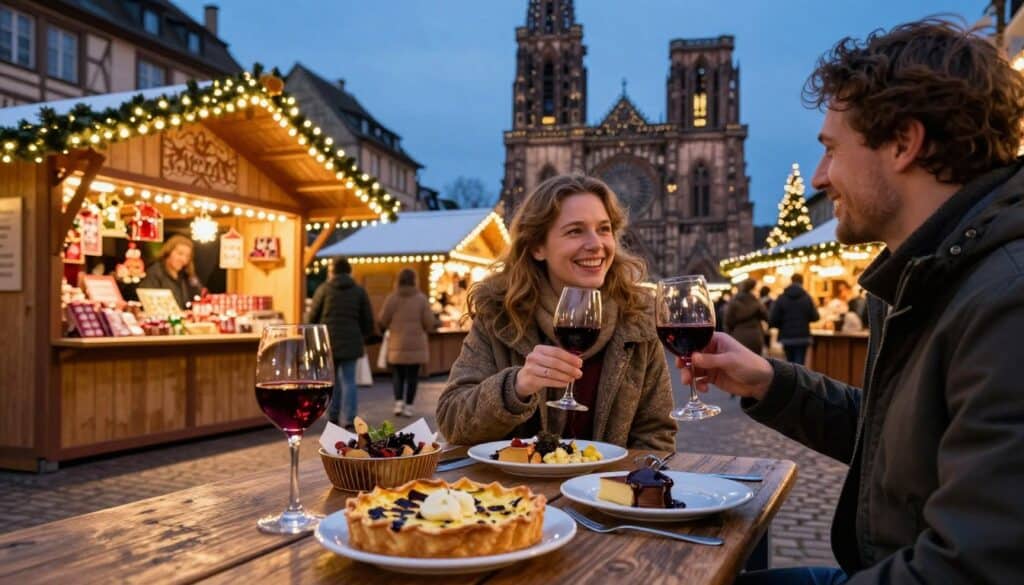
End the market day around a table or on a guided tasting walk, with Alsatian flavors setting the pace. A hosted meal can pair regional food with local wine and keep dinner relaxed and warm. For an evening built around local tastes, consider a guided regional Alsatian food-and-wine tasting.
Book popular Strasbourg restaurants at least three weeks ahead during peak Christmas season. La Corde à Linge is a sit-down option if you would rather settle in for dinner. A guided walk can offer a more flexible feel, though each tour’s route and format will differ; explore one through viator.tpk.lv.
Taste regional specialties at an unhurried pace
Flammekueche, bredele, gingerbread, and mulled wine are among the season’s familiar flavors. Bredele are traditional Alsatian Christmas cookies, with tastes such as cinnamon, almond, lemon, and buttery sablé. Sampling a few lets you experience local food without turning dinner into a rushed market lap.
| Taste | What to expect | A good moment to enjoy it |
|---|---|---|
| Flammekueche | Crème fraîche, onion, and lardon topping | As a savory shared bite |
| Bredele | Cinnamon, almond, lemon, or buttery sablé | With a warm drink or after dinner |
| Vin chaud | Mulled wine with cinnamon, cloves, and citrus | During an outdoor evening pause |
A hosted tasting may bring food and local wine together in a relaxed setting. You can focus on flavor and conversation rather than deciding where to stop at every turn. Gingerbread offers another sweet market taste, especially if you want a small treat to take away.
Make room for a warm final drink
Vin chaud, the French name for mulled wine, carries notes of cinnamon, cloves, and citrus. Sip it slowly after dinner or during a pause on a walking tour. If you prefer a nonalcoholic drink, choose another warm option and keep the evening comfortable.
Make the dinner reservation well ahead of the peak season.
Stay Close and Savor a Quiet Final Morning
A central overnight stay lets the last chapter of the day begin without a long return across town. Grande-Île, the area around Place Kléber, and Petite France all keep the historic center accessible. Choose a base in one of these areas to make this walking route easier.
The right location can make the overnight pause feel like part of the trip, not a gap between market visits. After a full day on foot, a short walk back gives you time to settle in and enjoy the city’s quieter side.
Keep your last morning open rather than filling it with another long stop. A calm start gives the day a gentler finish.
Make the overnight pause part of the experience
Staying near the old center keeps the evening’s final stretch manageable and the morning close at hand. In Grande-Île, around Place Kléber, or in Petite France, you can step out among the historic streets without planning a long trip back into town.
A central base also gives you room to enjoy the night at your own pace. You can return when you are ready, rather than watching the clock for a long journey across the city.
Take one last easy morning
Start with a slow breakfast, then take one last unhurried look at the city before departure. A quiet street or a familiar river view can be a fitting final pause after the markets. Keep transport timing tied to your own train ticket and travel plans.
Leave the morning open enough for an extra coffee or a short stroll, without adding another packed sightseeing block. Keep the final morning light enough to leave with a little space in the schedule.
Conclusion
Strasbourg’s Christmas magic is easiest to savor when you choose a few meaningful stops and give them time. A memorable day balances old streets and market traditions with the warmth of Alsatian hospitality. The best moments may come between planned stops, when you notice a reflection or linger over a local taste.
Begin with one practical step: choose a 2026 market date that suits your pace, then secure central accommodation early. That simple choice gives you more room to enjoy the city on foot. Choose your 2026 dates and reserve a central place to stay.